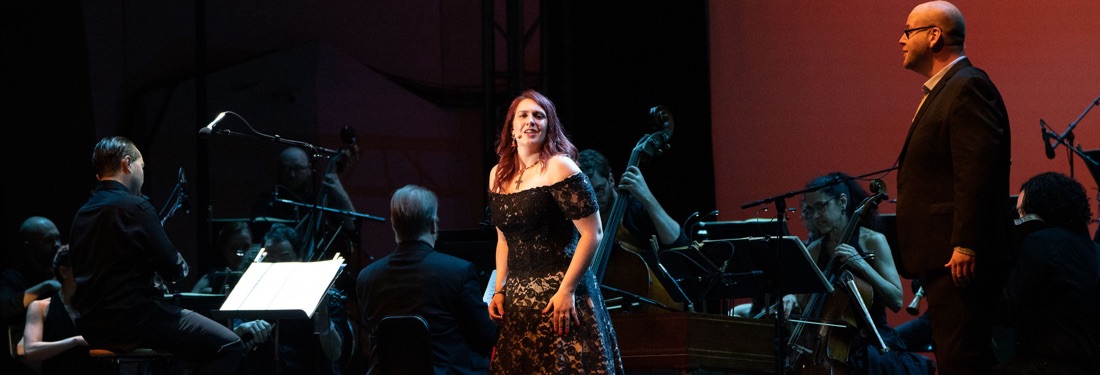
On Sunday afternoon, husband-and-wife duo Roberto Alagna and Aleksandra Kurzak presented a charming program of operatic favorites from the patio of the Château de la Chèvre d’Or in Èze, France.
“While Renée Fleming performed without an audience, DG Stage offered Puccini’s beloved melodrama Tosca before an outdoor crowd in Naples.”
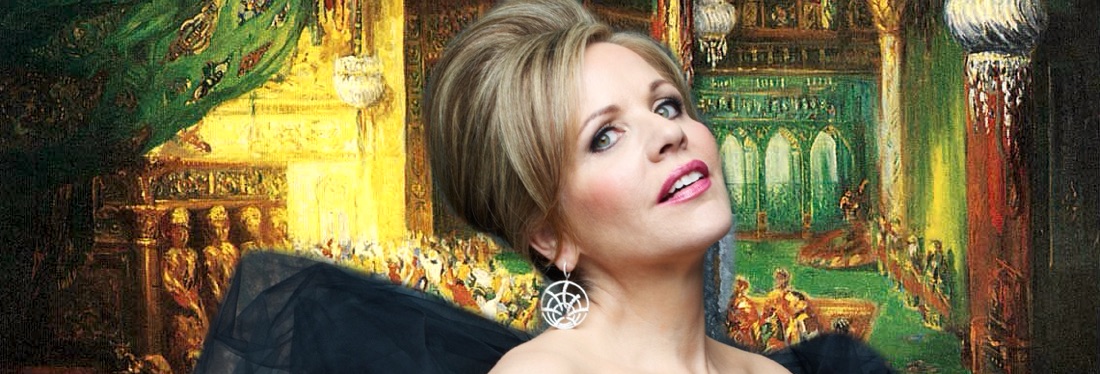
Renée Fleming presented a satisfyingly eclectic and quietly daring program of songs and arias, an interesting timestamp on a career that, despite its crepuscular vibe, seems as active as ever.
Rigoletto at Circo Massimo was my first opera since the lockdown started in March.
This video recording of Il trovatore is sensational for all the right and wrong reasons simultaneously.
Mr. Wilson’s production concept, according to his liner notes, has more to do with Paris at the time of the premiere and a “world of memory” than it does with the storytelling of civil war in medieval Spain.
Robert Wilson is many things: a visionary (certainly); an iconoclast, artist, director, and designer of sets, lighting, costumes, movement (and furniture). Yet his work is never boring (well, at least not intentionally).
I have seen all sorts of Boris Godunovs, but nothing quite like this.
On the first viewing of this Idomeneo, with a cast clad mostly in military khaki green set against a green sky, the eye starts to tire from the dullness of the surroundings.
Mascagni’s Cavalleria Rusticana has always been a particular favorite, although I’ve only seen it staged once (and that by an amateur company the details of which I share spare you all, save to note that dinner was served during the performance.)
Lady M, an Online Fantasia on Verdi’s Macbeth, Heartbeat Opera’s creative and thought-provoking foray into the Zoom opera scene, left me feeling alternately pensive, hopeful and somewhat uneasy, in a good way.
HERE’s Zoom opera, all decisions will be made by consensus, is not merely an opera written to be performed on a digital platform, but an opera that critiques the platform itself, laying bare all its social and aesthetic limitations.
With most of us dug in for the duration, there’s no better time to tuck into a CD box set of neglected treasures. Not that I needed an excuse, mind you.
While isolated opera-lovers intently navigate the deluge of streaming videos being made available, I’ve been listening rather than viewing.
What we see here from Strasberg is frustratingly literal and drably conventional—it looks to me like he’s channeling a lot of received wisdom about how Chekhov should be staged and bringing almost nothing of his own to the process.
Time to stop being coy, I think. You and I had quite different takeaways on the show, didn’t we?
For a show set during the hardscrabble 1930s, very few of the performances give off an air of downtroddedness.
As long as women have been preyed upon, Don Giovanni has been relevant.
It’s difficult to discuss Unknown Soldier without considering the impact of legacy.
We are in the midst of a titanic Beethoven onslaught prompted by the unstoppable need to commemorate the composer’s upcoming 250th birthday.
Ester, Liberatrice del Popolo Ebreo was presented in concert on Thursday night by Salon/Sanctuary Concerts in the Brotherhood Synagogue on Gramercy Park, in proper time for Purim.
Not everyone is happy about the Beethoven sestercentennial.
That question hung in the air when Teatro de la Zarzuela Madrid revived Tomás Bretón’s opera Farinelli for first time since its premiere in 1902.
While last year’s finals were dominated by early nineteenth-century bel canto arias, this year’s finalists took on a remarkably broad range of music from a variety of repertoires.
Sign up for Parterre’s free newsletter.
Exclusive opera reviews, commentary, and top reads
delivered to your email weekly…ish.