A place in the shade A place in the shade

Next Wednesday is the composer’s 337th birthday, so Trove Thursday previews this spring’s most enticing Handel performance with two very different live versions of his delightful Serse,.

Playing the diva vs. being the diva Playing the diva vs. being the diva

In the last weeks of January, as the Metropolitan Opera season wound to a close (prior to the winter hiatus) two striking sopranos were thrust into the limelight.

Endearing gifts Endearing gifts

Since my previous CD round-up review the onslaught of solo recital disks of 18th century (and sometimes also 17th) vocal music has continued unabated.

Straight to hell Straight to hell

November in New York hosts two premieres dedicated to mythology’s greatest musician, which prompts Trove Thursday to present a vintage Monteverdi L’Orfeo with Judith Raskin and Gérard Souzay conducted by Leopold Stokowski (!) and a recent HIP London broadcast of Luigi Rossi’s L’Orfeo.

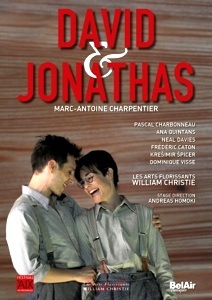
“Jonathan loved him as his own soul” “Jonathan loved him as his own soul”

Trove Thursday celebrates Pride with a Bible-based homoerotic sort-of opera not by the guy who wrote “Depuis le jour”: Charpentier’s David et Jonathas with Mark Padmore, Laurent Naouri and Jaël Azzaretti led by Emmanuelle Haïm.

Fascinating but frustrating Fascinating but frustrating

Now, through the auspices of the Metropolitan Opera, we have Sonya Yoncheva—and if anything, the diva-dom has been kicked up a notch!

Terracotta puppets of the gods Terracotta puppets of the gods

Dancing sheep! Flying sheep! Flying sheep who dance!

Cradle song Cradle song

While seasonally-awkward streams of Messiah abound, Trove Thursday turns instead to Berlioz’s exquisite L’Enfance du Christ from francophone forces including Stéphanie d’ Oustrac, Bernard Richter, Edwin Crossley-Mercer and Nicolas Testé (for once, sans sa femme).

Significant mother Significant mother

As Phaedra’s tragic, all-consuming passion for her stepson Hippolytus has fascinated artists for centuries, Trove Thursday offers two of its lesser-known musical settings: Pizzetti’s opera Fedra with Régine Crespin and Lorraine Hunt Lieberson performing the cantata Phaedra, Britten’s final vocal work.

Green-eyed monster Green-eyed monster

Last night should have seen my favorite of this season’s revivals but instead Trove Thursday must step up with Jean-Marie Leclair’s irresistibly captivating Scylla et Glaucus conducted by Christophe Rousset.

What women want What women want

While isolated opera-lovers intently navigate the deluge of streaming videos being made available, I’ve been listening rather than viewing.

Sweet 1600s Sweet 1600s

Over the past week New York City was blessed by two appealing 17th century presentations: John Blow’s Venus and Adonis from Opera Lafayette and La Storia di Orfeo courtesy of the Boston Early Music Festival.

Agrippina Agrippina

“Trove Thursday” presents for the third annual installment of “Handel for my Birthday” a wickedly ideal Felicity Palmer dominating Agrippina.

The bad and the beautiful The bad and the beautiful

“Trove Thursday” offers Offenbach’s irreverent La Belle Hélène featuring the beauteous Véronique Gens.

Band in Boston Band in Boston

In the triumphant American premiere of Orlando Generoso at the Boston Early Music Festival last week, the hippogriff was among the many stars of the show.

The old song and dance The old song and dance

The most disappointing performance in 30 otherwise glorious years of William Christie and Les Arts Florissants visiting New York City.

Frick show Frick show

French early music group Ensemble Correspondances offered two of the year’s very best concerts. 

Made in the shade Made in the shade

Here’s a quick sprint through some recent (and a few maybe not-so-very-recent) Handel CDs that have been stacking up. 

Not the Messiah Not the Messiah

Four fine Handel-centric concerts from the Morgan Library to Carnegie Hall and Lincoln Center proved a bracing antidote to pervasive Messiah-mania.

Telling the glory of God Telling the glory of God

“The heavens are telling” begins the famous chorus that ends the first section of The Creation. 

All is forgiven All is forgiven

Why do we go to the opera? Because the world needs a reminder of the power of forgiveness, particularly in these dark and gloomy times!

The man who would be nymph The man who would be nymph

Sometimes the fates conspire, preventing an artist from recording the role for which he is his generation’s touchstone.

I put a spell on you I put a spell on you

Armide with a superbly grand Francophone heroine in Karina Gauvin and conducted by the always excellent Ivor Bolton.

Tragically Hippolyte Tragically Hippolyte

I had my head in my hands groaning in disbelief instead of joining in the general applause around me.