
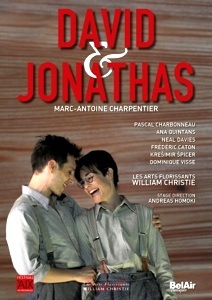
Falling in love, never again
Marc-Antoine Charpentier’s opera David et Jonathas, written for a celebration at a Jesuit school in 1688, premiered together with a Latin verse drama, Saul, now lost.
100 pieces since 2010.
Marc-Antoine Charpentier’s opera David et Jonathas, written for a celebration at a Jesuit school in 1688, premiered together with a Latin verse drama, Saul, now lost.
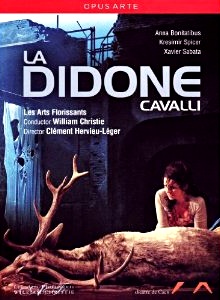
The theatrical expression “You can’t tell the players without a program” was never more apt than when applied to Opus Arte’s release of Cavalli’s La Didone.

For those who complain (not entirely unfairly) that Handel operas are “just a string of da capo arias,” I sometimes mutter to myself, “Have they ever tried Rameau?”
An unlikely but adept English-language vocal stylist, Cecilia Bartoli, led the cast of a revival of the 2007 Zurich staging of Handel’s Semele, transferred to the Theater an der Wien for a short run. Director Robert Carsen takes an occasional liberty: Juno and Jupiter emerge as British royals, for instance, she a wellie-wearer and devotee […]

The days are getting shorter, but you can keep the prattle going this fall’s Talk of the Town! You will, you can, you must join in the discussion about: Great mezzo soprano performances (October),
Gained in translation (November), Teleport me back to… (December).
Exclusive opera reviews, commentary, and top reads
delivered to your email weekly…ish.