(A)nything (B)ut (C)armen
Calling from 2066, Brendan Latimer argues that the best way to save opera might be to just blow up the standard repertoire altogether.
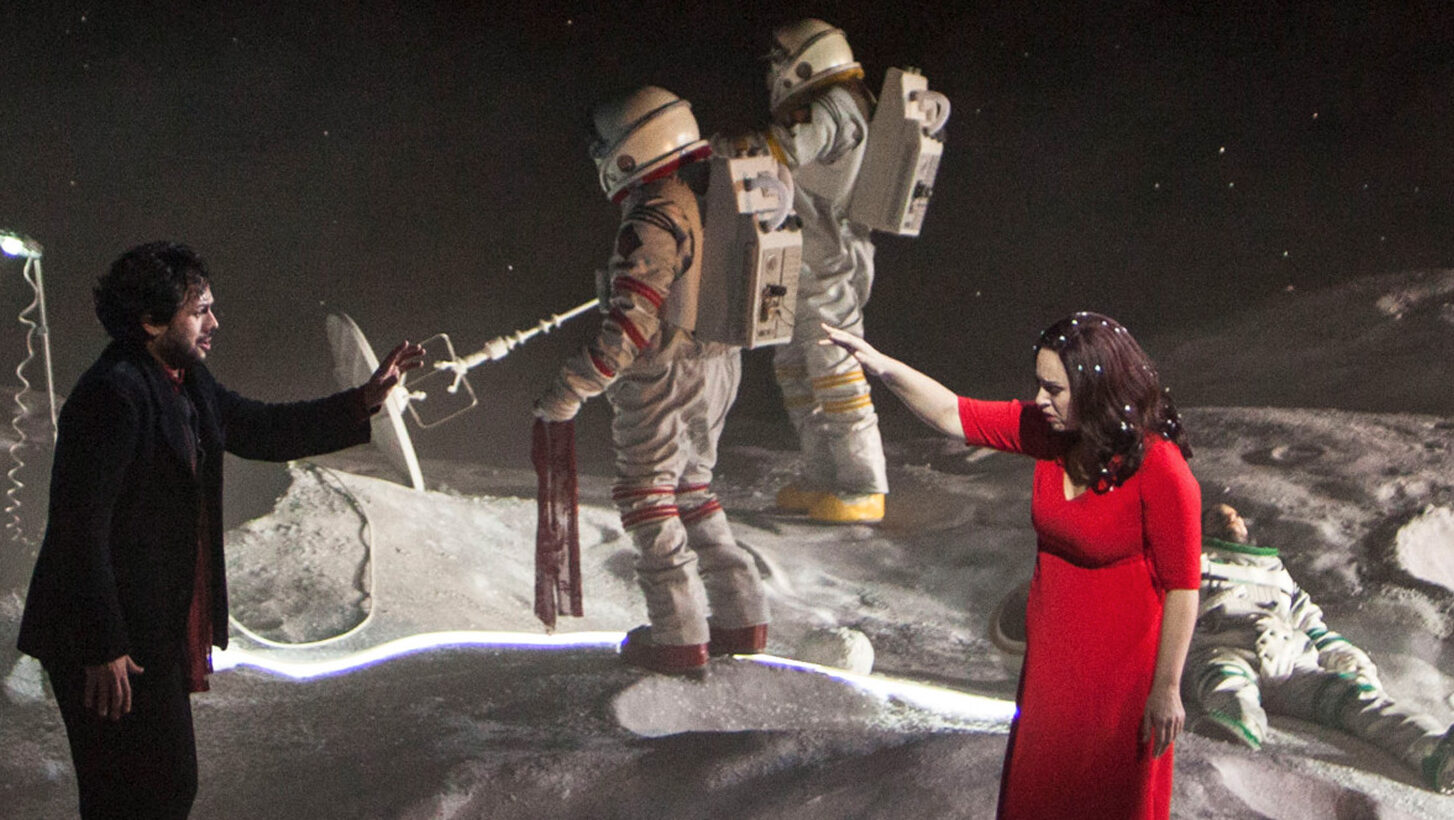
Claus Guth’s production of La bohème at the Paris Opera / Photo: Bernd Uhlig/Paris Opera
Begin transmission.
Dear People of 2026,
The year is 2066. The sky glows with an iridescent, chemical luster. Malia Obama has just been elected the third president of the Eastern United States. And, three years ago, the International Federation of Opera issued a three-year ban on all productions of the ten most-played operas in the world, including the so-called “ABC” operas: Aida, La Boheme, and Carmen). Good riddance.
Everything is different now. (Remember that shirtless guy ripping the innards out of a Waymo a couple months ago in Los Angeles, screaming at the top of his lungs? He, too, was from my world. You should have listened. I digress.) I’ve returned because, in 2032, Peter Gelb threatened to ruin this boon for the industry. Be reassured, good opera ancestors, that banning these productions was the best move the industry ever made. Sales are up. Opera seasons, studded with new works and revivals, have taken on new cultural and social significance. It took a certain countertenor (leading, in 2026, a major house) to turn the tide. But, that is another story…
Let’s take a look at some of these pieces we’ve “lost” in the last three years. For context, in 2026, the ten most-performed operas worldwide according to Operabase were, in order:
-
- Die Zauberflöte, Mozart (1791)
- La traviata, Verdi (1853)
- Carmen, Bizet (1875)
- La Bohème, Puccini (1896)
- Le nozze di Figaro, Mozart (1786)
- Tosca, Puccini (1900)
- Don Giovanni, Mozart (1787)
- Madama Butterfly, Puccini (1904)
- Il barbiere di Siviglia, Rossini (1816)
- Rigoletto, Verdi (1851)
Banning these operas turned out to be good for the art form for multiple reasons; for one, overexposure of these operas crowded out scores of worthy works that went unplayed. The disparity got ridiculous in 2026. Let’s take Carmen. Olivia Giovetti, on the podcast decanonized, quipped that “you can’t swing a cat” without hitting a production of Carmen. In the 2026-2027 season, per Operabase, there were 96 staged or concert productions of Carmen. Now, there are an almost unlimited number of composers who are unjustly neglected, but to start, contrast this with the entire operatic oeuvre of one of my favorite composers, Hector Berlioz:
- Benvenuto Cellini (1838): 0
- La damnation de Faust (1846): 6
- Les Troyens (composed 1856–58): 0
- Béatrice et Bénédict (1862): 0
The entire operatic output of Hector Berlioz, then, will see 1/16 the amount of productions as Carmen alone in the 2026-2027 season. Perhaps this is a deep cut. Berlioz, some might say, is an acquired taste. Let’s go to some supposed crowd-pleasers (i.e., those I arbitrarily consider popular due to story, tunefulness, or other metric). Again, looking at the 2026-2027 season, against the 96 productions of Carmen worldwide, I counted 12 of Rusalka (Dvořák), 9 of Peter Grimes (Britten), 6 of L’Orfeo (Monteverdi), 4 of Lady Macbeth of Mtsensk (Shostakovich), 4 of Dialogues des Carmélites (Poulenc), and 2 of Oedipus Rex (Stravinsky).
And these composers are all still in the collective imagination! If you look at the Metropolitan Opera alone, there are a myriad of composers who saw glory in the 19th century, yet languish in the shade of the ABC operas. Nick Fuller, writing in early 2025 on The Opera Scribe, notes that these include Les Huguenots (Meyerbeer), which saw 129 performances at the Met until its final run there in 1915; Die tote Stadt (Korngold), 12 performances, last performed in 1923; and Mignon (Thomas), 110 performances, last produced in 1949. Not all are grand operas, either – nor by obscure composers. The last time Met audiences heard Ravel’s L’Heure espagnole, a one-act gem, the depression had not yet hit (1922); Spontini’s La Vestale, a favorite of both Berlioz and Wagner, suffers a similar fate, having last seen the light of day in 1926.
And what about operas by non-white or non-Western European composers? How about a production of Morgiane (Edmund Dede, 1887), the oldest surviving opera by a Black American? Carlos Gomes, a mixed-race Brazilian, was a prolific opera composer of the late 19th century, churning out hits like Il guarany, Fosca, and Lo schiavo. (See this page for a fascinating dive into the world of Gomes.) After the ABC operas were banned, worldwide productions of Russian composers – Mussorgsky, Rimsky-Korsakov, Shostakovich, and Stravinsky – shot through the roof. Opera schedules everywhere thrummed with the folk melodies of Eastern Europe and the Russian Steppe, with Hungarian and Czech and Danish (Maskarade, Carl Nielsen). Women composers rightfully saw more play: Saariaho, Weir, and others, now nearly absent from opera seasons, proliferated.
Some may point out that the ABC operas are excellent for the uninitiated – that opera needs them to cultivate a new generation of listeners. Tuneful and charming, these are exemplars of musical theater – sophisticated, yet accessible and uncomplicated. Yet there remains a vast ocean of operas that fit this description. Even second-tier Verdi is preferable to yet another Carmen or Bohème. What youngster wouldn’t be gripped by the “Invano, alvaro” duet in La forza del destino? Works that stretch the classical form (think Joplin’s Treemonisha, a ragtime opera, or Bernstein’s Trouble in Tahiti, which blends jazz and classical genres) could also be a gateway into serious musical theater, triaging the failure of public music education by staging works with more familiar syncopations to the general public.
Others may point to the bottom line: not only are the ABC operas workhorses, they’re piggy banks. This was, perhaps, the biggest obstacle between the bloodless, tired programming of 2026 and the triumphant Renaissance of 2066. Perhaps, in 2026, you look to the future for hope of a more utopian world, one which values arts funding and education. Don’t. It’s not coming. The ABC operas only contributed to broadly-held perceptions of stuffiness. Diversifying the repertoire gave younger audiences a sense of surprise and unpredictability. More and more, opera marketed itself as an avant garde alternative to the often vulgar métier of the musical. Where the musical was crass, amplified to smithereens, and mainstream, opera became the equivalent of art-house cinema – an operatic Cassavetes to the musical’s Marvel Universe.
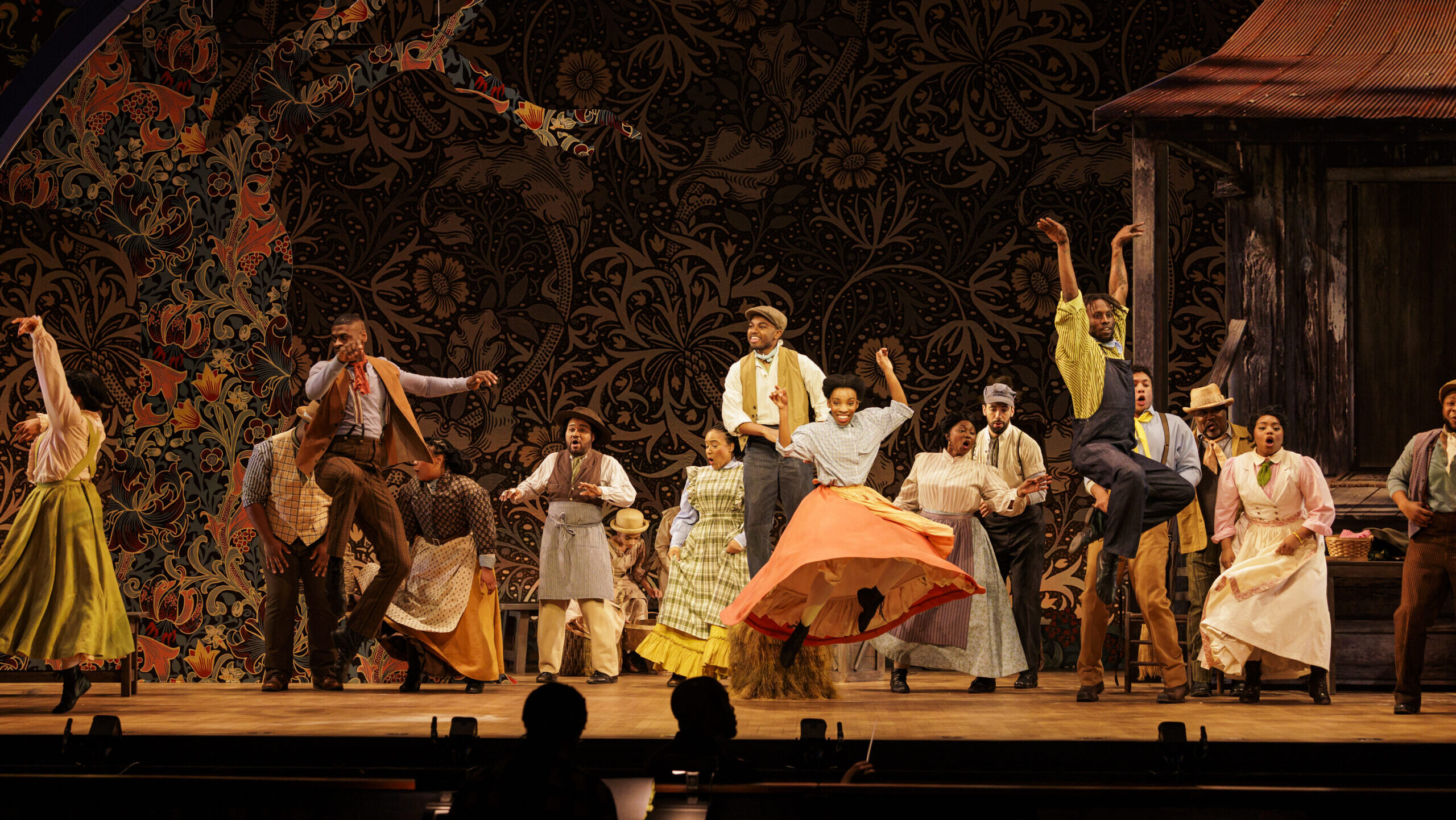
Treemonisha at Washington National Opera in March 2026 / Photo by Elman Studio
But don’t take it from me. Eric Einhorn, incoming General Director of Opera Delaware, is confident on the matter: “Absolutely nothing would happen,” he predicts. “To disqualify the top ten pieces, in my opinion, sounds like something far more catastrophic than it would be in practice…if you couldn’t do [the ABC operas] at all, I think that companies are doing a great job of pieces of all different sizes of different parts of the rep – new pieces – that audiences become more invested in the company than the work that they’re doing specifically.” He then conjectured an imaginary opera patron, writing, in anger, demanding that their local company produce Tosca and Boheme. “I would wager that that same person,” he said, “is also going to buy tickets to whatever you’re putting on the mainstage. They’re going to go to Così even though you don’t put on Figaro.”
Sometimes a company will try to pair an opera to a particular interest of a big donor, but this usually goes no deeper than aesthetic and conceptual choices, not repertoire (Einhorn used an example of a big donor who’s also an astronomer and an opera set in space.) “With rare exception, and never in my experience, is someone going to come to you and say, “I want to give you x-hundred thousand dollars to produce Carmen. And if there are people who want to give more focused production or repertoire-specific funding, it’s not the [ABC operas] that people want to fund! It’s new pieces, it’s obscure pieces.”
What would my top ten look like? It would include the monstrous, the intimate, the fantastical, the new, the shocking, and the dramatic. It wouldn’t coddle to audiences; rather, it would leverage myth, literature, and history as a narrative entry point. And, importantly, it would give the workhorses a much-deserved rest, recharging our sense of wonder. As George Bernard Shaw, who thought Don Giovanni the greatest opera of all, once pleaded: “Why not leave Don Giovanni in peace on the shelf? It would be so easy not to perform it.”
Here are my suggested ten replacements (in no particular order):
- Boris Godunov, Mussorgsky (1874)
- Les Troyens, Berlioz (composed 1856-1858)
- Otello, Verdi (1887)
- Billy Budd, Britten (1951)
- Les Huguenots, Meyerbeer (1836)
- L’amour de loin, Saariaho (2000)
- The Minotaur, Birtwistle (2008)
- Dialogues des Carmélites, Poulenc (1957)
- Acis and Galatea, Handel (1718)
- Highway 1 USA, Still (composed 1940s)
I am at the end of my transmission. What say you? What are your top 10? One day, perhaps, it will become a reality.

Brendan Latimer
Brendan Latimer is a writer and urban planner based in Baltimore, MD. He invented the dark chocolate with orange juice combo. You can find him on Instagram at @b_lat_ and @operanoises.
-
Topics: a modest proposal, critics and their criticism, opinion
-
People: Ambroise Thomas, Benjamin Britten, Carl Nielsen, Carlos Gomes, Claudio Monteverdi, Claus Guth, Dmitri Shostakovich, Dvorak, Edmund Dede, Eric Einhorn, Erich Wolfgang Korngold, Francis Poulenc, Gaspare Spontini, George Bernard Shaw, George Frideric Handel, Giacomo Meyerbeer, Giuseppe Verdi, Harrison Birtwistle, Hector Berlioz, Igor Stravinsky, Judith Weir, Kaija Saariaho, Leonard Bernstein, Malia Obama, Maurice Ravel, Modest Mussorgsky, Nick Fuller, Nikolai Rimsky-Korsakov, Olivia Giovetti, Peter Gelb, Scott Joplin, William Grant Still
-
Works: Acis and Galatea, Béatrice et Bénédict, Benvenuto Cellini, Billy Budd, Boris Godunov, Carmen, Così fan tutte, Dialogues des Carmélites, Die tote Stadt, Die Zauberflöte, Don Giovanni, Fosca, Highway 1 USA, Il barbiere di Siviglia, Il Guarany, L'amour de loin, L'Heure espagnole, L'Orfeo, La bohème, La damnation de Faust, La forza del destino, La traviata, La Vestale, Lady Macbeth of Mtsensk, Le nozze di Figaro, Les Huguenots, Les Troyens, Lo schiavo, Madama Butterfly, Maskarade, Mignon, Morgiane, Oedipus Rex, Otello, Peter Grimes, Rigoletto, Rusalka, The Minotaur, Tosca, Treemonisha, Trouble in Tahiti
-
Places & Organizations: Metropolitan Opera, Opera Delaware, Paris Opera, Washington National Opera