
Calling from 2066, Brendan Latimer argues that the best way to save opera might be to just blow up the standard repertoire altogether.
Aryeh Nussbaum Cohen shows that he’s at the top of a crowded pack of countertenors in two recent New York performances with Philharmonia Baroque.
Les Arts Florissants present two ravishing programs in Brooklyn and Manhattan.
A brief concert at the Frick Collection teases the multifaceted artistry of Davóne Tines
I felt that the whole performance at West Edge Opera on Sunday was greater the sum of its parts, particularly due to the dedication of the whole cast and crew amidst all adversities.
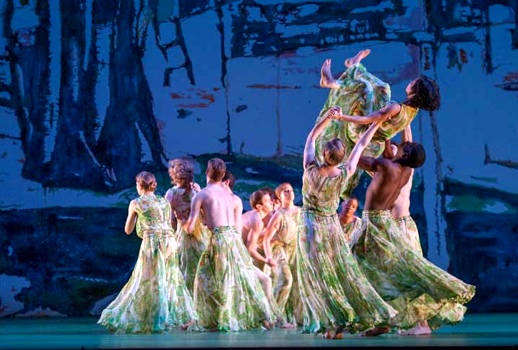
People these days often exclaim “…..is everything!” but often it feels like gross hyperbole. But surely anyone who has seen Mark Morris’s L’Allegro, il Penseroso ed il Moderato since it premiered in 1989 would agree that it is indeed everything!
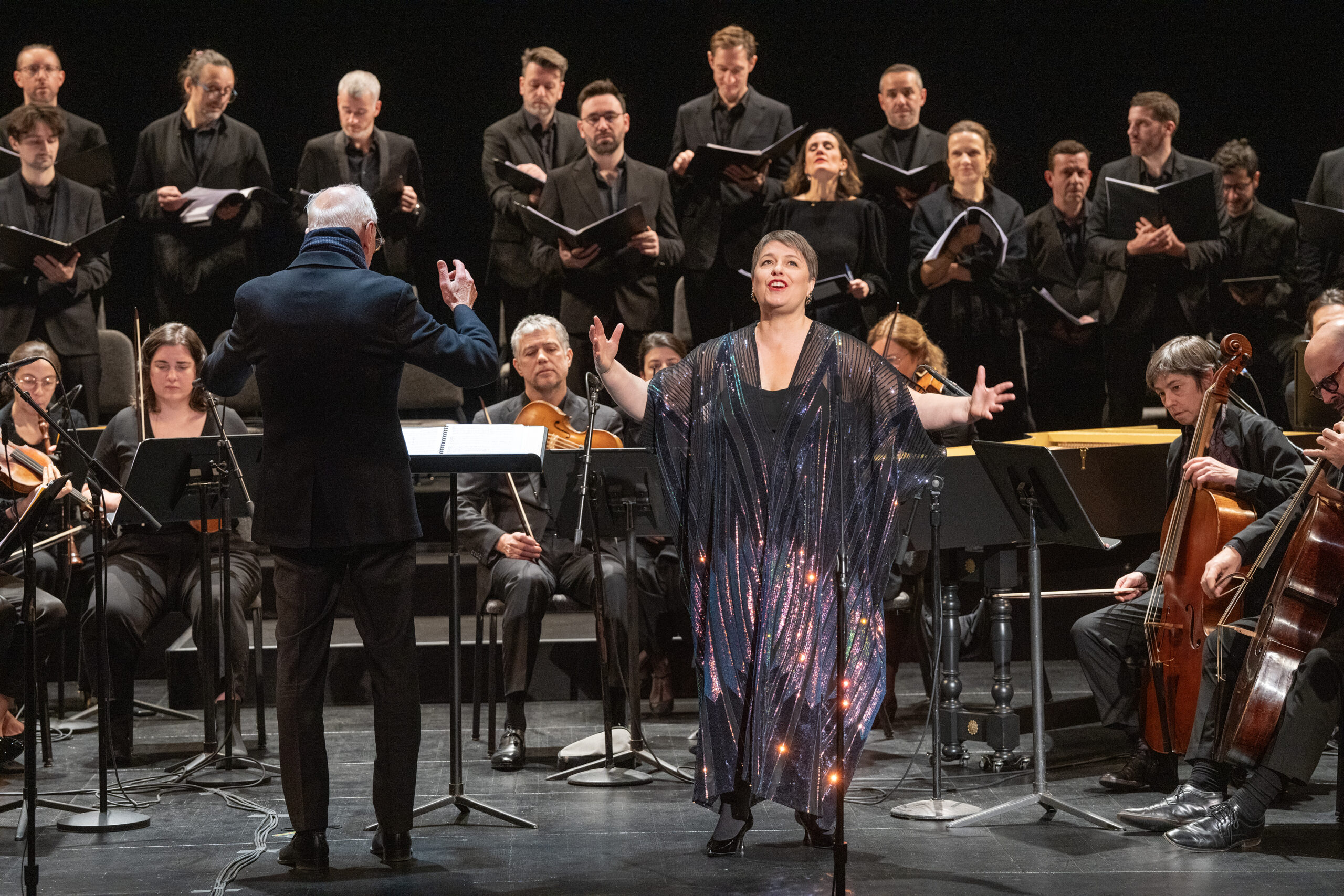
Jordi Savall and William Christie, 80 and 77 respectively, stand as the two senior masters whose recordings and appearances have done the most over the past decades to build a healthy local enthusiasm for pre-Classical music.
While seasonally-awkward streams of Messiah abound, Trove Thursday turns instead to Berlioz’s exquisite L’Enfance du Christ from francophone forces including Stéphanie d’ Oustrac, Bernard Richter, Edwin Crossley-Mercer and Nicolas Testé (for once, sans sa femme).
This week’s “Trove Thursday” offers Benjamin Britten’s Death in Venice featuring Anthony Rolfe Johnson.
Wednesday brought Christopher Alden’s grimly dark and violent take on Handel’s Aci, Galatea e Polifemo at National Sawdust.
Notable purveyor of mayhem and infanticide Medea has lately been missing from the local operatic scene, but Sunday afternoon sections of the recently renovated Alice Tully Hall were singed by Canadian soprano Dominique Labelle’s blazing incarnation of the Greek sorceress.
Mark Morris’ staging of Acis and Galatea at Lincoln Center is everything good about summer condensed into two hours.
Lincoln Center hosted two milestones this week.
I can think of no other case that resembles Handel’s complex relationship to the story—derived from Ovid’s Metamorphoses—of the ill-fated love between the shepherd Acis and the sea nymph Galatea.
That’s what it must have been like in 1726 London when Handel composed Alessandro for perhaps the three most famous (and expensive) singers of the day.
I could feel my face (to say nothing of my spirits) sink as I opened an envelope from La Cieca containing a new Decca CD to review.
Your feelings about the new Opus Arte DVD of Handel’s Acis and Galatea will have a lot to do with your tolerance for gentle whimsy. As a cultural consumer who tends to gravitate toward the more high-octane, Italianate drama of a Verdi overture or a Real Housewives of New Jersey hair-pull, I do my best…
Tell us: Filth or dementia?
Hasten thee to feed another quarter of conversation for The Talk of the Town!
Sign up for our free Newsletter.
Support Parterre Box
Donate to keep opera's liveliest publication free and independent. No paywalls, no institutional backing, no bootlicking.
Get our free newsletter
Opera's top reads delivered to your email weekly…ish.
Join over 100k readers.
The best opera magazine on the web.
Reviews, breaking news, critical essays, and brainrot commentary on opera from those demented enough to love it.
Essentials
Copyright © 2026 Parterre Box.
All rights reserved.
Registration or use of this site constitutes acceptance of our Terms & Conditions and our Privacy Policy. Do Not Sell or Share My Personal Information.
Sign up for Parterre’s free newsletter.
Exclusive opera reviews, commentary, and top reads
delivered to your email weekly…ish.