
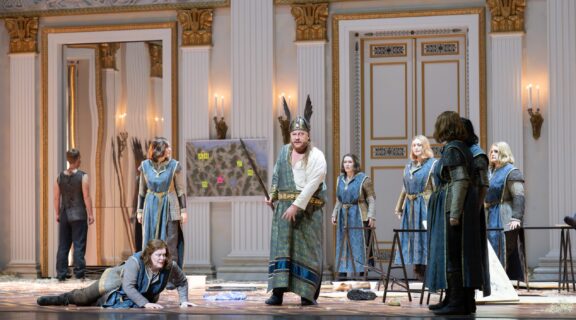
Beyond the valley of the gods
The Bayerische Staatsoper’s Ring cycle scores another triumph with Tobias Kratzer’s take on Die Walküre.
19 pieces since 2008 — at 8 companies, most often at Bayerische Staatsoper.
The Bayerische Staatsoper’s Ring cycle scores another triumph with Tobias Kratzer’s take on Die Walküre.
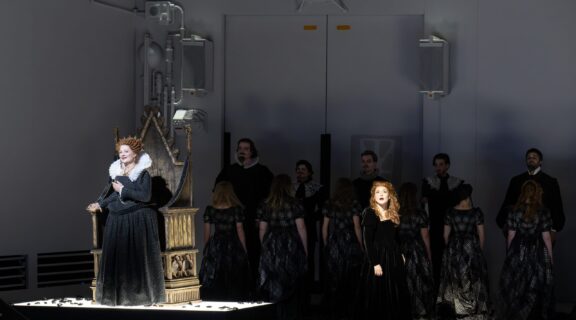
Brett Dean‘s Of One Blood casts a well-trodden Tudor tale in a poignant, new light.

Dmitry Matvienko led a performance of Mussorgsky and Shostakovich at La Monnaie with meticulous rectitude.
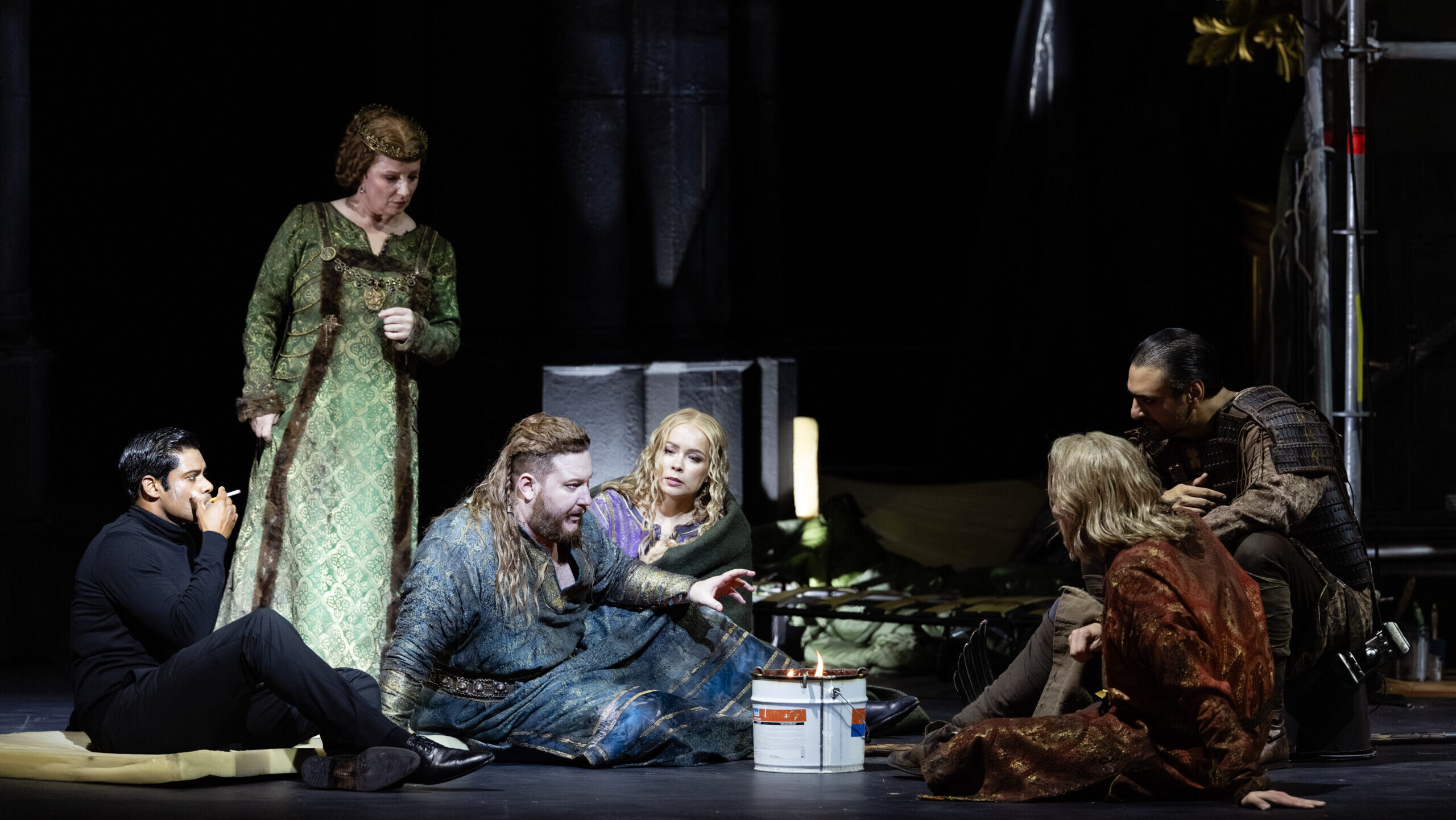
Tobias Kratzer‘s Das Rheingold in Munich kicks off a Ring for the post-secular age
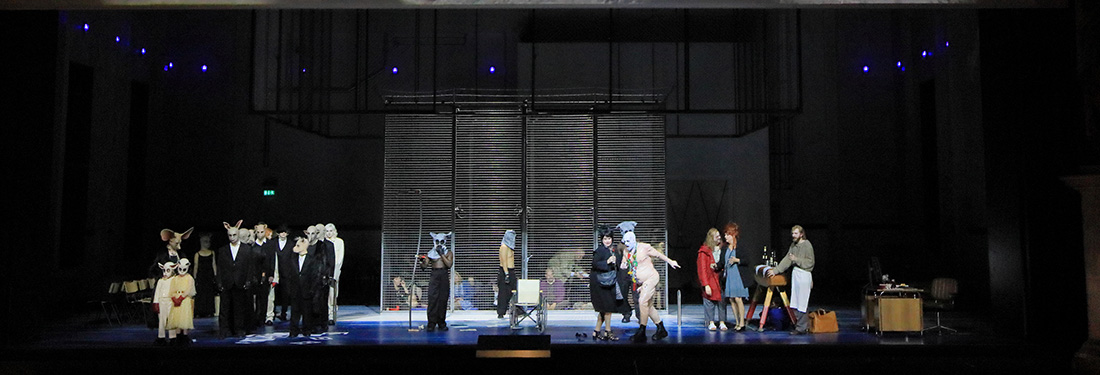
As a burgeoning opera fan, I relied on YouTube to connect me with the art form.

Later this month Asmik Grigorian will star in Covent Garden’s new Jenufa, which Trove Thursday anticipates presenting the acclaimed Lithuanian soprano in a broadcast from 2014 of Tchaikovsky’s rare opera The Enchantress (Charodeyka).
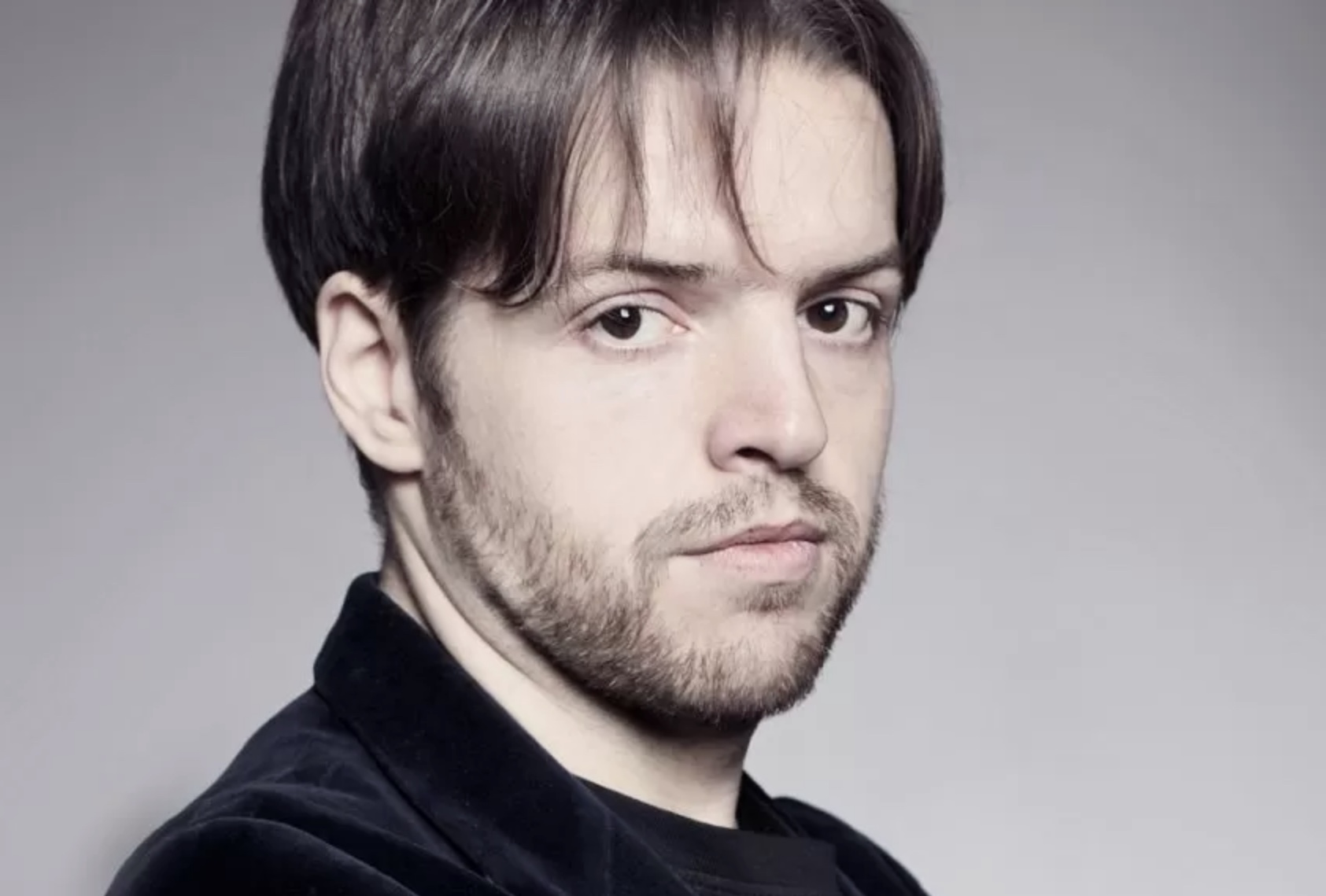
A brace of Handel operas at the George Enescu International Festival.
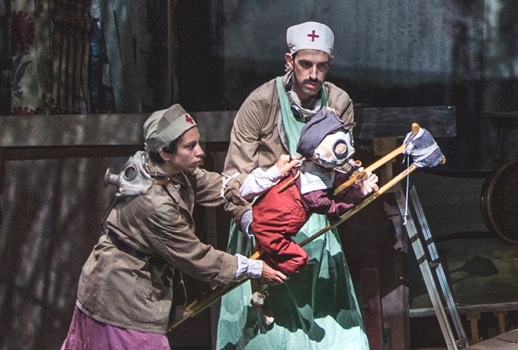
Alban Berg’s compact yet potent oeuvre has long played an outsized role in shaping my understanding of music’s aesthetic evolution.
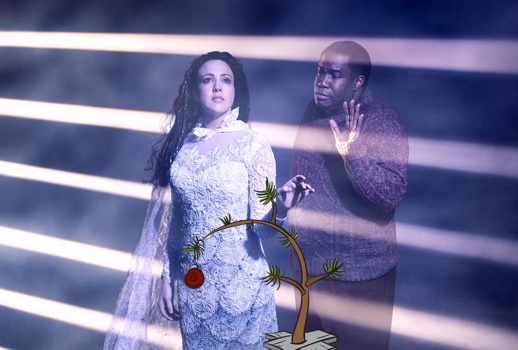
With Christmas Eve 2016 falling on a Saturday, the Met offers contrasting orchestral splendors at noon and 6 p.m.
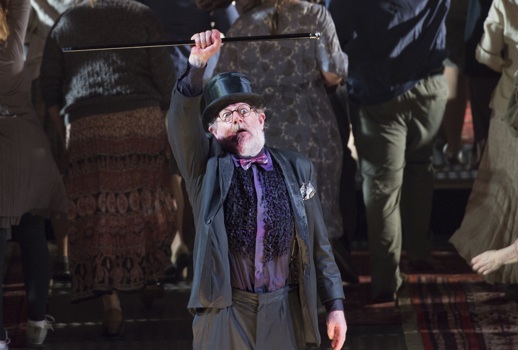
As is happening increasingly in opera productions today (e.g., the Rosenkavalier in Stuttgart), the action of Moses und Aron at the Komische Oper begins some minutes before the music does.

James Levine turns 72 this year. Even though his health has improved considerably in the past year and he may continue to conduct for a decade or more, it seems inevitable that he will step down as the Met’s Music Director sometime in the next few years to assume the role of Conductor Laureate.
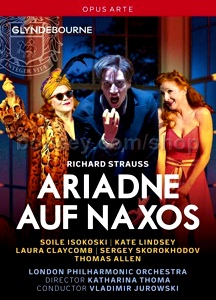
The appeal of Ariadne auf Naxos (for me anyway) is the acknowledgment that underneath it all, opera (and all other forms of “high art”) is really show business.
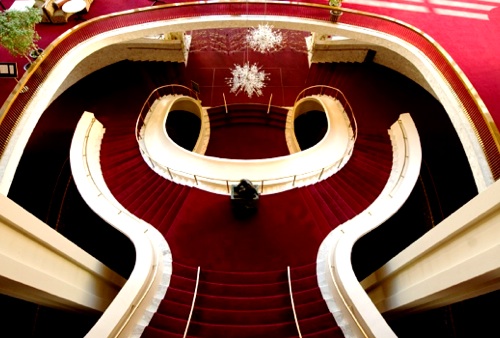
The Met’s financial challenges are not meteorological, demographic, or cyclical; they are structural.
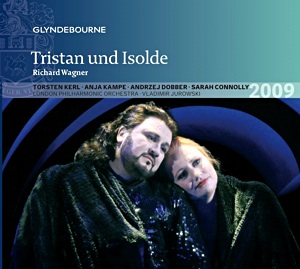
The finer performances of Tristan und Isolde have a way of sounding like a four-hour improvisation, the fruit of a single moment of inspiration that makes one forget how emotionally manipulative and painstakingly crafted the music really is.
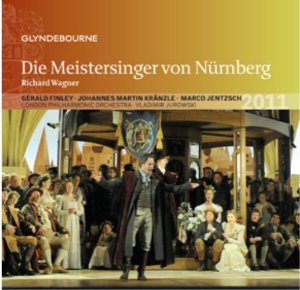
Beneath the pageantry, the paeans to German art and the self-referential allusions to the creative process, Die Meistersinger is a story about a community and human qualities like love, friendship, envy and hatred.

The simple fable at the heart of Die Frau ohne Schatten shouldn’t be difficult to parse, but Hugo von Hofmannsthal’s libretto juggles its vaguely Jungian, vaguely Arabian Nights symbolitry as if with intent to mystify and bewilder.
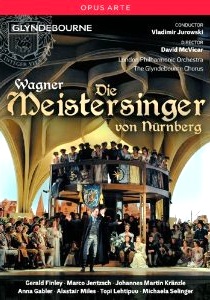
Opera’s Scottish enfant terrible David McVicar has applied his considerable skills in this 2011 Glyndebourne production of Die Meistersinger, the result being a refreshing new take on a familiar warhorse.
The three Brownies applying the final touches to a tapestry – the show curtain – depicting an idyllic landscape of Windsor before the music begins are the first indication that this productionof Falstaff does not take place in Elizabethan times.

The days are getting shorter, but you can keep the prattle going this fall’s Talk of the Town! You will, you can, you must join in the discussion about: Great mezzo soprano performances (October),
Gained in translation (November), Teleport me back to… (December).
Exclusive opera reviews, commentary, and top reads
delivered to your email weekly…ish.