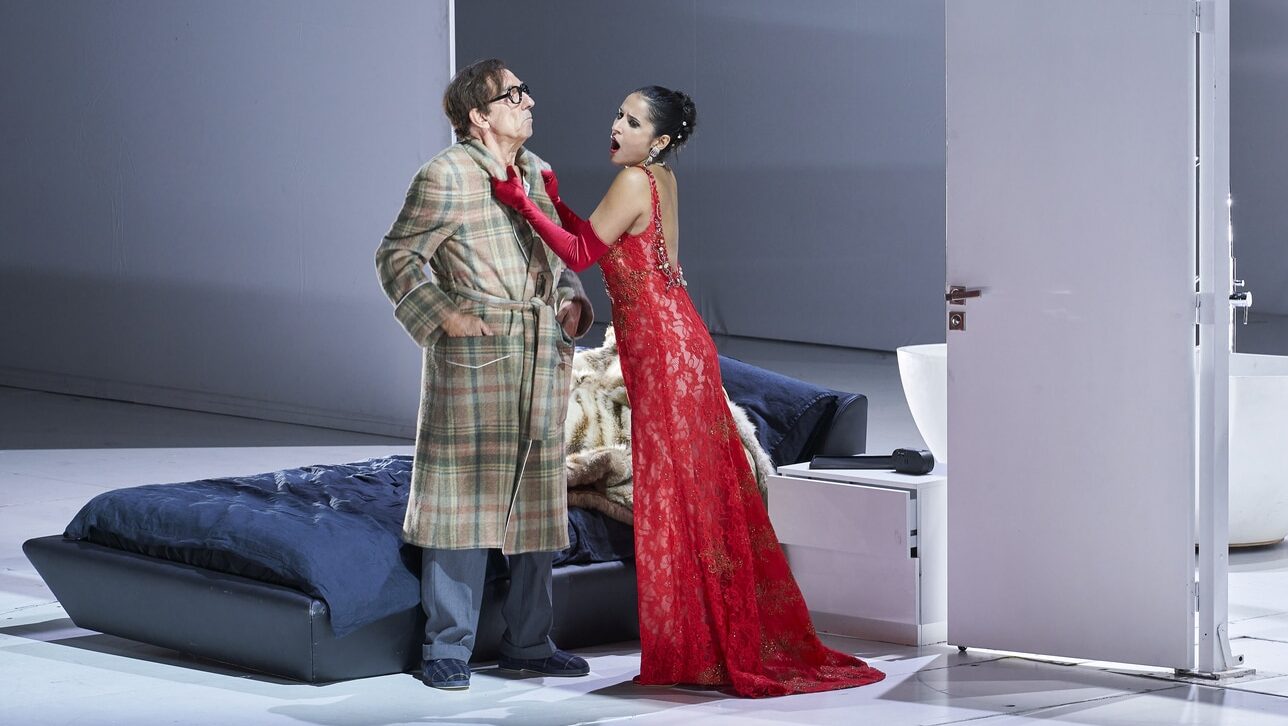
It may be blasphemy to admit—particularly this month—but usually I can either take or leave Donizetti’s serious operas. However, I love the composer in comic mode, so Chris’s Cache runs with that sentiment in offering three recordings of Don Pasquale.
“What would you do if the world you knew was suddenly gone and you were thrown into the deepest abyss stripped of all humanity? Would you fight to remember who you were?”
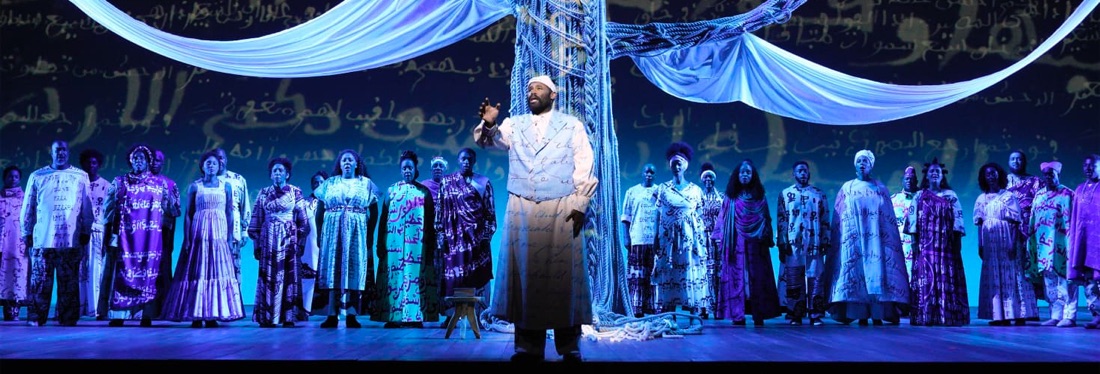
The audience greeted the opening night of Omar with more genuine enthusiasm than I have ever seen at Los Angeles Opera.
The Met’s recent Ariadne auf Naxos and Elektra combo left me wanting more and more Richard Strauss, so Trove Thursday offers a complete Capriccio with Jonas Kaufmann (his one-and-only Flamand) and Christopher Maltman vying for Soile Isokoski.
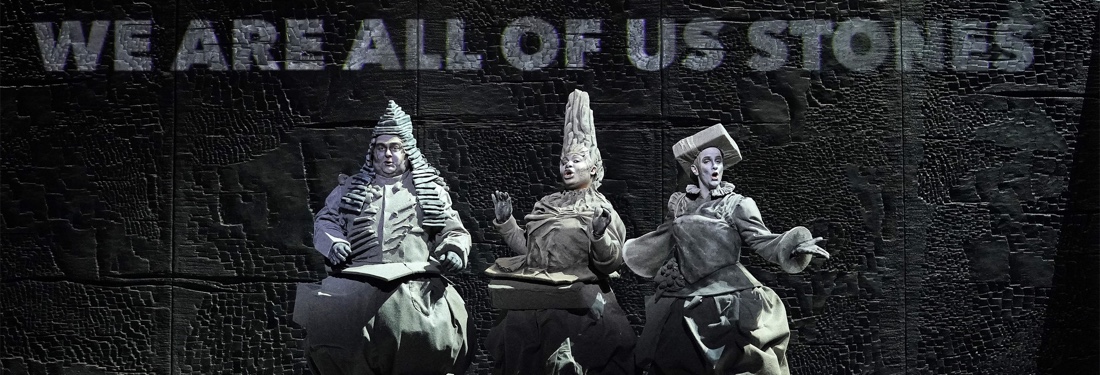
No, we don’t really need another “Orpheus” opera. Or, rather, we don’t need this one.
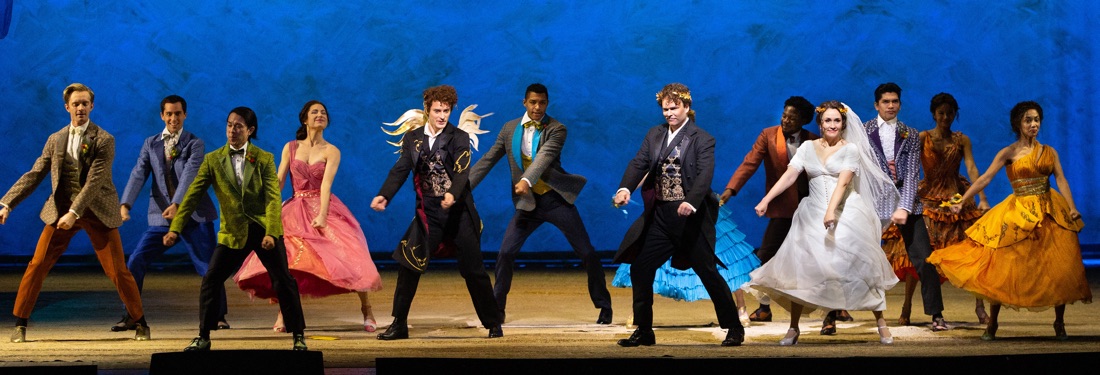
A special program note for Saturday night’s performance of Matthew Aucoin’s new opera Eurydice pointed to a rare convergence of three MacArthur Grant fellows in its creation and staging.
Rossini’s Semiramide is a highly original and imaginative work of theater that impresses for its creative and beautifully scored orchestration, incisive recitatives and ensembles, and theatrically intriguing characters.
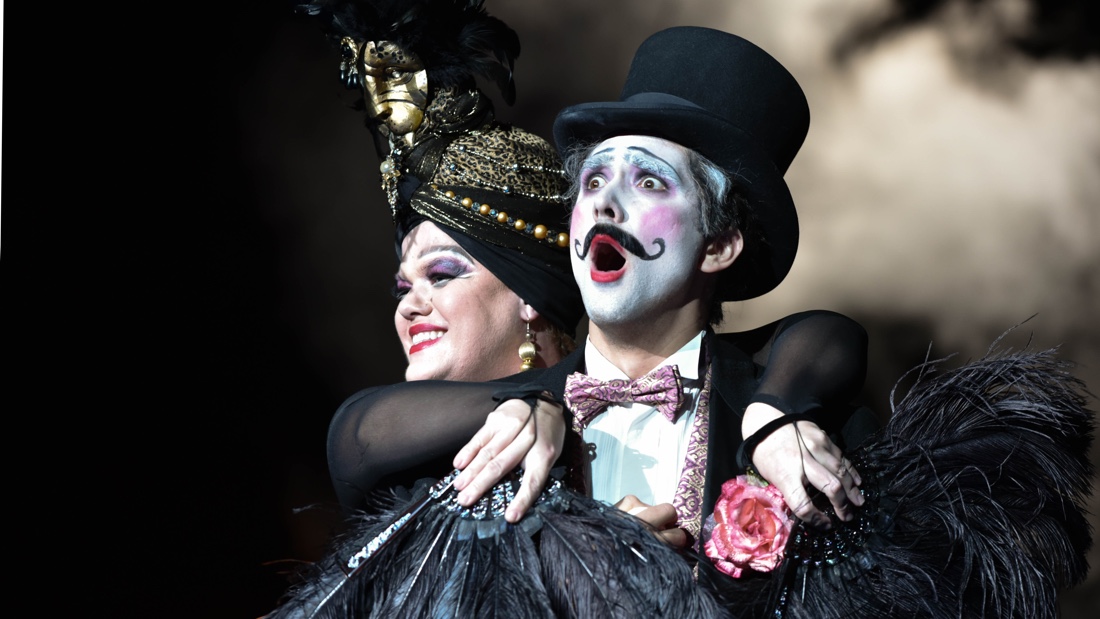
Opera Philadelphia’s Love of Three Oranges is never less than extravagantly entertaining theater.
Capriccio skates along on a fine line between a fascinating idea-driven debate about the purpose of art in the wider world and a rather fussy narrow debate about text and music interesting only to those interested in opera as theatre.
Our Doyenne demonstrated her omniscience once again by sending me a DVD of Rimsky Korsakov’s Le Coq d’Or (Zolotoy Petushok) to review. I’m with musicologist Richard Taruskin who stated that Rimsky Korsakov was “perhaps the most underrated composer of all time” (and I’m sure his editor insisted on including the “perhaps”).
The premiere of Mary Zimmerman’s production of Giacomo Gioachino Rossini’s Armida was arguably the most controversial event of the Metropolitan Opera’s 2009-2010 season. The performances represented Armida’s first run at the Metropolitan Opera and had been commissioned at the behest of mega-diva Renée Fleming. The soprano had scored a triumph in concert presentations of the…
1817 was a fertile and diverse time for 26 year old Gioachino Rossini. It opened with his last true opera buffa, La Cenerentola, continued with his most important semiseria, La gazza ladra, and ended with two operas, which, although both nominally belonging to the seria genre, could not be more different from each other.
Our Own Gualtier Maldè (right) escaped today’s Armida dress rehearsal at the Met with his wits intact. He reports:
Tell us: Filth or dementia?
Hasten thee to feed another quarter of conversation for The Talk of the Town!
Sign up for our free Newsletter.
Support Parterre Box
Donate to keep opera's liveliest publication free and independent. No paywalls, no institutional backing, no bootlicking.
Get our free newsletter
Opera's top reads delivered to your email weekly…ish.
Join over 100k readers.
The best opera magazine on the web.
Reviews, breaking news, critical essays, and brainrot commentary on opera from those demented enough to love it.
Essentials
Copyright © 2026 Parterre Box.
All rights reserved.
Registration or use of this site constitutes acceptance of our Terms & Conditions and our Privacy Policy.
Sign up for Parterre’s free newsletter.
Exclusive opera reviews, commentary, and top reads
delivered to your email weekly…ish.