Performance Reviews
Reviews of operatic, vocal, and classical performances at the Metropolitan Opera, Carnegie Hall, all across America, and around the world.
Reviews of operatic, vocal, and classical performances at the Metropolitan Opera, Carnegie Hall, all across America, and around the world.

For Philadelphia opera lovers, October means the Giargiari Bel Canto Competition—a staple event for the Academy of Vocal Arts, and a pipeline for the public to discover some of their strongest resident artists.

In Handel’s Rodelinda, a usurped monarch, believed dead, returns to avenge his deposition and reclaim the woman he loves.
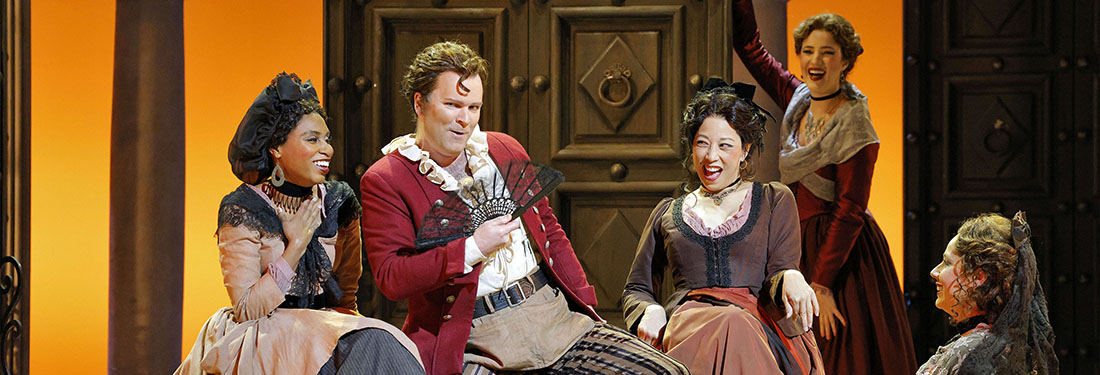
I hate to say I nearly cringe at the thought of Gioachino Rossini’s Il Barbiere di Siviglia.

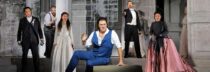
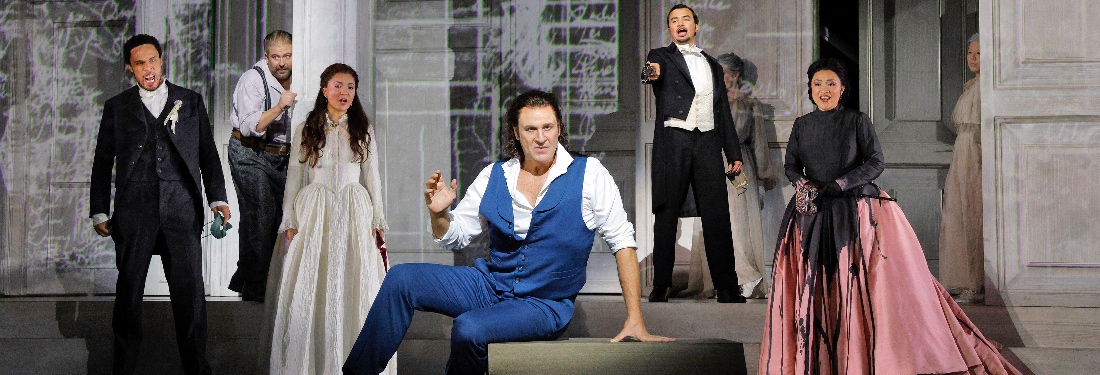
On October 20th, a wet but warmish Friday night, the Metropolitan Opera opened this season’s revival of Verdi’s Un Ballo in Maschera in David Alden’s 2012 production.
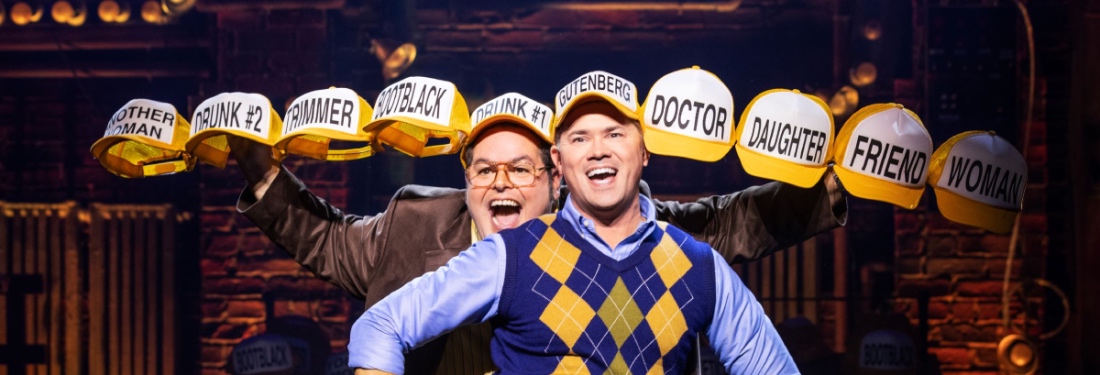
You might wonder how this slimly plotted show, which had a brief Off-Broadway run in 2007 before fading into relative obscurity, ended up occupying a piece of prime Main Stem real estate nearly two decades later. To that end, I have four words: Josh Gad. Andrew Rannells.
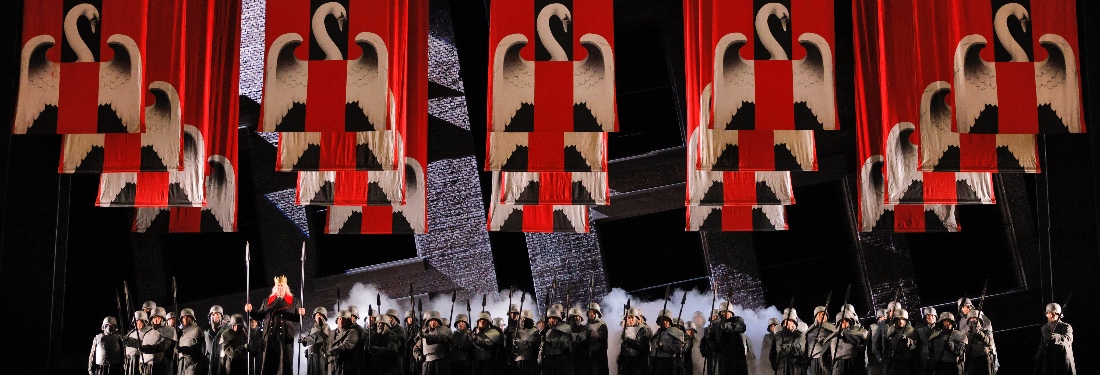
All in all, this was truly a superb achievement for San Francisco Opera and an auspicious first chapter in the Wagner opera journey with Eun Sun Kim.

Suddenly, here it was, and I wondered if it was a dream or an illusion.


The Hunt’s strongest argument for the possibility of growth, connection, and agency even under adverse and restrictive circumstances lay, of course, in its music, in which three individual voices were able to combine and transform into something infinitely rich and strange.

It’s autumn in New York, baby.
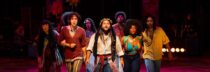

Wanna feel old? Hair, “The American Tribal Love-Rock Musical,” as it styled itself, has its 56th birthday this month.
I love it, truly, just not that much.

It’s a warning that could strike fear in even the heartiest theatergoer.
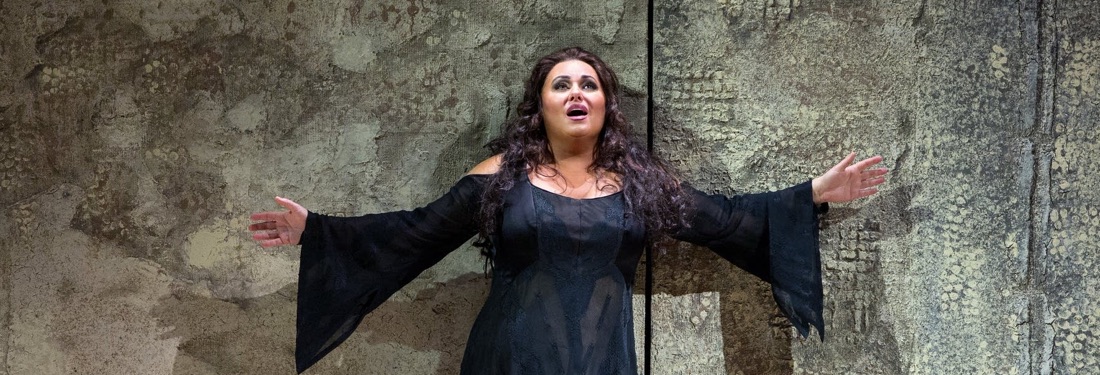
How appropriate that the Met should present this supposedly “Jewish” opera after many in the audience had just spent twelve days immersed in the genuine article over the High Holy Days.

Instead of following the story, we in the audience spend most of the evening thinking “What?? Why is that happening?”


One got a sense that the Met and the maestro directed most of the rehearsal and preparation toward the opening night premiere of the Heggie opus
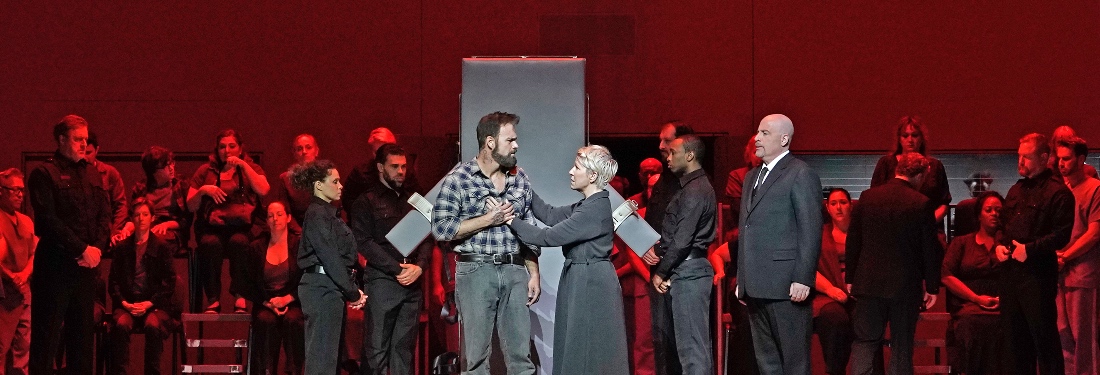
“None of that sentimental crap, okay?”
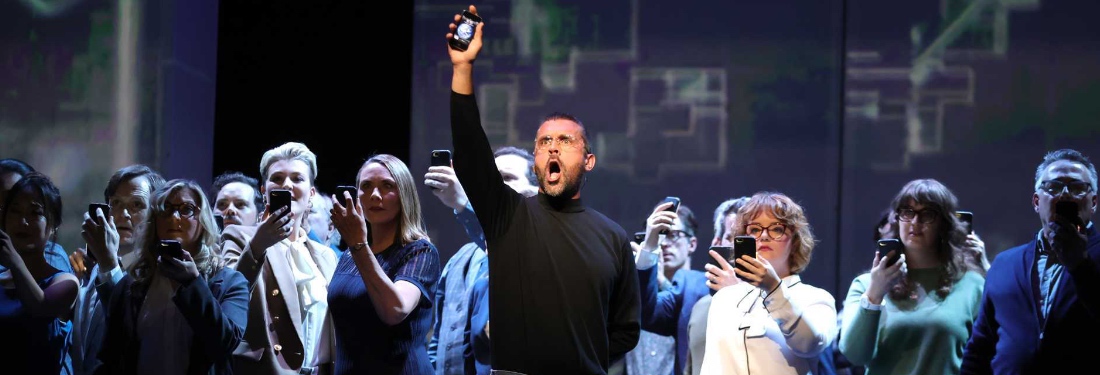
Bay Area composer Mason Bates’s and librettist Mark Campbell’s contemporary opera about the life of the tech mogul Steve Jobs came home “to the place where it all began” in spectacular fashion
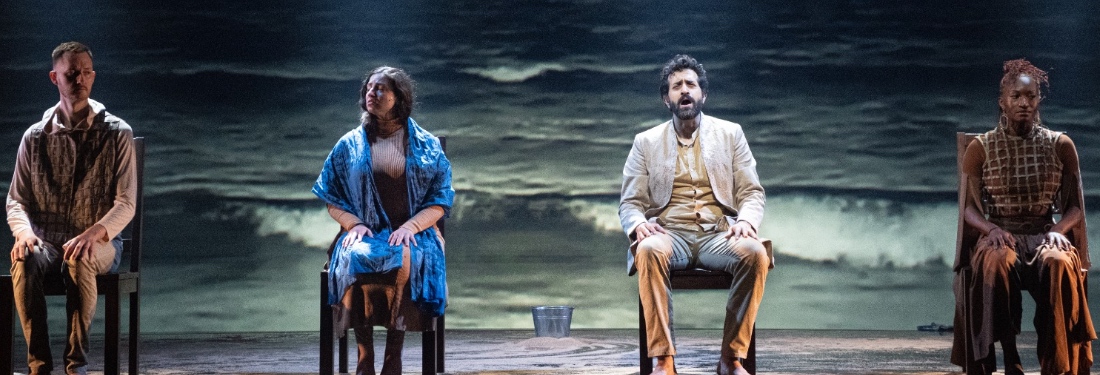
Rather than focusing on a narrative, Unholy Wars explores a series of timeless yet current themes: war, destruction, alienation, and what it means to be perceived as outsider—particularly from the Middle East—in the context of a violent world.


German opera-director Claus Guth has reimagined Schwanengesang as a series of scarred soldier’s visions in Doppelgänger, showing this week in at the Park Avenue Armory.

In sum: not a perfect Simon Boccanegra—is there such a thing?—but a grand and often great one.

David Devan may be leaving the company, but there can be no better living tribute to him than this extraordinary work, which in 90 minutes gives us everything we could want from a new opera

Phil Chan described his point of departure for reimagining Orientalist works as the question, “what else could this be?”

Power struggles, prejudice, feuds and revenge abound in San Francisco at the moment.

The great archetypal image of an opera singer is a towering Wagnerian soprano who shatters entire panes of glass the moment she opens her mouth.
Tell us: What’s your favorite Verdi performance?
Hasten thee to feed another quarter of conversation for The Talk of the Town!