Kuda, woulda, shoulda
A strong revival of Eugene Onegin at the Metropolitan Opera and a recital by Benjamin Bernheim offered the chance to hear “Kuda, kuda” twice in two days.
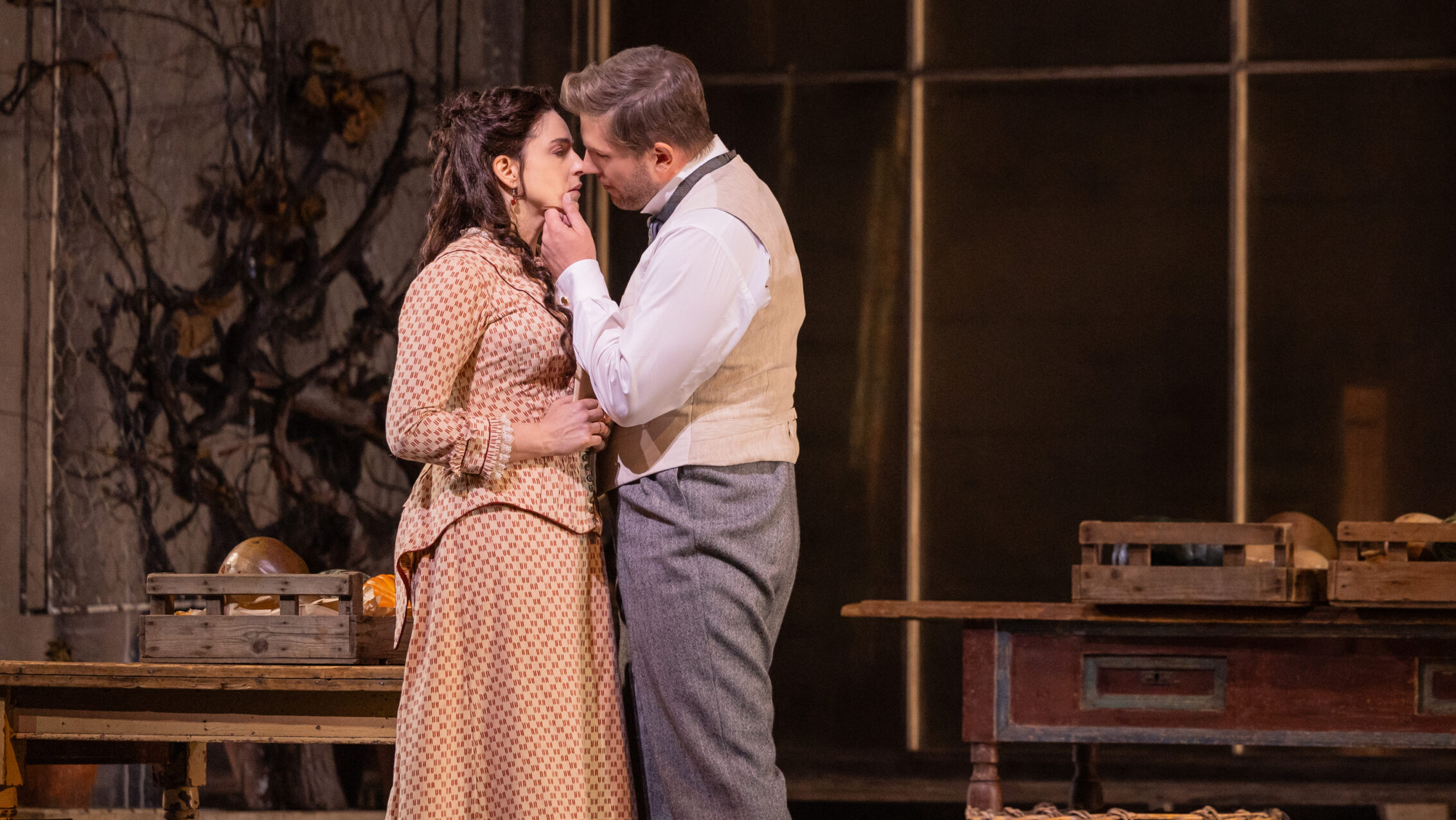
Asmik Grigorian as Tatiana and Iurii Samoilov in the title role of Tchaikovsky’s “Eugene Onegin.” Photo: Evan Zimmerman / Met Opera
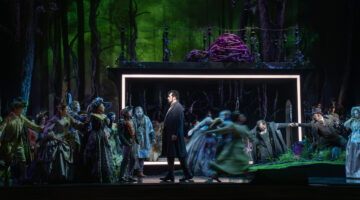
By a remarkable coincidence, “Kuda, kuda,” Lensky’s achingly poignant aria from Tchaikovsky’s Eugene Onegin, was sung on consecutive nights at Lincoln Center this week by France’s leading tenors. On Monday, Stanislas de Barbeyrac, returning to the Met after six years, offered an unusually nuanced rendition of “Kuda, kuda,” a highpoint of the company’s first performance of Deborah Warner’s uneven production since 2022. Across 65th street at Alice Tully Hall on Tuesday evening, Benjamin Bernheim, absent from the Met both this season and next, included Lensky’s aria in a marvelously enjoyable, if poorly produced recital accompanied by Carrie-Ann Matheson, his frequent collaborator.
The Met revival, splendidly led by debuting conductor Timur Zangiev, has been keenly anticipated for Asmik Grigorian’s first appearances since her acclaimed though controversial debut in 2024 as Cio-Cio-San. The Lithuanian soprano’s Tatiana did not disappoint as she limned a searing portrait of a woman moving from embarrassed yearning to stoic resignation caused by her doomed love for Onegin. In a mesmerizing Letter Scene, Grigorian’s bright, cool voice vividly conveyed the shy girl’s rapturous romanticizing of a man she scarcely knows yet is inexorably drawn to.
Has there ever been a more uncomfortable Tatiana as her rowdy name-day celebration mortified the shy girl at every turn? Her transformation into the glamourous Princess Gremina proved absolutely convincing though Warner’s choice to have Tatiana engage in over-the-top PDA with her husband during his aria once again felt like a serious miscalculation. That Grigorian’s Tatiana read slightly older than Iurii Samoilov’s youthful Onegin added an unexpectedly illuminating note to their tortured entanglement. Grigorian, who in December had been so impressive in a concert version of the opera’s final scene with Thomas Hampson, was again riveting as she fought off Samoilov with steely determination parting from him with a tender, if passionless kiss that exactly mirrored the one he gave her in the first Act.
The Ukrainian baritone, replacing the originally announced Igor Golovatenko, is a veteran Onegin who played his part as more feckless and less cruel than others have. His mellow, medium-sized voice worked best in the first Act; later, it lacked the desperate edge needed for his slow-dawning realization that he’d screwed up his life and lost the woman he should have cherished. One might have assumed that he lacked top notes as he skipped the alternative high ending to Onegin’s first aria that nearly every baritone takes. However, his potent high notes readily conveyed his anguished desolation at the final curtain.
As his friend, then dueling victim, de Barbeyrac began erratically in his soulful song to Olga in which he strained at every high note. However, at the second-Act ball, the tenor deftly brought out the poet’s lethally temperamental side as he sputtered violently at Onegin and then launched the crushing ensemble with heart-stopping eloquence.
Ukrainian bass-baritone Alexander Tsymbalyuk, an occasional Met guest since 2010, had never before made such a memorable impression as he did in his grandly eloquent rendition of Gremin’s aria. It brought down the house more loudly than in any Onegin I’ve attended at the Met since Yevgeny Nesterenko sang the role with the visiting Bolshoi Opera in 1991. Tony Stevenson once again made something lovely of Triquet’s tribute verses. Maria Barakova’s lush Olga towered over everyone–physically at least, while Elena Zaremba, a past Met Olga, and Larissa Diadkova opened the evening with a wobble-fest as Larina and Filippyevna. In his debut season, Ben Brady stood out once more as the Captain. and it’s always good to hear Richard Bernstein who particularly stood out as Zaretski.
The rising Timur Zangiev brought a thrilling urgency to Tchaikovsky’s stormy work yet sensitively tamed his forces so that both Grigorian and de Barbeyrac could take their time in their showcase scenes. This Russian conductor especially made the dance sequences bounce with infectious energy, so much so that I wished he could revive Iolanta at the Met accompanied by The Nutcracker, its original partner.
This easily recommendable Onegin will be transmitted in HD to theaters worldwide on 2 May, the third time for this production. The first in 2013, when the production was new, featured the flawed pairing of Anna Netrebko and Mariusz Kwiecien: she still finding her way in a role she never coveted, he small-scaled next to her. But Netrebko’s superb outing opposite Peter Mattei in 2017 was much more satisfying.
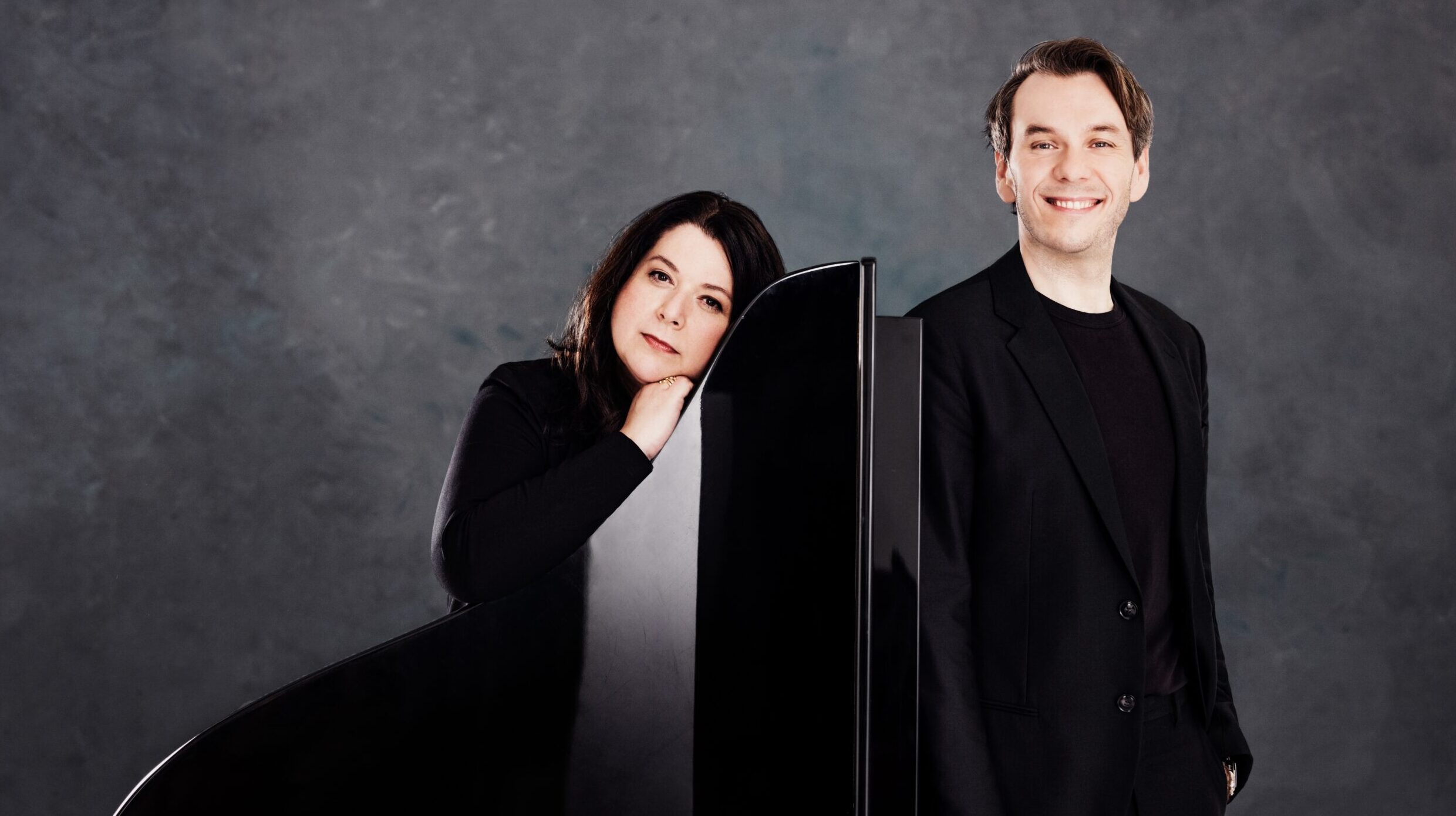
Benjamin Bernheim and Carrie-Ann Matheson / Photo courtesy of Columbia Artist Management
Though the tenor was in top form, Benjamin Bernheim’s recital the following evening was a muddled affair. He performed a somewhat different program in early February at nearby Princeton University at a sold-out concert that had been announced nearly a year earlier. The Alice Tully Hall date instead turned up on social media much later and was poorly advertised. As a result, the balcony was closed and the orchestra section less-than-filled. Some who had bought balcony seats were told to pick up their new tickets at the box office, but I observed others who to their consternation were turned back by the ticket-scanners and sent up grumbling to the ticket window for an exchange.
The worst faux pas, however, was the complete absence of any information about the concert’s selections–not even a single Xeroxed sheet or a dreaded QR code! Bernheim, who spoke at the beginning of the concert using a microphone, must have learned about his audience’s lack of programs during the intermission; he then introduced each number of the second half. This was particularly helpful as that part of the concert included material less well-known than the familiar Duparc songs and operatic arias which made up the first half.
Bernheim’s suavely easy demeanor and obvious affection for Matheson added to a “love-in” atmosphere that began with the wildly enthusiastic applause that greeted the pair. With closed eyes and ardent gestures, he wove a bewitching spell with his opening Duparc set of “L’Invitation au voyage,” “Chanson triste,” and “Phidylé” endowing them with beguiling soft voix mixte high notes. Though advocates argue that Italian is the ideal language for singing, I can think of few pleasures that can compare with hearing French sung as exquisitely as it was all evening by Bernheim. The lack of sung texts was only slightly ameliorated by his enviable diction throughout—whether French or Italian (I can’t speak for his Russian), every word was easily understandable.
Instead of the Chausson, Mompou, Turina, and Ginastera that he offered in Princeton, Bernheim gifted the audience with arias by Tchaikovsky, Bizet, Gounod and Donizetti. If his version performed with piano in a tuxedo (but with a black, open-collared shirt) lacked the theatrical immediacy of de Barbeyrac’s, Bernheim’s “Kuda, kuda” nonetheless gripped listeners with its hushed intensity. The tenor gave us a preview of his first Don José which will occur in a semi-staging this fall in Monte-Carlo opposite Marina Viotti. As he excels at dreamy romanticism, it may be difficult to imagine the tenor in José’s murderous frenzy, but his earnest Flower Song proved a fine fit.
For each of the other numbers in the first half, Bernheim had moved around easily, but for Nadir’s “Je crois entendre encore” he gripped the piano in a slightly uneasy rendition that embraced the traditional high ending that Bizet didn’t write: personally, I prefer the composer’s original. Thankfully his Gounod selection wasn’t Faust’s “Salut demeure” but Roméo et Juliette’s “Ah! lève-toi, soleil!” which New York audiences must remember from his glorious pairing with Nadine Sierra at the Met two years ago. The aria’s ecstatic climax soared once again, and listeners enthusiastically shouted their approval.
After intermission he began with his least successful aria, “Una furtiva lagrima,” which he performed ably but with a radiant smile that seemed oddly off-putting. He then related a moving anecdote about Ildebrando Pizzetti’s song “I Pastori,” a rarely heard song that has been special to him as long as he has been singing. His hypnotic rendering of it made one long to hear more of Pizzetti’s music. He also clearly relished the three delicious Puccini songs that followed, including “Sole e amore” made up of themes from La bohème and reminding us that Rodolfo is one of his most often performed roles.
The set program ended with three “popular” French (or Belgian) songs including a rapturous “Les feuilles mortes” that couldn’t have been more different from the “Autumn Leaves” sung by Nat King Cole we remember over the titles of the overwrought Joan Crawford melodrama. A triumphant “Quand on n’a que l’Amour” by Jacques Brel inevitably brought the crowd to its feet in a noisy ovation that was amply rewarded by two more arias: first, a passionate “E lucevan le stelle,” previewing his first Cavaradossi in October at the Berlin Staatsoper in a Tosca-lite beside Aleksandra Kurzak and Davide Luciano. But he saved the best for last: an intensely shattering “Pourquoi me reveiller” from Massenet’s Werther, his most acclaimed signature role.
Hint to Maestro Dudamel: the New York Philharmonic should immediately invite Bernheim to bring his Berlioz Faust to Lincoln Center.
NYC tenor doublings will continue when Lawrence Brownlee reprises the Pêcheurs de Perles aria during his “Golden Age” concert with Erin Morley at the 92nd Street Y on 6 May.

Christopher Corwin
Christopher Corwin began writing for parterre box in 2011 under the pen name “DeCaffarrelli.” His work has also appeared in , The New York Times, Musical America, The Observer, San Francisco Classical Voice and BAMNotes. Like many, he came to opera via the Saturday Met Opera broadcasts which he began listening to at age 11. His particular enthusiasm is 17th and 18th century opera. Since 2015 he has curated the weekly podcast Trove Thursday on parterre box presenting live recordings.
-
Topics: alice tully hall, Metropolitan Opera, Review
-
People: Aleksandra Kurzak, Alexander Tsymbalyuk, Anna Netrebko, Asmik Grigorian, Ben Brady, Benjamin Bernheim, Carrie-Ann Matheson, Davide Luciano, Deborah Warner, Elena Zaremba, Erin Morley, Gustavo Dudamel, Igor Golovatenko, Iurii Samoilov, Larissa Diadkova, Lawrence Brownlee, Maria Barakova, Marina Viotti, Mariusz Kwiecie?, Nadine Sierra, Peter Mattei, Richard Bernstein, Stanislas de Barbeyrac, Thomas Hampson, Timur Zangiev, Tony Stevenson, Yevgeny Nesterenko
-
Works: Carmen, Eugene Onegin, Iolanta, Le Damnation de Faust, Les pêcheurs de perles, Roméo et Juliette, The Nutcracker, Tosca, Werther, Yevgeny Onegin
-
Places & Organizations: 92nd Street Y, Alice Tully Hall, Bolshoi Opera, Metropolitan Opera, New York Philharmonic, Staatsoper Berlin