
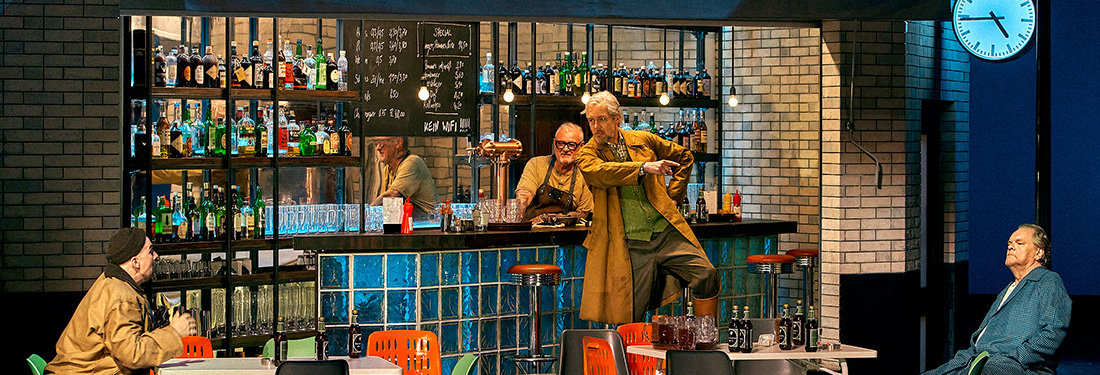
Fjord model T
Dmitri Tcherniakov’s interpretation of Wagner’s Der Fliegende Höllander presents an engrossing character study about Senta and the Dutchman’s struggles against their insular community’s stifling conformism.
23 pieces since 2011 — in 12 roles, at 12 companies, most often at Bayreuth Festival.
Dmitri Tcherniakov’s interpretation of Wagner’s Der Fliegende Höllander presents an engrossing character study about Senta and the Dutchman’s struggles against their insular community’s stifling conformism.
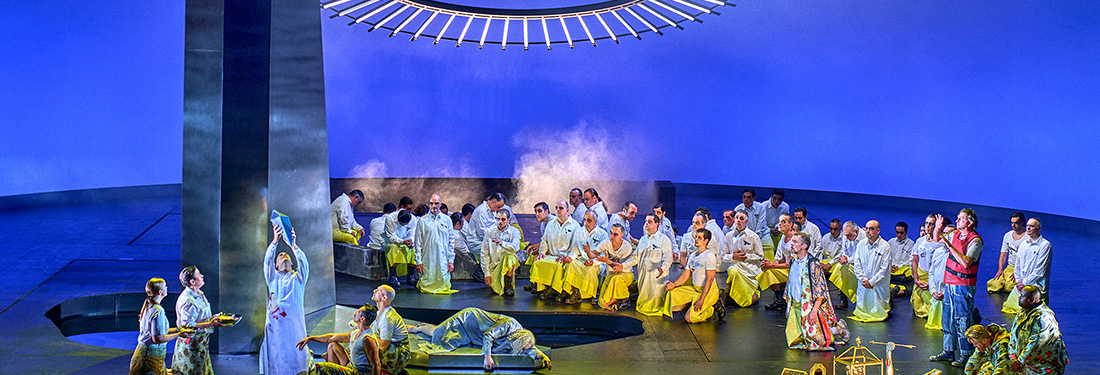
Jay Scheib’s Augmented-Reality Parsifal is a cautionary reminder that technological innovation shouldn’t absolve directors from the exacting work of deriving intelligent and fascinating theater from the source material.
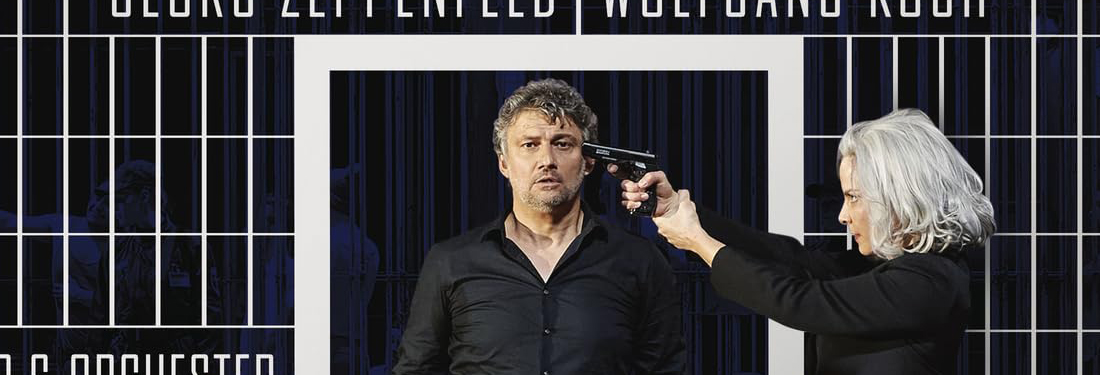
And what a luxury it is to experience this musically outstanding Parsifal with a cast of this caliber!

Matthias Davids‘s reactionary new production of Die Meistersinger von Nürnberg might be fun, but no one comes to Bayreuth for fun.
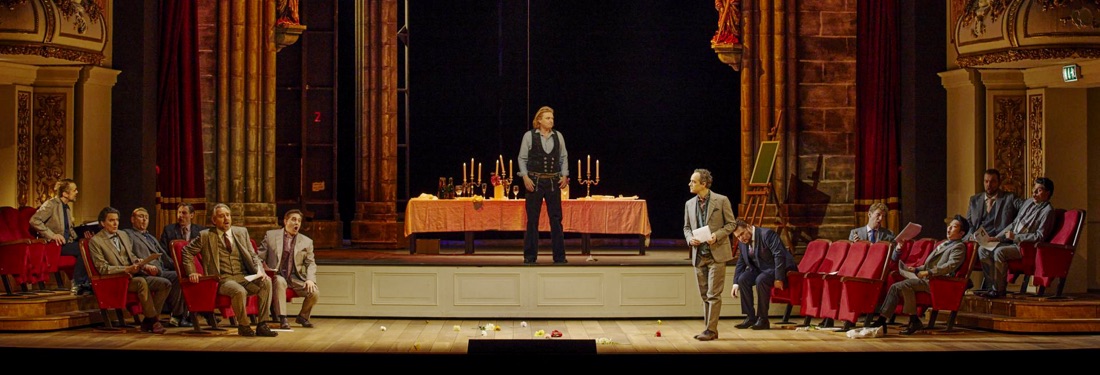
In the opera world, one of the pieces that underwent a multitude of changes in its reception was undoubtedly Richard Wagner’s longest and most Germanic opera, Die Meistersinger von Nürnberg.
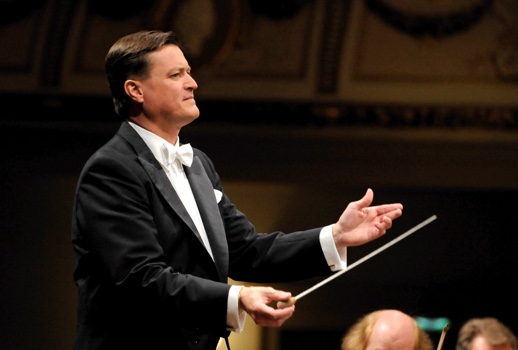
Christian Thielemann is widely regarded as our time’s preeminent master of the Austro-German symphonic ensemble.

In any case, we probably got as good a Tannhäuser cast as could be assembled these days.
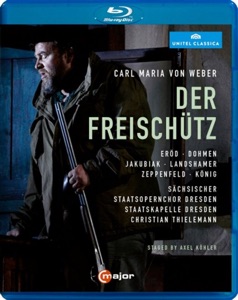
What we really need, some seem to believe, is fuller representation of the 19th century.
Hans Neuenfels‘ new staging of Lohengrin for Bayreuth is the grimmest version of this work I’ve seen. Not that this opera is all bright lights and lollipops, but he gave us a particularly dark take on the work, motivated, in part, by Wagner’s writings at the time of the opera’s composition.
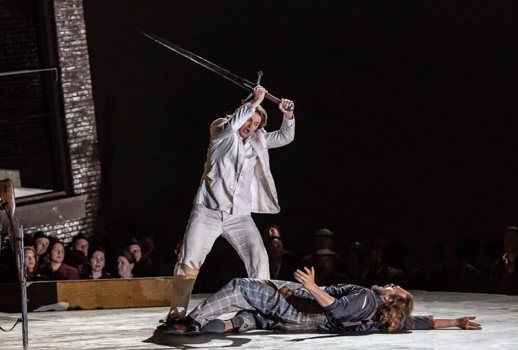
So I just got out of the Lohengrin prima at the ROH and I’m itching to share my thoughts.
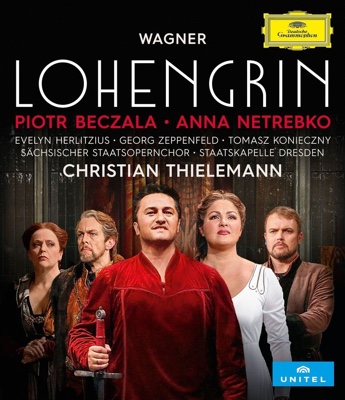
In May of last year tenor Piotr Beczala and soprano Anna Netrebko sang in Lohengrin for the first time under the baton of Christian Thielemann in his home house at the Staatskapelle Dresden.

This Hans Neuenfels staging for the Bayreuth Festival caused quite a stir at its 2010 premiere, but now, with time and distance, how radical is the production?
The moral of Lohengrin is clearly set out: Don’t talk on your wedding night. Even more important, don’t sing. Happily, at Lyric Opera of Chicago, Johan Botha in the title role and Amber Wagner as Elsa of Brabant ignored this advice.
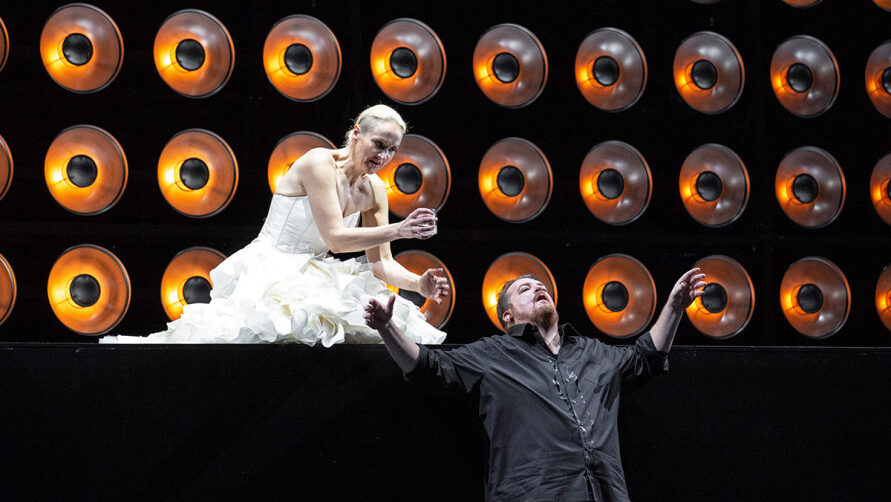
Michael Thalmeier‘s Tristan und Isolde in Berlin asks, how much minimalism is too much minimalism?

Christine Goerke‘s distracted, tentative Isolde turned out to be the least potent feature of what was an otherwise exciting and effective second act of Tristan.
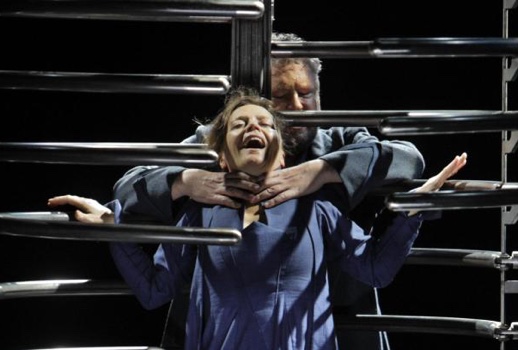
Now we have considered the three “winners” in the Tristan competition, let’s turn to the also-rans, or, to be more optimistic, the runners up.
The finer performances of Tristan und Isolde have a way of sounding like a four-hour improvisation, the fruit of a single moment of inspiration that makes one forget how emotionally manipulative and painstakingly crafted the music really is.
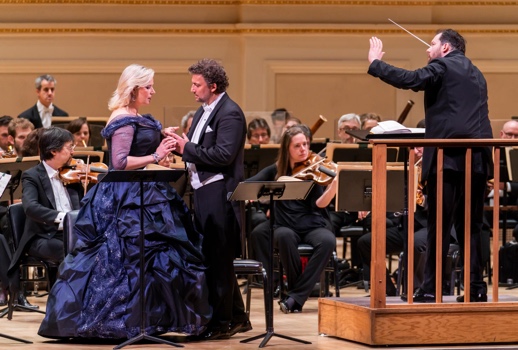
A heady audience paid top price to pack Carnegie Hall Thursday for just 80 minutes of unstaged Wagner.
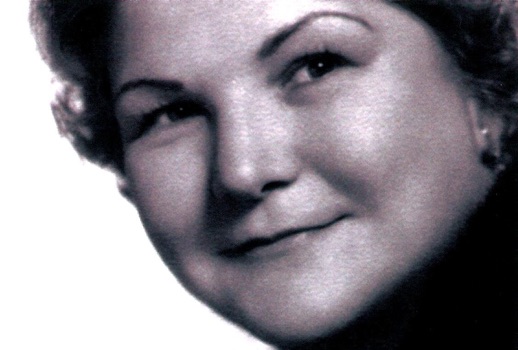
“Trove Thursday” presents a live Tristan 2 concert featuring one of my favorite dramatic sopranos. Gertrude Grob-Prandl.
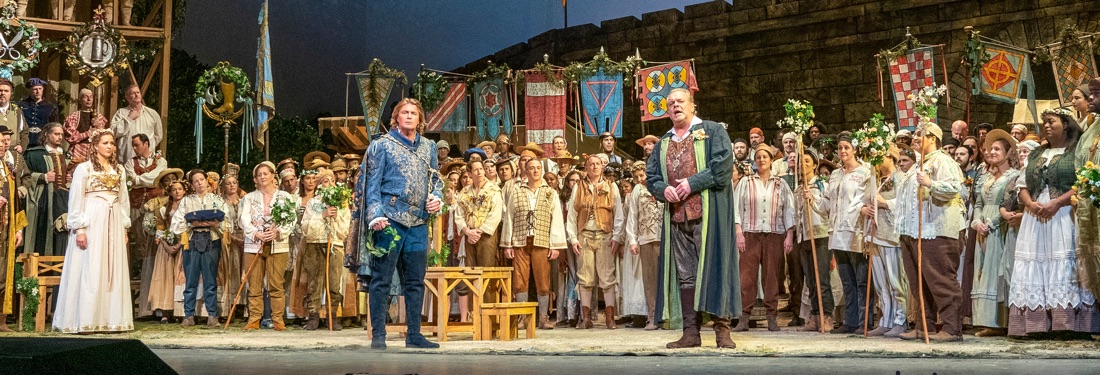
Last night’s cast of Die Meistersinger at the Met, dominated by the irascible, unbeatable duo of Michael Volle and Johannes Martin Kränzle as Sachs and Beckmesser, did much to enliven Otto Schenk’s creaky, nearly 30-year-old production.

What to do with all those glorious short operas: play them alone or find companion pieces?

The days are getting shorter, but you can keep the prattle going this fall’s Talk of the Town! You will, you can, you must join in the discussion about: Great mezzo soprano performances (October),
Gained in translation (November), Teleport me back to… (December).
Exclusive opera reviews, commentary, and top reads
delivered to your email weekly…ish.