
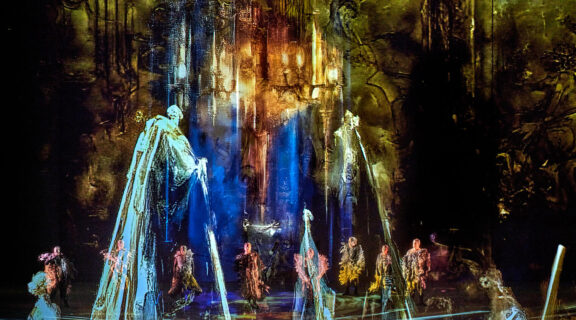
Avert your AIs
Bayreuth’s AI-powered “Ring 100010110” marred a first-rate cast and orchestra with nightmarish visuals and horrid dramaturgy.
21 pieces since 2010 — in 10 roles, at 10 companies, most often at Bayreuth Festival.
Bayreuth’s AI-powered “Ring 100010110” marred a first-rate cast and orchestra with nightmarish visuals and horrid dramaturgy.
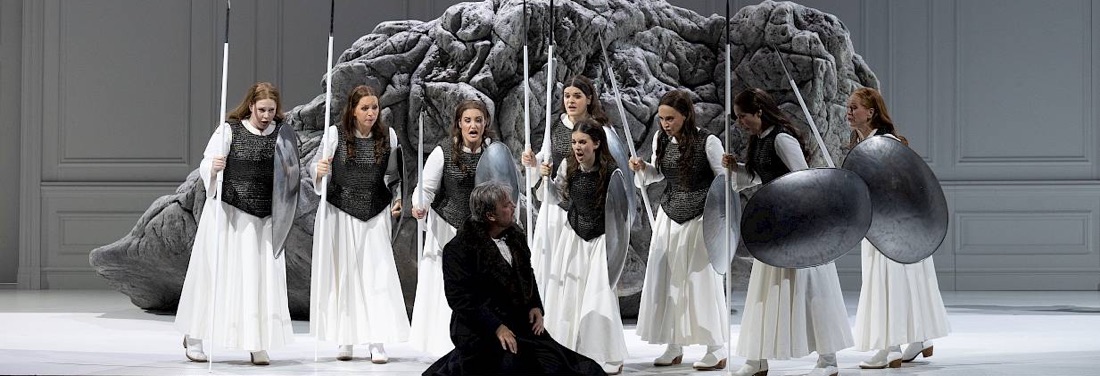
Gianandrea Noseda leads seasoned Wagnerians in Andreas Homoki’s stark production of Die Walküre for Zurich Opera.

The production by Sebastian Baumgarten is the type of regietheater that’s not a rethinking or reconstruction, but just a hot mess.
Fertilization; birth; growth; decay. Eating; digestion; defecation; fermentation; biogas recovery; food production. Wagner’s Tannhäuser is a meditation on the relentless, repetition of cycles that define our existence and man’s insistence on the possibility salvation despite all the biochemical evidence to the contrary.
Directors love directing Wagner, or rather, they love directing their versions of Wagner. They don’t seem to like the operas very much. We all know what we’re going to see if we travel to Bayreuth or Berlin or Stuttgart for an evening: the regietheater world of concept grafted over concept grafted over concept with the […]

A sense of celebration was definitely in the air last Thursday at the Vienna State Opera.
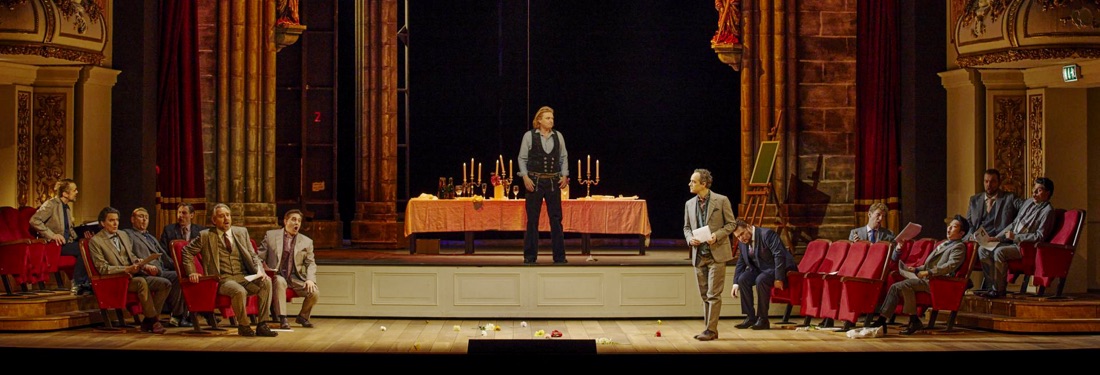
In the opera world, one of the pieces that underwent a multitude of changes in its reception was undoubtedly Richard Wagner’s longest and most Germanic opera, Die Meistersinger von Nürnberg.
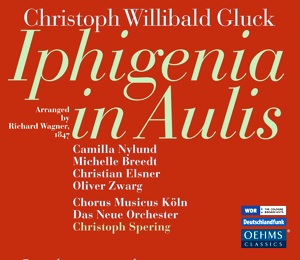
When Richard Wagner reached into the past and revised Gluck’s Iphigénie en Aulide, he went beyond the accepted boundaries of tinkering and more or less created a new work that’s fomented aesthetic debates ever since.
When Hans Von Bülow joked that Rienzi was Meyerbeer’s best opera, he was not very far off the mark. In fact, Rienzi, der Letze der Tribunen, Wagner’s third opera, has all the traits of a typical “grand opéra”: it is divided in five acts, features a historical character or situation, makes large use of the […]
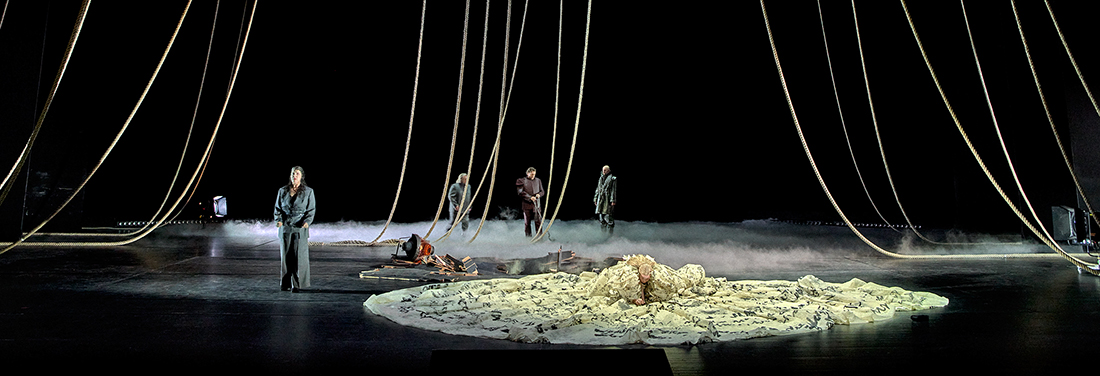
In Nike Wagner’s essay “The Sounding Silence,” the German dramaturge argues that “the longing for deathrepresents the central motif” of her great-grandfather’s opera Tristan und Isolde.

Christine Goerke‘s distracted, tentative Isolde turned out to be the least potent feature of what was an otherwise exciting and effective second act of Tristan.
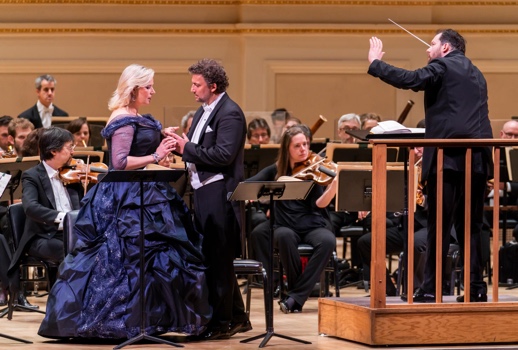
A heady audience paid top price to pack Carnegie Hall Thursday for just 80 minutes of unstaged Wagner.
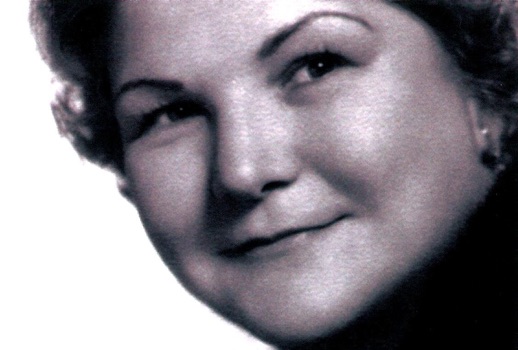
“Trove Thursday” presents a live Tristan 2 concert featuring one of my favorite dramatic sopranos. Gertrude Grob-Prandl.
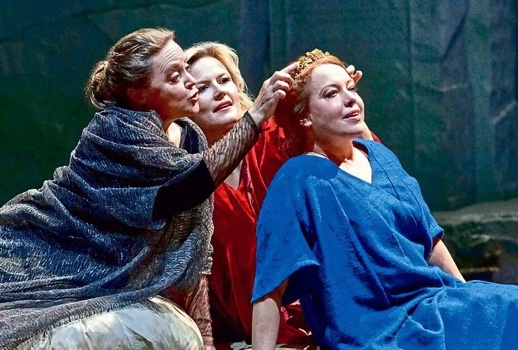
The Wiener Staatsoper commemorated its 150th anniversary with a musically sensational presentation of Richard Strauss’ Die Frau Ohne Schatten.

Günther Groissböck’s ridiculously entertaining Baron Ochs and Sir Simon Rattle’s enthralling conducting soared highest during a mostly excellent revival of Der Rosenkavalier.

A captivating Asmik Grigorian leads the Bayerishce Staatsoper‘s revival of its Holocaust-set Salome.

The days are getting shorter, but you can keep the prattle going this fall’s Talk of the Town! You will, you can, you must join in the discussion about: Great mezzo soprano performances (October),
Gained in translation (November), Teleport me back to… (December).
Exclusive opera reviews, commentary, and top reads
delivered to your email weekly…ish.