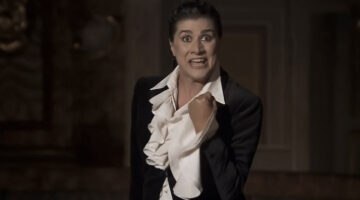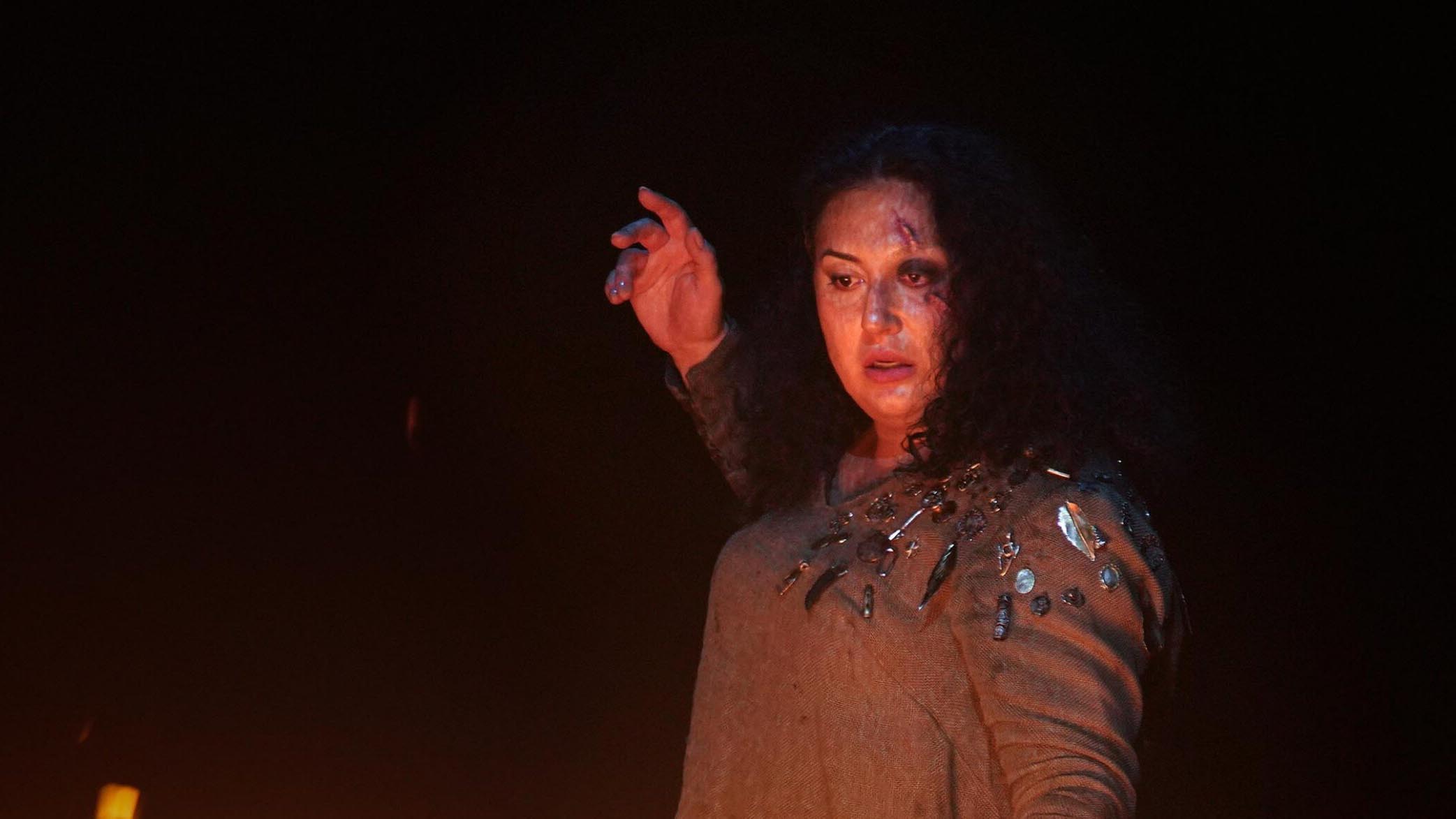
Voi foste, io vi perdei
Christopher Corwin remembers the late soprano Ileana Cotrubas — and shares some archival recordings of her in Bellini, Tchaikovsky, Leoncavallo, and Gounod.
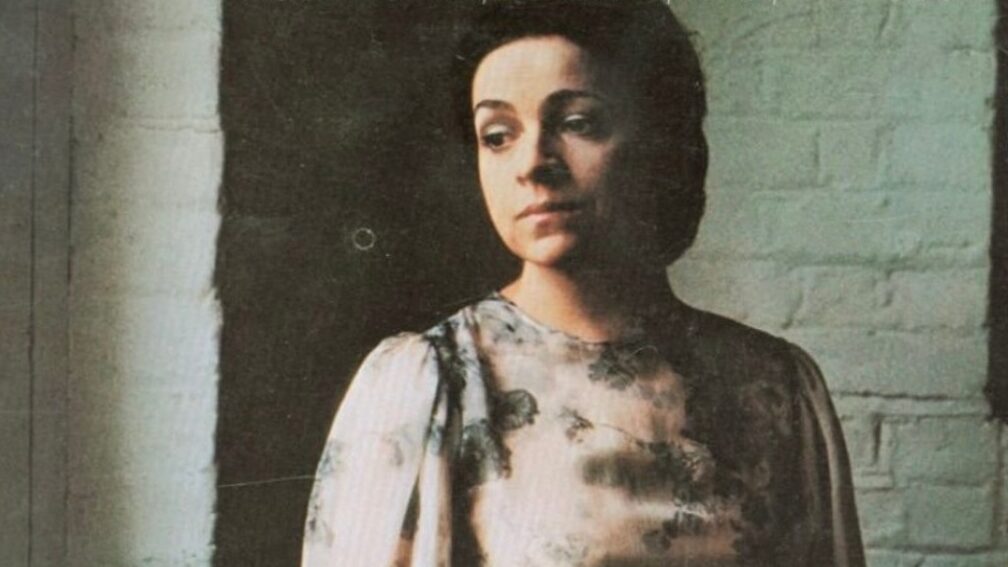
The great Romanian soprano Ileana Cotrubas died on 20 August at her home in Vienna at the age of 87. Though I only managed to see her perform twice, her throbbing, plangently vulnerable voice has been in my ears for nearly as long as I’ve been interested in opera.
Soon after I began listening to the Texaco Metropolitan Opera Saturday afternoon broadcasts in grade school, I became intrigued by Early Opera. Thanks to my local library’s vast LP collection, Handel became an early favorite but 17thcentury Italian works took me longer to warm up to. After several tries, Cavalli finally clicked for me thanks to Glyndebourne’s L’Ormindo recording. Around that time the festival’s follow-up production of Raymond Leppard’s realization of La Calisto was receiving raves, and when I saw a King Karol ad in Opera News for its new Argo double-LP I immediately asked my parents to order it for me.
I’d already become a devoted Janet Baker stan by then, so the set’s revelation was the irresistible Calisto of Cotrubas. I read in High Fidelity that the BBC had televised the sublime Peter Hall production, but I was never able to watch their Calisto until many decades later.
Soon after, I eagerly obtained Leppard’s Mozart Mass in C Minor featuring Cotrubas and Kiri Te Kanawa, another of my teenage soprano crushes.
Having become bored with live opera in my native southwestern Ohio, I began making regular culture-vulture jaunts to New York City when I was in college. Two of my first three trips were centered around the openings of Met Mozart new productions with those two divas. In January I saw Te Kanawa’s Fiordiligi and then on my birthday (it was fate!) the company premiere of Idomeneo, which unfortunately proved to be the only time I saw Cotrubas (as Ilia) in a staged opera.
Mimì in La bohème was her US calling-card role: it served for her U.S. debut at Chicago Lyric in 1974; then two years later she arrived at the Kennedy Center with the visiting company from La Scala in its famed Franco Zeffirelli production. Her Mimì first appeared at the Met soon after the company’s historic La bohème live telecast in 1977, then San Francisco the following year. Her Met Mimi wasn’t broadcast, so the wider American public had to wait until that fall to discover the soprano when she starred as Gilda in a new Met production of Rigoletto which was telecast live with Plácido Domingo, Cornell MacNeil, and the inimitably bodacious Isola Jones.
Well before I finally heard Cotrubas in person, I had been collecting pirates of her performances on reel-to-reel tape. Not being a big Domingo fan, I skipped the commercial recording Covent Garden’s L’elisir d’amore and instead snapped up a live pirate with José Carreras instead as Nemorino. And as I’ll always prefer comic to tragic Donizetti, I also ordered her delicious Norina from Chicago 1974, again with Geraint Evans as well as Alfredo Kraus and Vicente Sardinero.
The late Jason McVicar (aka early Parterre’s Enzo Bordello and a great friend of James) wrote me that his favorite of all my Trove Thursday postings was Haydn’s Die Jahreszeiten conducted by James Levine with Cotrubas, Francisco Araiza and José van Dam.
Cotrubas’s New York career was not as extensive as it might have been: she dropped out of a revival of John Dexter’s production of Don Pasquale (conceived for Beverly Sills) and also left town early after clashing with conductor Eugene Kohn over his conducting of La bohème. By the way, Dexter was to have directed her Met Violetta scheduled for the fall of 1980. However, that season’s long labor strike pushed it to March of the following year when she apparently got her way and Dexter was replaced by Colin Graham.
Her local withdrawals also included two fascinating “what-might-have-beens;” thanks to her close association with Matthew Epstein, she was to star in two of his legendary mid-1980s concert opera presentations at Carnegie Hall. For the Marilyn Horne-Rossini series, the impresario actually lost all three of his European divas, to be replaced by American ones: for La donna del lago, Semiramide, and Tancredi, Frederica von Stade, June Anderson, and Lella Cuberli ultimately partnered with Horne in place of the originally announced Agnes Baltsa, Monserrat Caballé, and Cotrubas. The latter was also to have been the Countess in Capriccio (what a marvelous final scene that might have been!) in January 1986, but instead Felicity Lott stepped up.
Her final Met role was Micaëla taking over the role from Leona Mitchell (who had replaced the originally announced, but often-elusive Gabriela Benacková) during the 1987 Carmen run that starred Agnes Baltsa, Carreras, and Samuel Ramey. Trove Thursday featured her Micaëla in an equally starry Carmen with Christa Ludwig, Jon Vickers and Justino Diaz.
Nine years after those Micaëlas, I heard Cotrubas again when she returned one last time (years after her opera retirement) for the mammoth 1996 Levine 25th Anniversary Gala during which she offered “Meine Lippen sie küssen so heiss” from Lehár’s Giuditta, last sung at the Met in 1960 when Leonie Rysanek offered it at another gala. However, my preferred Cotrubas special Met appearance occurred at the 1983 Centennial Gala when she sang with signature intensity the “Aire de Lia” from Debussy’s L’Enfant Prodigue, the first time I heard it.
One of Cotrubas’s final new roles was Charlotte in Massenet’s Werther which she sang in Vienna in 1990.
The soprano’s commercial opera discography is not vast but includes such important releases as the Carlos Kleiber La Traviata, Carlo Maria Giulini Rigoletto, Claudio Abbado Carmen, Herbert von Karajan Le Nozze di Figaro, Levine Die Zauberflöte, and John Pritchard Hansel und Gretel.
Over the years, however, I’ve collected a good number of Cotrubas live audio recordings (including a Paris Die Fledermaus in which she came to grief in the Csárdás that I ultimately deleted).
Many have been uploaded to YouTube, with three special ones I’d like to point out: Euridice in Gluck’s Orfeo ed Euridice with Julia Hamari and Cuberli, conducted by Riccardo Muti, 1976; Konstanze in Mozart’s Die Entführung aus dem Serail with Martti Talvela, conducted by Lorin Maazel, Salzburg 1980; and Magda in Puccini’s La rondine conducted by Bruno Bartoletti, Chicago 1985.
Finally, I supplement the audio recordings I’ve already posted on Parterre with four more: three roles she rarely sang (Amina, Nedda and Marguerite) along with her Met Russian Tatyana, a role which some fans may know from an early Covent Garden Onegin in English.
Bellini: La sonnambula
Amina: Ileana Cotrubas
Lisa: Elizabeth Gale
Teresa: Phyllis Cannan
Elvino: Dennis O’Neill
Rodolfo: Robert Lloyd
Conductor: Manfred Ramin (Cotrubas’s husband)
Royal Opera, Covent Garden
18 November 1981
Broadcast
Tchaikovsky: Eugene Onegin
Tatyana: Ileana Cotrubas
Olga: Cleopatra Ciurca
Larina: Ariel Bybee
Filippyevna: Batyah Godfrey
Onegin: Leo Nucci
Lenski: Vladimir Popov
Prince Gremin: Sergei Koptchak
Triquet: Anthony Laciura
Conductor: Neeme Järvi
Metropolitan Opera
26 September 1984
In-house recording
Leoncavallo: Pagliacci
Nedda: Ileana Cotrubas
Canio: Plácido Domingo
Tonio: Matteo Manuguerra
Silvio: Wolfgang Schöne
Beppe: Heinz Zednik
Conductor: Adam Fischer
Wiener Staatsoper
6 June 1985
In-house recording
Gounod: Faust
Marguerite: Ileana Cotrubas
Siebel: Rachel Joselson
Marthe: Olive Fredricks
Faust: Neil Shicoff
Mephisto: Ruggero Raimondi
Valentin: Franz Grundheber
Conductor: Alain Lombard
Hamburgische Staatsoper
28 October 1985
In-house recording

Christopher Corwin
Christopher Corwin began writing for parterre box in 2011 under the pen name “DeCaffarrelli.” His work has also appeared in , The New York Times, Musical America, The Observer, San Francisco Classical Voice and BAMNotes. Like many, he came to opera via the Saturday Met Opera broadcasts which he began listening to at age 11. His particular enthusiasm is 17th and 18th century opera. Since 2015 he has curated the weekly podcast Trove Thursday on parterre box presenting live recordings.
-
Topics: ileana cotrubas, obituary
-
People: Agnes Baltsa, Alfredo Kraus, Beverly Sills, Colin Graham, Cornell MacNeil, Eugene Kohn, Felicity Lott, Francisco Araiza, Frederica von Stade, Gabriela Benacková, Geraint Evans, Ileana Cotrubas, Isola Jones, James Levine, Janet Baker, John Dexter, José Carreras, José van Dam, June Anderson, Kiri Te Kanawa, Lella Cuberli, Leona Mitchell, Marilyn Horne, Montserrat Caballé, Peter Hall, Plácido Domingo, Raymond Leppard, Samuel Ramey, Vicente Sardinero