A game of hoarse
Baltimore Symphony Orchestra’s concert Rigoletto hits some vocal turbulence
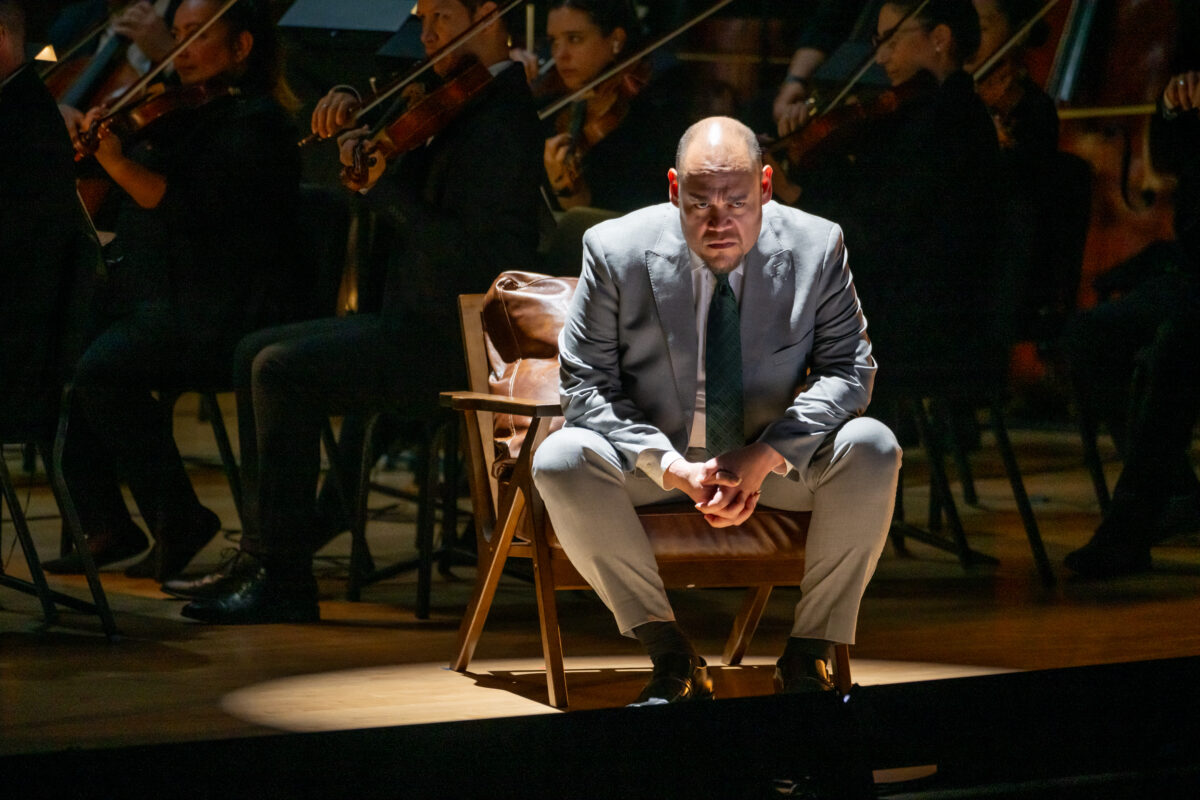
Photo: Max Franz
Some nights, you wonder at the miracle of opera. The sheer amount of things that need to go right make it the most impressive and improbable of all the art forms. Last night, Friday, June 12, was a reminder just how rarely it falls apart. That’s because the two male leads—Quinn Kelsey in the title role and Andrew Owens as the Duke—were in such poor vocal form that the latter bowed out after the second act, and the former should have done so before the first note was struck.
Kelsey was simply out of sorts. We, the audience, should give singers as much grace as possible, but the veteran baritone, it seems, should also know the line between acceptably “off” and unacceptably hoarse. (Although, it should be said that it’s unclear whether the BSO had a cover for Rigoletto; thus, the blame may lay at the feet of management.) Throughout the evening, Kelsey splintered notes across the passaggio and merely muscled through what should be the most electrifying moments of the show, particularly in “Sì, vendetta” and “Cortigiani, vil razza dannata.” Even when his typically warm, round timber shone through, the orchestra—situated behind him that evening for the concert version, which should have helped—swallowed him completely, an effect made more striking whenever Christian Pursell, playing Monterone, and Peixin Chen, playing Sparafucile, opened their mouths. It was as if, through Pursell’s huge, commanding voice, someone had finally turned the knob to a higher volume. Chen, too, put us on terra firma with a rock-solid bass that gave the punch that the other singers lacked.
Kelsey’s co-star, Andrew Owens, knew he was cooked. After pausing several times to cough—after one spell, making an endearing, apologetic clasp to the throat—the tenor tapped out, agreeing to mime the rest of his part while Daniel O’Hearn took over. Coming fresh off the bench, O’Hearn sang with ringing squillo and a golden timbre, soaring in the wildly cheered “La donna e mobile” and anchoring the quartet, “Bella figlia dell’amor.” O’Hearn’s weren’t the only heroics of the night: Raven McMillon was a delightful Gilda. Her voice, while not big, has freshness and clarity, especially in the upper register, and a hard, gleaming quality in the middle. Her “Caro nome” was well done, if a bit pitchy on some of the tip-toe runs, and she received the biggest ovation of the night, which she received with grateful tears.
In addition to these pleasures, Chandler Benn, Samuel Weiser, and Hakeem Henderson formed the trio of cortigiani (Marullo, Ceprano, and Borsa, respectively), providing both comic relief and, later, terror as they crept slowly up the stage in ski masks towards Gilda at the end of her aria. Deborah Nansteel and J’Nai Bridges rounded out the singing with solid performances of Giovanna and Maddalena, respectively.
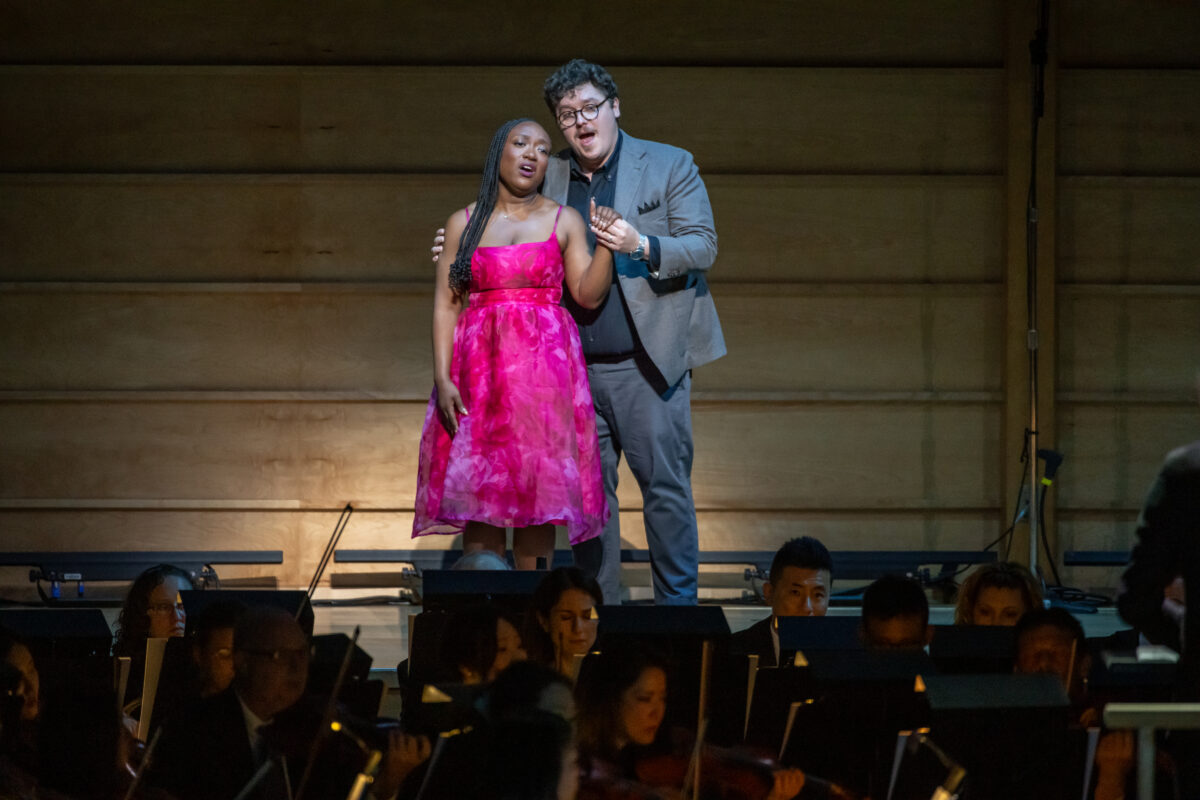
Photo: Max Franz
Perhaps the true stars of the night, however, were the orchestra and chorus. “The only reason,” Sir Colin Davis once said, “we go to the opera is because of the music, and we don’t hear it properly. Everybody is looking and they are not listening. You put it on the stage and you realize that everything about the opera is in the music. You can hear the singers, and the drama is explained by the orchestra, and so it is wildly exciting to hear a concert performance of, say, Otello. We all know damn well what happens in Otello, but this music is diabolical in its intensity and it makes such a huge impression.” That sentiment was apt for this evening. Of course we know what happens in Rigoletto, but it was Jonathon Heyward and the BSO that brought off the best bits. When Verdi calls for individual woodwinds to rise above the orchestra, for example, Heyward brings his outfit to a hush as a clarinet, oboe, and flute take turns rippling through the orchestra. The Washington Chorus, under Eugene Rogers, was similarly excellent, particularly in evoking the storm in Act III.
The BSO is in the middle of their Verdi Cycle; Rigoletto comes between last year’s Aida and next year’s Requiem. One hopes for a more fortuitous showing in the next installment of this admirable series. Until then, I’ll be I’ll be looking forward to Mr. O’Hearn’s interpretation of Lensky in Wolf Trap opera’s Eugene Onegin later this summer.

Brendan Latimer
Brendan Latimer is a writer and urban planner based in Baltimore, MD. He invented the dark chocolate with orange juice combo. You can find him on Instagram at @b_lat_ and @operanoises.
-
Topics: concert performances, preview
-
People: Andrew Owens, Baltimore Symphony Orchestra, Chandler Benn, Christian Pursell, Colin Davis, Daniel O’Hearn, Deborah Nansteel, Eugene Rogers, Giuseppe Verdi, Hakeem Henderson, J'Nai Bridges, Jonathon Heyward, J’Nai Bridges, Peixin Chen, Quinn Kelsey, Raven McMillon, Samuel Weiser, Washington Chorus
-
Works: Aïda, Rigoletto, Yevgeny Onegin
-
Places & Organizations: Baltimore Symphony Orchestra, Wolf Trap Opera