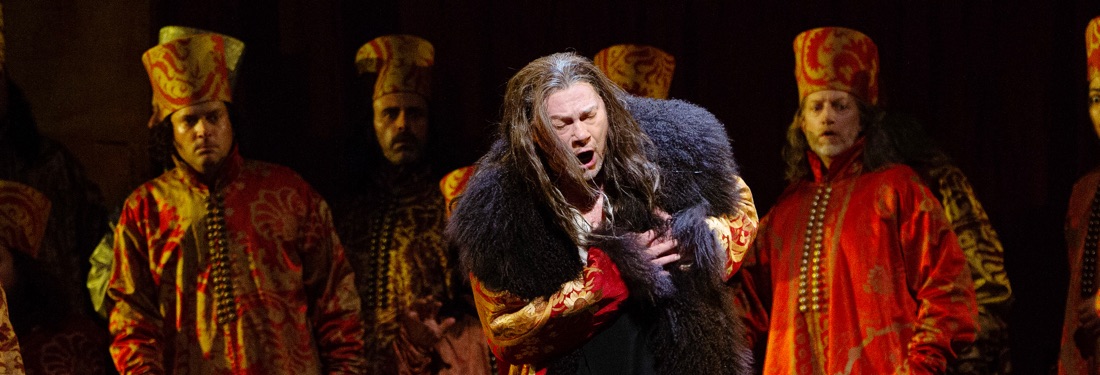
Klaus Florian Vogt is a singer oft discussed at parterre pox, but few have had the opportunity to hear him, especially those in the USA.
Although she began her career nearly 25 years ago recording and performing lots of baroque music, I was surprised to see German soprano Dorothea Röschmann promoted as the star attraction of an all-Purcell concert Sunday at Carnegie Hall.
If works like Salome and Erwartung defined modernism in the first decades of the 20th century, Die Tote Stadt and Palestrina represented the regressive avant garde.
“Michael Volle is not into bling,” begins an article in ACT-O, the glossy magazine of the Grand Théâtre de Genève.
My memory is fading but the events I recall most vividly of the last season seem largely to have been concert performances.
The Salzburg Festival has long had the image of this place where for a little over a month, the very best singers are brought together with the very best conductors and the very best directors to create the very best productions the opera world has to offer.
The finer performances of Tristan und Isolde have a way of sounding like a four-hour improvisation, the fruit of a single moment of inspiration that makes one forget how emotionally manipulative and painstakingly crafted the music really is.
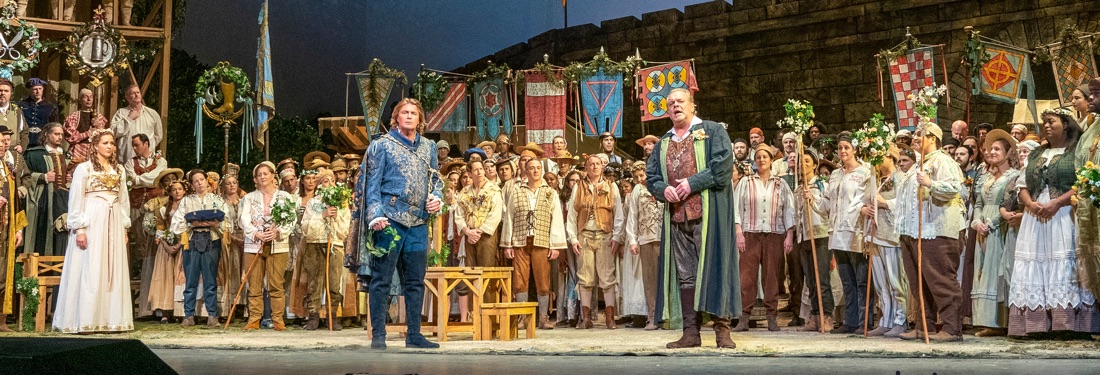
Beneath the pageantry, the paeans to German art and the self-referential allusions to the creative process, Die Meistersinger is a story about a community and human qualities like love, friendship, envy and hatred.
Each year, Leon Botstein leads the American Symphony Orchestra in a concert opera or two.
Here’s a canard proceeding from a clearly truthful premise.
If Frank Castorf‘s work on Der Ring des Nibelungen at Bayreuth accomplishes nothing else, it should serve as a sort of loud disorganized reminder of the dangers of indulging in the intentional fallacy.
Rupert Christiansen (not pictured) writes, “…a right old mash-up of Meistersinger, confusing, contorting and complicating something which should communicate with radiant emotional and intellectual simplicity.”
Well, my dears, if you thought Frank Castorf‘s Ring or Stefan Herheim‘s Meistersinger were outré, then wait until you get a load of the radical take on Don Carlos by Peter Stein for the Salzburg Festival!
American mezzo Jamie Barton, who has steadily been winning fans in the US over the past few years for her rich and nuanced singing, took the international opera world by storm last weekend by winning both the Song Prize as well as the overall prize in the BBC Cardiff Singer of the World competition.
A new CD features the ten most gorgeous minutes recorded by a tenor in Wagner since World War II.
Midway through his traversal of Wagner’s 10 mature operas for PentaTone, we’ve learned this about Marek Janowski:
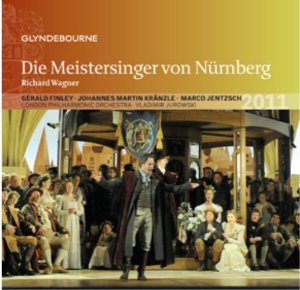
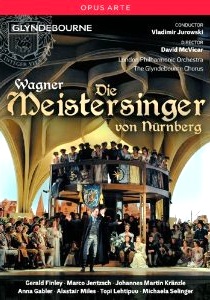
Opera’s Scottish enfant terrible David McVicar has applied his considerable skills in this 2011 Glyndebourne production of Die Meistersinger, the result being a refreshing new take on a familiar warhorse.
Certain contemporary opera directors have taken to portraying Wagner protagonists as visual artists to better illuminate the characters’ moral and aesthetic struggles.
The symbolism and themes of suffering and redemption in Parsifal have provided catnip for more than a few oddball stagings filled with Regie excesses.
In the liner notes to his new Wagner CD, Rene Pape opines that performing the master’s work isn’t terribly different than performing Mozart. Both composers require singers to sustain a melodic line, manipulate vowels at the right moments and deploy dynamic gradations for dramatic effect. Call it German bel canto or natural speech, just don’t…
Fertilization; birth; growth; decay. Eating; digestion; defecation; fermentation; biogas recovery; food production. Wagner’s Tannhäuser is a meditation on the relentless, repetition of cycles that define our existence and man’s insistence on the possibility salvation despite all the biochemical evidence to the contrary.
A documentary about the heldentenor Max Lorenz would seem to be an ideal prism through which to examine the moral ambiguities and trade-offs of artistic life in the Third Reich. The preeminent Siegfried, Tristan and Tannhauser of the Nazi era was considered so essential to the success of Bayreuth that Winifred Wagner told Hitler that…
In 1967, Rolf Liebermann , General Manager of the Hamburg State Operas, undertook to produce 13 operas for television, securing the Hamburg-based film and television company Polyphon Film und Fernsehgesellschaft to record the productions with the original Hamburg casts. The director Joachim Hess adapted the stage productions for the requirements of television. The second of…
In the summer of 2007, at the height of the heated speculation and public debates over who would succeed Wolfgang Wagner as the head of the Bayreuth Festival, his daughter, Katharina Wagner presented a new production of Die Meistersinger von Nürnberg at the festival, replacing the mind-numbingly boring one by her father (his third at…
Tell us: Filth or dementia?
Hasten thee to feed another quarter of conversation for The Talk of the Town!
Sign up for our free Newsletter.
Support Parterre Box
Donate to keep opera's liveliest publication free and independent. No paywalls, no institutional backing, no bootlicking.
Get our free newsletter
Opera's top reads delivered to your email weekly…ish.
Join over 100k readers.
The best opera magazine on the web.
Reviews, breaking news, critical essays, and brainrot commentary on opera from those demented enough to love it.
Essentials
Copyright © 2026 Parterre Box.
All rights reserved.
Registration or use of this site constitutes acceptance of our Terms & Conditions and our Privacy Policy. Do Not Sell or Share My Personal Information.
Sign up for Parterre’s free newsletter.
Exclusive opera reviews, commentary, and top reads
delivered to your email weekly…ish.