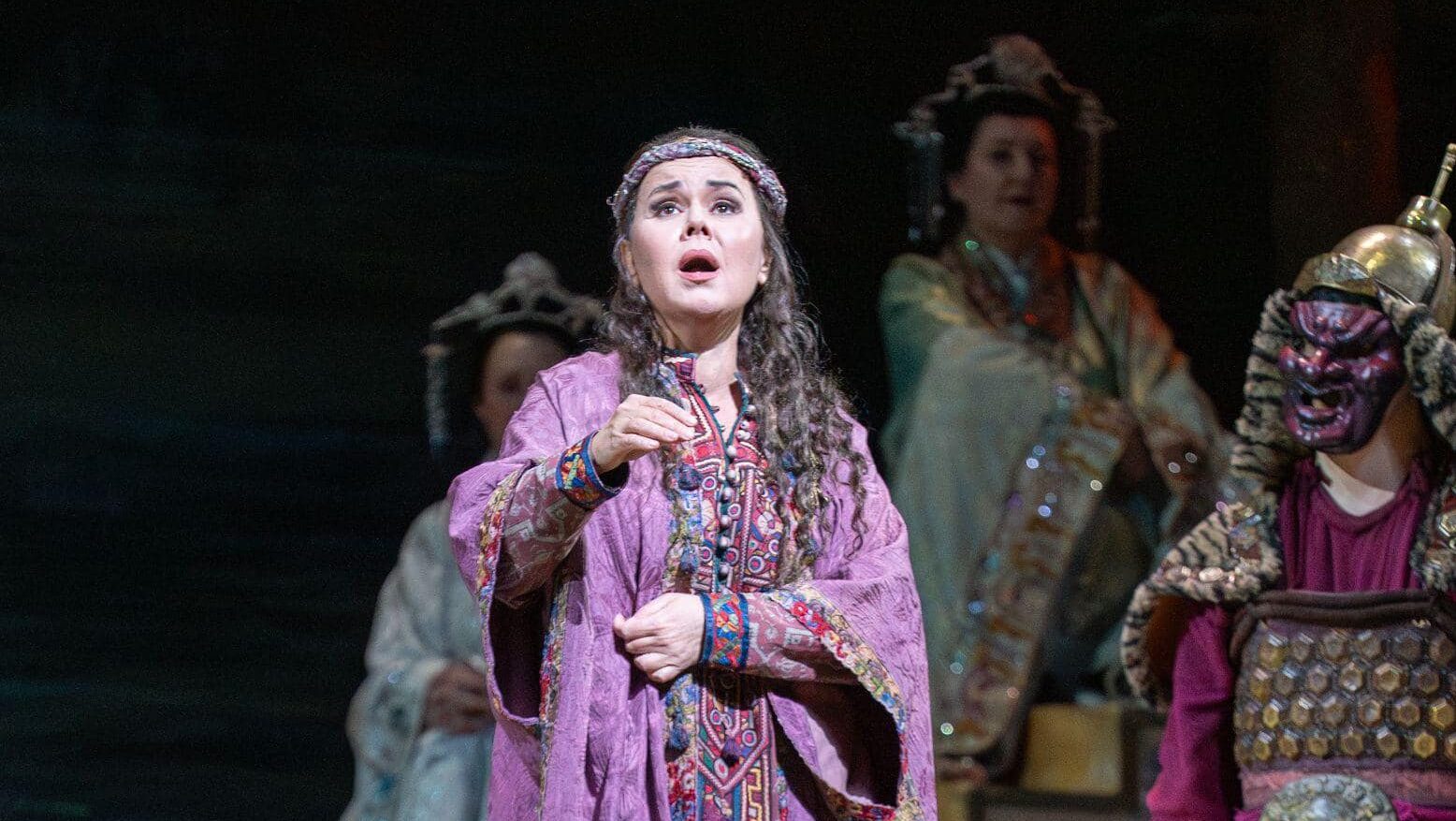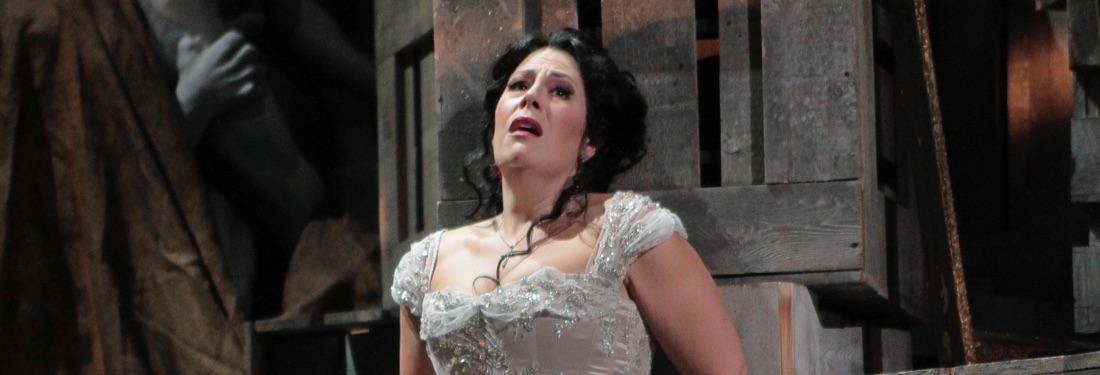
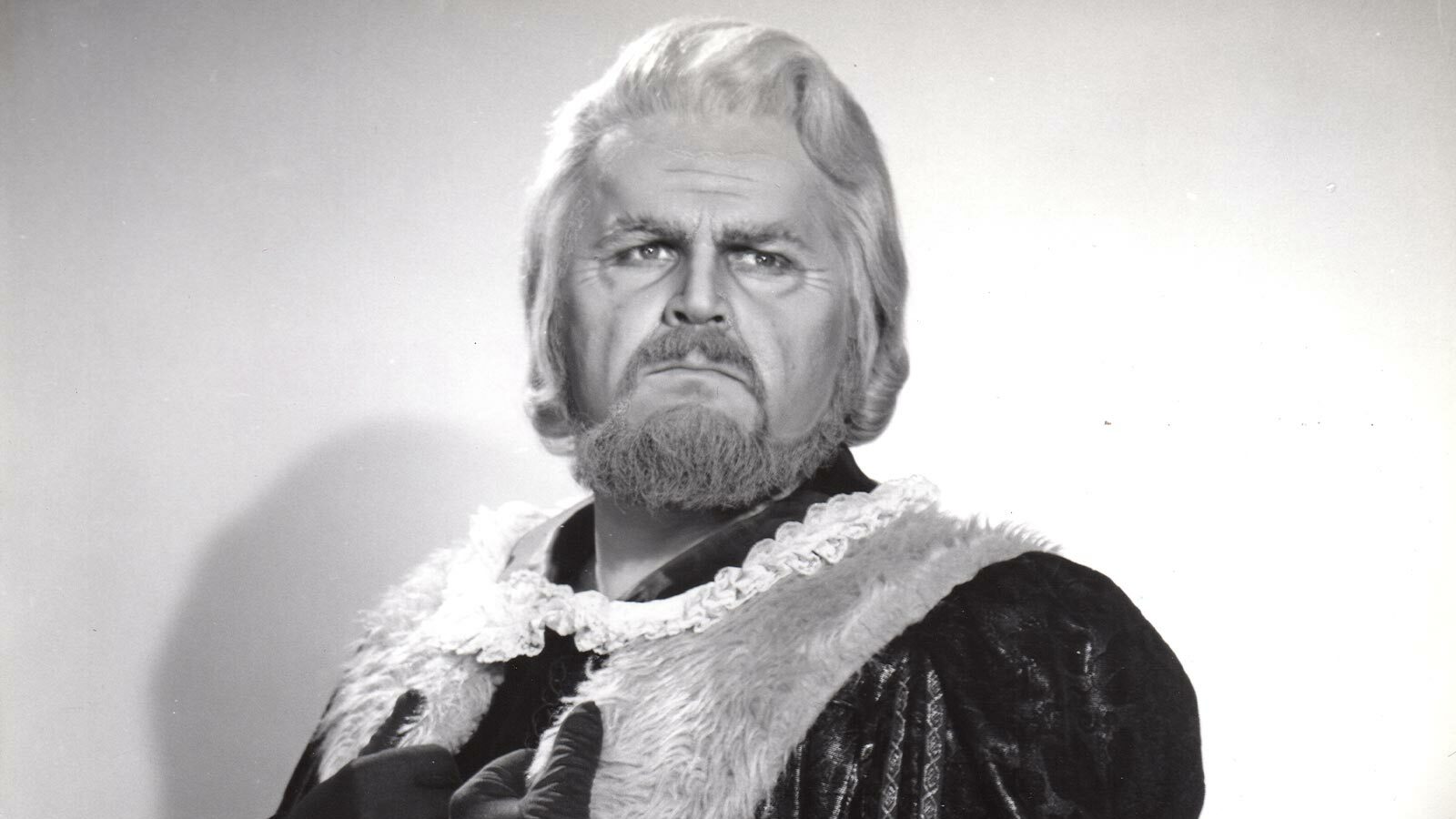
To celebrate the 100th anniversary performances of Turandot at the Met starting next week, Patrick Dillon gives a listen to seven versions of “Signore, ascolta!” for Perspectives on an Aria.
As this is “Donizetti Month” here on parterre box, Chris’s Cache offers the recently deceased Paul Plishka and Opera Orchestra of New York with Carol Vaness in Anna Bolena and with Mariella Devia in the rarely heard Adelia.
Too young to be in love. But not too young to go to war or to die.
On October 14, 1979 I spent my birthday attending my first all-star opera gala, thrilled at the chance to hear some of the great singers I’d only experienced on LPs, broadcasts or via my pirate reel-to-reel tapes.
Despite the diminishing returns of her vocal means, Edita Gruberova‘s last years of her career were if anything more successful than ever.
In an era when the Metropolitan Opera cannot cast an Aida, Trovatore or Forza consistently, New Amsterdam Opera managed to cast large, attractive and fully technically capable voices in all the cruelly demanding principal roles in I Vespri Siciliani!
Trove Thursday begins February with two striking versions of Rossini’s Tancredi.
For nearly 70 years, New York City was the world capital of concert opera thanks first to the American Opera Society, then to Eve Queler’s Opera Orchestra of New York.
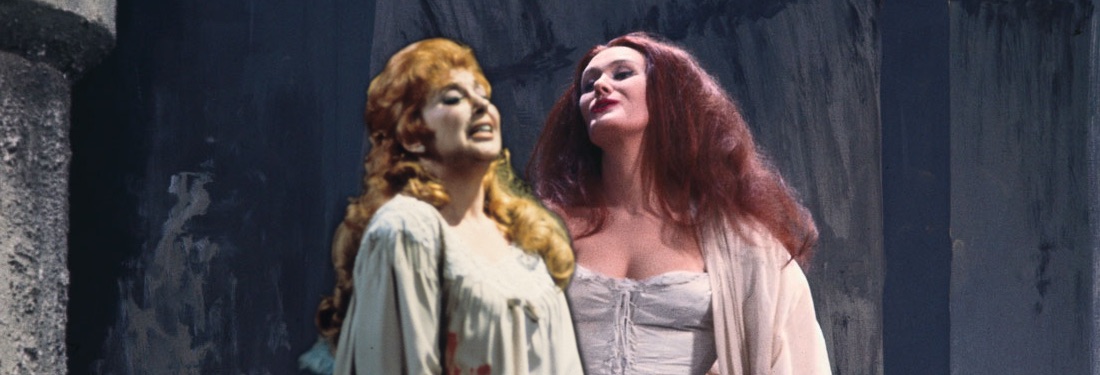
With La Scala’s plan to open on December 7 with a new Lucia di Lammermoor thwarted, Trove Thursday sets its Wayback Machine to nearly 50 years ago to present two of the 20th century’s greatest madwomen—Joan Sutherland and Beverly Sills—denounced by Plàcido Domingo and Alfredo Kraus respectively, with the former pair consoled by Kurt Moll‘s luxurious Raimundo.
One of Mariella Devia‘s earliest New York successes: Delibes’s Lakmé with Nicolai Gedda and Paul Plishka.
Trove Thursday uncovered two broadcasts of Donizetti’s Lucrezia Borgia that share a fascinating nexus: in each an enduring superstar tenor—José Carreras/Alfredo Kraus—is poisoned by a soon-to-vanish rising-star soprano—Vasso Papantoniou/Margarita Castro-Alberty.
Trove Thursday completes its Prévost–trifecta with Puccini’s Manon Lescaut starring Sondra Radvanovsky and (pre-Met) Aleksandrs Antonenko conducted by Riccardo Chailly plus an added Radvanovsky-Puccini bonus: Suor Angelica.
Otto Nicolai’s Il Templario with Juan Diego Flórez, Clémentine Margaine and Luca Salsi.
We close 2018 with Le Comte Ory with an enviable nearly all-Italian cast of prime-time Rossini specialists: Mariella Devia, Cecila Bartoli, Ewa Podles, William Matteuzzi, Claudio Desderi and Pietro Spagnoli.
In Bellini’s opera Norma, the “padre” role of Oroveso, it may be safely said, is “undistinguished”—dull and conventional. The bass entrusted with the role usually will engender two reactions: more frequently than not, “Cut this boring music,” and rather more rarely: “What a pity Oroveso doesn’t have more music.”
I attended the Sunday, May 13, performance with bittersweet anticipation.
Next week the Italian soprano Mariella Devia celebrates her 70th birthday so “Trove Thursday” salutes her with one of her earliest New York successes: Delibes’s Lakmé
Ali Baba ou Les Quarantes Voleurs continues straight-tone September with Teresa Stich-Randall as its heroine while Alfredo Kraus scales the heights with another Nadir.
Pretty Yende was still hanging around after her last Barbiere and she knows the role of Elvira, having sung it in Zurich last June.
The beautiful singing here is less in the sound than in the way the voice moves.
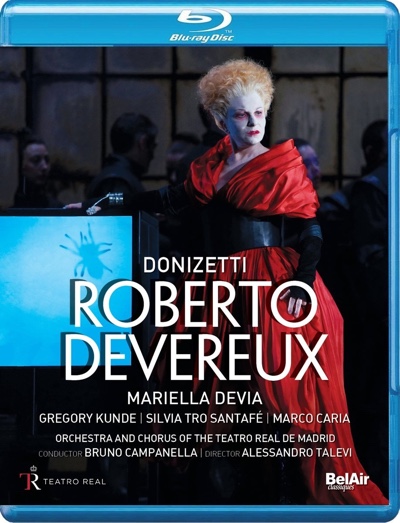
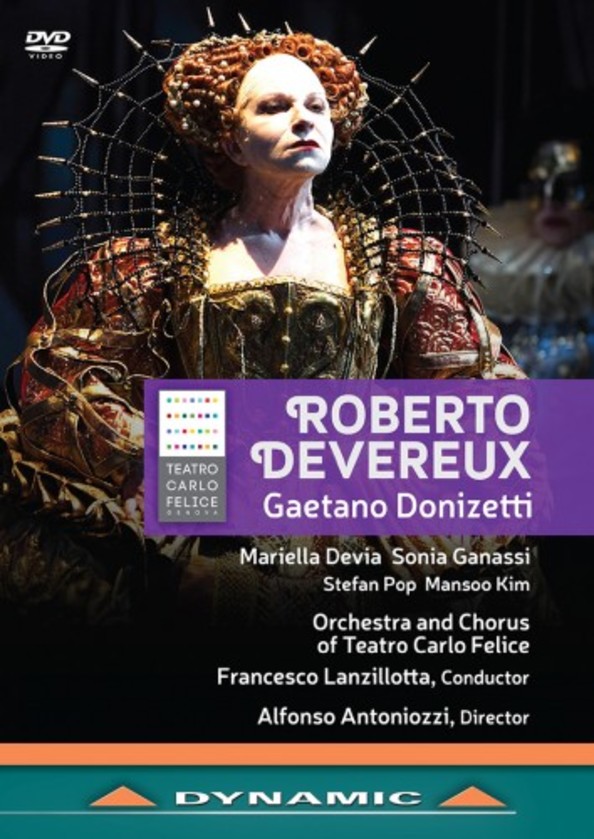
Now we find Mariella Devia, a diva held in near mythic regard due to her vocal longevity, with competing videos of two of her performances that were released, literally, on the same day.
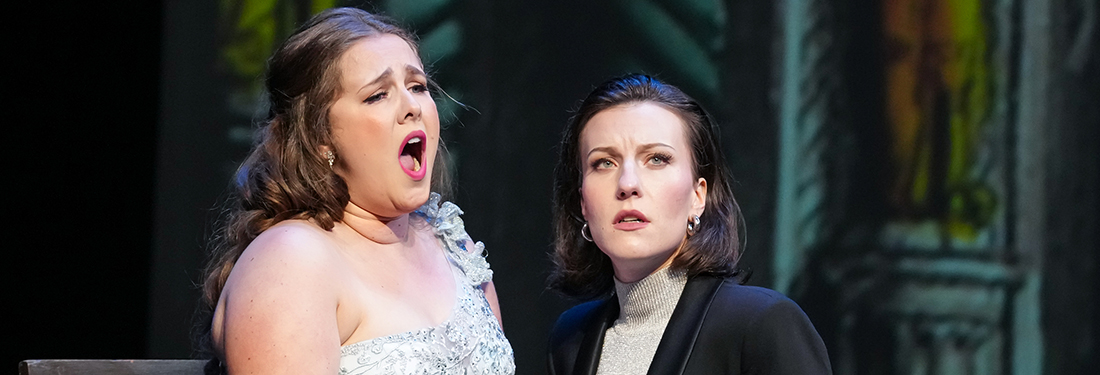
During its first-ever Roberto Devereux Thursday evening one felt transported back to the Volpe years: four of the Met’s biggest stars shining in an opulent (if occasionally perverse) but reassuringly non-challenging production paid for by Sybil B. Harrington.
By the time Roberto Devereux saw its premiere at Napoli’s Teatro San Carlo on 29 October, 1837, Gaetano Donizetti had lost, in an 18-month time frame, both his parents, two still-born children, and his beloved wife Virginia.
There might be nothing in the world as joyous as a Rossini overture.
Tell us: Filth or dementia?
Hasten thee to feed another quarter of conversation for The Talk of the Town!
Sign up for our free Newsletter.
Support Parterre Box
Donate to keep opera's liveliest publication free and independent. No paywalls, no institutional backing, no bootlicking.
Get our free newsletter
Opera's top reads delivered to your email weekly…ish.
Join over 100k readers.
The best opera magazine on the web.
Reviews, breaking news, critical essays, and brainrot commentary on opera from those demented enough to love it.
Essentials
Copyright © 2026 Parterre Box.
All rights reserved.
Registration or use of this site constitutes acceptance of our Terms & Conditions and our Privacy Policy.
Sign up for Parterre’s free newsletter.
Exclusive opera reviews, commentary, and top reads
delivered to your email weekly…ish.