
Fangs out
Ying Fang delights in the Lyric Opera of Chicago’s sharp production of Don Pasquale.
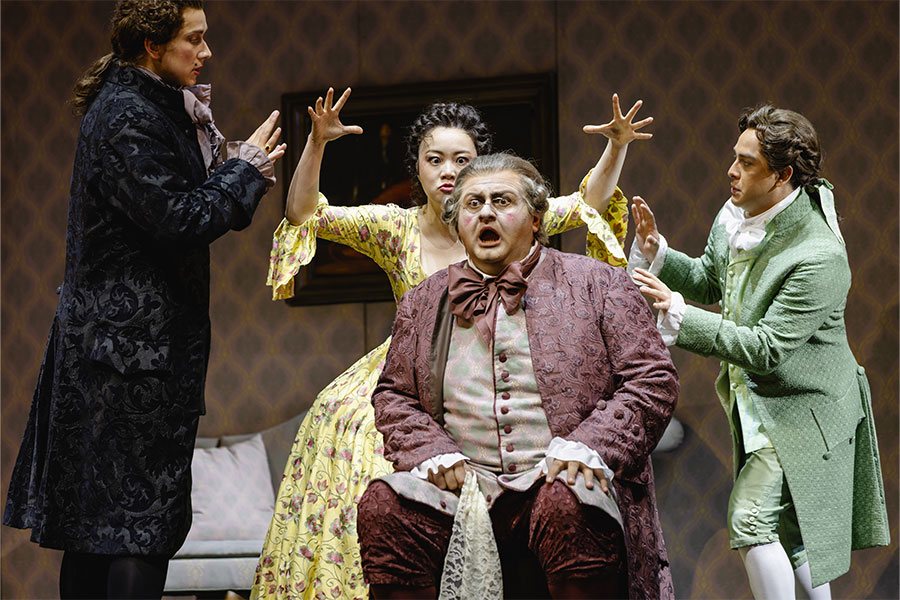
Photo: Kyle Flubacker
It’s a gas, the Lyric Opera of Chicago’s run of Donizetti‘s Don Pasquale: it’s an absolute pleasure. Following serious, admirable, imperfect presentations of Don Giovanni and Rhiannon Giddens and Michael Abels’s Omar to start the season, Don Pasquale arrived in Chicago on Thursday in Mariame Clément’s production—first seen at Glyndebourne in 2013, with current Lyric Music Director Enrique Mazzola conducting—as a perfect dessert course, a delightful trifle of real musical substance and thoughtful direction.
Clément’s production hasn’t always come off this well. This publication, reviewing the Glyndebourne run on DVD, deemed it “just generally sour and unpleasant.” But subsequent showings have brought more comedy and subtlety to Clément’s concept, which insinuates that the wily Doctor Malatesta and the seeming ingenue Norina are in fact lovers—unbeknownst to the doddering Don Pasquale, who thinks he’s married her, and his would-be troubadour nephew Ernesto, who wishes he could.
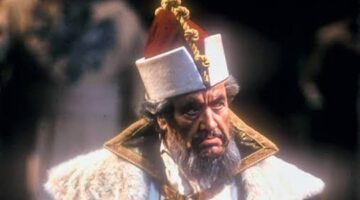
To come off well, this sly twist on Donizetti’s opera buffa requires comic panache, and the Lyric’s cast has that in spades. The overture finds Ian Rucker’s Malatesta slithering through the rooms of Julia Hansen’s ingenious turntable set, working wonderful physical comedy from its hidden doors and secreting screens. In the title role, Misha Kiria, excellent in his Lyric debut, chewed the scenery as a buffa buffoon should. Comedy flowed from every corner on Thursday, including Sid Chand’s compact but well-drawn turn as the Notary and, especially, Sarah Sapperstein’s terrific acting in the silent role of Don Pasquale’s domestic servant. And Mazzola, setting a clever and sensitive pace from the overture to the Act III curtain, deftly supported the cast’s comic timing from the orchestra pit.
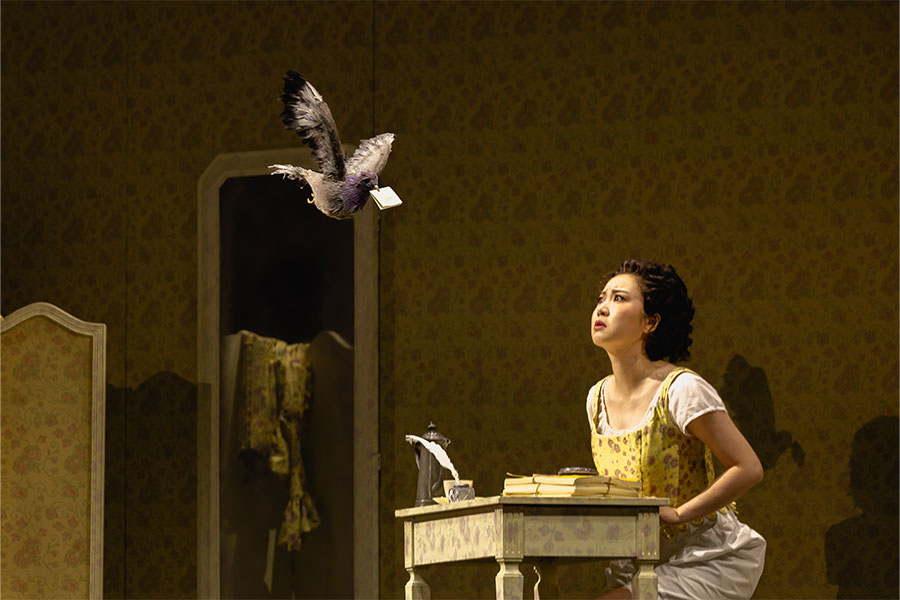
Photo: Kyle Flubacker
But despite the quality up and down the call sheet, this run belongs to Ying Fang. Norina is a new foray for Fang, who is best known for her Mozart and Handel—a foray not only into bel canto, but into bel canto comedy, at that. Her Norina drew together the evening’s strengths: a strong dramatic sensibility, comic flair, and a truly magnificent vocal performance. Fang’s “Quel guardo il cavaliere,” the cavatina that introduces her character, fit utterly naturally on her voice, merging a sweetness in Norina’s reflection on the heroes of chivalric romance with a sparkling control of the trills and runs of the ensuing “So anch’io la virtù magica.” Sweetness and sparkle, the seduction of Don Pasquale—and, in Clément’s production, Malatesta—and the spunk of her immediate transformation into a riotous terror of a shrew. Fang managed the antinomies of Norina’s music and her character with such ease as to make a challenging part seem effortless.
Effortlessness, though, isn’t always what Don Pasquale is after. Don Pasquale’s layabout nephew, Ernesto, for instance, could stand to work a little bit harder. His character is, perhaps not coincidentally, the least sharply realized in the libretto Donizetti wrested from Giovanni Ruffini. Alberto Robert, also making his Lyric debut, was not quite as comically assured as his scene partners. His brilliant voice occasionally grazed a flinty edge, and his syllables sometimes suffered from a lack of clarity in their initial consonants.
But effort can also be turned to comic effect, as in Malatesta and Don Pasquale’s rat-a-tat Act III patter duet “Cheti, cheti immantinente.” If Rucker and Kiria—each in agile voice, with wonderfully clear Italian—seemed only just to cling to Mazzola’s baton, so much the better: their encore of the quick-fire cabaletta, in which Don Pasquale anticipates his confrontation with his wife’s supposed lover and Malatesta relishes his plan’s impending success, was richly rewarded.
Donizetti leaves time for beauty, too, in this quick-paced comic piece. Clément and Hansen, who also designed the costumes, render the garden in which Don Pasquale’s confrontation will take place as a scene of genuine natural splendor, an open-air antidote to the whirling interiors of the rest of the opera. Bernd Purkrabek’s lighting was especially effective here, accenting the garden in rich sunset blues and pinks—particularly in contrast to what could occasionally become too white and chilly a light in the earlier interior scenes. (The Lyric seems to have a penchant for cold lighting: I suspect it’s to render the stage more sharply visible, but it can sometimes feel all wrong, as though someone has put a workroom bulb in a bedside lamp.) The garden also found the Lyric’s chorus (under Michael Black’s direction) in reliably excellent form, dreamily echoing Ernesto’s serenade of the woman he will soon, indeed, succeed in wedding.
Or will he? Clément has made us wonder how Norina’s hidden fling with Malatesta will rework the ending of this normally happy comedy. It would be a shame to spoil her staging’s ingenious double twist, except to say that it, like the rest of this winning production, leaves Fang cleverly in charge.

Bradford Case
Bradford Case is a PhD student in English at the University of Chicago. A bassoonist and former music director of Yale's Berkeley College Orchestra, he is currently the Editor of Chicago Review.
-
People: Alberto Robert, Bernd Purkrabek, Enrique Mazzola, Ian Rucker, Julia Hansen, Mariame Clément, Michael Black, Misha Kiria, Sarah Sapperstein, Sid Chand, Ying Fang
-
Works: Don Pasquale
-
Places & Organizations: Lyric Opera of Chicago

Comments