Da capo days of summer
San Francisco goes baroque with performances of Handel‘s Alcina, Tolomeo, and Rinaldo.
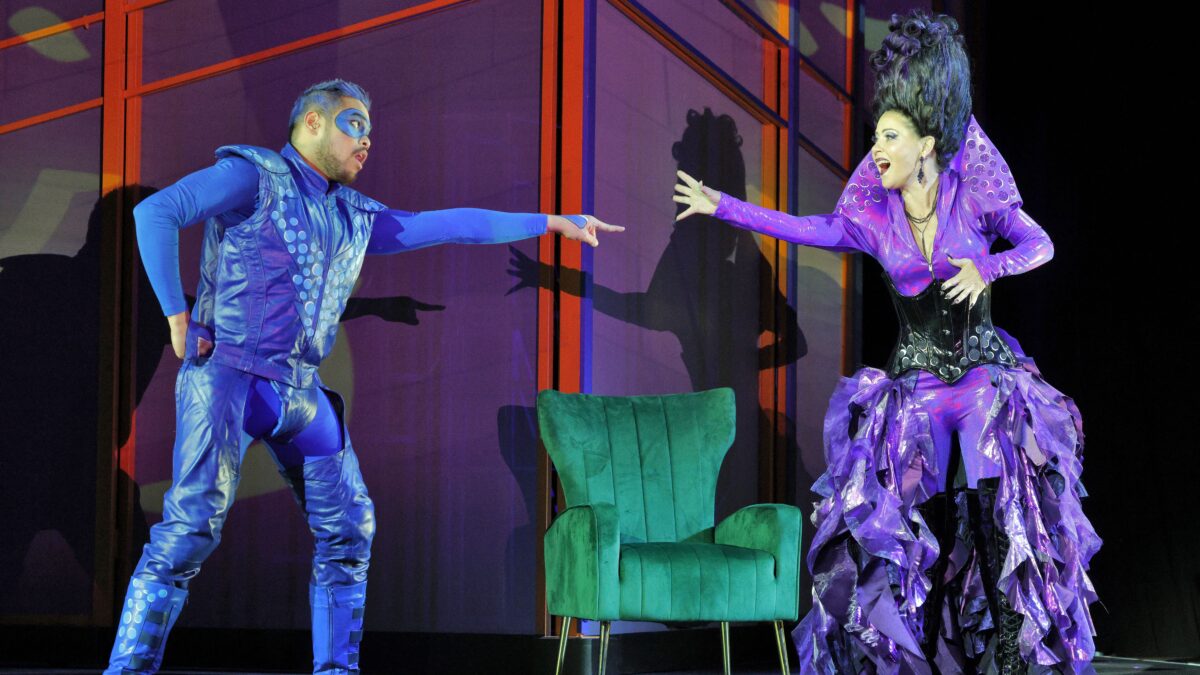
Photo: Cory Weaver
It’s not an exaggeration to say the Bay Area has been enormously blessed this summer with a mini Handel opera festival. I’m talking strictly about Handel’s 42 numbered operas (HWV 1–42), from Almira to Deidamia, excluding the oratorios such as Semele and Theodora, the pasticcios like Oreste and Giove in Argo, and Parnasso in festa, his festa teatrale.
Performances of Handel operas are few and far between around here. In the last seven years, for example, the San Francisco Opera staged Orlando in 2019 and spectacularly revived Partenope in 2024, while West Edge Opera (WEO) brought Aryeh Nussbaum Cohen to the title role of 2022’s Giulio Cesare in Egitto (more on Cohen later). The arrival of Jeremy Geffen at Cal Performances sparked excitement among Bay Area Handel enthusiasts like me with the announcement of the English Concert’s multi-season Handel opera/oratorio project, which so far has borne fruit in 2021’s Alcina, 2023’s Rodelinda, and 2025’s Giulio Cesare in Egitto. Therefore, you can understand my shock and excitement upon learning that this summer we were getting not one or two, but three Handel operas!
By an interesting coincidence, those three operas were presented in reverse order of composition. It began with Alcina (HWV 34), produced by Festival Opera in collaboration with the San Francisco Early Music Society (SFEMS) and performed over two separate weekends in different venues. A month later, a new era for the Philharmonia Baroque Orchestra (PBO) under Peter Whelan, its newly minted Music Director, was launched with a semi-staged presentation of Tolomeo (HWV 25), performed in San Francisco, Berkeley, and Caramoor, New York. Finally, West Edge Opera staged Handel’s first success in London, Rinaldo (HWV 7), on three separate weekends.
Written in 1735, Alcina is long considered part of Handel’s second peak trilogy, together with 1733’s Orlando and 1735’s Ariodante — all three so-called “magic” operas based on Ludovico Ariosto’s epic romance Orlando Furioso. Alcina was the second opera in Handel’s first season with his third opera company in London, the Covent Garden Theatre (now the Royal Opera House). Like the preceding Ariodante, Alcina‘s score is filled with dance sequences written for the renowned French dancer and choreographer Marie Sallé and her company, which were often cut for time, as in this production.
Performing Alcina is a major undertaking for any opera company, even in a semi-staged production. The score itself, if uncut, lasts more than four hours and requires seven competent singers and a chorus, all of which were present in this show. Nevertheless, in this first collaboration with Berkeley Festival and its Executive & Artistic Director, Derek Tam, who conducted these performances, Festival Opera seemingly didn’t fully grasp the demands of mounting Alcina, judging by the rather chaotic opening night. First, there was a lot of confusion about the show’s running time between the website and the ushers, and the ushers were uncertain whether there would be one or two intermissions (it ended up with two, although Tam looked like he was about to continue with the last act). But most importantly, to reduce the performance time, the arias were presented complete, but pretty much all of them in truncated versions; some lost A’ (of the da capo aria), including Alcina’s Act II closer “Ombre pallide”, and others lost both B-A’! With the risk of sounding like a broken record, this practice, similar to 2022’s aforementioned Giulio Cesare, didn’t do justice to educating the Bay Area audience about the beauty of Baroque operas, especially Handel’s. I would very much prefer it if they cut some minor characters or even omitted some arias but left the rest intact! Even better, if they chose a shorter Handel’s opera, like Imeneo.
Despite all the shortcomings, the show still managed to provide an enjoyable night at the opera thanks to the total commitment of everyone involved. Tam, who also played the harpsichord, conducted the 17-person orchestra in a competent, lively reading. While he could be a tad slow in some arias for my liking, he moved things along nicely and coaxed beautiful playing from the orchestra. Particularly noteworthy was Eva Lymenstull’s dramatic cello solo on Morgana’s “Credete al mio dolore,” which greatly underpinned Morgana’s heartbreak and made it feel as if time stood still. Festival Opera General Director Zachary Gordin’s subtle direction of the singers was particularly effective, as he let each singer express themselves and get lost in the characters’ emotions. The singers came in and out of the stage areas via side doors, à la a staged production. I wish more opera companies would do Baroque operas in this fashion rather than filling the stage with unnecessary antics! He also wisely placed the 16-person choir in chairs right at the back wall, which helped focus attention on the singers and the orchestra!
Festival Opera assembled a cast of talented local artists who worked together to uncover the nuances of each character’s relationships. Stripped of its magical elements, Alcina is essentially a complex psychological study of what it means to love (from love at first sight to love of power and deceit), and the show beautifully highlighted this aspect of the opera. The allure of seeing this production was hearing budding mezzo Nikola Printz tackle the title role, and they certainly didn’t disappoint. Although the role is usually sung by a soprano, there have been several mezzos in the past, most memorably Joyce DiDonato in Alan Curtis’s celebrated recording, my personal favorite. Printz brought a thrilling conviction and regal presence to the role, developing a femme fatale persona that was hard to resist. Vocally, they confidently handled the demands of the role, delivering vocal splendor with their dark, burnished color. Only the lament “Ah! mio cor!” in Act 2 stretched their voice to the limit, and as a result, they took the return to A form (aka A’) lower than the original.
Equally impressive was contralto Sara Couden’s Bradamante, who chewed the scene with commanding presence and ease in coloratura (Has anyone ever wondered why Handel wrote the role of a knight’s fiancée lower than the knight himself?), while tenor Spencer Greene expressively delivered a sweet-sounding Oronte, Alcina’s general, particularly in “Un momento di contento.” Isaiah Musik-Ayala turned in a kind, sympathetic Melisso, and with their very bright voice, soprano Nina Jones made the audience sit up and take notice in her personification of the usually obnoxious boy Oberto!
Courtney Miller sang earnestly as the knight Ruggiero, though her characterization was somewhat overshadowed by her more eloquent colleagues. Frequent Bay Area soprano Shawnette Sulker had a rough opening night as Morgana; her top sounded thin and reedy, and her fast vibrato interfered with the slow arias. In my opinion, she pushed the coquettishness way too far, reducing the character to mere comic relief and, in a way, affecting her singing.
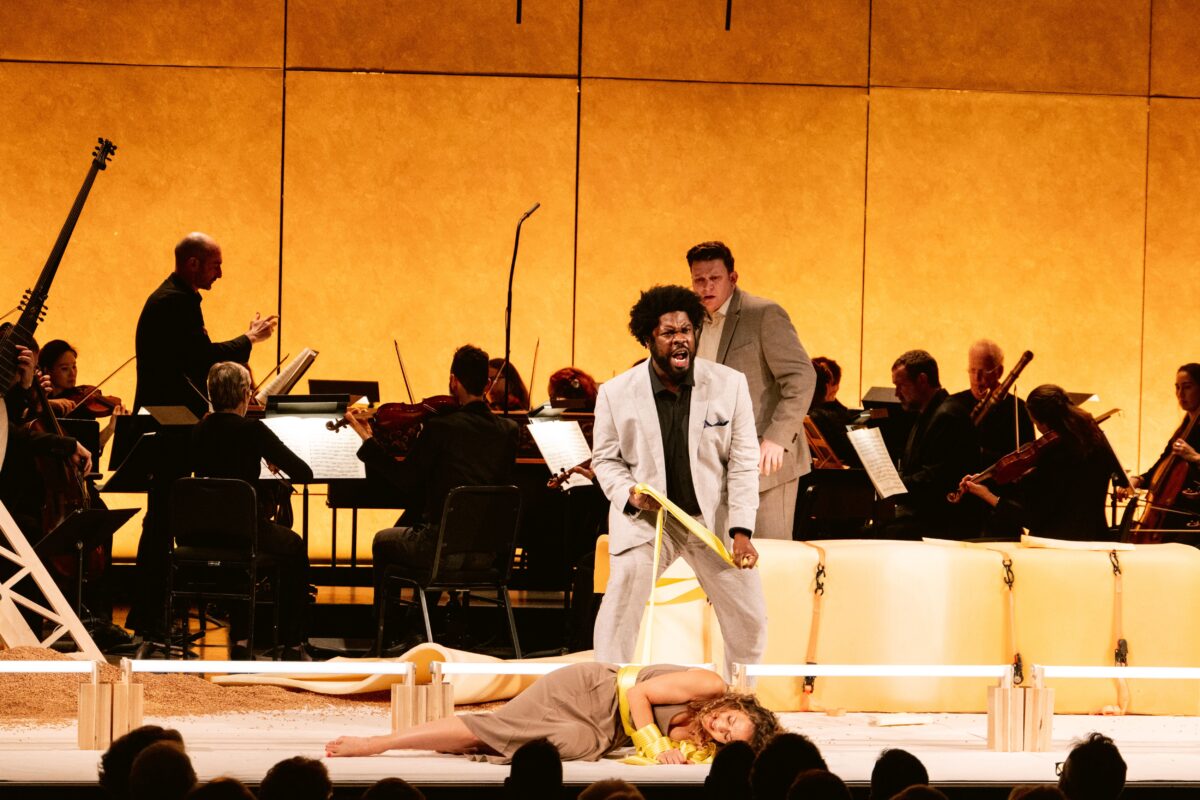
Photo: Kristen Loken
The psychology of love is also explored in Handel’s earlier Tolomeo, though this time it is complicated by power and betrayal. Written in 1728, Tolomeo was the last opera he composed for the Royal Academy of Music, his first opera company, marking the end of a glorious eight-year reign that included his first peak trilogy in 1724. Tolomeo was also the last of the five operas he composed for the triumvirate of internationally renowned singers, the castrato Senesino and the “dueling” sopranos Francesca Cuzzoni and Faustina Bordoni, a collaboration that began two years earlier with Alessandro.
The score for Tolomeo is very pastoral in nature, and the libretto (by Nicola Francesco Haym) frequently references the natural elements. Therefore, it requires a skilled hand to mount this gentle opera. I thought it was curious when PBO announced Tolomeo as their 2026/27 season opener, but my curiosity was answered on opening night!
Announced in Summer 2025, Whelan is the fourth Music Director in PBO’s 45-year history, following Laurette Goldberg, Nicholas McGegan, and Richard Egarr. He made his US debut conducting Gluck’s Orpheus & Eurydice during San Francisco Opera’s Centennial season in 2022. His acclaimed debut with PBO, Handel’s Alceste in March 2025, led to his appointment. On July 23, Whelan made sure all eyes were on him, as he was undoubtedly the star of the show, leading PBO in a vigorous and exciting reading that was, literally, the best I’ve heard from PBO in a long time. He coaxed a glorious palette of nuances from Handel’s score, and the woodwind, always PBO’s weak spot, shone brightly without flubs. Even better, he gave this pastorale opera a sense of purpose, treating it as a first-class score! I simply couldn’t wait to see what he had in store for the future of this period-instrument band!
Whelan assembled a starry cast of singers that elevated the musical aspect of the night to the highest level. Personally, I found the opera’s title role a puzzling character, as he spent the bulk of the opera in a depressed state, with morbid thoughts running through his arias. Cohen managed to shift the feeble character into strength with his warm, round voice, giving each aria a sense of determination that was lovely to witness. It was easy to see why his Tolomeo was fought over by two lovely sopranos, Lauren Snouffer’s Seleuce and Nicole Heaston’s Elisa. Their instruments were fundamentally different; Snouffer’s silvery, lyrical voice channeled Seleuce’s hardships, while Heaston completely stole the show with her bright, sonorous tone and chameleonic persona. On the opening night, Snouffer’s top notes sounded a bit pinched at times, although she maintained a great rapport with Cohen, and their two duets were highlights of the night. Countertenor Kangmin Justin Kim and bass-baritone Dashon Burton rounded out the principals with notable performances as Alessandro, Tolomeo’s brother, and Araspe, the king of Cyprus.
The only drawback of the show was James Darrah Black’s baffling direction. While the opera was originally set on the island of Cyprus, Black moved the action to a present-day, undisclosed island, with a downed plane as the backdrop. In itself, it was a reasonable transition, but the execution of his vision left much to be desired, especially since he filled the tiny stage of Herbst Theatre with a giant crate wrapped in foam and fluorescent tubes on wooden blocks (probably to signify a makeshift airport on that island). For the first two acts, the singers moved around that crate while trying hard to steer clear of the light tubes on the floor (one singer actually tripped over them). For the last act, mirrored cubes emerged from the crate, and each singer literally sang and watched their reflections on those cubes for the entire act. In the program notes, Darrah mentioned that “a person’s true complexity is hardly ever captured by the one simple reflection glimpsed in a mirror,” and I thought he realized that with those cubes. Nevertheless, this was the point where I felt his symbolism got in the way of a clear narrative… such a pity, especially when the musical aspect was that good!
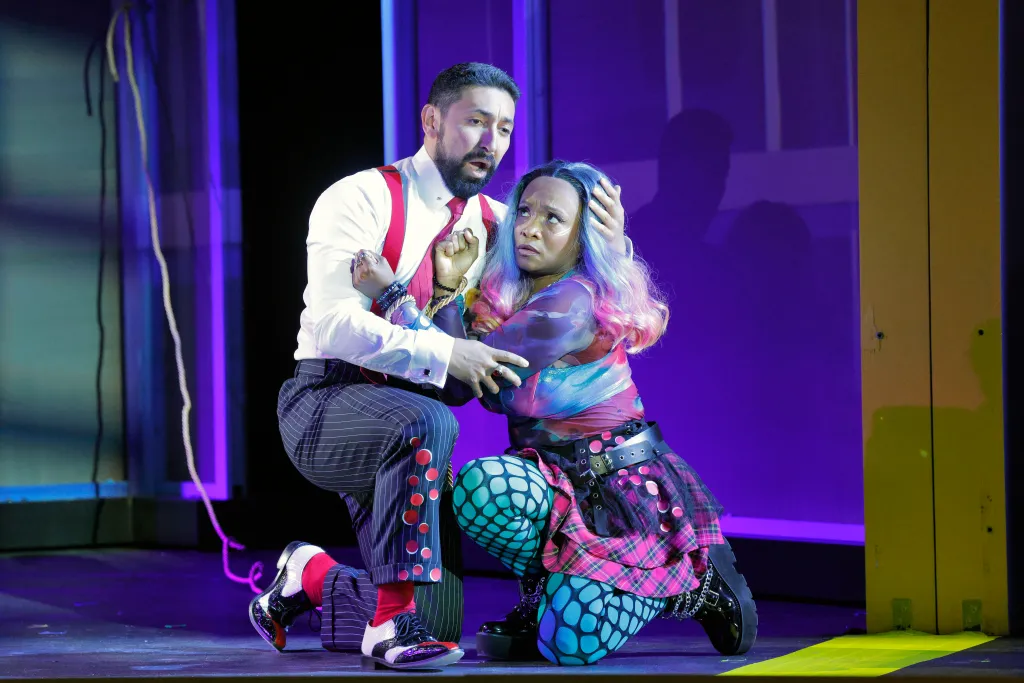
Photo: Cory Weaver
Similarly, a week later, WEO presented a contemporary staging of Rinaldo, a gamble that paid off handsomely. Written in 1711, Rinaldo was Handel’s first London success and the first Italian-language opera written specifically for the London stage. Loosely based on Torquato Tasso’s epic poem Gerusalemme liberata, the libretto was by Giacomo Rossi, with input from English impresario Aaron Hill. Rinaldo was wildly popular during Handel’s lifetime, becoming the most frequently performed of his 42 operas.
Director Keturah Stickann received one directive (from WEO’s General Director Mark Streshinsky) for Rinaldo: “[P]lease make it funny.” She transposed the Crusades setting into the realm of comic-book superheroes. In this version, Rinaldo was a superhero working for the city’s police force (modeled after The Tick), with Goffredo as the chief of police (à la Commissioner Gordon), and Almirena, his daughter (the role of Eustazio, his brother, was eliminated). Argante became the Lex Luthor of the local syndicate A.S.A. (Alliance for Superhero Annihilation), while Armida evolved into the super-villain. A final character combined the roles of the Siren and the Magician to complete the cast.
Stickann carried her vision through and excelled in every aspect of the show, making it one of the most fun Handel productions in a long while. Liliana Duque-Piñero’s double-panel set evoked comic-book panels, perfectly complemented by Michael Oesch’s excellent lighting and Yuki Izumihara’s entertaining Batman-style projections (yes, complete with Boom! Pow! Smack!). Costume designer Bethany Deal had a field day with her outrageously over-the-top, colorful costumes for each character, particularly for Armida and the Siren/Magician. Six dancers performed a well-choreographed routine (by Stickann herself) to represent the cops and the robbers, giving the whole proceeding an unmistakable showbiz sheen. Who knew Baroque opera could be this fun?
Musically, WEO’s Rinaldo was an invigorating and revelatory performance that matched the production’s fast pace. Emily Senturia brought vigor and clarity to her interpretation of the piece, leading the 18-person orchestra with a steady hand and keen sensitivity to the singers. The local cast responded strongly to her conducting. In the title role, countertenor Kyle Tingzon sounded warm and good-natured, perfectly embodying the high-spirited, if somewhat obtuse, superhero. Soprano Nikki Einfeld played Armida with glee, employing her bright instrument almost to a terrifying degree, particularly in the rage aria “Vo’ far Guerra,” complemented by baritone Efraín Solís’s indecisive Argante. Two singers returned here from Alcina, namely Couden and Sulker. Once again, Couden made full use of her big, robust contralto voice in the trouser role of Goffredo, while Sulker fared much better as Almirena, bringing a sweet sound as the police chief’s daughter. Naturally, the truncated running time meant many cuts to the score, but this time they were applied judiciously.
All in all, what a great summer of Handel operas in the Bay Area. I certainly hope this won’t be the last time, but who knows? I, for one, am forever grateful for this unique opportunity! One more performance of Rinaldo remains; you’d be wise not to miss it!
-
Topics: Review
-
People: Aaron Hill, Alan Curtis, Aryeh Nussbaum Cohen, Bethany Deal, Cory Weaver, Courtney Miller, Dashon Burton, Derek Tam, Efraín Solís, Emily Santuria, Emily Senturia, Eva Lymenstull, Faustina Bordoni, Francesca Cuzzoni, George Frideric Handel, Giacomo Rossi, Gluck, Isaiah Musik-Ayala, James Darrah Black, Jeremy Geffen, Joyce DiDonato, Kangmin Justin Kim, Keturah Stickann, Kristen Loken, Kyle Tingzon, Lauren Snouffer, Laurette Goldberg, Liliana Duque-Piñero, Ludovico Ariosto, Marie Sallé, Mark Streshinsky, Michael Oesch, Nicholas McGegan, Nicola Francesco Haym, Nicole Heaston, Nikki Einfeld, Nikola Printz, Nina Jones, Peter Whelan, Richard Egarr, Sara Couden, Senesino, Shawnette Sulker, Spencer Green, Spencer Greene, Torquato Tasso, Yuki Izumihara, Zachary Gordin
-
Works: Alceste, Alcina, Alessandro, Ariodante, Giulio Cesare in Egitto, Imeneo, Orlando, Orpheus & Eurydice, Partenope, Rinaldo, Rodelinda, Semele, Theodora, Tolomeo, Tolomeo (Handel)
-
Places & Organizations: Cal Performances, Covent Garden Theatre, English Concert, Festival Opera, Herbst Theatre, Philharmonia Baroque, Philharmonia Baroque Orchestra, Royal Academy of Music, San Francisco Early Music Society, San Francisco Opera, West Edge Opera