There are no dead
John Danaher pays an operatic tribute to the writings of James McCourt, an author who captured the spirit of opera as queer and dangerous like no other.
 By
John Danaher
By
John Danaher
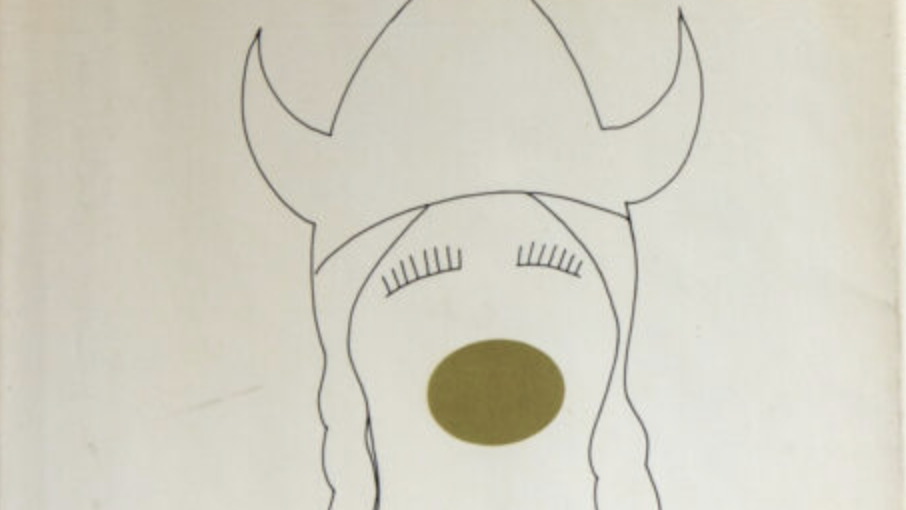
A portion of the cover of Mawrdew Czgowchwz by James McCourt
If opera is tantamount to a religion for the most devoted readers of Parterre Box, James McCourt is surely its high priest and Mawrdew Czgowchwz its sacred text. Published to strong reviews in 1975, Mawrdew is most famously a send-up of diva culture and has earned the sobriquet “cult classic.” McCourt would continue to return to opera (as well numerous other passions) in his subsequent work, including in the linked stories of Kaye Wayfaring in The Avenged, the poignant Time Remaining, the highly regarded non-fiction Queer Street: The Rise and Fall of an American Culture 1947-1985, and the long awaited sequel to Mardew, Night Voyagers: The Night Sea Journey. No contemporary writer better captures the spirit of opera as queer and dangerous than McCourt.
Mawrdew turned fifty last year, and James McCourt will be eighty-five on July 4th. In honor of these milestones and as an homage to this great American writer, I thought we might trip down memory lane through each of these texts and examine their rich and dazzling engagement with opera. Indeed, McCourt’s characters often see the world through an operatic lens, and he uses his vast knowledge of the opera world to make them say or think insightful, interesting, and often very funny things about it. By way of illustration, I’ve included examples of performances to try to capture the musical atmosphere of McCourt’s references and influences.
Mawrdew, McCourt’s most famous and expressly operatic work, had a long gestation, with a first extract published by The New American Review in 1971. In retrospect, one gets the sense that McCourt had to have experienced hundreds of hours of brilliant, droll conversations, drank dozens of stingers, had lots of sex, and studied all of what would become a fire hose of cultural references before he felt he was ready to make his debut.
The story captures the Zeitgeist of the standing room line at the old Met on 39th St and Broadway during the 1950s, where opera was a matter of life or death and where queer men (and a few women) could be themselves despite the menacing legal and cultural proscription of the mainstream. An encyclopedic and prodigious memory of singers, productions, and performances was the price of admission to this milieu. That, and the boundless energy required to acquire that knowledge in a pre-internet world. McCourt’s characters are imbued with this energy and are often in motion as they carry on their conversations.
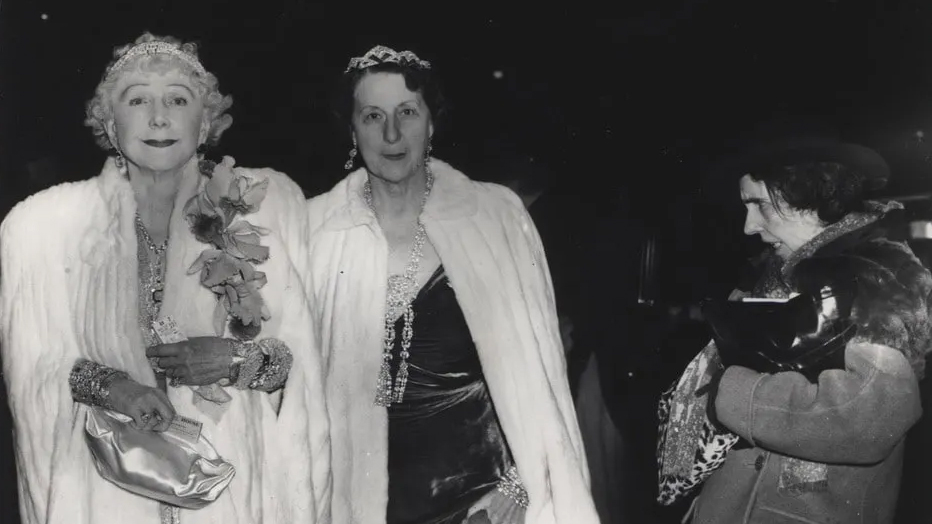
A portion of “The Critic” by Weegee
At the risk of committing heresy, I confess to having thought that Mawrdew might have had a wider audience if it had been entitled something less clever. Czgowchwz, like the Czech language, appears intimidating and impenetrable. Mawrdew sat on my shelf unread longer than it should have because, despite its sterling reputation, it looked like it might be a slog. Of course, the difficulty of the title is a feature, not a bug. To know it, i.e. how to pronounce it, meant you were “in the know.” In an interview for the final print version of Parterre Box, McCourt reminded us that that its origin was too good to pass up:
[…] I started doing some research on who she [the singer Miliza Korjus] might be, and more or less on the spot I invented for Miliza a wayward sister called Mawrdew. I chose “Mawrdew” because that was my camp name. (I had this incredible case on Jack Kerouac and used to stalk him, though with no real success.) The original publicity for Miliza Korjus said, “rhymes with gorgeous.” That’s where the name “Czgowchwz” came from.
Mawrdew, the “bewitching scion of a Fenian firebrand and a Bohemian metaphysician,” conquers the opera world with her signature three and a half octave oltrano voice. Discovered by a group of devoted opera fanatics (The Secret Seven) via an overseas radio broadcast of Aida, she eventually arrives at the old Met and makes her debut as Violetta in La traviata. During the performance, “Flowers began to fall again, continuing through the scene, but Czgowchwz mused relentlessly, weaving enchantment.” Though no Mawrdew in terms of range and power, here is McCourt’s muse and friend Victoria de los Angeles weaving her own enchantment as Violetta:
https://youtu.be/y–PXLX84HY
Later, in a hilariously shambolic performance of Tristan und Isolde Mawrdew sings the Liebestod not in German but in Irish, “in that same tongue the Irish once sang of love and death in the Western World.” She collapses at the conclusion and is unable to speak or sing. The whole world waits anxiously for news of the stricken diva. With the help of the eminent psychiatrist Dr. Gennaio and the poet/translator Jameson O’Maurigan she recovers. Her comeback begins with a matinee performance at the Met as Mélisande in Debussy’s opera. McCourt would likely have been influenced by Bidu Sayão, a mid-century Met stalwart as Mélisande. Here she is with Lawrence Tibbet as Pélleas:
The afternoon performance is followed improbably by an evening recital at Carnegie Hall with a superhuman program of no less than thirty songs, arias, and song cycles: “The recital was recorded live, as well as taped by many everywhere. Applause, mounting, cascaded. Mawrdew Czgowchwz permitted every ovation. Bouquets past counting fell about the platform…[she] bewitched a willing audience.” Mawrdew is triumphantly back on top.
Mawrdew meets her soulmate and fellow oltrano in Jacob Beltane, and they travel to the island of Manitoy (think Block Island) where in a theater built for the occasion (think Bayreuth) for a week-long music festival. On the program: “the mock operas Savonarola (after Verdi), Morphine (after Massenet), Plotziful (after Wagner), and La Farfalla di New York (after Puccini).” The festival ends spectacularly with a performance of the new opera NOIA composed for the occasion. The music drama is accompanied by a hurricane, aptly named Amneris:
The wind and the rain’s demented force diminished slightly during this astonishing progress, as if Amneris, her bluff called, had decided to go menace elsewhere. She weakened steadily thereafter throughout the afternoon, until in the Mawrdew Czgowchwz Theater atop Neap Hill at Neaport on the island of Manitoy, in the final moments of Creplaczx’s NOIA, the hollow sound of the perishing tempest moaning in eerie imitation of the woodwinds supporting the final Czgowchwz-Beltane duet died away altogether. Nature’s thrust met art’s and surrendered, kneeling.
McCourt frequently refers to Zinka Milanov in his work, amusingly parodying her accent; here she is with Fedora Barbieri as Amneris in the classic RCA recording of Aida:
Just like the modernists that he clearly admires—Joyce, Woolf, and I think especially Proust—McCourt benefits from rereading. If it’s been a while, I urge you to revisit this comic gem; it will not disappoint.
Opera cognoscenti waited (im)patiently for McCourt’s next book, perhaps hoping for more of the same. But in his follow-up, Kaye Wayfaring in Avenged (1984) the mercurial McCourt turned his gimlet eye to Hollywood and film culture. In four linked stories, McCourt here writes in the style of the movies he clearly knows so well: the entire film noir canon and his holy grail All About Eve starring Bette Davis. The plot is superfluous, providing settings for wise-cracking dialogue. Pushing forty, the eponymous heroine reluctantly stars in what will become an Oscar-worthy performance. The “action” moves from New York to Hollywood and eventually via train and ferry to the island of Manitoy, where Kaye contemplates her next role.
It is regrettable that McCourt never had a screenplay produced or that Mawrdew was never made into a film. A director like Ken Russell might have done wonders with it. Perhaps it’s just as well: the technology available to filmmakers today might even better realize McCourt’s outlandish and imaginative set pieces. (Speaking of technology, I found McCourt more enjoyable to read on an e-reader, where I could more easily look up an esoteric word or reference, and translate the untranslated texts in French, German, Italian, and Latin, to name a few, that appear throughout his work.)
I digress. Mawrdew Czgowchwz and other characters from the first book return in Kaye Wayfaring as they will in subsequent McCourt stories. Opera references abound. As Kaye strolls through what is described in Mawrdew as “the charted Cytherean reaches in lower-mid Central Park known as the Ramble, an area valued in certain quarters as the perfect Gotham rendezvous for languorous Maytime trysts” waiting for the next scene to be shot, she spontaneously begins singing from Gluck’s Orfeo ed Euridice, recalling a performance of Mardew’s. The present triggers the memory of an aria, a singer, a performance and thus is imbued with heightened meaning. Here, he specifically refers to Kathleen Ferrier:
Time Remaining, published in 1993 and dedicated “In memory of dead friends pictured within,” appeared as the AIDS pandemic continued to ravage the gay community. Two linked stories are a vehicle for the performance artist Daniel Delancy to tell his own story and for the drag queen Odette (Proust!) O’Doyle to describe her recent European adventures (with numerous trademark McCourt digressions) as they ride the overnight train to Montauk. Delancy invokes the characters from Mawrdew, including his friend Jameson O’Maurigan. Mawrdew presides in spirit over Time Remaining.
The impetus for Odette’s trip is to take the ashes of some of her fellow drag queens who have succumbed to AIDS (a group known as the Eleven) and to spread them in various bodies of water i.e., the Rhine, the Liffey. McCourt explicitly invokes Wagner, the spirits of the dead friends as the Valkyries: “It seemed to me that it was Brünnhilde’s eight sisters in their unreadable disguises who followed us into the last car of the Montauk train…” And in the often uproarious narrative that follows they are revealed to have been keenly protective of their lifestyle and of each other. The incomparable Nilsson captures the vibe:
Opera indirectly prompts some of McCourt’s most elegiac writing and the book’s title. As she is dying, Miss Faith obsessively listens to Mawrdew‘s 1956 live recording of Pélleas. McCourt quotes Maeterlinck:
And speaking of Maeterlinck, he declared there are no dead. He was absolutely right there are no dead; we simply go through life imagining the unlikely and occupy the time remaining in re-editing and canonizing the attributes and performances of the seemingly disappeared.
Writing in The New Yorker in 2018, Michael LaPointe reported that “in the months and years after the book was published, several people told McCourt that they read it aloud to their dying lovers, and together, in what time remained, they screamed with laughter.” To provide humor and comfort to a community in the midst of such devastation with a gift such as Time Remaining is a profound achievement.
In 2004 McCourt published his idiosyncratic non-fiction history Queer Street: The Rise and Fall of an American Culture 1947-1985 to much acclaim. John Bayley writing in the New York Review of Books commented on how McCourt’s “ allusive, stream-of-consciousness style is as strangely comely and insidious as it is, so to speak, habit-forming. In the way it is with many naturally deft writers, the reader finds himself becoming involuntarily a part of the writing.” The book is packed with names, places, events, and conversations yet it reads effortlessly.
In Queer Street McCourt brings his critical eye to bear on the relationship between mid-twentieth century opera and queer culture. Here he is on Mozart’s Don Giovanni:
…being the one opera most undeniably pliable in a queer reading (although the queer immolation opera of all time remained Bellini’s Norma), most especially in the character of the Don himself, who, like some lockerroom Lothario jock, carries his cocksman reputation on stage but is never to succeed in seduction during the course of the evening and believed by queers, before he attempts to seduce Zerlina to have his eye squarely set on a menage-a-trois with Masetto, whom he trusts will pursue and be cajoled into consenting.
McCourt explicitly links the intrigues of Don Giovanni with the world he so lovingly captures in Queer Street, referring to Cesare Siepi in the title role:
McCourt also muses on (comparatively) more recent operas, noting that Barber’s Vanessa and Carlisle Floyd’s Susannah in particular lent themselves to queer readings. He describes how the originator of the role of Vanessa, Eleanor Steber, remained a great gay icon into the 1970s; she would sing at the Continental Baths along with the likes of Bette Midler. Like the pre-Stonewall queer culture he documents, McCourt captures the spirit of an opera culture that for a time held the attention of a wider part of American culture that has largely disappeared. His history will ensure that it will not be forgotten.
McCourt had long teased that there would be a sequel to Mawrdew Czgowchwz and in 2007 it finally arrived as Now Voyagers: The Night Sea Journey Some Divisions of the saga of Mawrdew Czgowchwz, Oltrano, Authenticated by Persons Represented Therein. Book One. As the lengthy title suggests and as its five hundred plus pages bear out, this was going to be a thorough telling of Mawrdew’s further adventures. In contrast to the concision of the original, this is McCourt on steroids, perhaps skewering his postmodern near-contemporaries and their massive tomes. The style is discursive maximalism and McCourt’s digressions from his prior work return: Schopenhauer, Wittgenstein, Freud, Catholicism, St. Augustine, Menander, Virgil, Ovid, Bette Davis, All About Eve, the Everard Baths and, of course, opera and many of the mid-century singers he admires.
In Mawrdew Czgowchwz things happen to Mawrdew; we don’t get much from her point of view. In Now Voyagers, Mawrdew, now long retired from singing (she subsequently became a psychoanalyst) renders her opinions and critical judgments. She is obsessed with Puccini’s Fanciulla, his “finest work.” We learn that Minnie was a favorite role, and the Czech soprano Emmy Destinn who originated it at the Met was an early mentor. Marfa in Khovanschina is another favorite role. She also recalls her friendship with Risë Stevens “the first American I ever met.” A cavalcade of stars and performances anchor Mawrdew’s lived experience as one of the greats of the twentieth century.
Mawrdew’s nostalgic reminisces lead to, appropriately, a dream (Freud!) that she is performing at La Fenice in La Gioconda as Laura with none other than Maria Callas, her former colleague in the title role. Perhaps no singer prompted more impassioned discussion on the standing room line at the Old Met. For Mawrdew and her creator, the fierce debates about Callas perhaps represented the apotheosis of mid-century diva culture, and thus a fitting coda to Night Voyagers.
I hope that this short survey–inadequate as it is—captures some of the true originality of McCourt’s voice as well the breadth of his achievement over a distinguished career. He remains essential reading for numerous constituencies: those interested in comic writing, twentieth century New York City, film history, Irish American Catholicism, and most especially queer culture and its relation to opera. We wish James McCourt a very happy birthday and thank him for the joy and laughter he has given us these last fifty plus years.
John Danaher
John Danaher lives in Naples, FL, where he has retired to read all of the books he was supposed to read in college. He attended a performance of Rigoletto at the New York City Opera when he was ten years old and was hooked: “Why are they putting that lady in a bag,” he asked as Gilda was being abducted. John’s live opera highlight was seeing the legendary Leonie Rysanek at the Metropolitan Opera in the role of Kostelnicka in Janacek’s Jenufa—the house almost literally was brought down. He enjoys tennis and traveling, catching opera performances on the road whenever he can.
-
Topics: book review, feature, james mccourt
-
People: Bette Davis, Bette Midler, Bidu Sayão, Cesare Siepi, Eleanor Steber, Emmy Destinn, Fedora Barbieri, James McCourt, Kathleen Ferrier, Lawrence Tibbett, Maria Callas, Maurice Maeterlink, Rise Stevens, Victoria de los Ángeles
-
Works: Aïda, All About Eve, Don Giovanni, Khovanshchina, La fanciulla del West, La gioconda, La traviata, Mawrdew Czgowchwz, Norma, Orfeo ed Euridice, Pelléas et Mélisande, Susannah, Tristan und Isolde, Vanessa
-
Places & Organizations: Metropolitan Opera