A springtime baroque bouquet
Christopher Corwin picks the flowers of a baroque May in New York City with reviews of concerts starring Lauren Snouffer, Key’mon Murrah, and the Oratorio Society of New York.
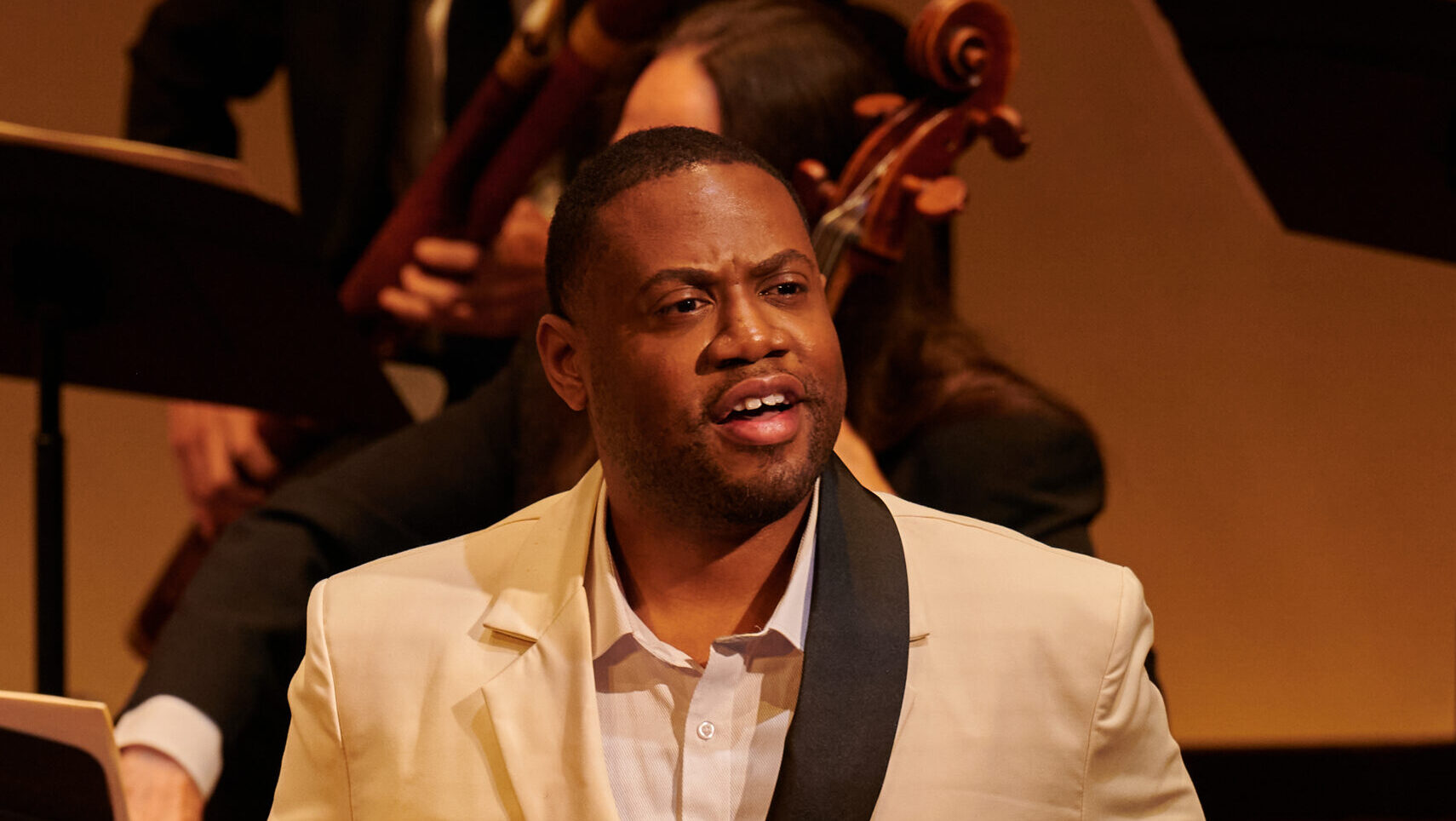
Les Talens Lyriques and Key’mon Murrah perform in the Frick Collection’s Stephen A. Schwarzman Auditorium Photo: Cris Sunwoo © The Frick Collection
For those of us in New York City who relish vocal music from the baroque and classical eras, May provided three rewarding events: a pair of solo concerts featuring two of America’s finest singers of this repertoire—Lauren Snouffer and Key’mon Murrah– along with a rare opportunity to hear Handel’s Alexander’s Feast, or The Power of Musick.
I used to often attend Early Music performances at Merkin Hall at Kaufman Music Center near Lincoln Center but hadn’t for quite a while. I was then pleased that Opera Lafayette chose the welcoming Upper West Side venue for New Woman, the final offering of its 2025-26 season. The concept program, featuring Snouffer and conducted by OL’s new Artistic Director, Patrick Dupre Quigley, was divided into two parts: “The High Male Voice and the Art of Pathos” and “The Soprano Voice from Within.” Though many may know the soprano from her recent debut role at the Met in The Amazing Adventures of Kavalier & Clay or from her fearless portrayal of Bess in Breaking the Waves, Snouffer has been primarily associated with 18th century music dating back to her time at The Juilliard School where I first heard her in Handel’s Clori, Tirsi e Fileno in 2010.
In New Woman’s first half, Snouffer performed two scenes written for male castrati: one somewhat familiar aria, the other surely new to everyone. The classical-era concert opened with Christoph Willibald Gluck. Prior to his famous “reform” operas, Gluck composed numerous opere serie, many to libretti by Pietro Metastasio including La Clemenza di Tito which would later be adapted for Mozart’s final opera. The best-known excerpt from Gluck’s version is Sesto’s sublime aria “Se mai senti spirarti sul volto” which the composer the later recycled as “O malheureuse Iphigénie.” Perhaps it should have been scheduled later in the concert as it seemed that Snouffer wasn’t fully warmed up as she sometimes struggled when the aria’s long lines rose to their highest. Otherwise, clad in the first of Ralph Rucci’s striking sculptural gowns specifically created for the evening, Snouffer’s darkly warm soprano throbbed expressively in Sesto’s elegiac music. Her second castrato piece, “Ebben si vada,” an extended concert scene by Johann Christian Bach with rich writing for oboe and fortepiano, happily found Snouffer in more confidently commanding form.
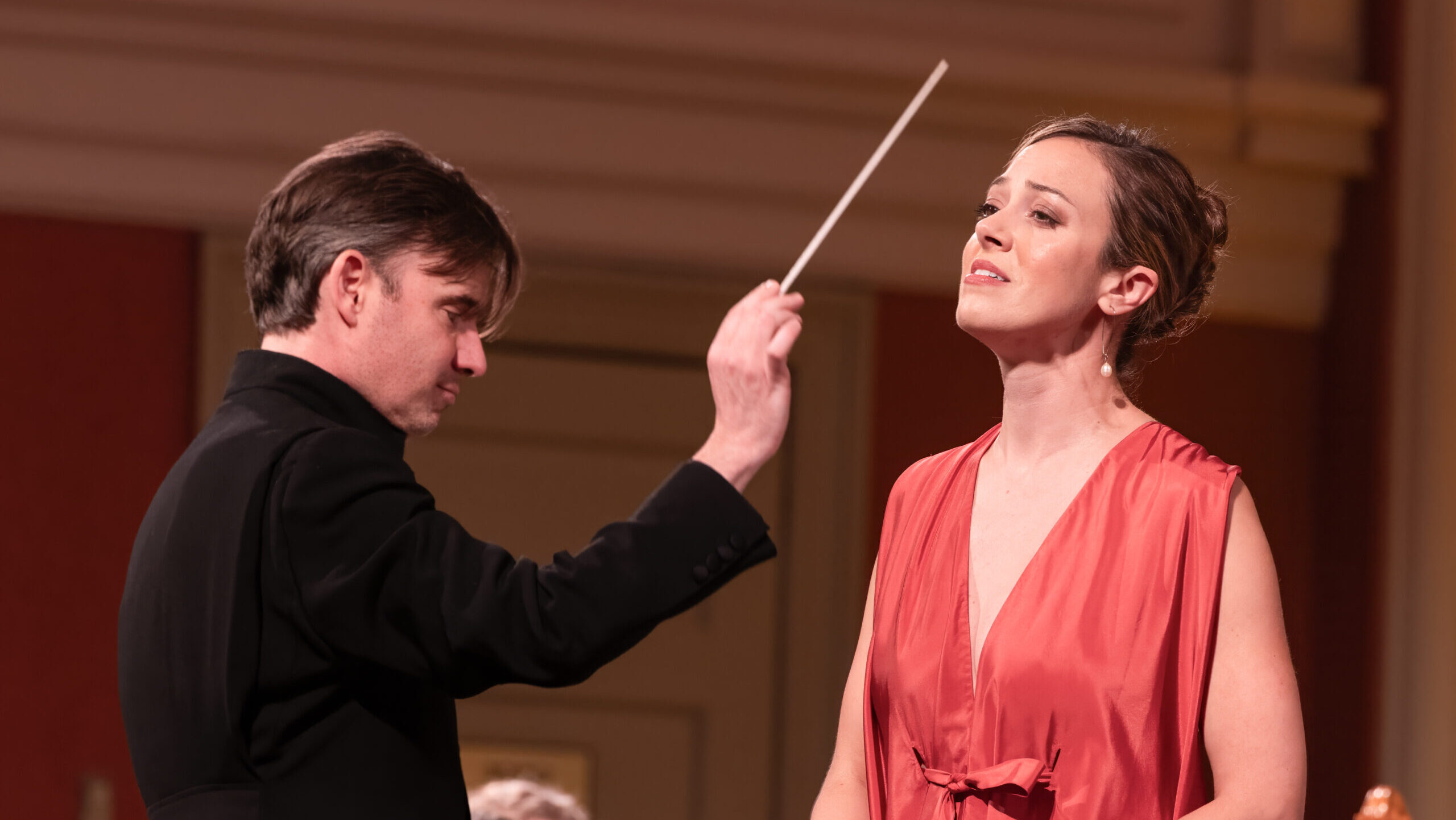
Patrick Dupre Quigley and Lauren Snouffer / Photo: Jennifer Packard
Through the years Opera Lafayette’s orchestra has sometimes struggled with the demands of the rarely-performed music it embraced. However, Quigley has markedly brought up its level as demonstrated in a delightfully vivacious rendition of Haydn’s Symphony No. 63 “La Roxelane” which was performed between the Gluck and J.C. Bach.
The second half highlighted music by two female composers who are both only recently being rediscovered. Maria Antonia Walpurgis’s opera Talestri, regina delle Amazzoni (c. 1760) will be broadcast live on 6 June from this year’s Händel Festspiele Halle.
Quigley and Snouffer gave a preview offering the opera’s overture and the title heroine’s opening da capo “Vado, ma il core, oh Dio!” They were followed by an overture and concert aria “Berenice, a che fai?” by Marianna Martines. These four excerpts suggested that both composers were accomplished musicians whose music falls gracefully on the ear yet perhaps without the distinction that would merit further investigation. In any event, Snouffer was in blazing form, particularly in Berenice’s shifting moods, and demonstrated why she is so sought-after for this repertoire. In July she’ll appear as Seleuce with Philharmonia Baroque in its three performances of Handel’s Tolomeo, two at its California homes, followed by a return to Westchester’s Caramoor Festival.
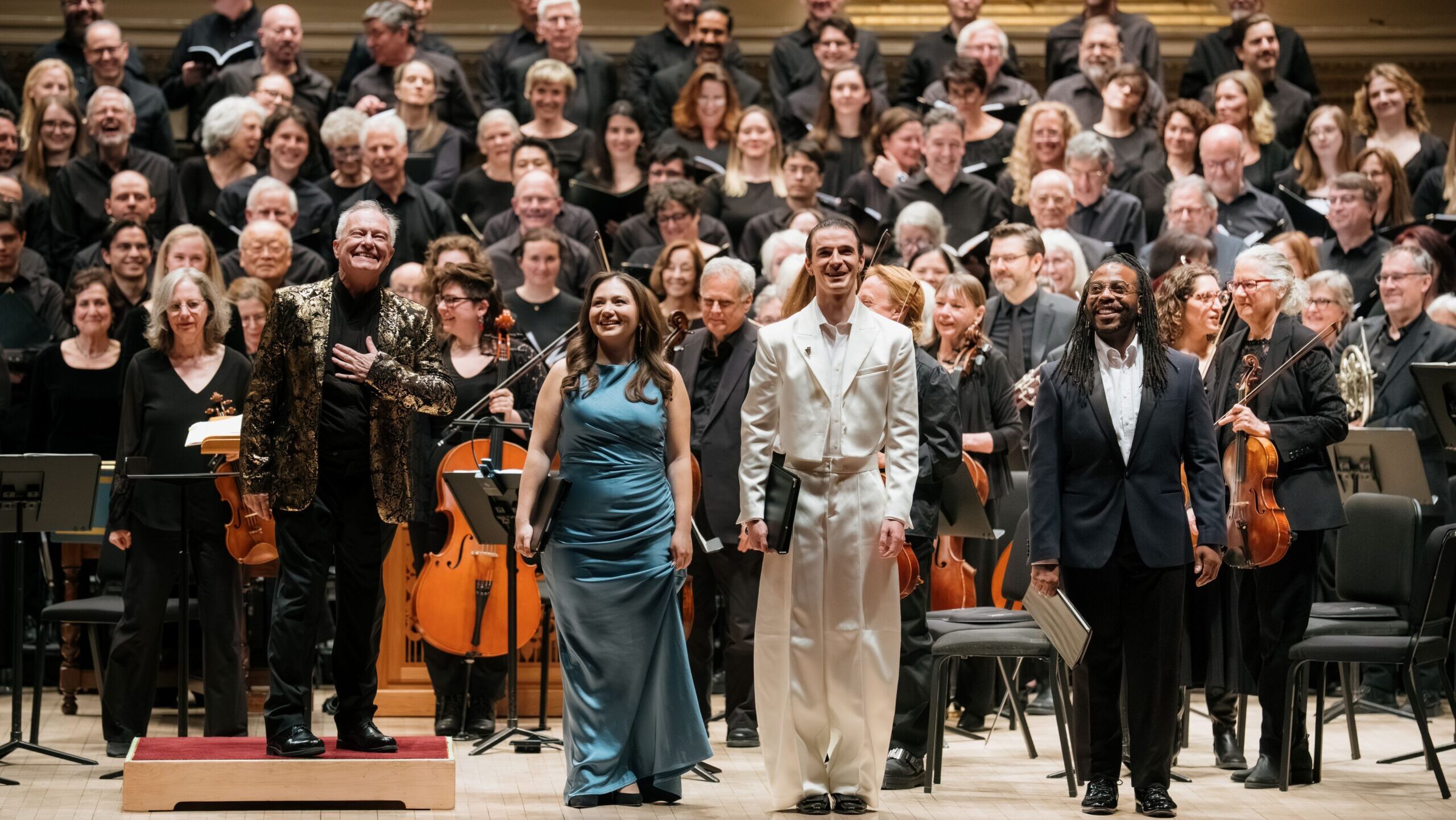
Photo: Brian Hatton
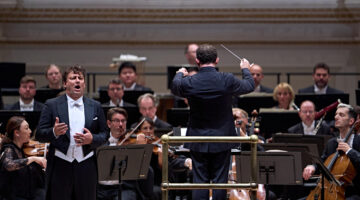
Snouffer was also originally announced as the soprano soloist for the Oratorio Society of New York’s Alexander’s Feast, but she withdrew several weeks prior to the May 11th concert at Carnegie Hall. She was replaced by Shelén Hughes Camacho who was joined by tenor Richard Pittsinger and baritone Sidney Outlaw in Handel’s vivid if dramatically inert secular oratorio to a text by John Dryden under the direction of Kent Tritle. His accomplished thirty-five-member modern-instrument orchestra brought stylish élan to Handel’s music; however, the Oratorio Society’s enormous chorus of over two hundred, though singing with admirable flexibility, inevitably muddied the finely-wrought lines of the Feast’s sometimes rollicking numbers such as the thunderous “The many render the skies” that concludes Part I.
Pittsinger, who is a member of this year’s edition of Le Jardin des Voix (the young artists performing branch of Les Arts Florissants), suavely wielded his light, high tenor with inviting flair, while Outlaw vividly tore into the furious roulades of “Revenge, Timotheus cries.” Hughes Camacho’s soprano was slimmer, more fragile than Snouffer’s, yet it rose above the staff quite comfortably when she added high ornaments to her music.
Fine though the work of these four fine vocalists was, none rose to the spellbinding fabulousness of Key’mon Murrah at the Frick on 22 May when the African-American countertenor (or, perhaps more accurately, male soprano) made a brilliant, star-making appearance superbly accompanied by Les Talens Lyriques, the deluxe French period-instrument ensemble led by its founder Christophe Rousset.
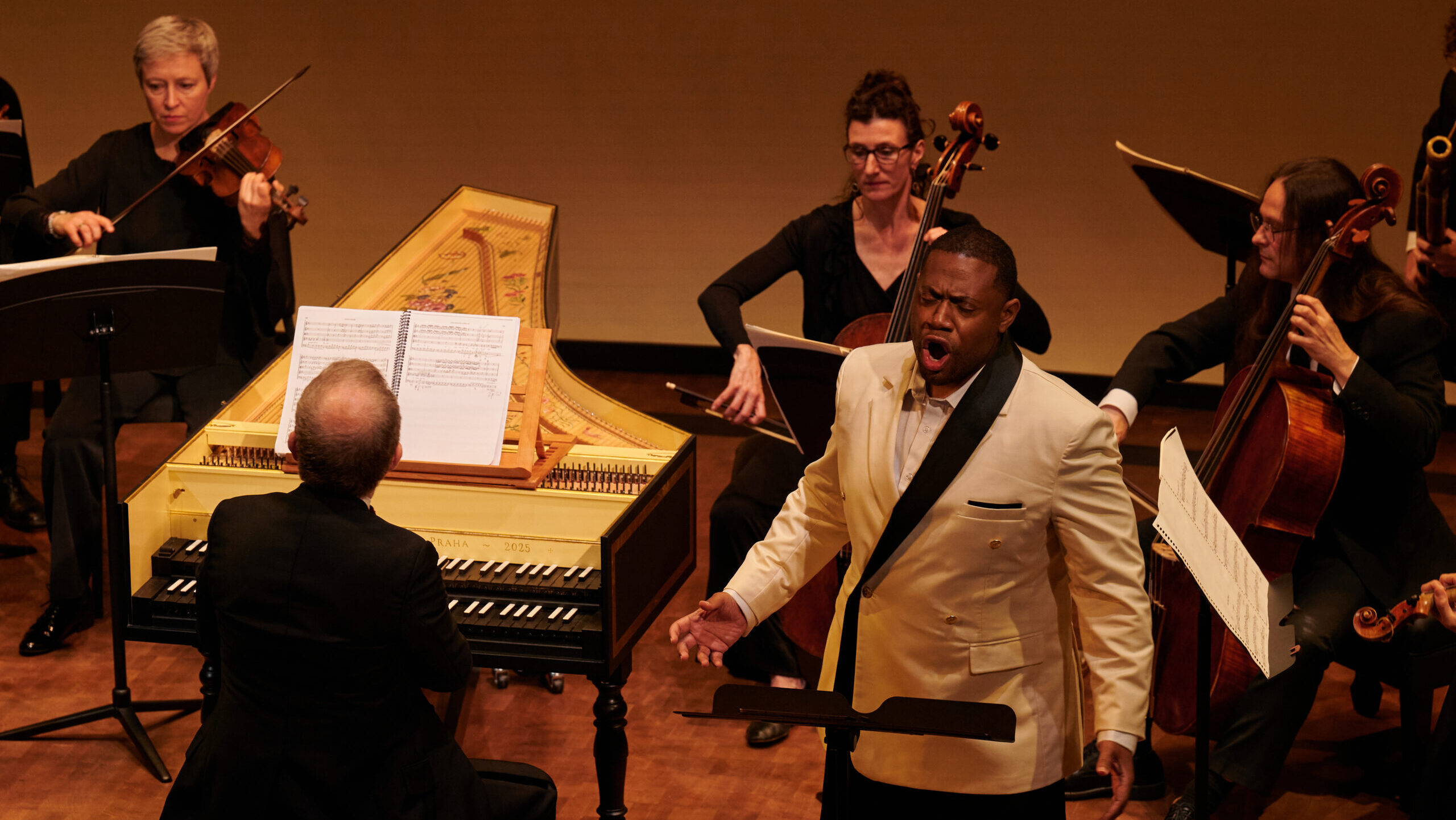
Les Talens Lyriques and Key’mon Murrah perform in the Frick Collection’s Stephen A. Schwarzman Auditorium Photo: Cris Sunwoo © The Frick Collection
While Murrah is not new to New York—he debuted two years ago at the Met as part of the countertenor trio in John Adams’s El Niño—and remains firmly committed to performing new music, his all-Handel program at the Frick gave definitive notice that he must now be considered among the finest baroque singers before the public today.
At first glance, his Handelian Heroes program looked a bit disappointing: nine thrice-familiar arias from Giulio Cesare, Serse, Ariodante, and Rinaldo. Yet he brought to all of them a seemingly effortless bravura that ranged from occasional firm dips into his baritone register to dazzling leaps above the staff that would be the envy of most cis-female sopranos. Murrah’s exceedingly modest stage manner belied his strong engagement with and marvelously idiomatic grasp of noble Handelian style.
If his first group of Sesto’s vengeance arias—“Svegliatevi” and “L’angue offenso”—lacked verbal clarity and punch, his final encore–that character’s fiery “La Giustizia”—rightly brought down the house with ferocious vigor and biting consonants. The evening’s coloratura showpieces, particularly a pleasingly unhackneyed “Dopo notte” and a stunningly flamboyant “Venti turbini” were admirably counter-balanced by soul-stirring pathos in a hauntingly beautiful “Scherza infida” that twice brought tears to my eyes.
Rousset who first led Murrah in a concert performance last year in France of Mozart’s Mitridate, Re di Ponto once again endowed Handel with his infectiously polished temperament. As always, he led his fourteen musicians from the harpsichord and made the several instrumental pieces much more than time-fillers inserted so Murrah could take breaks. The Rodrigo Passacaille and, especially, one of the Opus 3 Concerti grossi filled the intimate Stephen A. Schwarzman Auditorium with a vibrant plushness that would instantly convert any remaining HIP-doubters.
Murrah is also the undoubted star of Cedille’s new recording by Chicago’s increasingly essential Haymarket Opera Company of Leonardo Vinci’s Artaserse.
The opera, which in the early 2010s launched a Vinci renaissance, features one of Metastasio’s strongest libretti and provides a bounty of impressive and grateful opportunities for its cast to shine. If Haymarket’s vocal sextet and game period-instrument orchestra under Craig Trompeter don’t quite rise to the level of Concerto Köln’s all-male, all-star premiere recording, there is much fine singing to enjoy.
Eric Fenning’s sometimes edgy yet enviably fluent tenor proves entirely appropriate for bad guy Artabano, while male soprano Elijah McCormack enlivens Semira with piquant delicacy. Initially noticed years back for his devilishly canny impression of Cecilia Bartoli, Kangman Justin Kim in the title role is disappointingly inconsistent: some arias are firmly dispatched, while others emerge wanly wayward.
Remembered for her fine recordings with the Göttingen Handel Festival, undervalued Emily Fons as Mandane is the recording’s other star. Her firmly plangent mezzo delights in Vinci’s expressive writing in a convincing argument that female mezzos need not always cede their place in baroque opera to high-flying men.
But just as Franco Fagioli rose above his peers in the earlier Artaserse recording, Murrah amazes throughout and fluently voices Artabane’s famous “Vo solcando un mar crudele” with beguiling delicacy and flourishes.
The Frick helpfully projected the texts of Murrah’s arias; however, those for the encores went awry. After his serene “Lascia la spina” from Il trionfo del tempo e del disinganno, Rousset conferred with his singer and they launched into “La Giustizia;” however, the projected text announced the Vinci “Vo solcando” aria for which New York audiences will, alas, have to wait.

Christopher Corwin
Christopher Corwin began writing for parterre box in 2011 under the pen name “DeCaffarrelli.” His work has also appeared in , The New York Times, Musical America, The Observer, San Francisco Classical Voice and BAMNotes. Like many, he came to opera via the Saturday Met Opera broadcasts which he began listening to at age 11. His particular enthusiasm is 17th and 18th century opera. Since 2015 he has curated the weekly podcast Trove Thursday on parterre box presenting live recordings.
-
Topics: carnegie hall, Review, the frick collection
-
People: Christophe Rousset, Elijah McKormack, Emily Fons, Franco Fagioli, Kent Tritle, Key'Mon Murrah, Lauren Snouffer, Patrick Dupré Quigley, Pietro Metastasio, Richard Pittsinger, Shelen Hughes Camacho, Sidney Outlaw
-
Works: Alexander’s Feast, Ariodante, Artaserse, Breaking the Waves, Clori, Tirsi e Fileno, El Niño, Giulio Cesare, Il trionfo del tempo e del disinganno, Iphigénie en Tauride, La Clemenza di Tito, Mitridate, re di Ponto, Rinaldo, Serse, Talestri regina delle Amazzoni, The Amazing Adventures of Kavalier & Clay, Tolomeo
-
Places & Organizations: Carnegie Hall, Concerto Köln, Göttingen Handel Festival, Le Jardin des Voix, Les Arts Florissants, Les Talens Lyriques, Merkin Hall, Metropolitan Opera, Opera Lafayette, Oratorio Society of New York, Philharmonia Baroque, The Frick Collection, The Juilliard School