Dream a little dream of me
Gabriela Lena Frank’s El Último Sueño de Frida y Diego enchants and surprises despite the Disnified treatment of its subject matter.
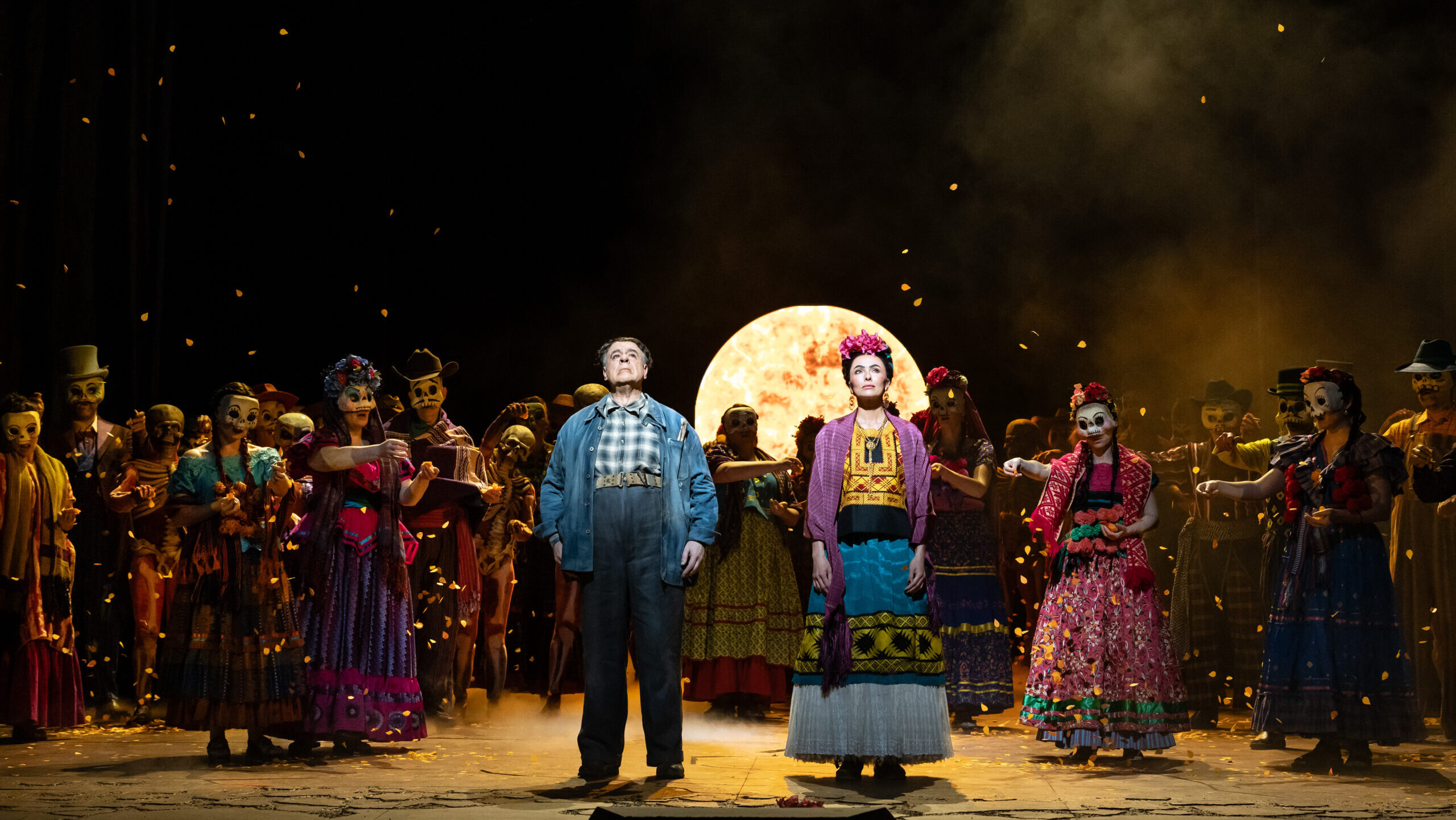
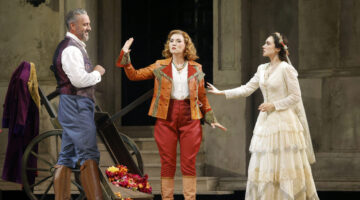
Carlos Álvarez as Diego and Isabel Leonard as Frida in a scene from Gabriela Lena Frank’s El Último Sueño de Frida y Diego. / Photo: Marty Sohl / Met Opera
Gabriela Lena Frank’s El Último Sueño de Frida y Diego had its Metropolitan Opera premier on Thursday 14 May. A reversal of the Orpheus story, Frida Kahlo in death is drawn back to earth on the Day of the Death to bring Diego Rivera with her into the Aztec underworld, Mictlan. Here the famously tumultuous lovers are at last reconciled, with all forgiven.
The effervescent, dreamlike opera dances frictionless across the jagged daggers of Kahlo and Rivera’s relationship. Exuberant and melodic, with elements of marimba and a faint spritz of mariachi and Mexican folkloric music, the opera beckons us into a unique an enchanting world of fiery phrases and a cinematic breadth of sound that made for a happy, quirky, and elegant 105 minutes of music.
Deborah Colker’s production, with a gorgeous set by Jon Bausor, is, like many recent new productions at the Met, visually breathtaking but dramatically static. The blazing blues and reds of the sets, the gleaming pinks, greens, and yellows of Bausor and Wilberth Gonzalez’s Mexican folk costumes, and the multicolored paper flags and bright orange ofrendas (Day of the Dead altarpieces) were brilliantly evocative. Dancing skeletons, in stunning red velvet costumes, crawl out of the blazing red underworld through cracks in the stage floor, performing a spasmodic, breakdance-informed Martha Graham ballet. While wildly entertaining, I couldn’t shake the idea that they were being used as stage filler, with the chorus mostly placed along the margins and poorly lit. It was as though we were being told that the director believes that your casual Met audience member doesn’t care much about classical music and is feeding us breakdancing skeletons to entertain us.
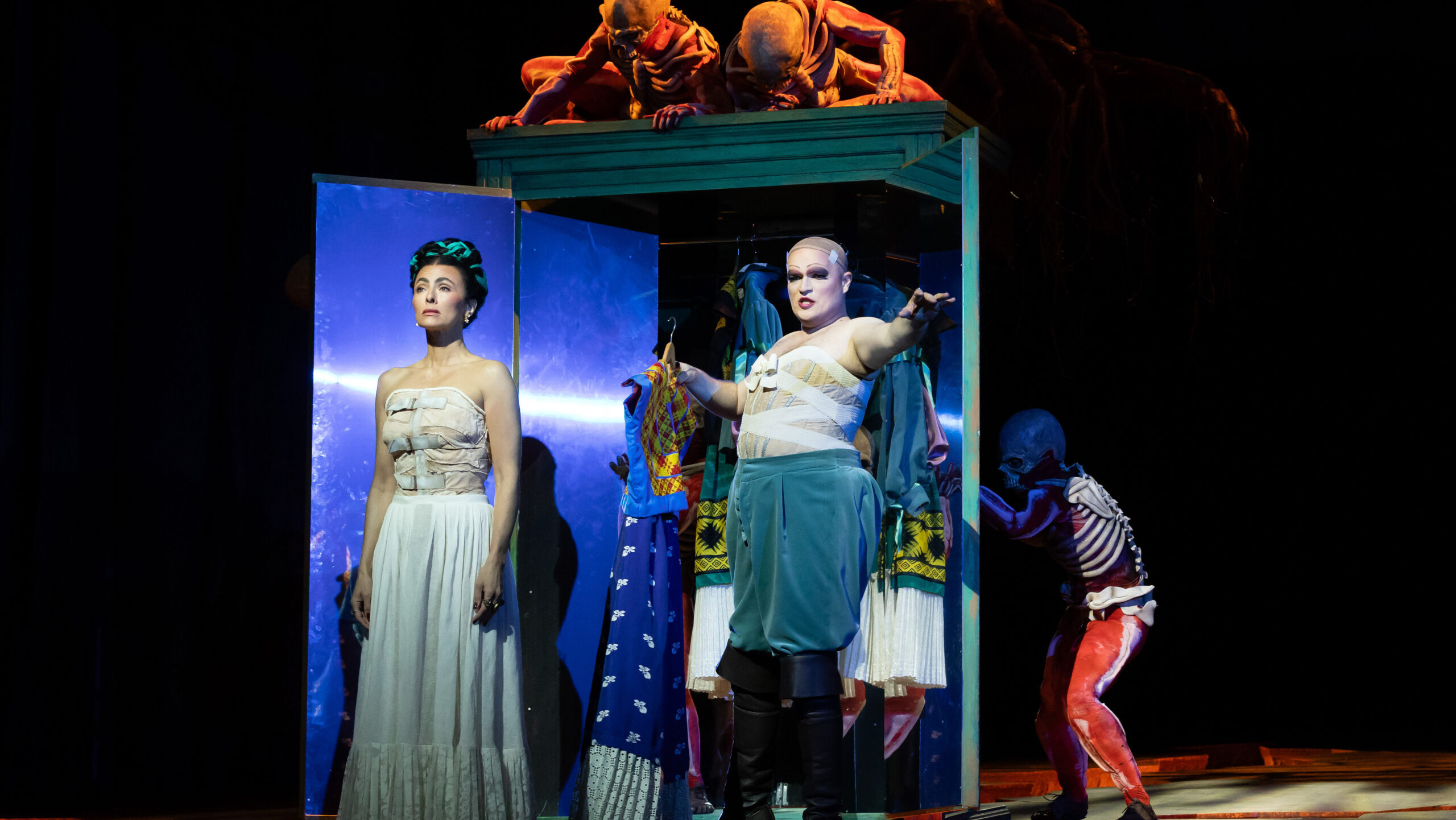
Isabel Leonard as Frida and Nils Wanderer as Leonardo in a scene from Gabriela Lena Frank’s El Último Sueño de Frida y Diego. Photo: Marty Sohl / Met Opera
The standout performance of the show (I saw its second performance, 17 May) was Gabriella Reyes as Catrina, the skeleton giant who acts as queen of the underworld and postmortem marriage counselor to Frida and Diego. She roared and thundered across the stage in her gigantic costume of bone and tulle. Her spectacularly witchy Brünnhilde meets Wicked Witch of the West performance was by itself worth the price of admission. The night’s other stunning performance was countertenor Nils Wanderer as Leonardo, Frida’s queer-coded companion in the underworld. Leonardo yearns to be brought back to the land of the living dressed as Greta Garbo for the sake of a living man who is obsessed with Greta Garbo. His impressive range, supple phrasing, and powerful acting give an energetic boost to the dreamy, mostly plotless opera. He has a depth and richness in his voice that can be lacking in countertenors and is reminiscent of warm, full-bodied contralto singing.
Isabel Leonard and Carlos Alvarez performed affectionate, intimate, and eerily accurate renditions of Frida Kahlo and Diego Rivera. Both seemed remote and subdued, however, as though holding back. Yannick Nézet-Séguin’s restrained conducting reined in the orchestra to allow for Leonard and Alvarez’s intimate, interior performances. The opera whirls around them like a festival, overwhelming their beautifully acted, pleasantly sung performances. They met the mark as best they could in an opera that seemed to be not very much about them.
Frank and librettist Nilo Cruz made a beautiful opera of the Orpheus story with a Mexican, Day of the Dead theme, but there was actually quite little about the real lives of Kahlo and Rivera in the opera. The sets and costumes mine the riches of their artwork, but the score itself treats them as incidental. Worse, these famous radicals receive a Disney treatment. There is a hint of anti-imperialism in place of Kahlo and Rivera’s mutual love of Marxism-Leninism and Frida sings about her physical pain and suffering but little about how she was impaled by a tram at the age of 18 and her artistic subsequent explorations into disability and bodily catastrophe. We are told that Diego had affairs, but not that Frida did, and there is no obvious mention of Diego’s affair with Frida’s sister.
Perhaps I’m asking too much of a show that’s meant to make money for a major arts nonprofit in 2026. Obviously, the Met isn’t going to put on a show called The Last Dream of Frida and Trotsky. Nevertheless, I was saddened that the complexities of the famous marriage were so little in evidence.
-
Topics: Metropolitan Opera, Review
-
People: Carlos Alvarez, Deborah Colker, Diego Rivera, Frida Kahlo, Gabriela Lena Frank, Gabriela Reyes, Gabriella Reyes, Isabel Leonard, Jon Bausor, Nilo Cruz, Nils Wanderer, Wilberth Gonzalez, Yannick Nézet-Séguin
-
Works: El ultimo sueño de Frida y Diego, El último sueño de Frida y Diego
-
Places & Organizations: Metropolitan Opera