Un paio in tre
Christopher Corwin and Andrew Lokay provide dual perspectives on the National Symphony Orchestra‘s performances of Puccini’s triple-bill.
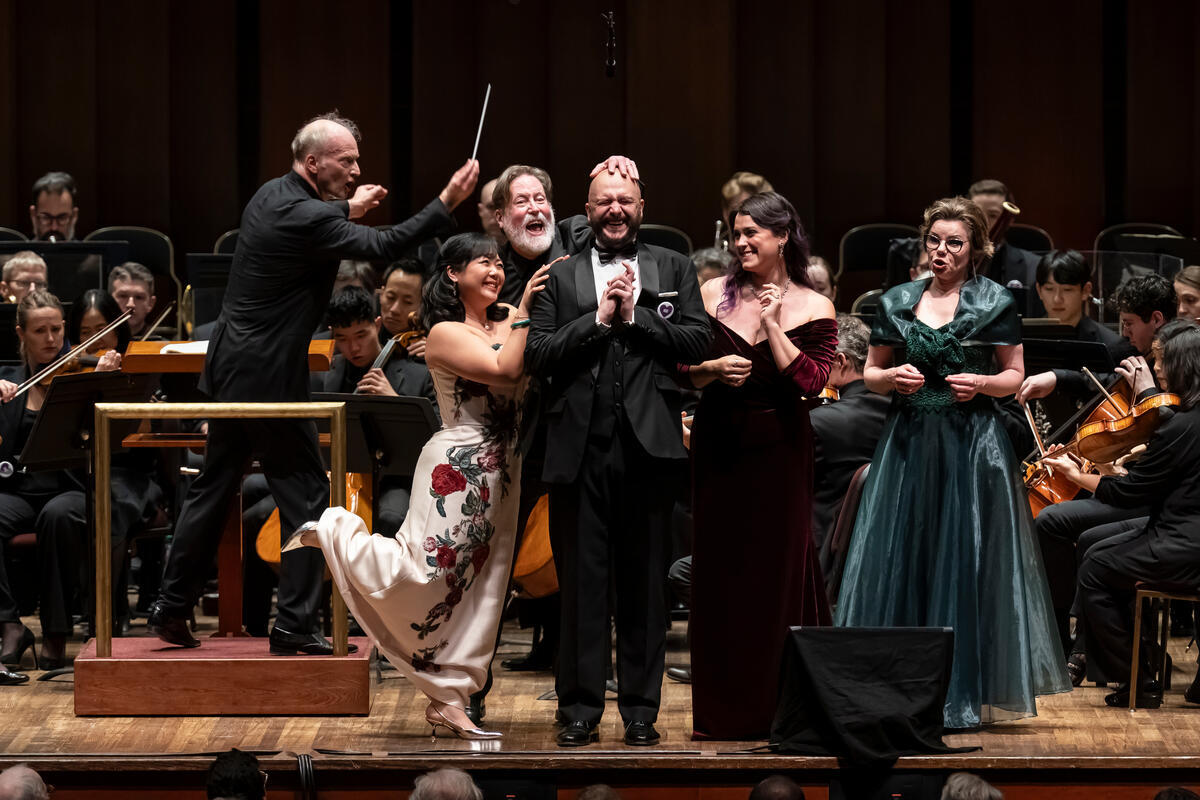
Photo: Scott Suchman
Andrew Lokay, from the Kennedy Center
The National Symphony Orchestra’s performances of Giacomo Puccini’s Il trittico in concert marked the end of an era for opera at the Kennedy Center.
Classical voice has been a fixture of the Center since it opened in 1971 with the world premiere of Leonard Bernstein’s Mass (revived by the NSO in 2022). Last week, the NSO brought opera back to the nation’s cultural center for the first time since the Washington National Opera departed earlier this year. This Trittico was the third installment in NSO Music Director Gianandrea Noseda’s opera in concert series, which featured Giuseppe Verdi’s Otello and Samuel Barber’s Vanessa in previous seasons. Friday’s performance of Puccini’s triptych is expected to be the last time opera is performed at the Kennedy Center until after the venue’s upcoming two-year closure for renovations, scheduled to begin in July. The NSO has not announced its 2026-27 season or where it will perform after the Center closes its doors.
The NSO performed Il trittico to a nearly entirely full hall as the hometown audience came out in full force on Friday, one of the final times this season that the NSO took to the Kennedy Center Concert Hall stage, its home since the Center’s opening. Many in the crowd wore “Heart NSO” buttons, also sported by Noseda and some members of the orchestra and cast (baritone Roman Burdenko substituted such a button for one of his cufflinks).
While DC classical music fans may primarily know Noseda as the music director of the NSO, he’s also music director of the Zurich Opera; the opera in concert series has given the NSO audience an opportunity to hear this side of his conducting. At the podium on Friday, Noseda was sensitive to the needs of opera, privileging the voice and working in sync with the singers. Under Noseda’s baton, the NSO effectively conveyed the three distinct musical moods required by Puccini’s one-act operas. His smooth, subtle interpretation of Suor Angelica opened the evening by effectively setting the scene of the convent with lovely legato and wonderfully delicate pianissimo moments. The NSO sounded particularly fine in conjuring the growing anticipation of the Zia Principessa’s visit. Noseda’s orchestra vividly evoked the gritty, layered sound world of Il tabarro, especially the ebb and flow of the Seine and the circus-like vibes of the barrel organ. The strings, most of all the cellos, thrillingly captured the suspense and dramatic irony of the finale. The NSO wrapped up the evening with a peppy rendition of Gianni Schicchi, careful not to upstage the singers. Going in, I had questions about how well the humor of Schicchi would come across in the concert format. Thanks to the ensemble cast’s excellent blocking and delightfully over-the-top acting, I didn’t miss a traditional staging at all.
It wasn’t totally clear why the NSO flipped the traditional order of Angelica and Tabarro, and the program didn’t offer any details. The swap raised interesting questions about the evolution of the principal soprano roles, here all sung by Erika Grimaldi. In a sort of rewind, she started as the tragic fallen woman, Suor Angelica, then became the cheating wife trapped in a loveless marriage, Tabarro’s Giorgetta, and finished as the bright-eyed ingénue, Schicchi’s Lauretta. It recalled Yuval Sharon’s reverse La bohème in the transition from somber end to auspicious beginning. Vocal reasons were most likely behind the reshuffle, getting what appeared to be Grimaldi’s most challenging role out of the way first. Originally cast as Suor Angelica and as Giorgetta, Grimaldi added the third part to her docket following the withdrawal of the initial Lauretta, soprano Sabrina Gárdez, giving her a swing at the verismo soprano’s Triple Crown (appropriate for Kentucky Derby weekend).
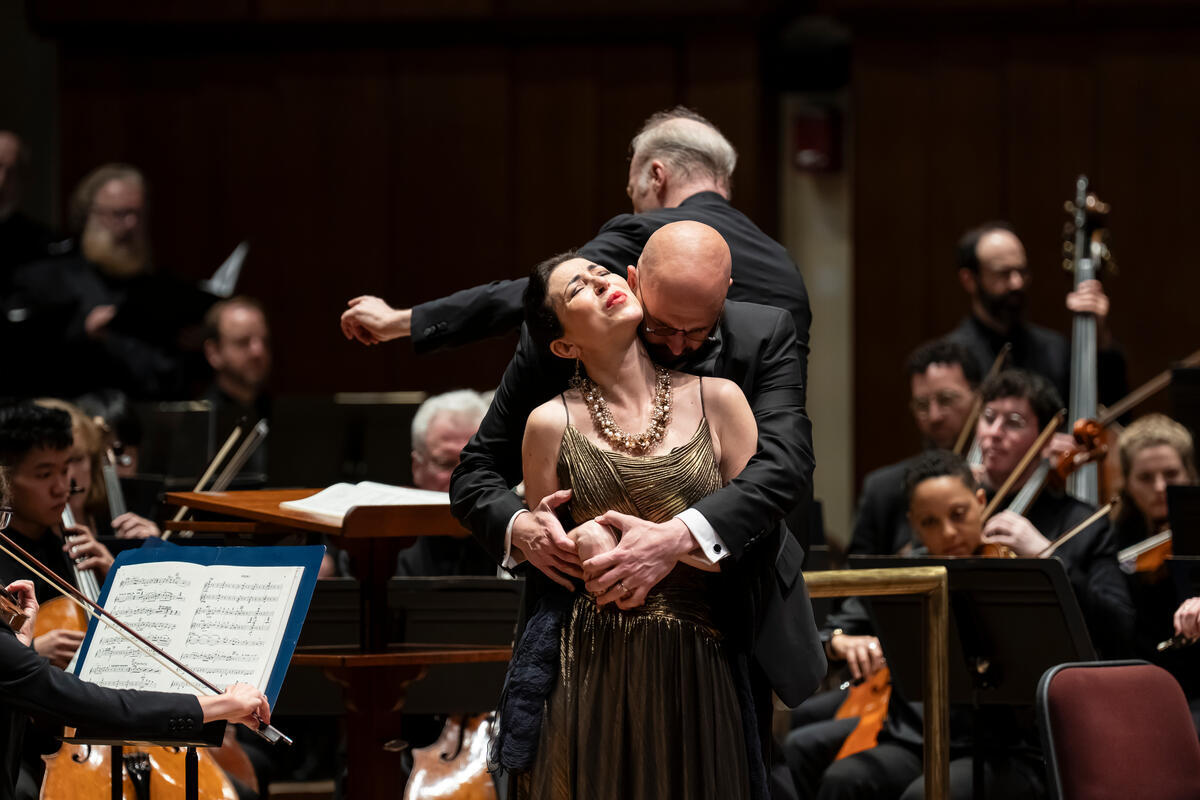
Photo: Scott Suchman
All three were role debuts for Grimaldi. The full trio of parts, each exacting its own distinct demands, is a taxing endeavor for any soprano. Grimaldi was a compellingly penitent Suor Angelica and delivered an emotionally wrought “Senza mamma,” though there was some strain in the top. She sounded more comfortable as Giorgetta, conveying the pain of her dead marriage with brittle candor and sliding into rapturous daydreams with her lover Luigi, sung here by tenor Gregory Kunde, replacing a previously announced Jonathan Tetelman. Grimaldi wrapped up her Trittico with a sweetly sung “O Mio Babbino Caro,” which sparked considerable audience applause. Kunde offered a thoughtful take on Luigi, his only role of the Trittico; his world-weary rendition of “Hai ben ragione,” Luigi’s aria in which he laments his fate of labor and misery, gave a hint of Jean Valjean. Washington National Opera Cafritz Young Artist Hakeem Henderson sang Grimaldi’s other love interest of the Trittico, Lauretta’s fiancé, Rinuccio, with youthful, anxious energy and nice enunciation.
Burdenko’s malleable baritone and strong comic chops made him a superb Gianni Schicchi. Ever the crafty trickster, Burdenko boasted a big personality that filled the hall and a highly entertaining pinched affectation in his impersonation of the late Buoso Donati. He seemed a bit less at ease as the unhappy boat captain Michele in Il tabarro but employed a rich lower register in a vengeful soliloquy pledging death to the man sleeping with his wife.
Mezzo-soprano Agnieszka Rehlis displayed tremendous dramatic range across the trio of operas. Rehlis’s haughty Zia Principessa in Suor Angelica showed off an impressively low, earthy bottom to the voice. She effectively brightened her tone for a good-natured Frugola, Giorgetta’s scavenging friend in Il Tabarro, before transforming again into an avaricious Zita in Schicchi. Meryl Dominguez lent her warm and sunny soprano to Sister Genovieffa in Angelica, one of the two amanti in Tabarro, and Nella in Schicchi.
Tenor Scott Wilde gave strong performances as a neglectful husband in Tabarro (Talpa) and as a perfectly pompous patriarch in Schicchi (Simone). Tenor Nicholas Huff cut a jolly figure out of a Frans Hals painting in Tabarro as the tipsy stevedore Tinca. This was his second inebriated role of this season—the first being the Drunkard in Washington National Opera’s The Little Prince—and I hope to hear him take on Alfredo’s Brindisi in the future. Huff also did admirable double duty as the second of the two amanti. Huff’s fellow Cafritz Young Artist Michelle Mariposa’s rich, bright mezzo made her an effectively severe supervising nun of the Suor Angelica convent. Other standouts of the evening included Randy Ho’s wistful tenor as the Tabarro song seller and baritone Chandler Benn’s humorous characterizations of Schicchi’s doctor and notary. Led by its artistic director Eugene Rogers, the Washington Chorus made a strong showing as the nuns of Suor Angelica’s convent and the spirited dockworkers in Il tabarro.
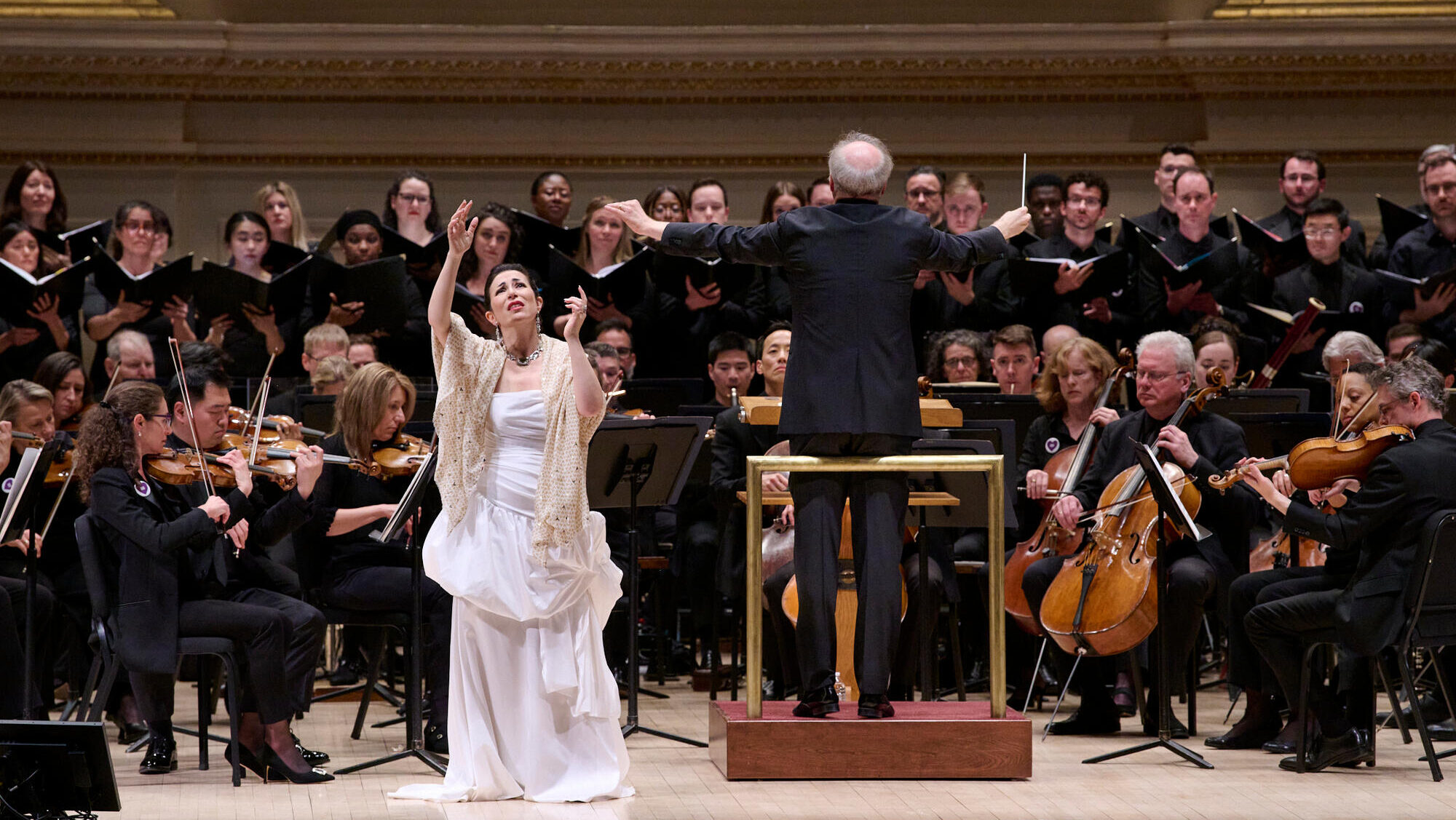
Photo: Stefan Cohen
Christopher Corwin, from Carnegie Hall
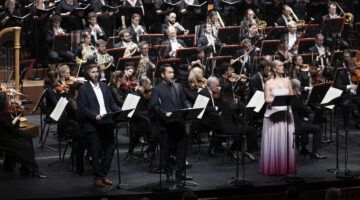
Puccini’s Il trittico has been missing from the Metropolitan Opera since late 2018, a run which commemorated the one-hundredth anniversary of its world premiere by the Met and which also (unknowingly, at the time) featured Placido Domingo’s farewell company performances (as a singer) in the title role of Gianni Schicchi. Five years later, Juilliard Opera presented just two-thirds of the work by omitting Il tabarro, which may have been deemed too demanding for young singers. The opportunity to once again experience the entire work brought eager Puccini lovers to Carnegie Hall on Sunday afternoon when the National Symphony Orchestra, soon to be displaced from its longtime venue formerly known as The Kennedy Center, arrived with an uneven yet still powerfully enjoyable triple-bill, a pet project of Gianandrea Noseda, its Music Director.
As Claus Guth had done recently in his Salzburg and Paris Opera productions, the NSO performance juggled with the normal order of the three operas: Il tabarro, Suor Angelica, and Gianni Schicchi. Whereas Guth began with Schicchi and ended with Angelica, Noseda placed Angelica first and concluded with Schicchi. He mentioned that he was reordering to make it easier for his soprano Erika Grimaldi who was originally scheduled to perform just Angelica and Tabarro’s Giorgetta. However, visa issues prevented his original Schicchi Lauretta from coming to the U.S., so Grimaldi took on all three heroines, an increasingly common practice seen with Asmik Grigorian in Guth’s version, as well as Corinne Winters in Houston last fall and Nicole Car next month at the Vienna Staatsoper.
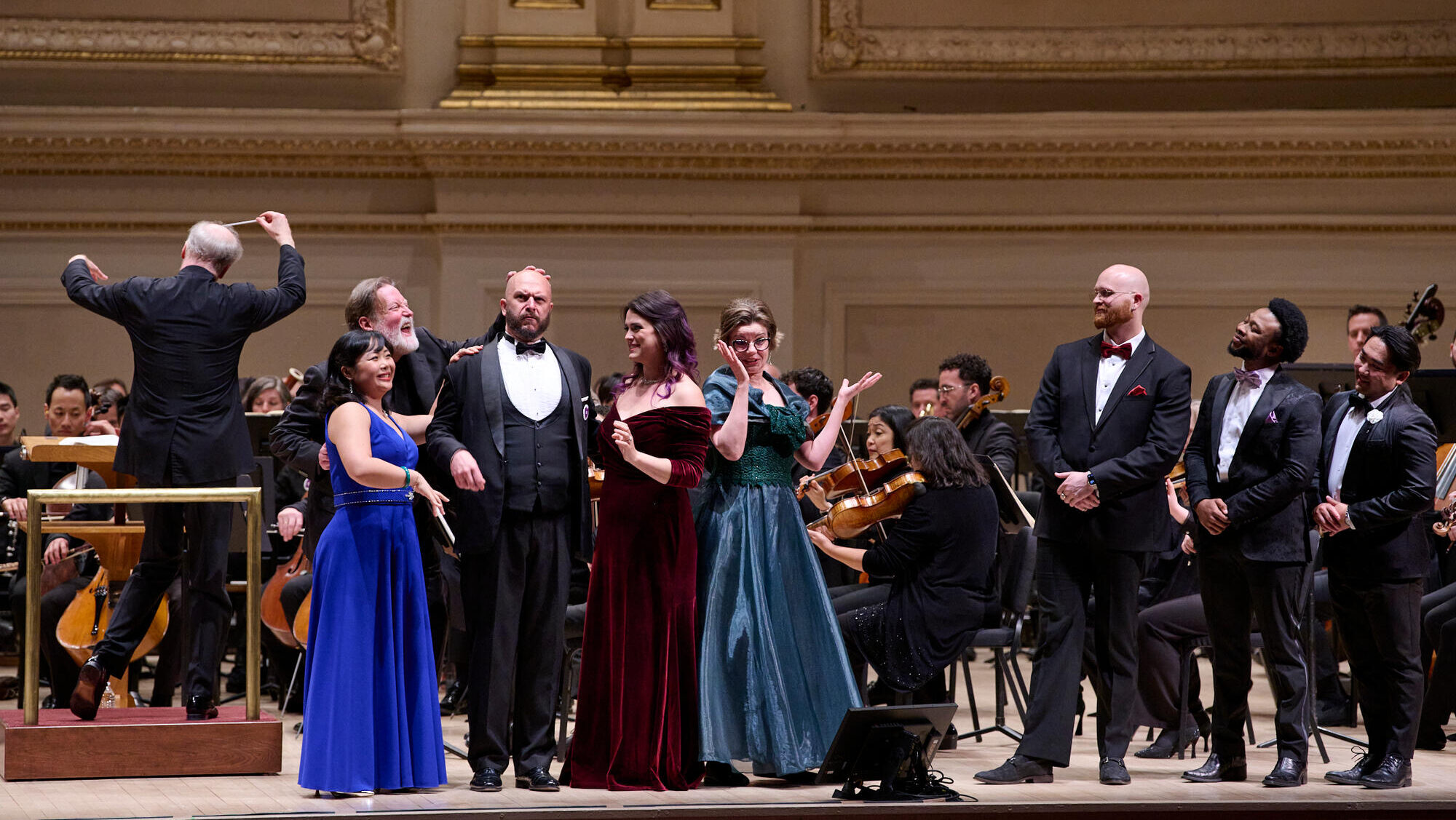
Photo: Stefan Cohen
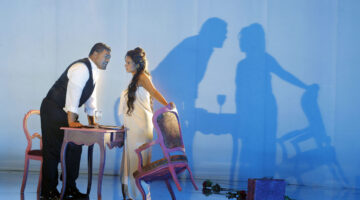
Long a Noseda favorite but virtually unknown in the U.S., Grimaldi made a mixed impression, particularly as Angelica in which her large, often harsh soprano was ill-suited to the tragically vulnerable nun and her elaborate white gown and grand diva gestures robbed the character of much of her pathos. However, she skillfully embodied—in the NSO’s semi-staging by Christopher Cano—the many facets of Tabarro’s dissatisfied bargewife, particularly in her restlessly sensual interplay with the lusty Luigi of Gregory Kunde, still remarkably stentorian at 72! I doubt many in the audience who welcomed Kunde thirty-nine years after his Met debut missed Jonthan Tetelman who dropped out of Trittico months ago. If her “O mio babbino caro” wasn’t the most limpid, Grimaldi’s Lauretta otherwise dutifully deferred to Daddy and modestly duetted with underpowered Hakeem Henderson’s Rinuccio.
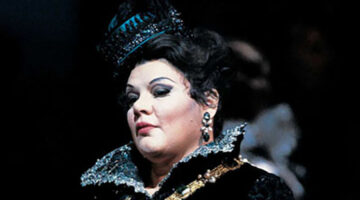
Agnieszka Rehlis brought her potent mezzo to three roles as well. She was most successful as Tabarro’s La Frugola, handily encompassing its wide range and partnering sympathetically with Scott Wilde’s bluff Talpa. Though she poured out impressive sounds as La Zia Principessa, her blurry diction blunted the character’s implacable pronouncements. Like others in the large energetic cast, Rehlis relished letting down her hair as part of Buoso Donati’s money-hungry family in a thoroughly riotous Schicchi in which soprano Meryl Dominguez was a lively Nella. Earlier she joined Nicholas Huff as Tabarro’s Due amanti and particularly shone as a winsomely lovely Suor Genovieffa. Michelle Mariposa, who had made a such a promising impression as part of Joyce DiDonato’s 2024 Carnegie Hall Master Classes, again gave notice that she’s a rising mezzo to watch as La suora zealtrice and La Ciesca.
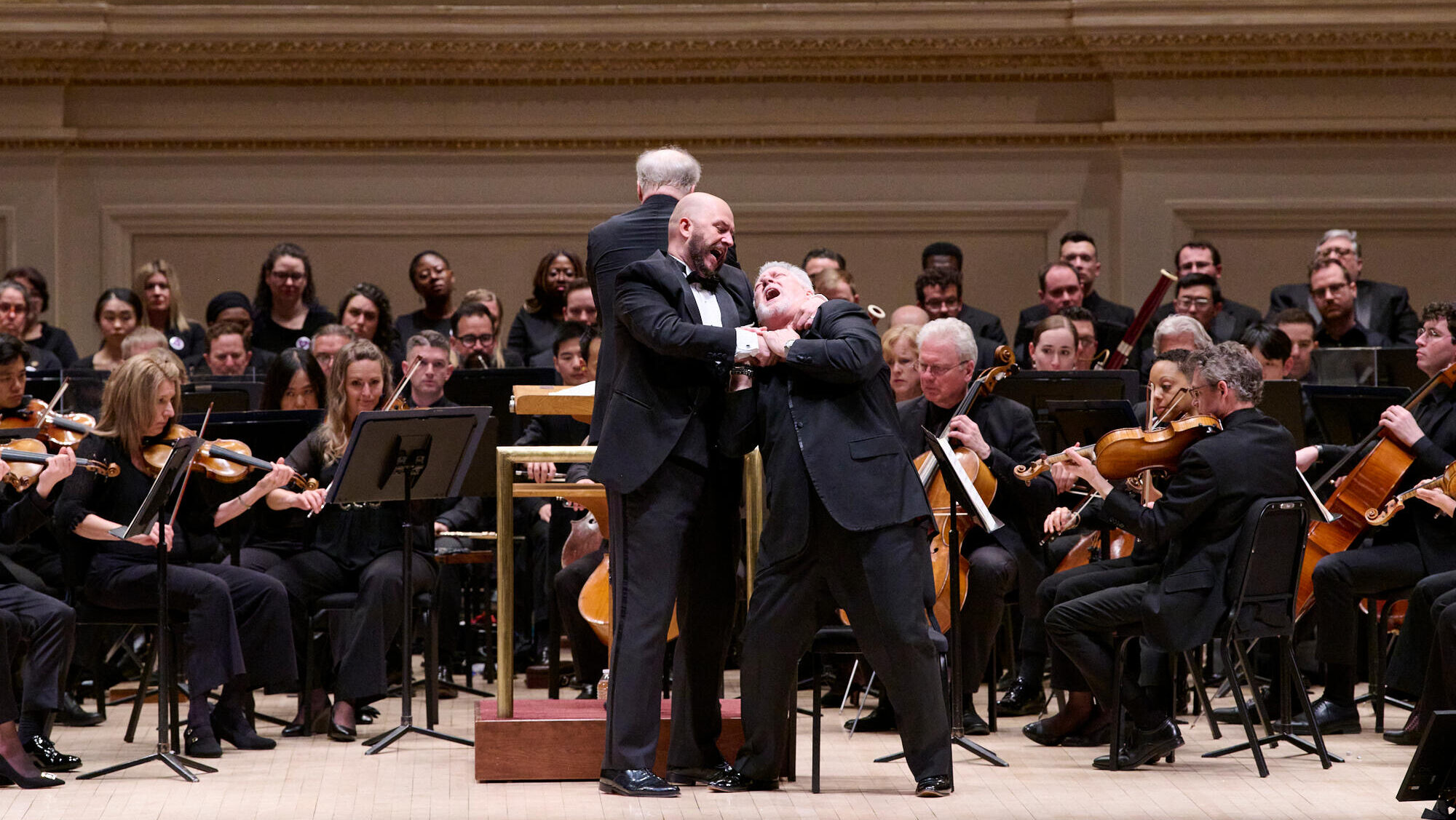
Photo: Stefan Cohen
Towering Russian baritone Roman Burdenko vividly delineated the dangerous extremes of Michele, the still-grieving father beaten down by the death of his and Giorgetta’s young child and the revenge-thirsty husband betrayed by his adulterous wife. After the second intermission, he miraculously transformed himself into the wily Schicchi who effortlessly hoodwinked his rapacious relatives. Burdenko, who made a well-received Met debut last season as Amonasro, takes on a very different role a year from now when he returns to the U.S. as Barak in the Cleveland Orchestra’s performances of Die Frau ohne Schatten.
Noseda, too, made his least impressive showing in the opening Angelica, though he skillfully evoked the amusingly contentious atmosphere of the convent in its opening scenes. However, Tabarro’s simmering, seething emotions briefly leavened by lively dancing emerged with blood-chilling intensity. His Schicchi exploded with whizzing energy and brought the afternoon to a jubilant close, leaving one eager to hear him and the NSO tackle Falstaff.
Unlike many orchestras, the NSO has yet to announce its 2026-27 season as it presumably struggles with finding a temporary (?) new venue or venues and seeks to fill in funding holes created by its homelessness. However, Carnegie will again host Noseda in March 2027 when he conducts the Zurich Opera, his European musical partner, in a concert presentation of Wagner’s complete Ring cycle!
Christopher Corwin
Christopher Corwin began writing for parterre box in 2011 under the pen name “DeCaffarrelli.” His work has also appeared in , The New York Times, Musical America, The Observer, San Francisco Classical Voice and BAMNotes. Like many, he came to opera via the Saturday Met Opera broadcasts which he began listening to at age 11. His particular enthusiasm is 17th and 18th century opera. Since 2015 he has curated the weekly podcast Trove Thursday on parterre box presenting live recordings.
-
Topics: carnegie hall, kennedy center, national symphony orchestra, Review
-
People: Agnieszka Rehlis, Asmik Grigorian, Chandler Benn, Claus Guth, Corinne Winters, Erika Grimaldi, Eugene Rogers, Giacomo Puccini, Gianandrea Noseda, Giuseppe Verdi, Gregory Kunde, Hakeem Henderson, Jonathan Tetelman, Joyce DiDonato, Leonard Bernstein, Meryl Dominguez, Michelle Mariposa, Nicholas Huff, Nicole Car, Plácido Domingo, Roman Burdenko, Samuel Barber, Scott Wilde, Yuval Sharon
-
Works: Der Ring des Nibelungen, Die Frau ohne Schatten, Falstaff, Il trittico, Mass, Otello, The Little Prince, Vanessa
-
Places & Organizations: Carnegie Hall, Cleveland Orchestra, Juilliard Opera, Kennedy Center, Metropolitan Opera, National Symphony Orchestra, Washington National Opera, Zurich Opera