Nile Scott Studios
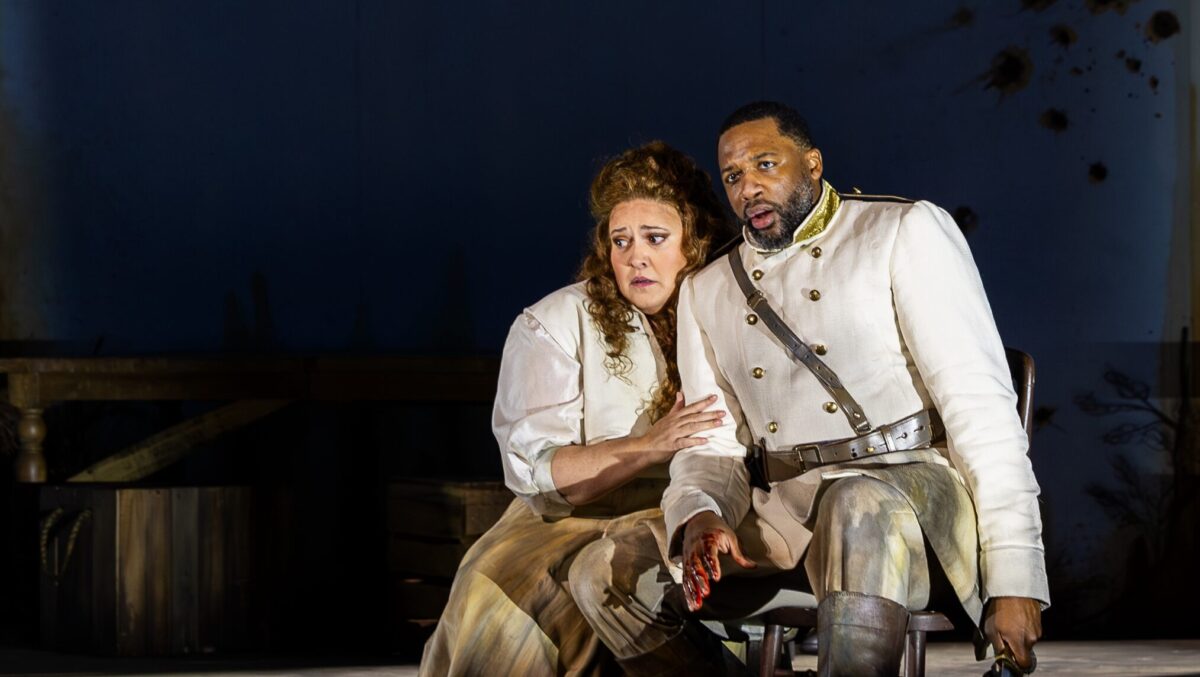
Steve Maler, whose numerous directing credits include far more Shakespeare plays than operas, set the opera around what vaguely seemed like the first World War with the characters in muddied trench-ware and helmets (Amanda Gladu designed the costumes) amidst Amy Rubin’s spare but evocative set. However, it was the directing of the lead couple that proved most confounding; simply put these Macbeths seemed too nice, to their enemies and especially to each other.
Norman Garrett, in the title role, brought a sense of anguish to the part of a King undone his unfettered bloodlust which was twinned with tireless if largely monochromatic singing. Alexandra LoBianco, as Lady Macbeth, met Garrett’s palpable fatigue and smallish instrument not with wily ambition, but with a distractingly high-spirited life coach energy that made the Thane’s scheming wife seem more like an errant Preziosilla, urging her husband to pep up and follow his bliss.
In a particularly bizarre touch, the Sleepwalking Scene, one of the highlights of LoBianco’s vocal performance including an expressed D-flat at the end, began with Lady Macbeth dancing out onstage. It did not help that LoBianco, recently recovered from a vocal hemorrhage, sounded secure but careful in Lady Macbeth’s fierce music while an illogical approach of registration often had her unpredictably belting much of the role in chest voice.
Nile Scott Studios
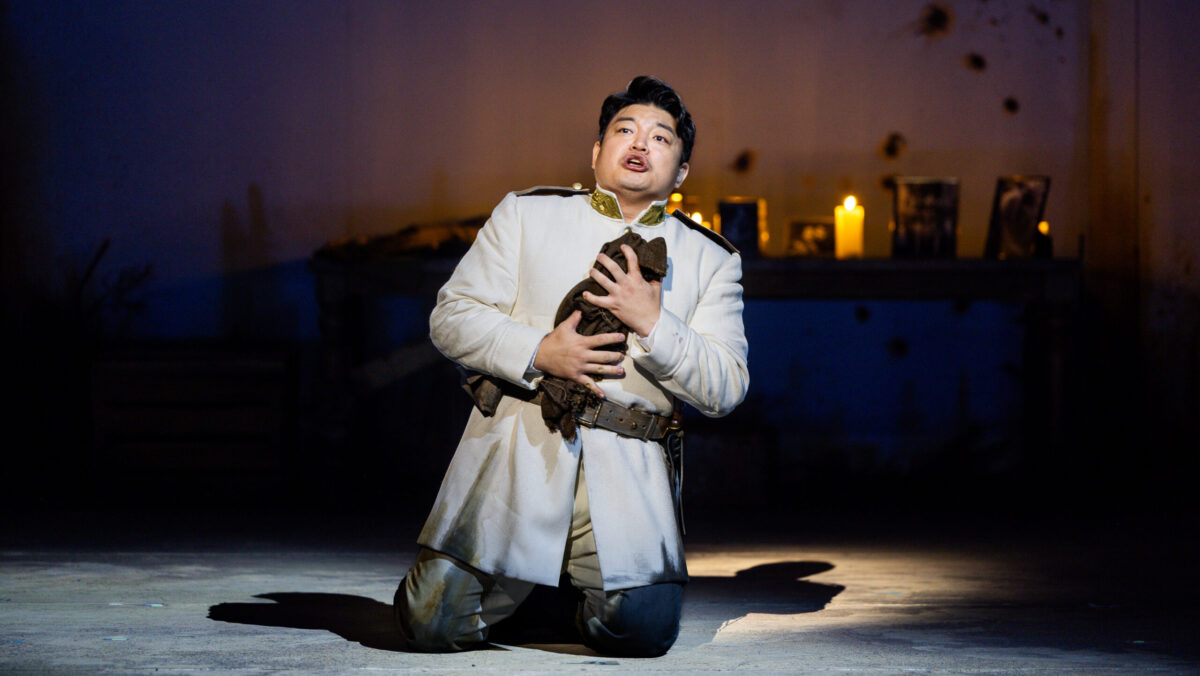
Zaikuan Song as Banquo showed off a bass of substance that was undermined by dramatic blankness, while Vera Savage was assured both vocally and dramatically as Lady Macbeth’s Lady-in-waiting. Omar Najmi, as Malcolm, sounded less than his usual best and the afternoon’s indisputably finest singing was from David Junghoon Kim as Macduff who poured out “Ah, la paterna mano” with ardent emotion and muscular tone.
David Angus led the orchestra with cohesion though both the orchestral playing and the choral singing were sorely short on rhythmic precision, qualifying his take as more haphazardly brassy than genuinely bombastic. But the most conspicuous problem with the performance is a recurring one for BLO: the use of clumsy, inaccurate subtitles, designed by Natalia St Jean. It’s baffling why one would opt to use awkward translations from an already awkward translation into Italian when the source text is one of the great works of English literature. But Shakespeare, both in tone and in substance, seemed far from the Colonial this weekend where sound and fury once again ended up not signifying much at all.