Maria Baranova
Baroness Vanessa, beautiful and a little nervous, was jilted decades ago by Anatol, who would not abandon his wife and child. She lives on, in her dark chateau with her mother, the Old Baroness (who refuses to speak to her), and Erika, her companion or protegée or something. Something. All the mirrors are covered in dark cloth, freezing time which must not be allowed to move on. And then a note arrives: Anatol is returning to her! But will he love her as he used to? Will change be allowed into her icy house?
She orders a splendid dinner for two—but the man who appears at the door is not the Anatol she loved. This is his son, who spent his youth observing his haunted father and jealous mother, the name “Vanessa” their perpetual torment. They are dead now—bankrupt, by the way. He has come, he says, to behold his father’s love. Vanessa flees the room, leaving young Anatol to Erika. But who, he asks, is Erika? “Sometimes I am her niece, but mostly I am her shadow,” the girl replies.
That answer is the keynote of R.B. Schlather’s production of Samuel Barber’s mysterious tale, presented by Heartbeat Opera at the Williamstown Festival in Massachusetts. Schlather is known for his highly original Handel opera stagings in the East Village (where I caught them), later revised for the Hudson Theater. He has also staged The Mother of Us All, another classic American opera that should be heard more often.
Maria Baranova
I got to the penultimate performance of Vanessa on 2 August, but Heartbeat is said to be bringing it to New York next May—and Boston Symphony Orchestra is to be giving another performance of Vanessa this winter. Long loved by a small but ardent group, Vanessa may be coming into its own at last.
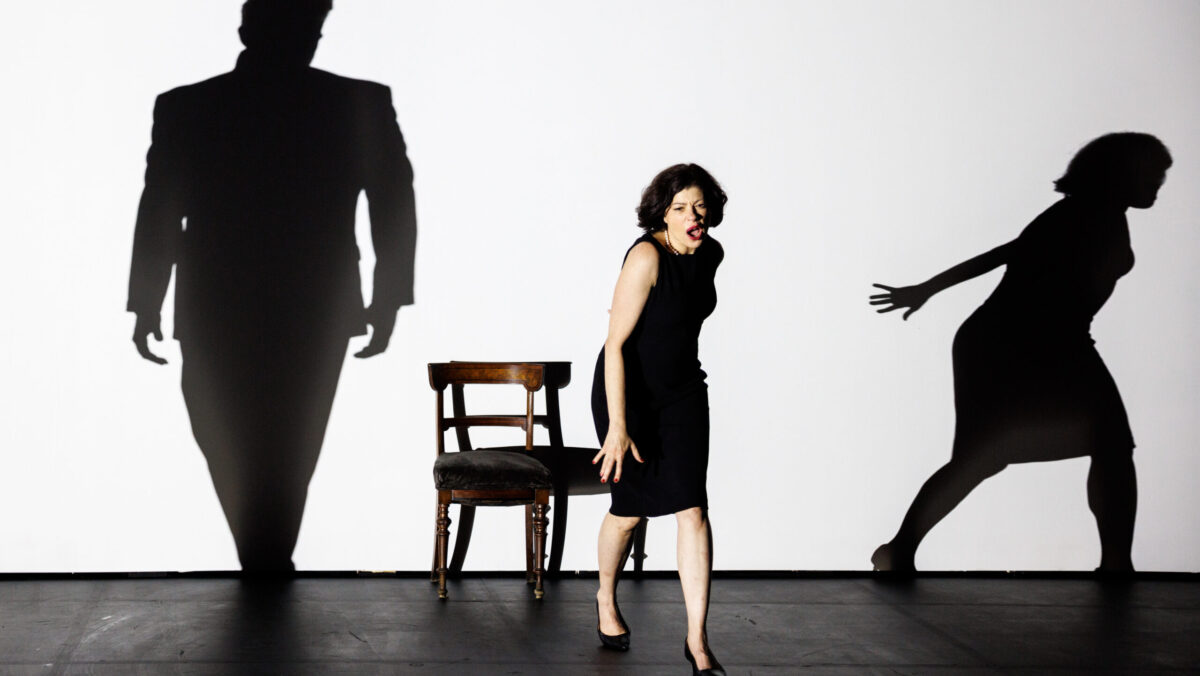
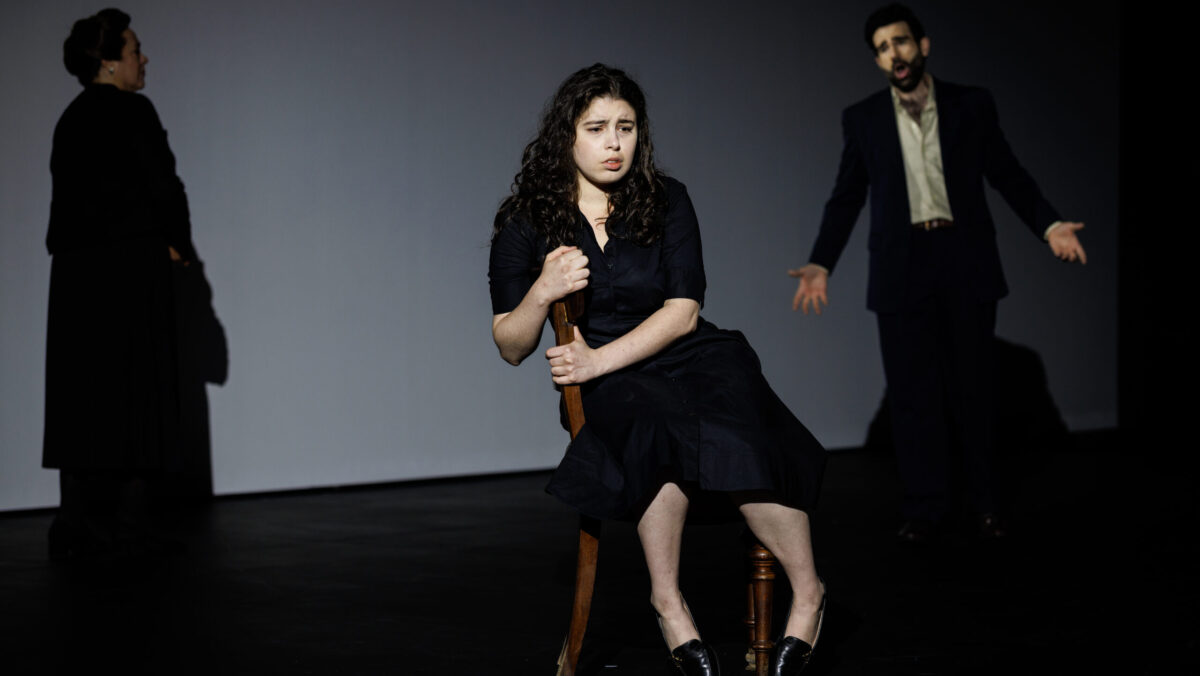
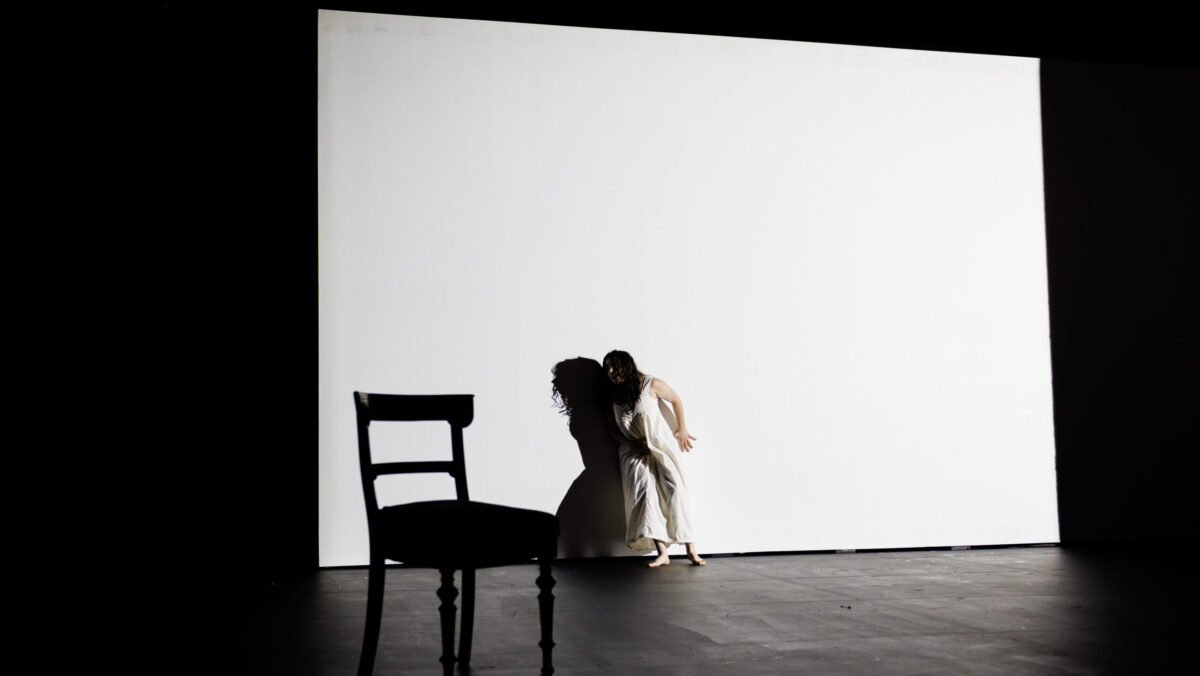
Vanessa “made her debut” (one might say) with a grand production at the Metropolitan in 1958. (Steber, Elias, Gedda, Tozzi, Mitropoulos—egad! People had hopes for it.) The production was set in a pompous, overfurnished mansion crowded with silent servants. This was revised and shortened by the composer in 1964, and Jacob Ashworth has reduced it further for Heartbeat. The set is now a white wall, four well-upholstered purple chairs, black costumes, seven instrumentalists playing Dan Schlosberg’s arrangement of the score, highlighting the recurring plangent motifs and their melancholy jazz inflections. It runs about 100 minutes with no intermission.
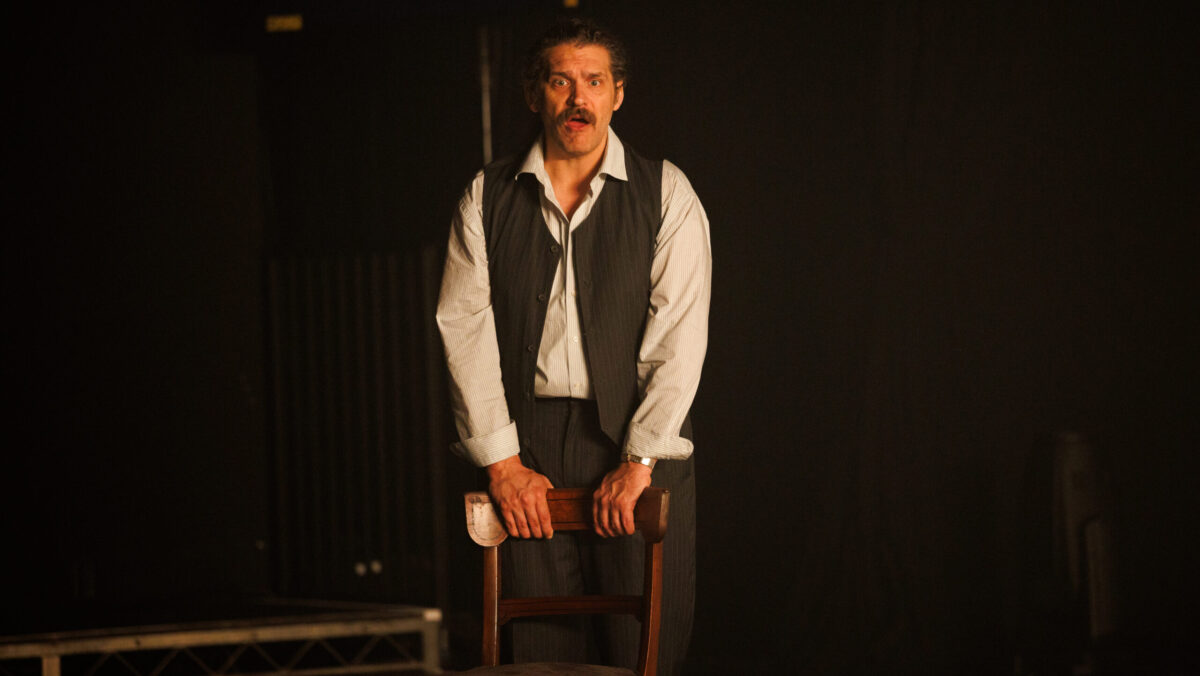
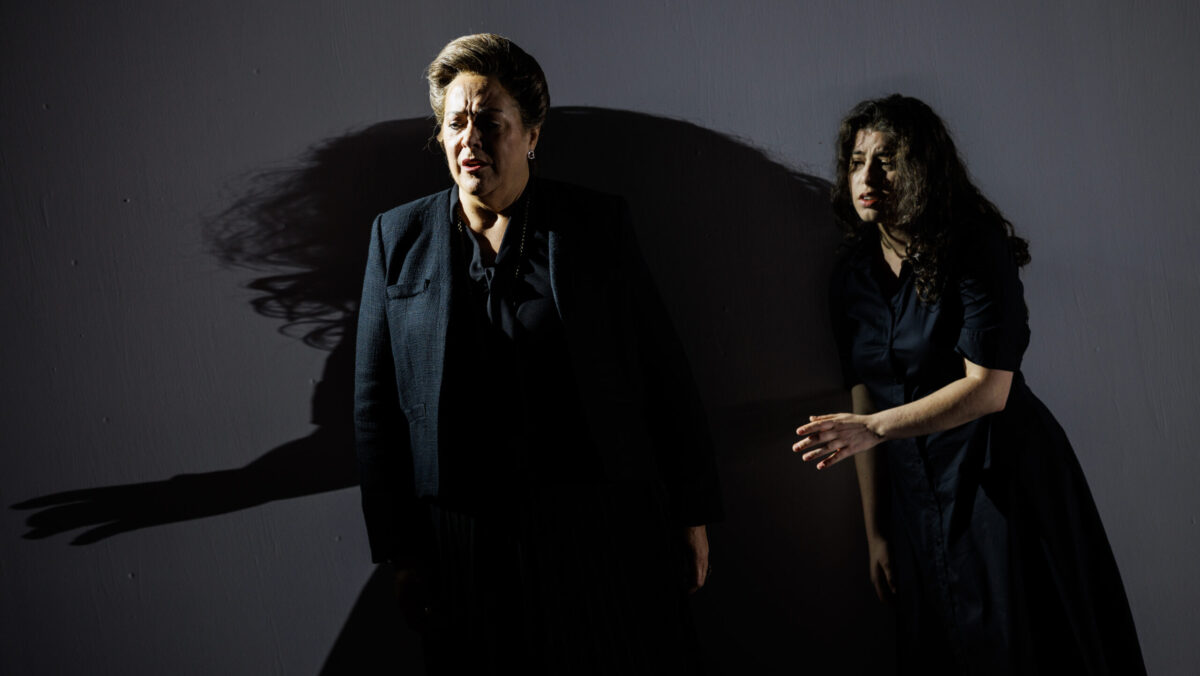
But there are other stars here: a couple of spotlights pick out the characters, giving each of them a double—or more than a double—in a display of shadows. Their movements suggest the concealments, the secrets, the inner thoughts clutched to the heart behind the words we hear sung. The dark figures on the wall behind the singers expand and shrink, slide beside and behind each other, seem to touch or embrace when the three-dimensional figures before us do not touch at all. They are another layer of subtext in this fable of people who have lost the habit of shared confidence. (The lighting is credited to Yuki Nakase Link but must have been worked out carefully with Schlather and his cast.)
Maria Baranova
Barber, too, and his librettist Gian-Carlo Menotti, keep their secrets. Vanessa is a moody piece, melodious but strange—metaphorical, like Pelleas or Bluebeard. It was not popular in its time, here or in Europe, and Barber attempted only one other grand opera, the disastrous Antony and Cleopatra that opened the New Met. Vanessa has had few revivals, yet its admirers cherish the beauty and skill of its self-exploring arias and the wonderful concluding quintet. It is said that Menotti had been reading Isak Dinesen—and I detect E.T.A. Hoffmann’s surreal symbolism here as well.
It is surely no accident that when Erika offers to read to her restless aunt, she chooses Oedipus—and that legend gets another shoutout when Anatol accuses her of concealing riddles like a Sphinx. That can’t be a coincidence in so literate a libretto. The dialogue is formal and old-fashioned—the upper classes as viewed in the gothic movies of the forties and fifties, such as Dragonwyck or Laura or The Spiral Staircase.
The formality conceals everyone’s motives and one or two shocking offstage events. Vanessa is voluptuously open about her feelings, but what do the other characters desire? Do they know themselves? They prowl around it when they relate to each other, observing customs like going to chapel on Sunday morning or giving a ball to announce an engagement. The music, too, moves sensuously, cat-like, around feelings, avoiding the obvious.
Maria Baranova
I’d like to say another word about the famous quintet, “To leave, to break, to find, to keep.” The epigrammatic text is sung by each character in turn and together, entwining their vocal lines, a concertato not a chorus, gives us a satisfying if unsettling conclusion to the story in vocal terms. It is not only a pleasure in itself; it is a satisfying way to conclude an unsatisfying story. This sort of thing—voices to express emotions that do not easily become spoken words—is the operatic form’s great achievement and advantage.
Why do so few modern composers, especially American opera composers, seem willing to risk this? That musical obscurity, that drama that makes itself felt in music, is what opera is about. This is why I find so many of them deeply unsatisfying. If you want to write it in words, write a play. In an opera, words are the bones; the flesh and the soul are elsewhere, and I do not hear much genuine music in contemporary opera. But perhaps the opera audiences of the 1950s did not hear it in Vanessa, Regina, Billy Budd, or Baby Doe.
At Williamstown, the vocal honors were high and evenly distributed. The room was intimate, but the voices filled it gratifyingly—any one of them could have handled a true opera house. There were subtitles but diction was clear. And the shadows filled in the corners if any word was not obvious.
Maria Baranova
Inna Dukach sang Vanessa warmly, triumphant when the lady was triumphant, but also relayed her tension, her whims and fears. There is a moment in Act II, “Why have they built this wall of silence around my happiness?” when Vanessa notices that not everyone is thrilled by her romance with young Anatol. Alone, she walks, singing, to the wall, facing it and not us, the shadow drawing in until it and she become one, and she concludes on a high G-sharp, held in unwavering diminuendo. It feels as if she is stifling the anguish of her soul, using vocal means to make a crucial emotional point. This is a singing actress who understands the role.
Ori Marcu sings Erika, who dwells in Vanessa’s shadow but blooms as her own heart grows and suffers. Erika has often been accused of outshining Vanessa, and Marcu’s handsome mezzo rises to the rivalry. (Legend has it that Callas turned down the title role on the grounds that Erika was the more interesting part.) The Old Baroness who does not approve of the emotional straying of her family was sung effectively by Mary Phillips.
Roy Hage was the attractive Anatol. He sang with a lissome, elegant tenor, soaring whenever he needed to soar, insinuating when that served him better. Joshua Jeremiah sang the Chekhovian Doctor with a pleasing baritone suitable to the comic relief of this fraught story, delighted to attend a ball once again so that he ignores a patient in extremis.