“Let’s start at the very beginning” of Kent Nagano’s pioneering complete Ring project which was recently discussed here in depth in Montagu James’s review of Die Walküre.
Two of France’s leading Early Music ensembles recently visited New York City to perform music by some of the 17th century’s leading composers.
Trove Thursday celebrates Pride with a Bible-based homoerotic sort-of opera not by the guy who wrote “Depuis le jour”: Charpentier’s David et Jonathas with Mark Padmore, Laurent Naouri and Jaël Azzaretti led by Emmanuelle Haïm.
Rossini’s Semiramide is a highly original and imaginative work of theater that impresses for its creative and beautifully scored orchestration, incisive recitatives and ensembles, and theatrically intriguing characters.
An unusually provocative program by the Orchestra of St. Luke’s conducted by Bernard Labadie with soloists Lydia Teuscher and Benno Schachtner made my “return” Thursday evening an illuminating and rewarding experience at Zankel Hall.
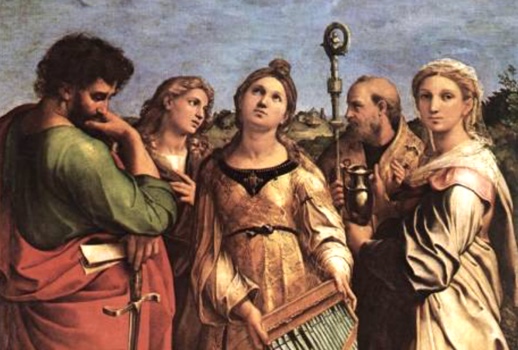
“Trove Thursday” marks St. Cecilia’s Day with two works by Henry Purcell, the composer who often celebrated music’s patron saint.
August on “Trove Thursday” begins with Midsummer Mezzo Madness featuring a sterling quartet of lower-voiced ladies
An outstanding performance of Weber’s Euryanthe to share on “Trove Thursday.”
Director Barrie Kosky’s Glyndebourne 2015 production of Handel’s 1739 oratorio Saul (released on Opus Arte DVD) shows imagination as well as a strong cast and design team.
Passion propels more operas than almost any other human emotion; however, many musical dramas have a very different sort of passion—the final days of Jesus—as their subject.
My impossible wish would be to hear one of the great castrati who dominated opera for most of the 18th century.
For better or worse, Decca’s new Norma recording will ultimately be embraced—or dismissed—by those reacting directly to Cecilia Bartoli’s controversial portrayal.
Handel’s 1711 opera Rinaldo was the first Italian opera ever written specifically for the London stage.
Despite baby-steps over the years, America’s musical scene, especially opera, remains decidedly un-HIP. (HIP: “historically-informed performance,” also called “period performance.”) While European opera houses turn increasingly to “original instrument” orchestras and specialist singers for seventeenth and eighteenth century works, this rarely occurs in the US.
Your feelings about the new Opus Arte DVD of Handel’s Acis and Galatea will have a lot to do with your tolerance for gentle whimsy. As a cultural consumer who tends to gravitate toward the more high-octane, Italianate drama of a Verdi overture or a Real Housewives of New Jersey hair-pull, I do my best…
Tell us: Filth or dementia?
Hasten thee to feed another quarter of conversation for The Talk of the Town!
Sign up for our free Newsletter.
Support Parterre Box
Donate to keep opera's liveliest publication free and independent. No paywalls, no institutional backing, no bootlicking.
Get our free newsletter
Opera's top reads delivered to your email weekly…ish.
Join over 100k readers.
The best opera magazine on the web.
Reviews, breaking news, critical essays, and brainrot commentary on opera from those demented enough to love it.
Essentials
Copyright © 2026 Parterre Box.
All rights reserved.
Registration or use of this site constitutes acceptance of our Terms & Conditions and our Privacy Policy.
Sign up for Parterre’s free newsletter.
Exclusive opera reviews, commentary, and top reads
delivered to your email weekly…ish.