This week’s star-spangled “Trove Thursday” offers the second crazy-quilt installment of divas in the wrong language.
Trove Thursday offers a pair of live broadcasts of Médée featuring two compelling mid-20th century divas—Inge Borkh in German and Eileen Farrell in Italian.
I first went bonkers for Bellini’s masterpiece during the previous century when the Met remounted it for Joan Sutherland.
This week brings another opera about which we’ve heard a lot but have had few opportunities to see onstage: The Fiery Angel by Sergei Prokofiev.
Now we find Mariella Devia, a diva held in near mythic regard due to her vocal longevity, with competing videos of two of her performances that were released, literally, on the same day.
Just 85 years ago, four of Italy’s greatest opera stars gathered at Teatro all Scala for an historic event: the first-ever recording of Arrigo Boito’s sole complete opera, Mefistofele.
I realized I hadn’t yet posted anything featuring one of the “Queens of the Bootlegs,” so I now correcting that with Puccini’s La Fanciulla del West starring the great Magda Olivero as Minnie.
By the time Roberto Devereux saw its premiere at Napoli’s Teatro San Carlo on 29 October, 1837, Gaetano Donizetti had lost, in an 18-month time frame, both his parents, two still-born children, and his beloved wife Virginia.
Friday’s season premiere at the Met of Donizetti’s opera about the doomed Scottish queen proved surprisingly satisfying and a genuine success for Sondra Radvanovsky.
Several prima donnas have ought to resurrect La Vestale, including Renata Scotto, whose priestess highlights this week’s “Trove Thursday.”
The Metropolitan Opera’s much vaunted so-called “Tudor Ring” of three royal operas by Donizetti got off to a bumpy start Saturday afternoon with a revival of Anna Bolena that stubbornly refused to cohere either musically or dramatically.
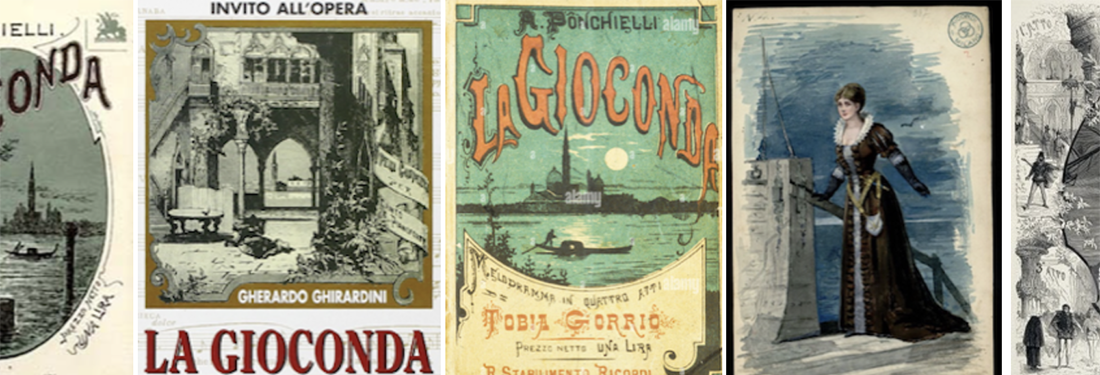
In attempting to get a little bit of everything onto my Mixcloud page, I realized that I inadvertently neglected some essentials: 1) Leyla Gencer 2) La Gioconda.
After listening to “Stella di Napoli,” her mightily impressive new CD of rare bel canto arias just released by Erato, I felt many of the old sparks reigniting.
Two operas both alike in dignity, set in dimly lit Renaissance towns ruled by seething, conspiratorial courts.
La Cieca is sort of out of words trying to describe what makes a great performance of the role of Norma, as opposed to the conscientious traversal of the notes.
It’s easiest to write reviews when there are soaring triumphs and miserable failures.
Everyone who revives Bellini’s Beatrice di Tenda, as the Collegiate Chorale did at Carnegie Hall on Wednesday night, calls the piece an “overlooked masterpiece.”
One of my adolescent pastimes was trolling the classical cut-out bins in record stores searching for overlooked gems or unfamiliar singers.
Giovanni Simone Mayr was one of the most important musical figures of his day, a man Rossini referred to as the “father of Italian opera” whom Napoleon personally lobbied to come work in Paris. Though he wrote nearly 70 operas and taught Donizetti and Bellini, the Bavarian-born composer had the misfortune of hitting his peak…
Once again, La Cieca can do no better than to quote the ineffable BAB, who says, “The beauty of the Saturday afternoon Chats this summer has been that everyone picks what they want and then we compare notes with what’s happening elsewhere. Ordinarily I make no recommendations, but I have decided to do things differently…
Christof Loy’s dreamlike, pared-down production of Donizetti’s 1833 masterpiece Lucrezia Borgia, created for the Bayerischen Staatsoper, is brought to life on Medici DVD from performances in July 2009. The DVD of the performance is accompanied by another hour-long DVD, The Art of Bel Canto: Edita Gruberova, which includes some fascinating rehearsal and performance footage of…
Leyla Gencer: The very name is exotic. She was an artist of Turkish ancestry who, during the 1950s and 60s, held her own despite the presence of Maria Callas, Renata Tebaldi, Renata Scotto, Montserrat Caballe, and Magda Olivero, all of whom shared roles in her repertoire. Ironically, Gencer has a number of important credits attached…
Interview with Leyla Gencer in 2007. [kml_flashembed movie=”http://youtube.com/v/5q4je2G7YpE” width=”425″ height=”350″ wmode=”transparent” /]
[This article originally appeared in the print zine precursor to this site, one of a series of surveys of live recordings by critic Leila de Lakmé.] Leyla Gencer. The very name is exotic. She was an artist of Turkish ancestry who, during the 1950s and 60s, held her own despite the presence of Maria Callas,…
Tell us: Filth or dementia?
Hasten thee to feed another quarter of conversation for The Talk of the Town!
Sign up for our free Newsletter.
Support Parterre Box
Donate to keep opera's liveliest publication free and independent. No paywalls, no institutional backing, no bootlicking.
Get our free newsletter
Opera's top reads delivered to your email weekly…ish.
Join over 100k readers.
The best opera magazine on the web.
Reviews, breaking news, critical essays, and brainrot commentary on opera from those demented enough to love it.
Essentials
Copyright © 2026 Parterre Box.
All rights reserved.
Registration or use of this site constitutes acceptance of our Terms & Conditions and our Privacy Policy.
Sign up for Parterre’s free newsletter.
Exclusive opera reviews, commentary, and top reads
delivered to your email weekly…ish.