
Strauss test
San Francisco Opera music director Eun Sun Kim tantalizes with her readings of Strauss.
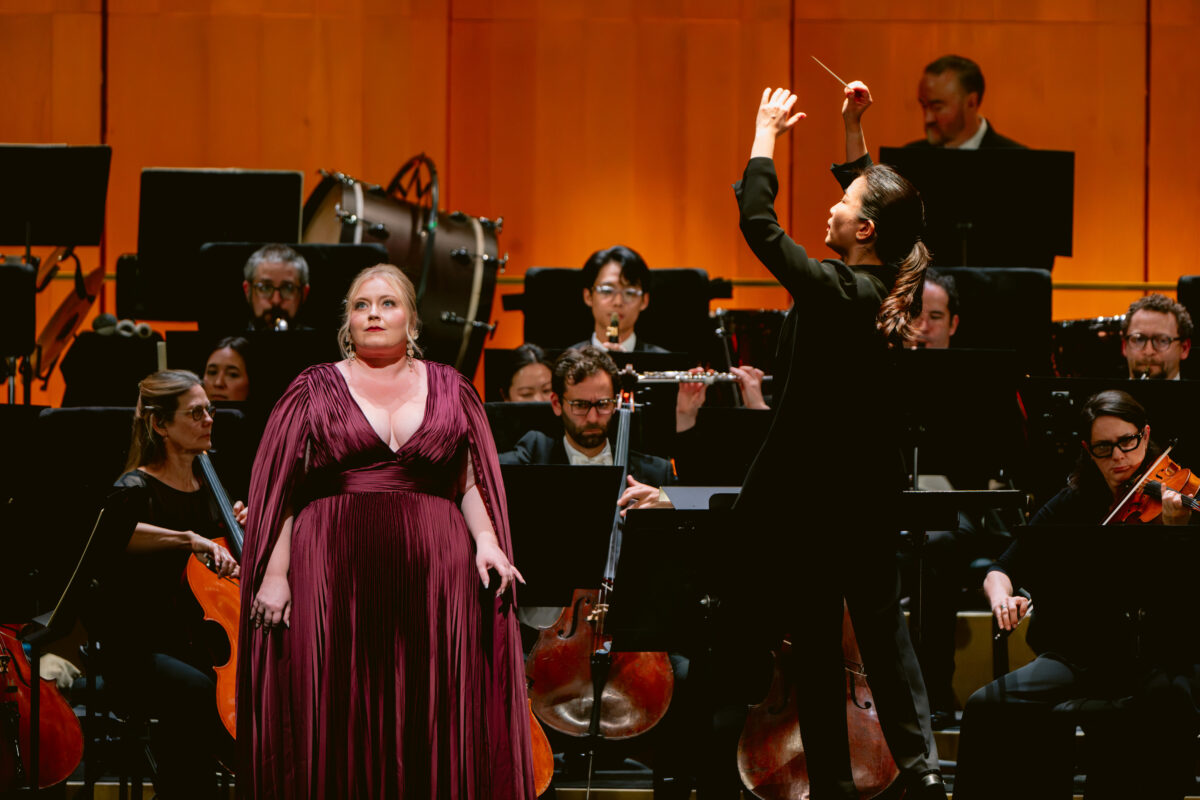
Photo: Kristen Loken/San Francisco Opera
Two years ago, the San Francisco Opera (SFO), due to financial constraints, reduced the number of staged operas from eight to six and supplemented them with two one-night-only concerts, one in the fall and the Pride Concert in June. The tradition continued on Friday, November 6, when the SFO Orchestra, under the direction of its music director, Eun Sun Kim, took center stage for “Strauss in Concert,” a program dedicated to showcasing the prolific German composer Richard Strauss’s music from various stages of his life.
The festive concert opened with Till Eulenspiegel’s Merry Pranks, Strauss’ 1895 tone poem depicting the pranks and downfall of the German folk prankster Till Eulenspiegel. The piece is also a great example of finding humor in (orchestral) music, as Strauss’s dazzling orchestration and ebullient energy present various manifestations of Till’s pranks in the score (performed by members of the orchestra), making it a perfect opener. People say it’s hard to make people laugh in the concert hall, but Kim and the SFO Orchestra succeeded tremendously, as their sparkling performance of Till Eulenspiegel’s Merry Pranks drew occasional smiles and chuckles from the audience throughout!
Kim, who gloriously led last summer’s Elektra, seemed to be positioning herself to tackle more of Strauss’s oeuvre with this concert, following her multi-year odyssey with Verdi and Wagner. The adjectives that made her Elektra memorable also applied to this tone poem, particularly its visceral clarity. Principal Horn Kevin Rivard and clarinetist Joshua Choi played key roles in shaping Till’s musical personification (the horn signified Till’s theme, the clarinet his laughter), while Kim’s elastic conducting brought the score fully alive and exciting, especially during the breathtaking horse-ride scene through the market. The Berliozian funeral march came as a shock after such a jolly ride, and the final chapter, in which the “once upon a time” theme returned for the last time, truly embodied Till’s immortal reputation.
When the concert was announced, the vocal selection for the night was Brentano Lieder, Strauss’ 1918 ode to love (set to poems by Clemens Brentano), to be sung by Adela Zaharia. That song cycle would have made a fitting chronicle of Strauss’ heyday, alongside the closer, Der Rosenkavalier Suite. Alas, a week before Friday, Zaharia was announced to be sick, and soprano Kathleen O’Mara was brought in. Brentano Lieder were subsequently replaced by Strauss’ Four Last Songs (Vier letzte Lieder), his final completed works (aside from “Malven”), which were performed across the street at San Francisco Symphony just last month.
Given the last-minute change, I was prepared for the worst; instead, to my pleasant surprise, I watched a young interpreter poised for greatness embark on a journey of interpretation that would only get better over time. O’Mara, who mesmerized as Micaëla in LA Opera’s Carmen last month, used every tool in her toolbox to deliver a highly sensitive reading of Strauss’ most poignant songs, navigating the long passages in “September” and “Beim Schlafengehen” with ease and sprinkling delicious pianissimi throughout. Singing completely without a score, her clear, bright voice soared comfortably above Kim’s lush conducting, never once getting covered by the thick orchestration. Those middle two songs were particularly jaw-dropping in their intensity. Interpretation-wise, I thought it was a valiant early take—she imbued the songs with almost a sense of hopefulness. Pretty was definitely the modus operandi here. I, however, missed the resignation in the latter part, particularly in “Im Abendrot,” though I guess that would only come with age or experience.
After intermission, we reach the concert’s longest segment, the U.S. premiere of a new Der Rosenkavalier Suite. Arranged by Swiss conductor Philippe Jordan and Czech arranger Tomáš Ille, the suite was commissioned by Radio France and premiered in 2021. At almost 40 minutes, it is longer than the better-known, Waltz-heavy earlier Der Rosenkavalier Suite (thought to be arranged by Artur Rodzinski). Unlike its predecessor, it is cast in ten scenes, follows the action chronologically, and includes nearly all the opera’s important events (the introductions for all three acts, the presentation of the rose, the final trio and duet, and the final scene). Essentially, it turns the opera into a tone poem!
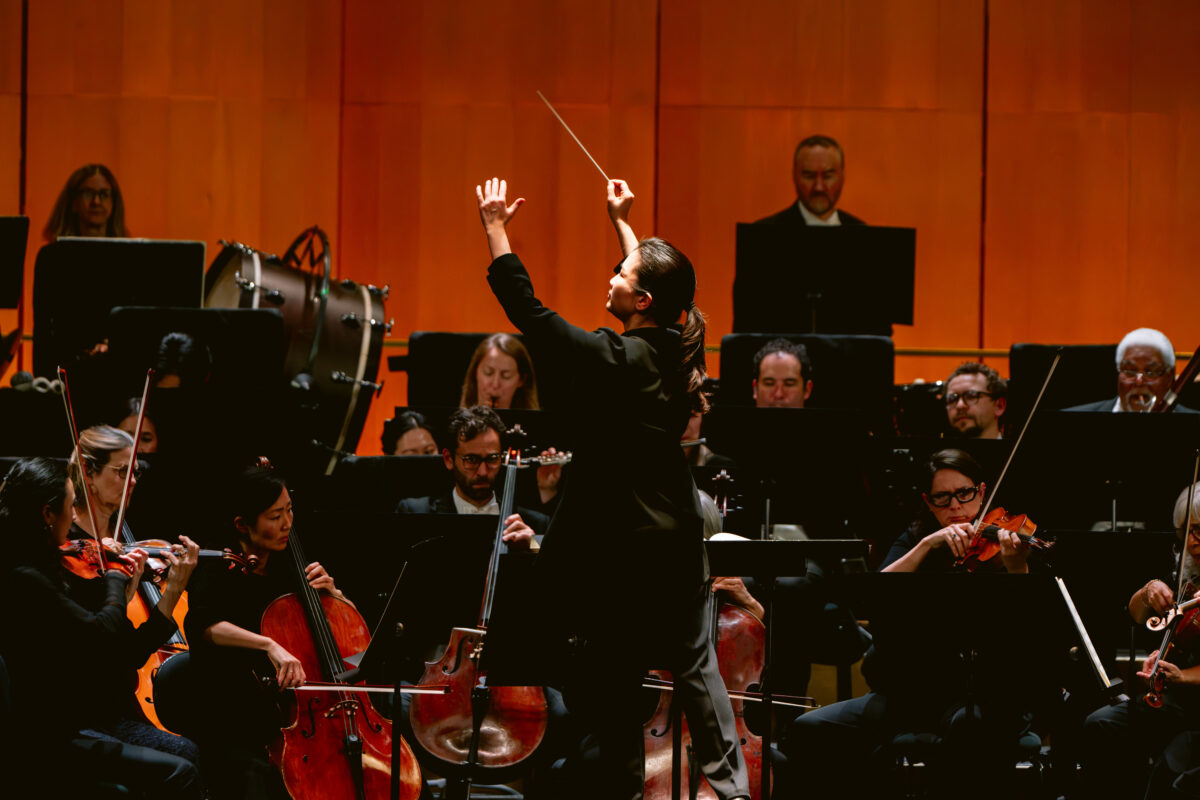
Photo: Kristen Loken/San Francisco Opera
Kim led the Orchestra in a lively reading of the new suite, if not a fully polished one. The opening scene, for example, sounded a little messy and didn’t flow coherently. Nevertheless, they recovered nicely and moved from strength to strength, scene to scene. It was very refreshing to see the Orchestra playing this score in full view, as we had only heard them from down in the pit. The many solos were handled adequately, with associate concertmaster Maya Cohon particularly stealing the show with her showmanship. The waltzes sounded ebulliently Viennese, no doubt due to Kim’s education and mentorships in Europe. The whole Suite definitely made me crave Der Rosenkavalier on the War Memorial stage, since we haven’t had one in almost two decades!
All in all, it was an enjoyable concert at the Opera House, full of promise for what’s to come. SFO, if you’re listening, let’s put Der Rosenkavalier or Salome on the schedule, shall we?
-
Topics: concert performances, Review
-
People: Adela Zaharia, Artur Rodzinski, Eun Sun Kim, Joshua Choi, Kathleen O'Mara, Kevin Rivard, Maya Cohon, Philippe Jordan, Tomáš Ille
-
Places & Organizations: San Francisco Opera, San Francisco Opera Orchestra

Comments