Philly fluff
Two Philadelphia institutions present delectable performances of sex and filth (of the best kind).
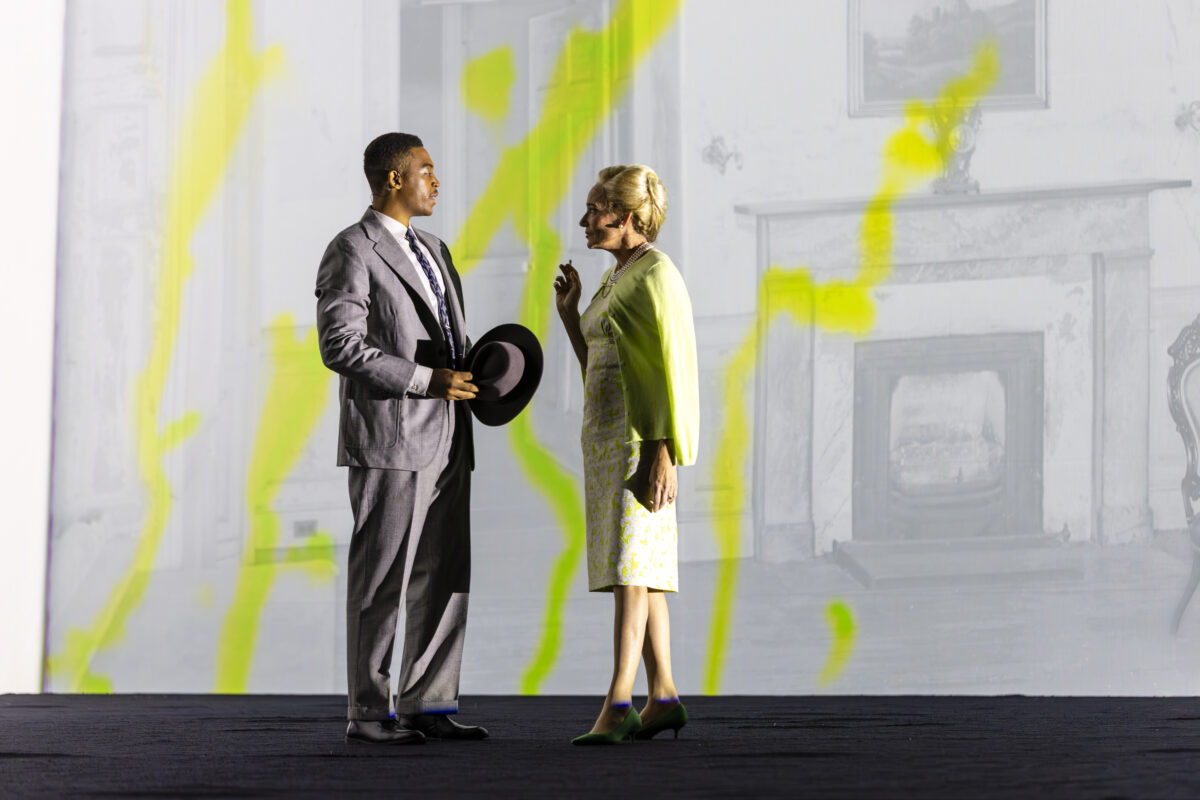
Photo: Dominic Mercier
Three cheers for the louche and carnal!
Last Friday, I spent an enormously satisfying day framed by two works that have long been decried by some critics and audiences, harping on the idea that both are—shall we say—in less than fastidious taste, even scandalous. I vividly remember that when Carmina Burana, the afternoon’s sensational offering by the Philadelphia Orchestra with Yannick Nézet-Séguin, was presented by my high school, it was scrubbed of virtually all references that even suggested sex, which ultimately left about 15 minutes of music.
The evening event was a new operatic exploration of Tennessee Williams’ Suddenly Last Summer, a play that for many marked a shocking qualitative descent by one of America’s greatest writers. Nowadays, it’s very rarely performed and mostly considered a camp artifact (the shocking climax—see below for more info) is evoked as a punch line in The Boys in the Band).
As it turns out, both performances were among the most memorable and effective I’ve seen in a long time. Sexy and gritty, yes—but far more than that.
Let’s get down and dirty, shall we? Read on for more details.
Carmina Burana (The Philadelphia Orchestra)
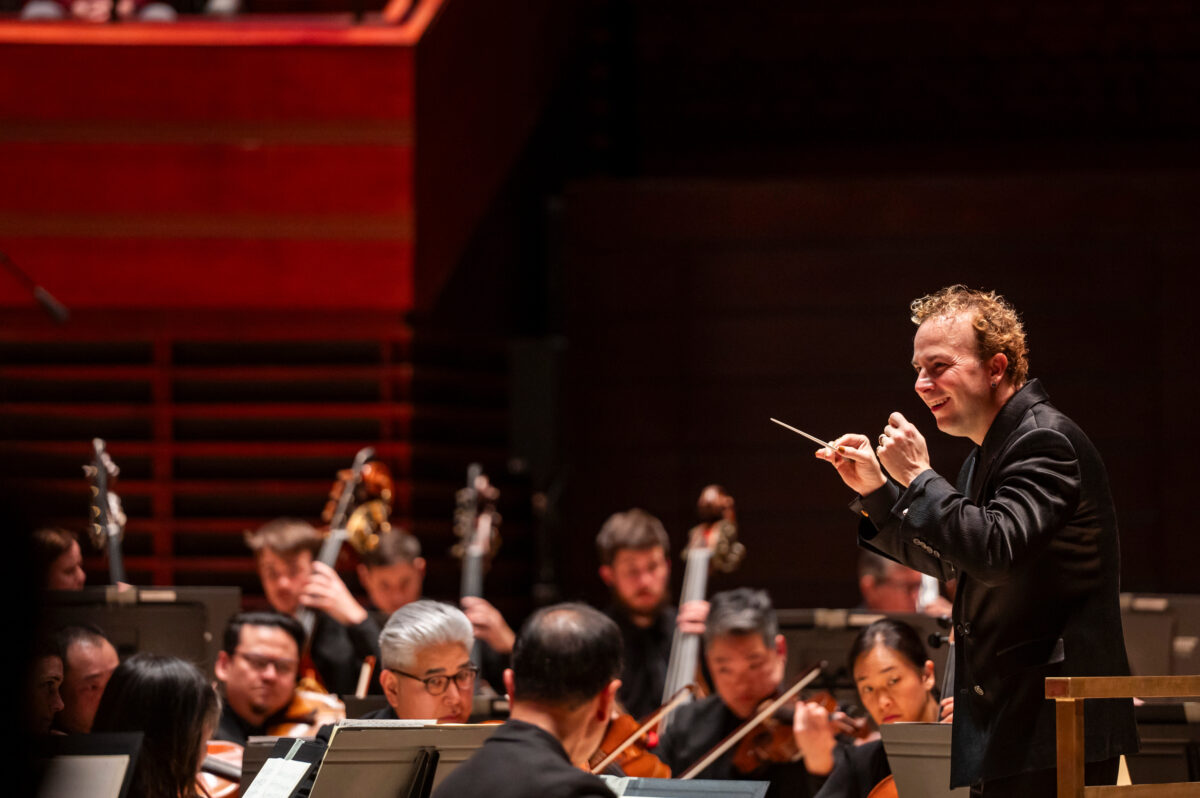
Photo: Allie Ippolito
Carl Orff’s magnum opus has always had wide audience appeal, but performances of it seem to go in and out of fashion. I hadn’t encountered it in a live context for a long time, but recently it’s back in circulation. Within the last few years, I’ve seen/heard it three times: with Opera Philadelphia; at Tanglewood by the Boston Symphony and Andris Nelsons; and previously with the Philadelphia Orchestra under Fabio Luisi.
Now comes a fourth—with the Philadelphia Orchestra under Yannick Nézet-Seguin—and it easily rises to the top. In fact, it’s the best version I’ve ever heard live, and maybe also including recordings.
It’s no surprise that our mischievous, hyper-energetic maestro would be at home with Carmina’s compulsively rhythmic, pagan energy. Sure enough, from the start this performance was marked by two of Yannick’s musical signatures: very fast tempos, and closing-up rests and pauses between some sections. I initially wondered it if would be too much: too fast, too throbbing, too loud. But by the “Omnia Sol temperat” section, it was clear that there was mystery and subtlety here too.
Three excellent singers scored major points in the fiendishly difficult solos. Baritone Will Liverman effectively contrasted his haunting, bass-like lower register with a bright falsetto—at times he seemed almost to be duetting with himself! Soprano Janai Brugger was ideally lush in the “In trutina,” and superbly assured in the nearly impossible (in live performance, anyway) leaps and high tessitura of “Dulcissime.” And Jonah Hoskins’ clarion Swan Song was hands-down the best I’ve ever heard. (Incidentally, both Brugger and Hoskins were on the Met’s team Lincoln in the Bardo earlier this week.)
But the biggest revelation was the ensemble, which included several excellent youth choruses along with the Philadelphia Symphonic Choir. Without in any sense loosening precision, the emphasis here was on a more casual, almost folk-like tone: rather than presenting the work as a single huge mass of voices, instead there was a sense of individuals making music in the most natural way possible. It was evident in their physical presence also, which radiated a feeling of pleasure. That was certainly reflected also in the audience’s roaring approval.
For the record, Carmina Burana was the second part of the concert. It was proceed by Samuel Coleridge-Taylor’s lushly melodic Ballade in A minor; and Gabriela Ortiz’s Clara, a fascinating 20-minute homage to the Schumanns that’s full of percussion (literally and figuratively, bells and whistles) and has a strangely compelling, neurotic energy that at moments evoked for me Bernard Herrmann’s scores for Psycho and Vertigo. Both were superbly played, but as Yannick twinklingly pointed out when he first walked on the stage, “I know you’re here for the second half.”
And indeed, we were.
Suddenly Last Summer (Opera Philadelphia)
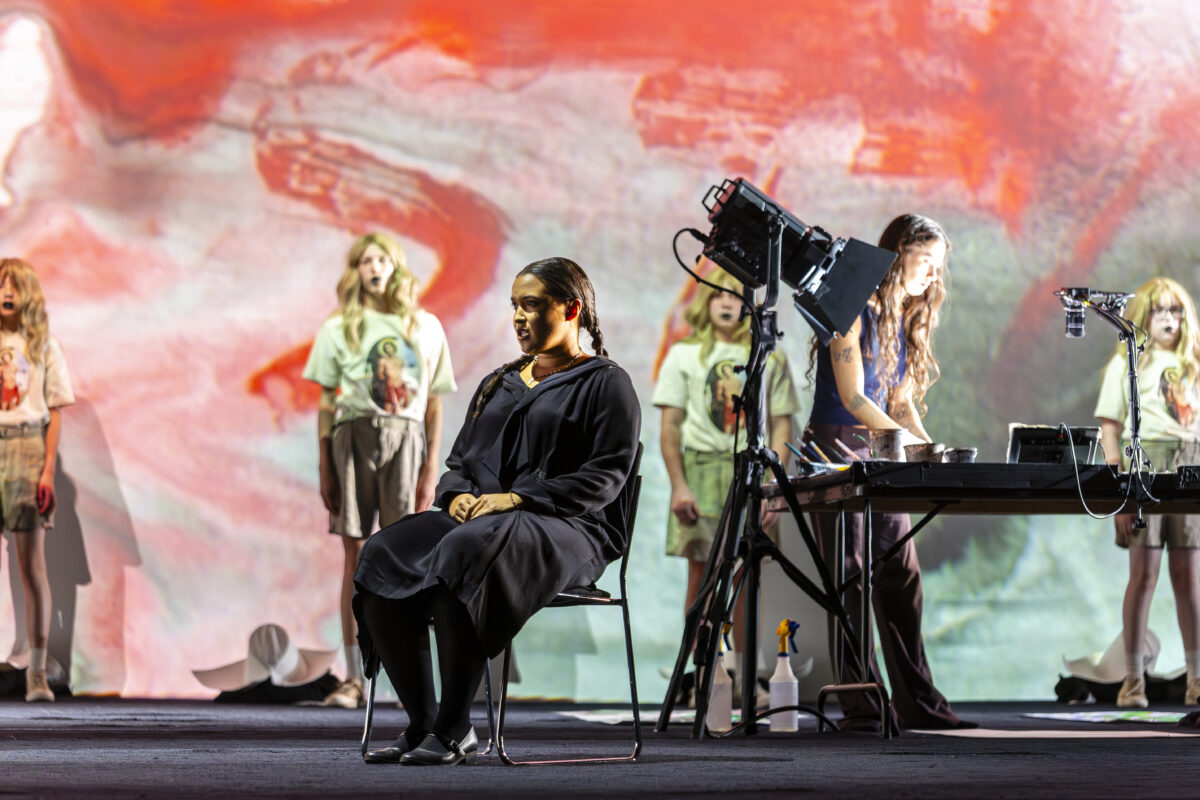
Photo: Dominic Mercier
The starting point here obviously is Tennessee Williams’ notorious—and notoriously problematic—play. Controversial from its premiere, its reputation now is largely based on a climactic final sequence which is described rather than seen but nonetheless packs a wallop. Here goes (and Spoiler Alert!)…
In the play’s final reckoning, a young woman describes in some detail the moment when her gay cousin, vacationing with her on a tropical island, goes on the prowl for some action, and is ultimately torn to shreds and partially eaten (yes, literally) by a pack of young boys.
If you want more details, you can certainly find them. Likely what Williams intended the audience to understand had something more to do with psychological and emotional descent than pure Grand Guignol. Nevertheless, the play is dismissed by many and is infrequently revived even in comparison to other lesser Williams’ works.
So, it’s not an obvious candidate for adaptation—yet that’s exactly what we have here. Composer Courtney Bryan and librettists Gideon Lester and Daniel Fish have rethought and reinterpreted Suddenly Last Summer in a co-production of Opera Philadelphia and Fisher Center LAB as a short, stark work of music theater. It premiered last June as part of Bard SummerScape 2026 and is now presented by Opera Philadelphia for a few performances at the Forrest Theatre.
The reports I’d heard from Bard were mixed to say the least, with a lot of grousing: It’s too deconstructed. Only one character sings. It’s not an opera.
Somewhat to my surprise, I found myself quite drawn-in by the work, which I found hypnotic and compelling. In fact, far from thinking it was an adaptation-gone-rogue, I found it the most effective demonstration of the play’s power that I’ve seen in years.
Let’s take the complaints one-by-one.
While Daniel Fish (who directed as well as collaborated on the libretto) certainly interprets the play abstractly, its “deconstruction” is in many ways very close to what the playwright calls for. Williams set Suddenly Last Summer in a gothic mansion in New Orleans’ Garden District and probably imagined that the lavish if decaying setting would starkly contrast with the shocking savagery of the story.
That setting vanishes in any concrete sense in Daniel Fish’s production… but before we get sniffy about how radically he has rethought the play, let’s look at what Williams’ actually asks for in his stage directions. This includes:
The set may be as un-realistic as the decor of a dramatic ballet… The interior is blended with a fantastic garden which is more like a tropical jungle… massive tree-flowers suggest organs of a body with undried blood; there are harsh cries and thrashing sounds in the garden as if it were inhabited by beasts, serpents and birds, all of savage nature.
In other words, what Williams wanted was less a literal home setting than a destabilizing sense of mood and creepiness… which is exactly what it gets here. Fish has framed the often-dark stage, which looks like a fragmented film set, with slashing Fauvist paintings. These are remarkably executed in real time by the artist Lucy Tarquino, and they are at once strikingly beautiful and savage, evoking the blood and jungle imagery that’s called for. (The estimable design team here are Marsha Ginsberg, Terese Wadden, Stacey Derosier, Joshua Thorson, Gareth MacAleavey and others.)
The drammatis personae include, in addition to Catherine, the principal character acted and sung by Mikaela Bennett (more on her in a minute), several actors who speak many familiar Williams’ passages from the play, They include Stephanie Roth Haberle, as a stylized and appropriately wraithlike Mrs. Venable; Branden Lindsay, a wonderfully quiet but intense Dr. Cukrowicz; and Miriam Silverman and Nick Westgate as Catherine’s awful mother and brother. (That Silverman and Westgate are seen only through black-and-white film excerpts seems to wink at a “traditional” version of Suddenly Last Summer.)
Is it an opera? I say yes. While it’s true that Catherine is the only solo singing character—clearly meant here to suggest that it is she and only she who speaks the truth—Courtney Bryan’s moody and cinematic score is very much front-and-center, and choral passages beautifully done by the Philadelphia Boys Choir also underscore the dark corners of Williams’ play. (Nathan Koci is the conductor and music supervisor.)
And then there’s Catherine, who certainly sings here. In a virtuosic turn that recalls the emotional and vocal challenges of Poulenc’s La Voix Humaine, Bennett is nothing short of astonishing. Costumed in black and seated much of the time, she unleashes a vocal performance that is at once highly “operatic”—with a wide range and fearsome high passages—and rooted in a chestier kind of musical theater delivery. Bennett is in full command of every aspect of the score. Her skill at moving from across the mix of styles with absolute commitment, authority, security, and tonal beauty reminded me at times of the great Judy Kaye—in this kind of music, I can think of no higher praise.
So yes… Suddenly Last Summer is opera, but maybe more important, it’s gripping theater. It’s not for everyone, I’m sure, as the original play certainly isn’t. But Bennett’s tour-de-force should surely be reason enough for the piece to have an afterlife.
__________
Over and out for now. Wishing you all a season of fun and lascivious performances.
-
Topics: concert performances, Review
-
People: Andris Nelsons, Branden Lindsay, Daniel Fish, Fabio Luisi, Gabriela Ortiz, Gareth MacAleavey, Gideon Lester, Janai Brugger, Jonah Hoskins, Joshua Thorson, Marsha Ginsberg, Mikaela Bennett, Miriam Silverman, Nathan Koci, Nick Westgate, Stacey Derosier, Stephanie Roth Haberle, Terese Wadden, Will Liverman, Yannick Nézet-Séguin
-
Works: Carmina Burana, Suddenly Last Summer
-
Places & Organizations: Philadelphia Opera, Philadelphia Orchestra