Mist opportunity
Lucia di Lammermoor at La Scala, starring Rosa Feola, proves as airless as this summer’s heatwaves.
 By
Harry Rose
By
Harry Rose
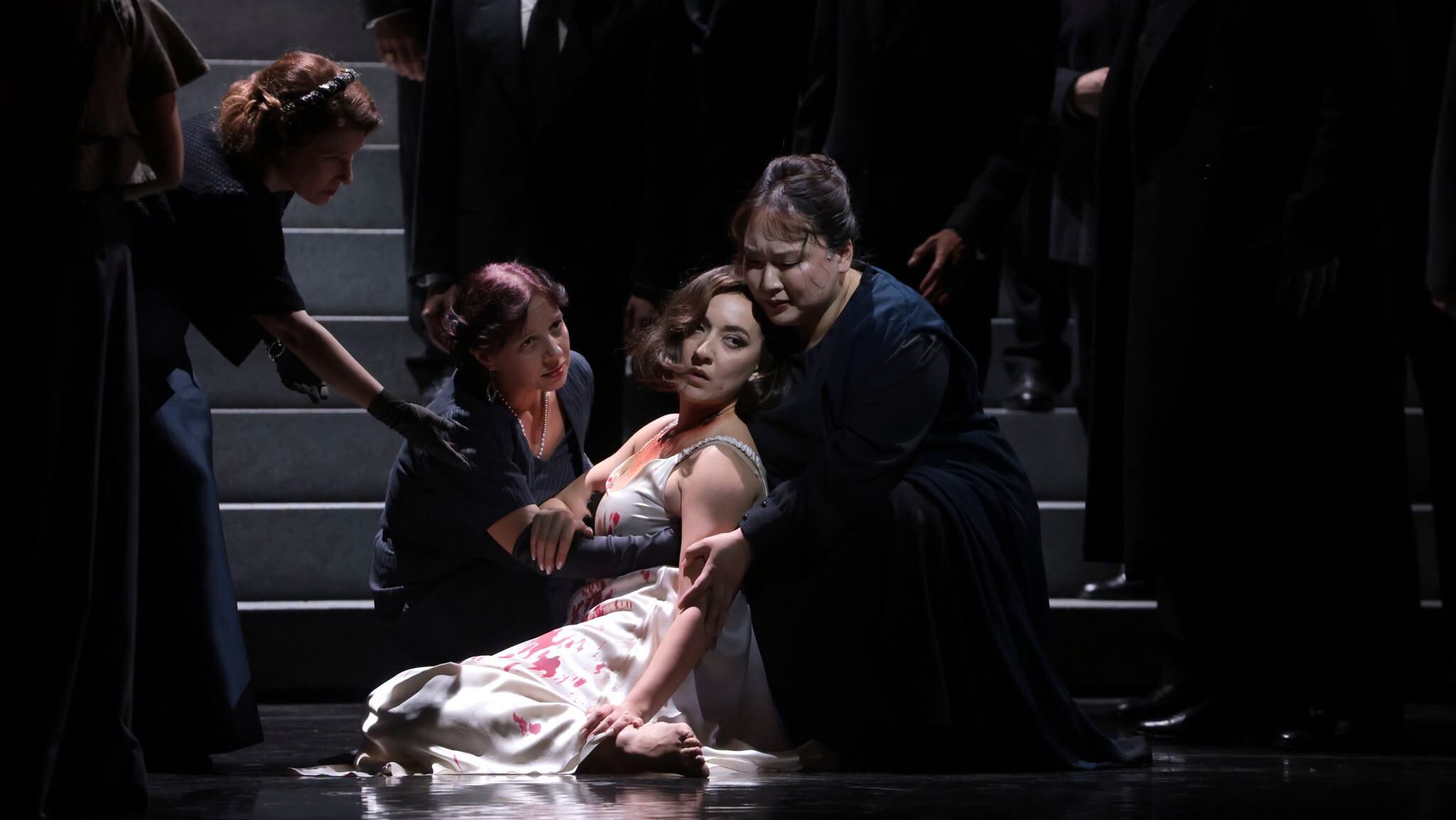
Photo: © Brescia e Amisano | Teatro alla Scala
For the past two years, La Scala has seen fit to launch into its summer hiatus with a bel canto work; last year was Norma with a revolving door of Norme, and this year was a revival of Yannis Kokkos’s 2023 production of Lucia di Lammermoor (originally mounted for Lisette Oropesa) starring a lovely Rosa Feola in the title role.
But wait, a lovely Lucia? The fragile lass that snaps and kills her husband in a fit of madness? Is that something anybody really wants? Feola was certainly adept in the part, singing with unstinting lyricism and thoughtful flourishes and alertly affecting forlornness in her acting, but the role was fundamentally more of a temperamental mismatch than a vocal one.
Indeed, on the former front, it was hard to find things to critique; in “Regnava nel silenzio” her milky tone was flowing and even and while her coloratura in the cabaletta was not necessarily immaculate, she’s plenty agile. The E-flat that ended the scene was not effortless but it did come out securely.
But rather than fated or loony or immature, this Lucia mostly just seemed exasperated, and the production gave her practically no help. Despite a vague update to the 1930s (that insofar as the drama seemed to justify only Oropesa’s 2023-era wavy bob, re-created, of course, for Feola), the alternately vague and heavy-handed symbolism in the scenery and rote blocking was shockingly unsophisticated for an ostensibly “non-traditional” production of a major work at a major opera house. The production’s only real intervention is the reframing of the Mad Scene as not some sort of wide-eyed feral mania, but a dissociated vampy, sexually liberated solo routine.
Feola threw herself into the pointless burlesque of the scene, and even at times managed to make the spastic coloratura outburst that had her writhing in pleasure seem fleetingly sexy. Her use of rubato was beguiling, her enunciation of the text was clear, and her slightly plangent tone gave a shade of pathos, even if her conscious lack of varying vocal color made her portrayal seem rather one-dimensional. But while one always worries in operas like Lucia that the soprano will play the end before the beginning, here any sign of volatility would have made a difference. I heard that her Violetta in New York this spring was “nearly ideal”; her Lucia, on the other hand, was accomplished but bloodless.
That she at least seemed deferential to her highly professional prima donna was conductor Speranza Scappucci’s greatest merit; otherwise, the relentless high-decibel, high-drama grinding by the cohesive La Scala Orchestra was old by the first scene, and in the extended harp solo before Lucia’s entrance, she had Luisa Prandina plucking so hard you could practically hear new calluses forming. (Fortunately, Friedrich Heinrich Kern was by default a subtler presence on the glass armonica during the Mad Scene.) If Scappucci felt the need to compensate for a lack of fire from the lead singers, surely there are other ways to address the problem than turning the orchestra up to a sustained 10 and expecting the singers to adjust themselves.
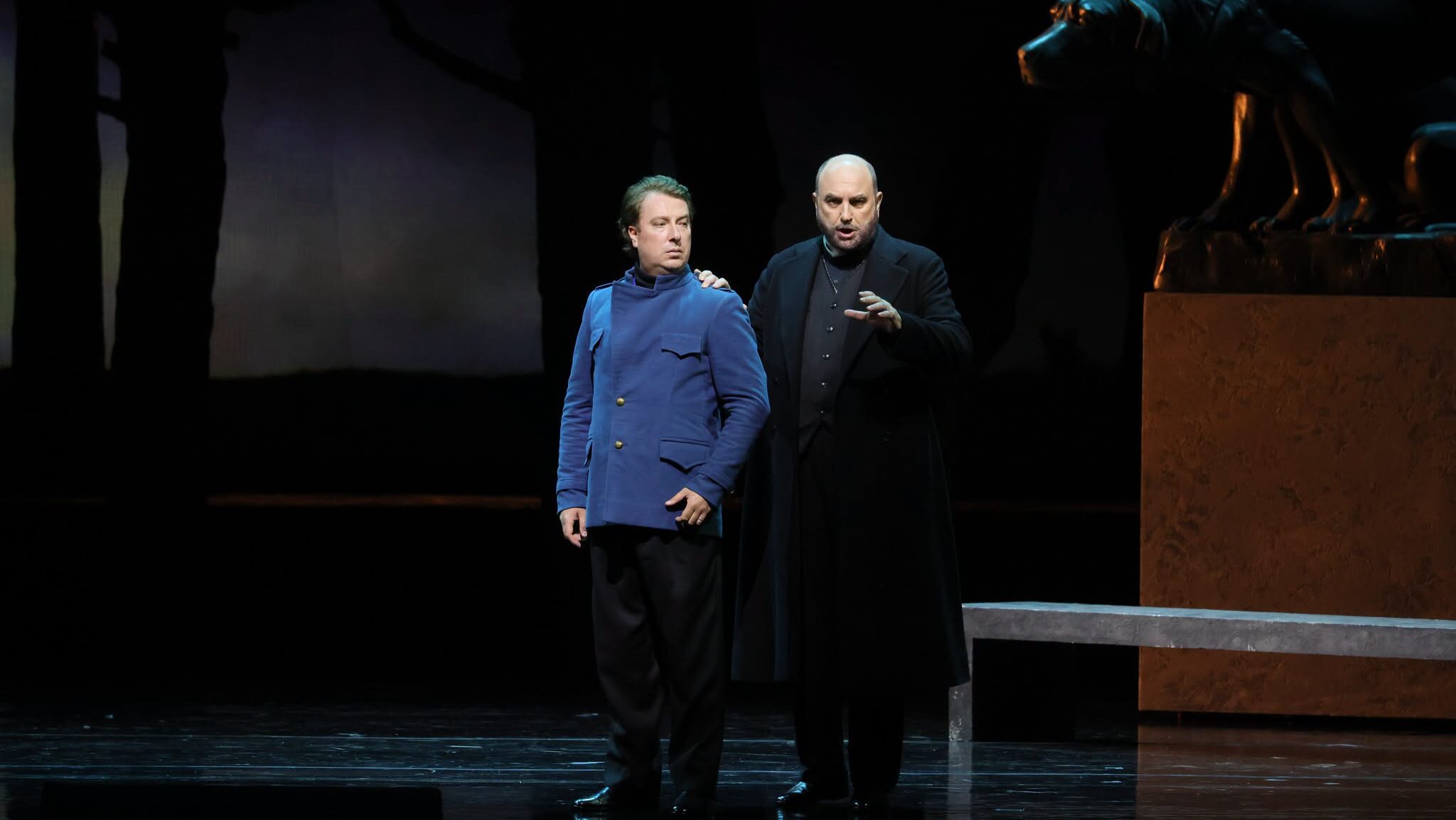
Photo: © Brescia e Amisano | Teatro alla Scala
One such case of an interpretative blankness far more severe than Feola’s was Boris Pinkhasovich‘s Enrico; as Lucia’s manipulative, hotheaded brother, he seemed largely unperturbed, opting once every handful of lines with a serviceable baritone to put some feeling into the words before lapsing into anonymity. Piero Pretti, as Edgardo, was at least more idiomatic than Pinkhasovich, though his sound is overall drier and more papery, especially in the voice’s upper third. Only in certain phrases of the Tomb Scene did he show glimmers of that warm glean that used to characterize his singing.
Michele Pertusi, as the chaplain Raimondo, was a conciliatory if uncommanding presence, while the Normanno of Paolo Antognetti and the highly individual Arturo of Leonardo Cortellazzi tended to slip under Scappucci’s fray. Walking out of the theater and into the heat and humidity of a mid-July Milan evening, I found myself wishing for a cool highland mist, the type that had eluded me all evening.
Harry Rose
Harry Rose, based in Providence, Rhode Island, is currently pursuing a PhD in Italian Studies at Brown University. Starting out blogging independently as Opera Teen in 2013, he holds the auspicious distinction of being the youngest writer to ever contribute to parterre box (at age 14) and has had the pleasure and challenge of writing for the rigorously discerning cher public since 2012. Increasingly niche hobbies and interests include opera, ballet, theatrical goings-on of the fin-de-siècle, and gatekeeping Camp.
-
People: Boris Pinkhasovich, Friedrich Heinrich Kern, Leonardo Cortellazzi, Lisette Oropesa, Michele Pertusi, Paolo Antognetti, Piero Pretti, Rosa Feola, Speranza Scappucci, Yannis Kokkos
-
Works: La traviata, Lucia di Lammermoor, Norma
-
Places & Organizations: Teatro alla Scala