Robust possibilities
After success at the Met as Turandot and before a historic Medea, soprano Anna Pirozzi talks to Harry Rose about her voice, her repertoire, and where her “second explosion of career” is taking her.
 By
Harry Rose
By
Harry Rose
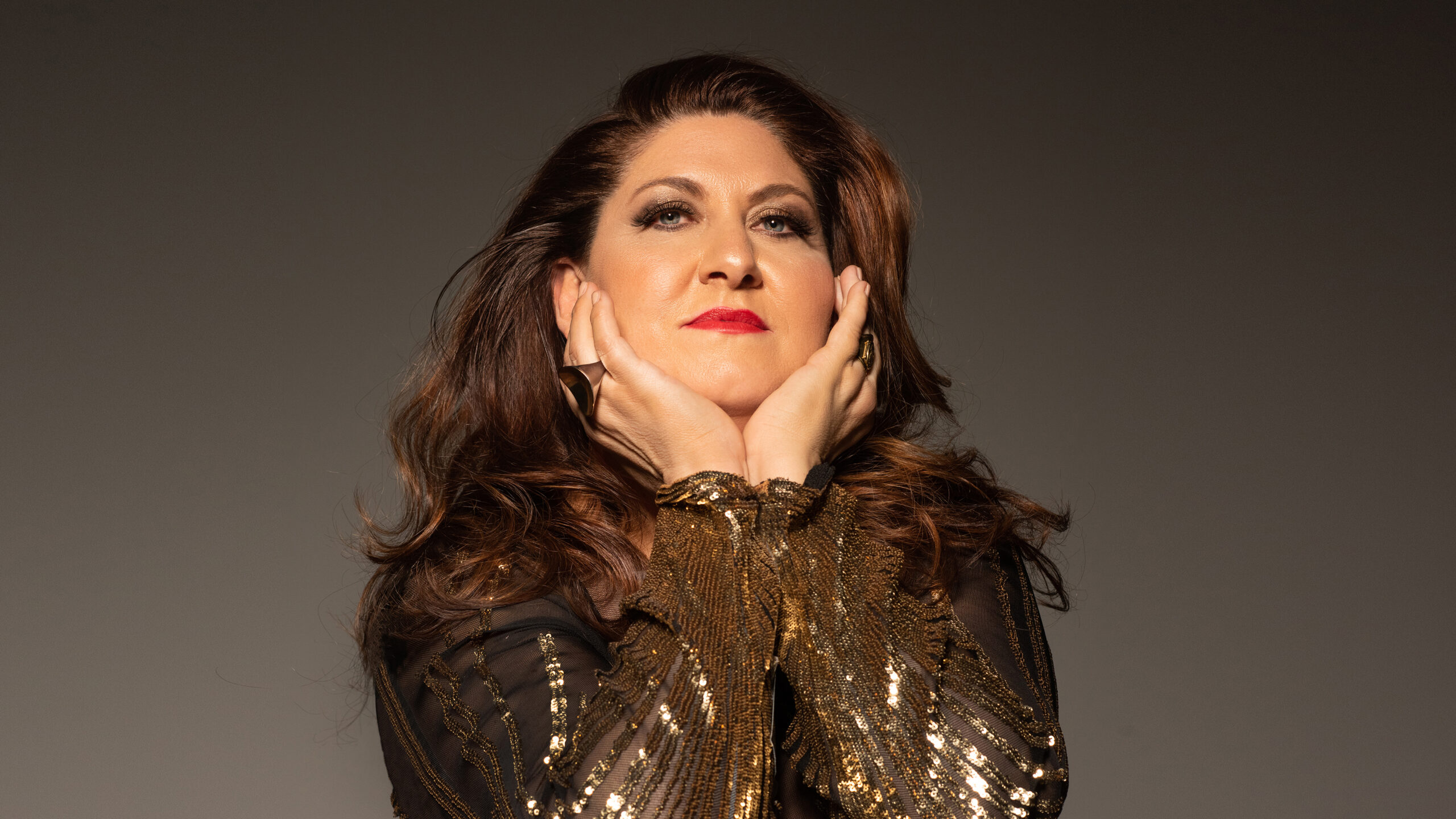
Soprano Anna Pirozzi / Photo: Charl Marais
“Robusta!” the soprano says with assurance, clenching her fist. “Healthy. I’m not precious with it—I’m strong.”
Anna Pirozzi is describing her voice to me in a wine bar on the Upper West Side. At the time of our conversation, which I’ve edited here for clarity, she has one remaining performance of Turandot before she returns home to Switzerland. This spring was her first time in New York to sing since 2019 and her return to the Met in one of her signature roles has been a triumph. And, she hopes, the start of something new.
After over a dozen peerless years in the most punishing repertory— Verdi’s early warrior heroines, Norma, Aïda, Turandot—the Italian soprano is levelling up, and audiences in New York are finally getting a prolonged look at a singer who has rather nonchalantly set a standard for lirico-spinto singing in Italy and in Europe. With these New York appearances, she says she feels like she’s living “a second career, another explosion of my career because my voice has held up well and I can still give the most, the best of myself.”
But what might be a second act for her— new theaters, some new roles, and some high-profile productions—is actually more of a first act for American audiences. After a single scheduled Lady Macbeth in 2019, during one of Anna Netrebko’s off nights, Christopher Corwin said, “One hopes that Pirozzi’s splendid one-shot debut won’t mean that it’ll take four years before we hear her again while the Met scrambles to find a place for her. The soprano’s wide repertoire […] along with her crowd-stirring artistry suggests that she should have a welcome and valued place on the Met’s roster.” Yet it would be over half a decade before she returned to New York, and when the call from the Met came a year ago, she was ready to return for five performances as Turandot, including a rapturously received broadcast that left many listeners wondering “Where has she been?”
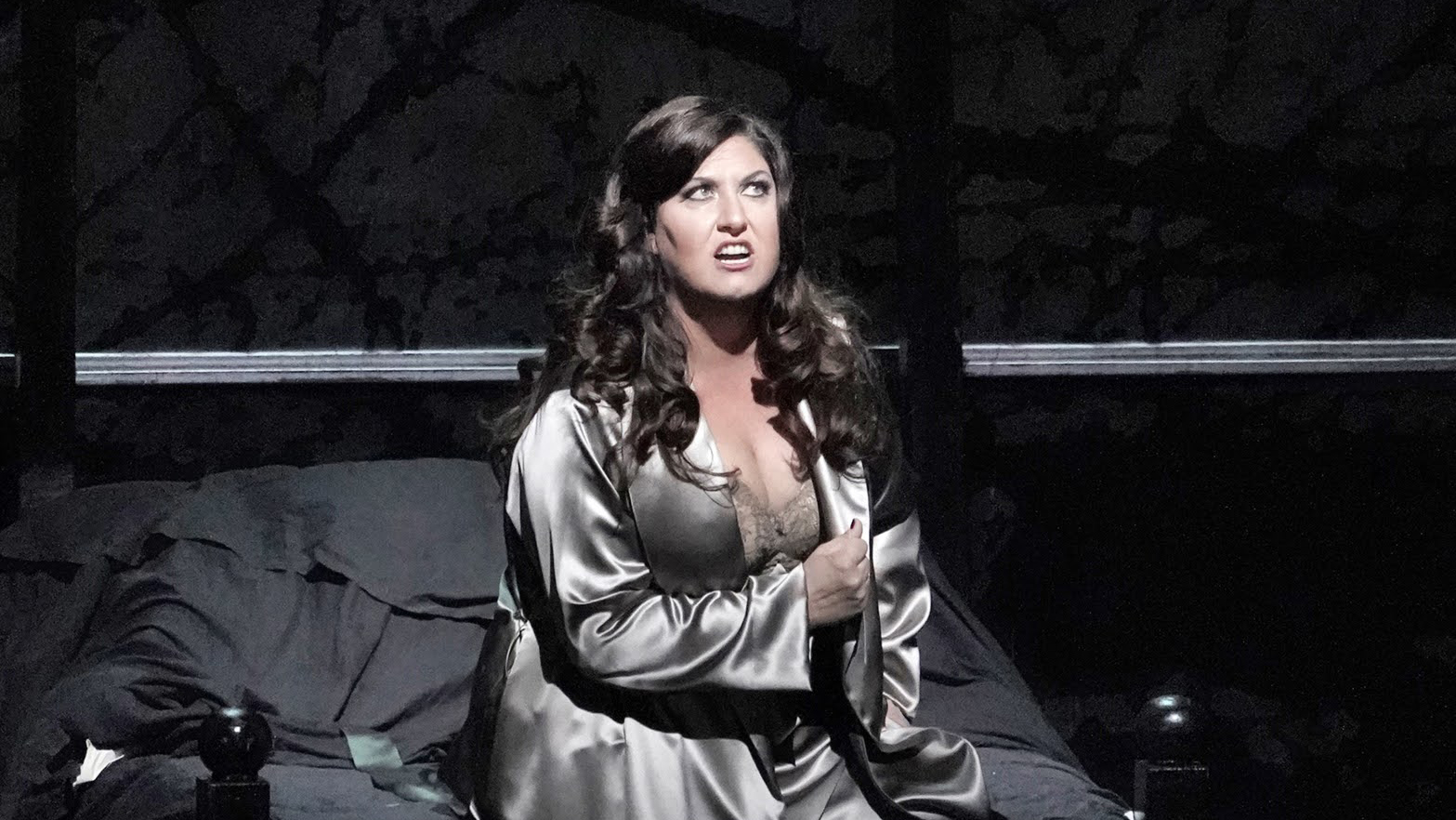
Anna Pirozzi in Macbeth at the Metropolitan Opera, October 2019 / Photo: The Metropolitan Opera
If it seemed like Pirozzi emerged out of nowhere ten or fifteen years ago, it’s because she did; in 2000, at age 25 and having never sung any classical music before, she heard a recording of Callas’s “Casta diva” and had her road to Damascus moment with opera—“It was love at first sight”—and she never looked back. After having previously sung almost exclusively contemporary music in small, social settings, in Valle d’Aosta where her family moved from Naples when she was 13, she began training at the local conservatory.
For the dozen years between her discovery of opera and her big break as Amelia in a single performance of Un ballo in maschera in Turin in 2012, she cut her teeth singing perilous early Verdi roles in small theaters at night while working in nursing homes and cleaning factories during the day. “My parents always told me if you want things, you have to earn them,” she says of her unflagging work ethic. “I would sing Aïda for €50, Abigaille for €100, in teeny tiny regional theaters. I’d be on a bus along with the orchestra, and I was just happy to sing. That was how I made my bones.”
It was with these roles that Pirozzi came to early acclaim; she came on my radar right here on Parterre Box in 2016 when the late James Jorden proclaimed of her Abigaille, “I think we can all agree that this Anna Pirozzi is the real thing,” and later that spring I got to see her La Scala debut run as Lucrezia Contarini in a due Foscari that was mounted for Placido Domingo (but featured performances by the eminently more echt Luca Salsi at the end of the run). In fact, the Salsi-Pirozzi pairing has yielded some of the most satisfying nights of Italian opera that I’ve ever experienced: their 2018 Macbeth in Parma was terrifying in its precision, and in Tosca in Pirozzi’s native Naples last fall, the two were constantly raising the stakes on each other in a riveting Act II.
On recording, Pirozzi has all the trademark qualities of that Cetra soprano sound: agile and focused, a solid chest register, and a quick, steady vibrato with the piercing bloom of acid hitting acetate. In a live recording of Trovatore from Macerata in 2016, her easy, nearly parlante legato skates fearlessly across Leonora’s precations in the Tower Scene until she leaps up into electric high notes or drifts off into pianissimi with a cumulonimbus’s imposing loftiness.
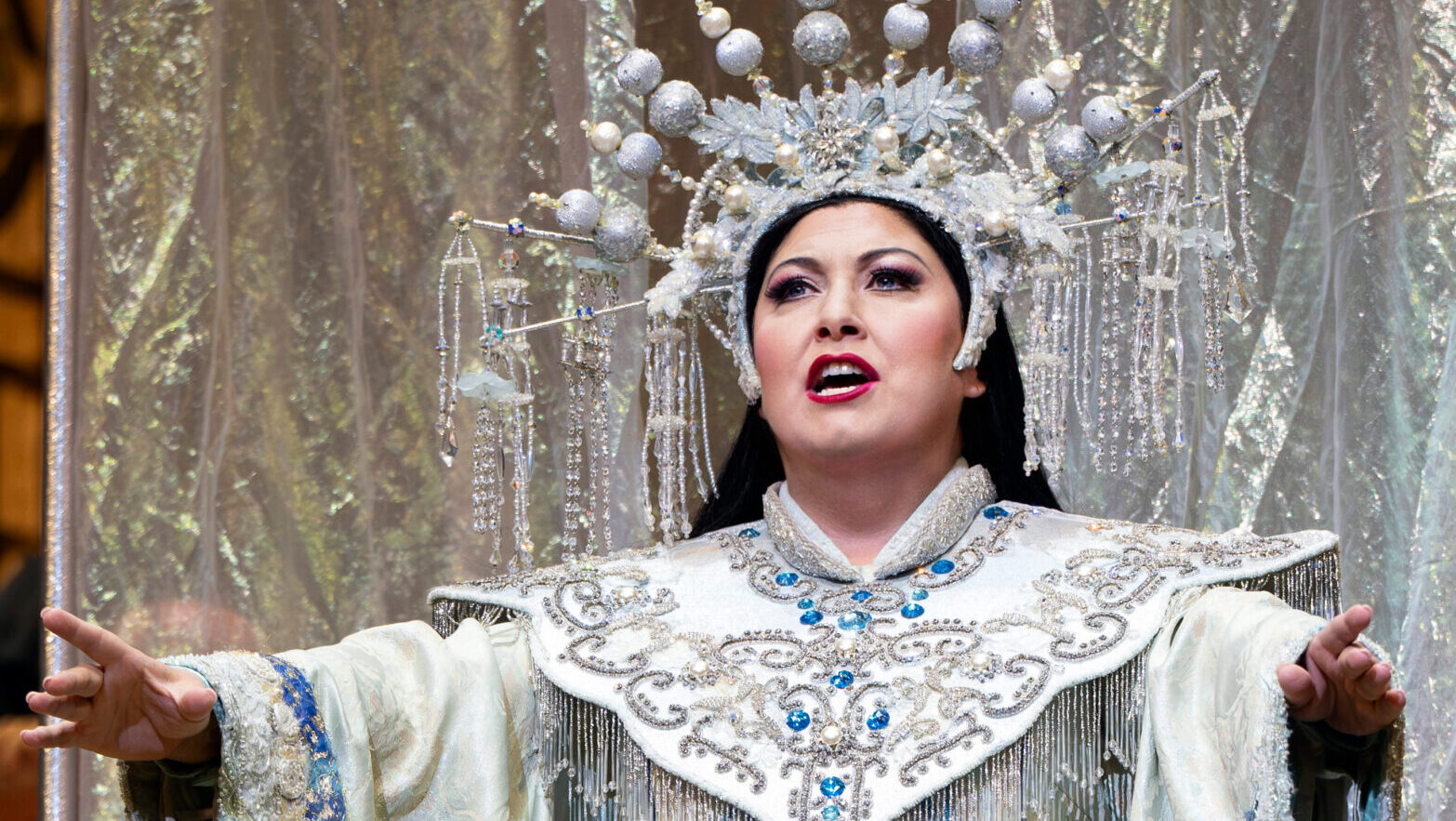
Anna Pirozzi in Turandot at the Metropolitan Opera / Photo: Jonathan Tichler
In her recent Turandot, she counterbalances huge, focused high Cs with delicate, even tender phrasings. Her timbre has warmth, a brilliant plangency, but her resonance is piquant, and only after you realize you’ve gotten all the notes do you realize that you’ve gotten all the words, as well. And if she’s not necessarily glamorous onstage, she’s plenty grand, and the no-nonsenseness with which she pulls it all off is intimidating.
No-nonsenseness might be Pirozzi’s defining characteristic. She wears the storied caché of the “Italian soprano” epithet lightly, but, she adds “I know I have something extra compared to a non-Italian singer. Italian singing has this frankness, this luminosity, the openness, this naturalness and not-too-affectedness. It’s singing with the joy of understanding what you’re saying.”
Comprehension has been key because up to this point, Pirozzi has drawn from a rigidly circumscribed repertoire of lirico-spinto roles. She recalls a German agency passing on her audition when she was starting out, saying that her singing was great but her diction in “Ozean! Du ungeheuer” from Oberon was terrible. Same with Mozart; she sang the Contessa in Figaro early on and studied Fiordiligi for a competition when the jury told her, “What are you doing singing Mozart with that voice? Go sing Verdi.”
“But I was a good Contessa,” she insists, “and considering that I started singing late, it was too late to start with Mozart.” She has similar regrets about roles in the lyric soprano repertoire, adding that before she was labelled as Abigaille and Lady Macbeth, “I would have loved to sing like Violetta or Mimì—and I would have been able to sing a good Traviata early on.”
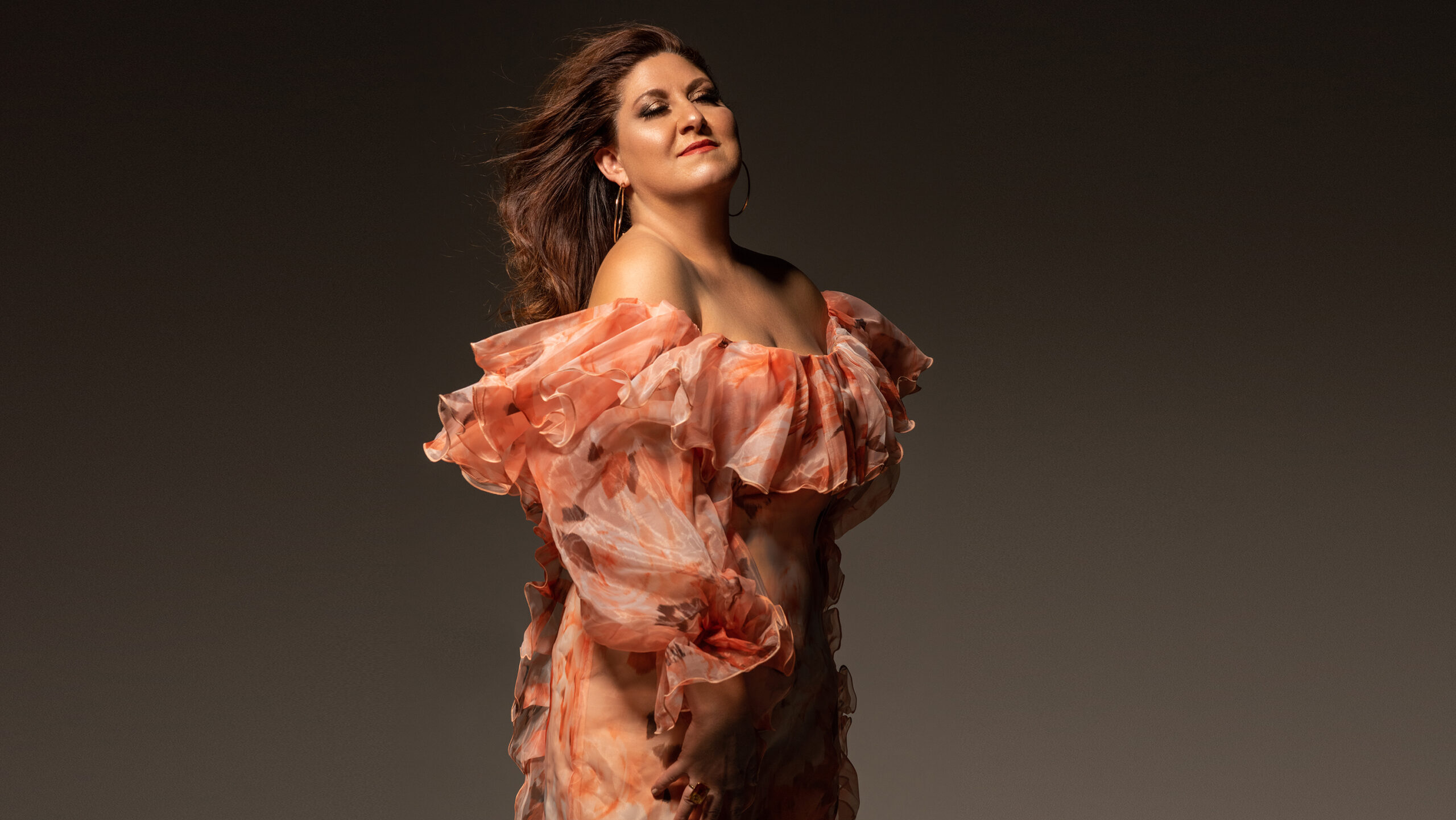
Soprano Anna Pirozzi / Photo: Charl Marais
But since her last New York appearance in one of her signature roles, things are different. “My body has changed, my voice has changed,” she says, and she’s evolving her repertoire in turn. She shares that she is considering leaving behind, or at least becoming more discerning about, some of the early Verdi roles that made her famous: “After 130 performances of Abigaille, for example, sometimes I feel like I don’t know what to say anymore, though I often take inspiration from the director or a particular production. And I would definitely be willing to revisit it in a place like New York or Milan!” She has taken a particular interest in more dramatic repertoire. Her sights are currently set on the bel canto heroines of Il pirata and Roberto Devereux, each of which she only sang once, as well as the other Tudor queens.
Verismo might seem intuitive for someone with Pirozzi’s self-acknowledged “verista temperament—Neapolitan, passionate, real,” but she finds that “in some verismo operas, sopranos can put in a crazy amount of effort and still get lost. I recently debuted Minnie, and while it’s not quite verismo and I quite enjoy singing it, Act II is toughie. It sometimes makes more sense to sing bel canto for the sake of the voice’s health.”
Alongside those bel canto heroines, another, unexpected composer might be looming on Pirozzi’s horizon: “Seeing as my voice is maturing, everyone’s asking me, ‘Why not try a bit of Wagner?’ So, now I’m starting to study some arias to sing in a concert.”
“She doesn’t speak German,” says bass Marko Mimica, a close friend of Pirozzi’s since a Macbeth in Palermo in 2016 with whom she has been preparing that Verdi/Wagner concert program, “but honestly, that’s not what worries me. She has a very good ear, she’s an intelligent musician, and she’s an extremely hard worker.”
The program, as they envision it, is organized thematically around the soprano-bass pairings in Don Carlos and Tristan und Isolde. Rather than just being a love duet hit parade, Mimica says, “this program explores a different kind of drama. It deals with love, of course, but also with disappointment, sacrifice, loneliness, and the passing of time.” In versions prepared for both a full orchestra and a piano, the two plan to explore scenes, arias, and overtures from the two composers.
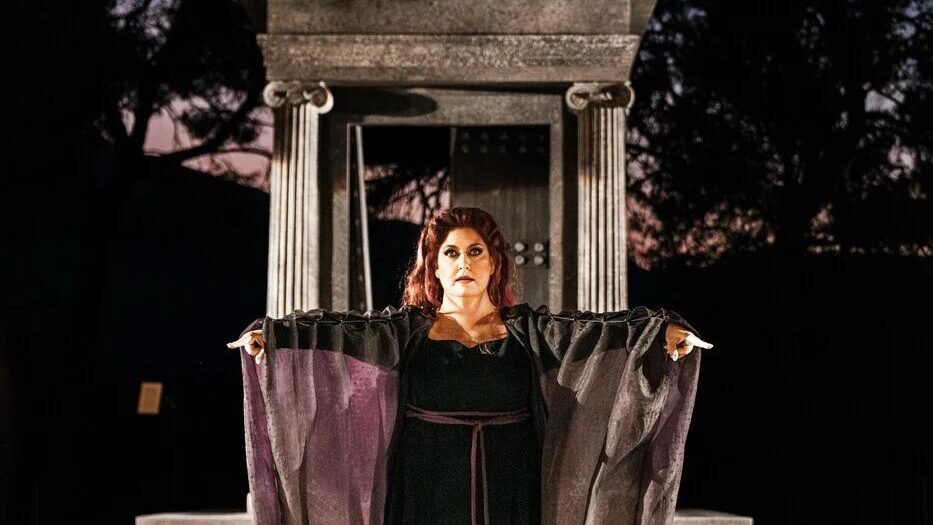
Anna Pirozzi as Medea in the Greek National Opera production of Medea, June 2026 / Photo: Giannis Altononglu | Greek National Opera
“It will be the first time she sings Wagner,” Mimica adds. “I’m very curious to see where that might lead.” Even the Everest of Wagner roles, he suggests, could be on the table for an artist with Pirozzi’s abilities: “I’ve told Anna many times that I think she has the potential to sing Brünnhilde. When I listen to Anna I hear qualities—power, flexibility, volume, the ability to blend registers—that are very difficult to find in one singer. For me, that flexibility is just as important as sheer volume in Wagner.”
She suggests that an intuitive next step for herself, given that she lives in the Italian part of Switzerland and speaks fluent French, might be one of Verdi’s operas in French. But when I suggest that Medea, originally written in French, could also fit that bill, she demurs: “Medea is an Italian opera for you?” “Italianissima!” In fact, she’s currently pivoting from Turandot to Medea ahead of an important production in the Ancient Theater of Epidaurus that honors Callas’s famous 1961 performance there.
“It’s a big responsibility,” she muses, interrupting herself to tell me to eat more of the cheese platter we’re sharing. “The place is magical, and the acoustic is amazing.”
“After they decided that I was the heir to Callas in this role,” she qualifies, “the Greek National Opera was so excited that they decided to do this Medea for me. I’ve gotten close, somehow, to what appeals to Greek audiences in this part. But I’d like to have other people hear my Medea, too, maybe in Italy or abroad, maybe in America.” (One hopes, given a certain track record, that Pirozzi will have her phone handy while the Met is mounting Medea this fall.)
But Turandot is, at the time of our conversation, the role that’s on her mind, and it’s fascinating to hear how she parses the notorious part. “I put my temperament into the opening aria which has to inspire a bit of fear—that’s in the vocal writing, with these immediate leaps to the high notes that you have to have ready in your pocket. But then I turn to my lyricism when I pray to my father ‘Figlio del Cielo…’” (She croons to herself across the table, and I’m momentarily dumbstruck.) “There, you need a lyrical voice so that you can also rest. You can’t just yell everything.
“There’s also a psychological change in Turandot that you need to show little by little in the voice. I do this in my acting. The change, for me, doesn’t come in the kiss from Calaf, but begins when she sees how in love Liù is with Calaf and she thinks, ‘How is it possible this woman loves this man so much?’ I look at him, and I see that love must be something beautiful, and when Liù kills herself, it’s another trauma for me—I relive the trauma of Lo-u Ling, whom Turandot never met. The first time I just heard about it, but the second time I’m seeing it, and this is a tremendous shock. There’s yet another change. And then, in the duet when he calls me ‘Principessa di Morte,’… he slowly begins to touch me, I start to feel something. There is the change.”
Was this psychological depth there from the beginning of her experience with the role? “The first few times I sang it just to show that I could sing it, but then as I gained some experience, I gained a maturity in the interpretation. You can’t just sing the notes; you need to interpret the part. Don’t just stand there the whole time preparing for the high note, gesturing like a crossing guard. You need to be able to act and to sing.” And in the opulent Zeffirelli, which hews to her personal preferences for traditional productions, she has found herself especially inspired: “For us singers, it’s inspiring to wear period costumes because you enter into that world and you sing better.”
Pirozzi’s next scheduled American engagement will be another Turandot, this time in Dallas in Francesca Zambello’s updated production and the new ending commissioned by Washington National Opera in 2024. Before then, though, in December, she’ll be crossing off a major item on her bucket list: recording an album. “Finally, I’ve wanted for a long time that my voice be recorded so that when I’m dead people will know what I sounded like.”
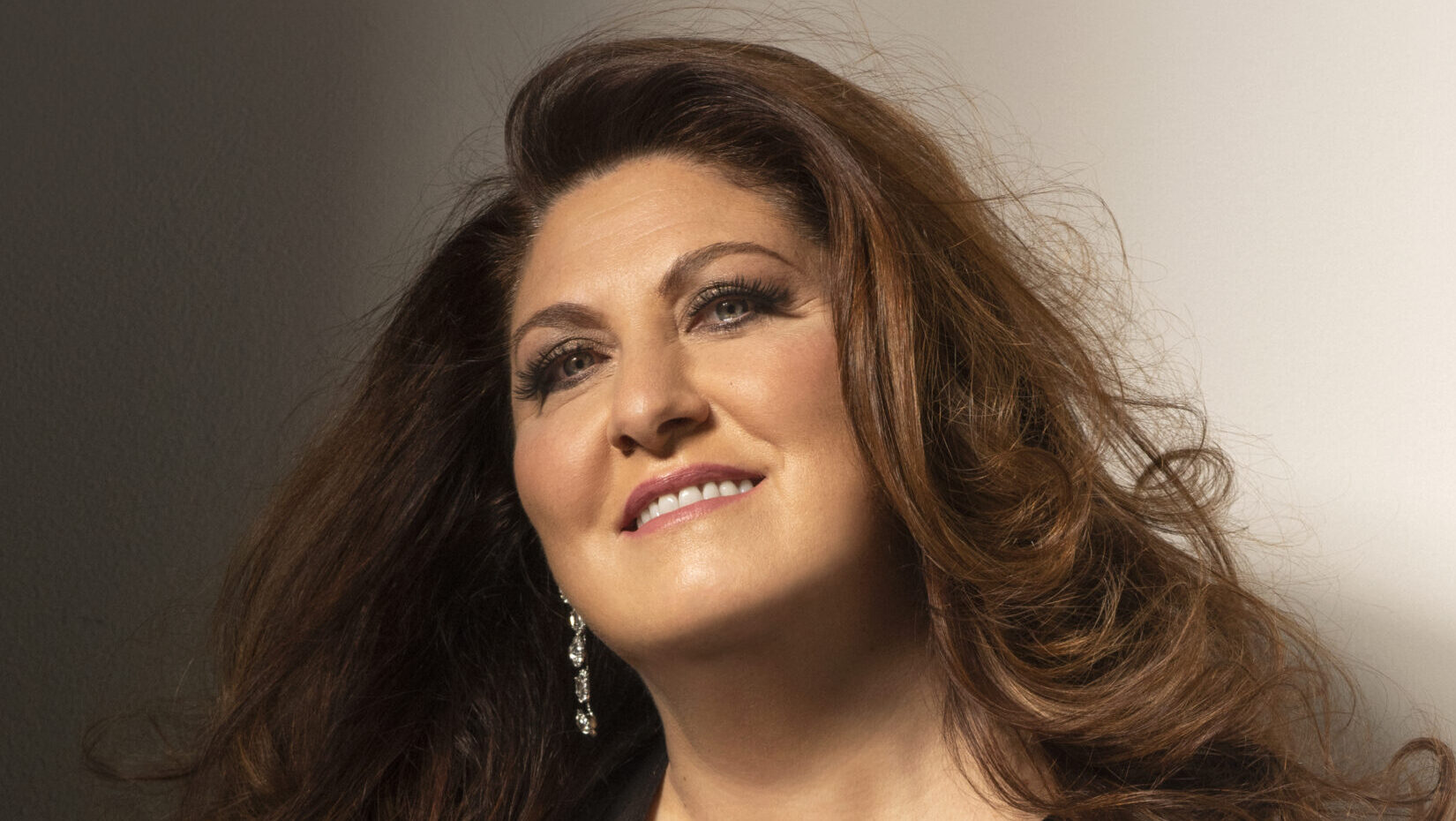
Soprano Anna Pirozzi / Photo: Charl Marais
That day is hopefully far off. “I’m not old,” she adds, thinking ahead to balancing her personal ambitions with the offers she receives from opera houses, “but I’m not young, either. I need to have an idea of how my voice is evolving and to choose the right operas.” At this inflection point, where new opportunities and new aspirations await an artist who reinvented herself with astonishing speed and decisiveness well into adulthood, the sky is the limit, and even if her voice is sturdy, she takes care to keep it in working order for the long haul. “I am always trying to improve, because when you get to such a high level, you have to maintain it. You cannot stop studying.”
And she hopes that before too long, she’ll have an opening night at a major theater mounted just for her, “Maybe at the Metropolitan, or at La Scala.” In fact, the more one thinks about next season at the Met, the more one sees opportunities for which Pirozzi would be ideal—a new Macbeth and Fanciulla, the revival of Medea—and hopes that her Turandots this spring and Aïdas next spring mean that she’s not passed over for similar opportunities in the future.
But regardless of her future repertoire, Mimica is confident that for his friend and colleague, the best is yet to come: “She is one of the most resilient singers I have ever met. She can sing the most demanding repertoire, travel constantly, deal with all the pressures of this profession, and somehow she always seems to come out strong.”
And in person, she’s as resilient and forthright as her singing. “Are you coming to hear Turandot?” she asks me at one point towards the end of our conversation. I tell her I’m going to the final performance tomorrow. “Ah, for La Pirozzi,” she replies with a twinkle in her eye. “I’ve heard she’s good.”
Harry Rose
Harry Rose, based in Providence, Rhode Island, is currently pursuing a PhD in Italian Studies at Brown University. Starting out blogging independently as Opera Teen in 2013, he holds the auspicious distinction of being the youngest writer to ever contribute to parterre box (at age 14) and has had the pleasure and challenge of writing for the rigorously discerning cher public since 2012. Increasingly niche hobbies and interests include opera, ballet, theatrical goings-on of the fin-de-siècle, and gatekeeping Camp.
-
Topics: anna pirozzi, feature
-
People: Anna Netrebko, Anna Pirozzi, Christopher Corwin, Francesca Zambello, Franco Zeffirelli, James Jorden, Luca Salsi, Maria Callas, Marko Mimica, Plácido Domingo
-
Works: Aïda, Così fan tutte, Don Carlos, I due Foscari, Il trovatore, La bohème, La fanciulla del West, La traviata, Le nozze di Figaro, Macbeth, Medea, Norma, Oberon, Roberto Devereux, Tosca, Tristan und Isolde, Turandot, Un ballo in maschera
-
Places & Organizations: Dallas Opera, Greek National Opera, Metropolitan Opera, Teatro alla Scala, Washington National Opera