His infinite variety
Bass-baritone Le Bu’s recital with Vocal Arts DC highlighted his linguistic and timbral versatility.
 By
Andrew Lokay
By
Andrew Lokay
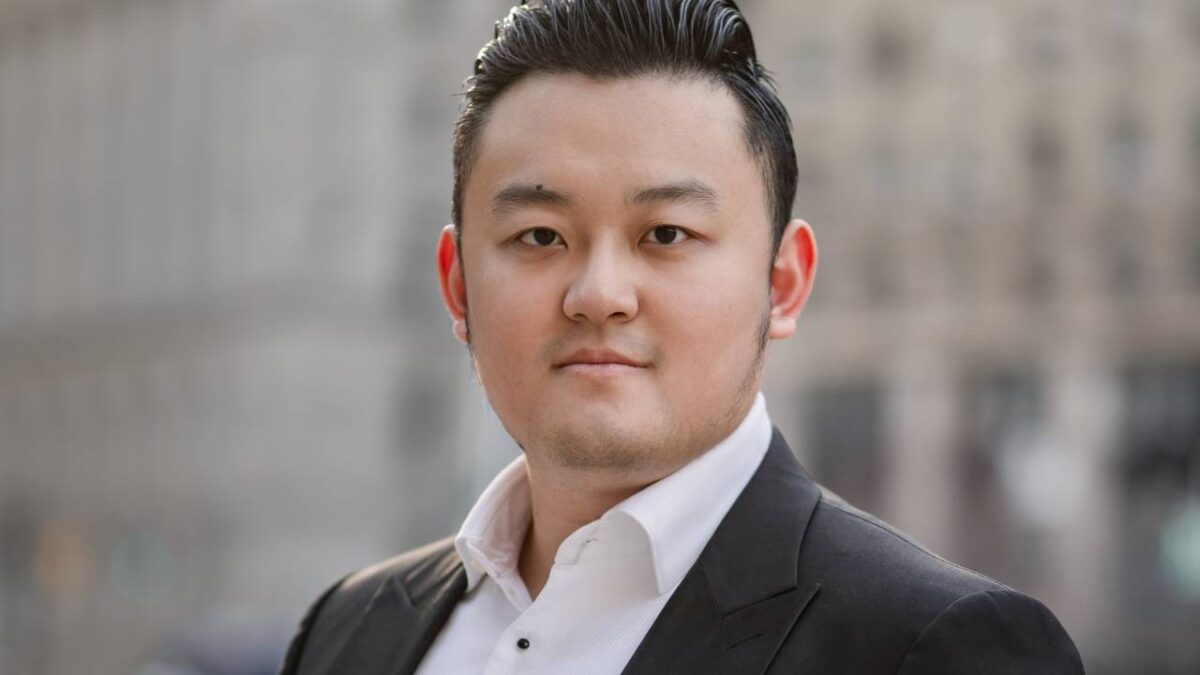
Photo courtesy of Minerva Artists
Following a successful run as Figaro last fall in Washington National Opera’s Il Nozze di Figaro, Le Bu returned to the nation’s capital for a program that spanned composers of different nationalities and eras with pianist Artyom Pak. In the interval, the bass-baritone was one of three singers awarded the 2026 Herbert von Karajan Prize at the Salzburg Easter Festival. This May, he appeared in Vocal Arts DC’s Gerald Perman Emerging Artist Recital, an annual showcase for up-and-coming singers that grew out of the organization’s previous collaboration with the Marilyn Horne Foundation. A bass-baritone’s bass-baritone, Le Bu excelled in art songs by Franz Schubert, Henri Duparc, Ralph Vaughn Williams, and Modest Mussorgsky that tested both tessituras. His voice is big, full of power and depth, but also capable of a softer touch. He sounded crisp and clear across the polyglot program, which included songs in German, English, French, and Russian, though his diction suffered a bit at higher volumes.
Le Bu opened with well-chosen selections from Schubert’s vast lieder catalogue. “Prometheus,” set to a text by Johann Wolfgang von Goethe, highlighted the resonant depths of his instrument, which could be felt with near-physical intensity in the acoustically well-designed venue, Live! at 10th and G, a mixed-use space offered by the First Congregational United Church of Christ that has become Vocal Arts DC’s new regular home. Le Bu continued the Schubert section with a trip to Hell, first with “Fahrt zum Hades,” the narrative of a boat ride through the underworld with text by Johann Mayrhofer. His dark, cushioned bass-baritone conjured an appropriately lugubrious aura for Schubert’s grim travelogue with effective vibrato and luxurious vowels. He concluded the Schubert section with an expressive delivery of “Gruppe aus dem Tartarus,” the composer’s setting of a text by Friedrich Schiller on the deepest pit of the Greek underworld. He nearly spat out the syllables with a snarl, accompanied by Pak’s haunting take on the composer’s eerie, trembling motif.
Pivoting to Duparc, Le Bu left the high drama of the Schubert songs behind and modulated his tone. The melancholic “Lamento” and “Extase” revealed a softer, lighter side to the voice. The latter song, executed by Pak with a dreamy finish, showed Le Bu with tight control over his range as he ascended and descended. In “La vague et la cloche,” he exhibited a strong chest voice and performed the song’s cynical conclusion with an almost guttural bitterness, accompanied by Pak’s skillful playing of Duparc’s bell-like refrain.
The recital then proceeded to excerpts from Vaughn Williams’s “The House of Life,” settings of poems by Dante Gabriel Rossetti. Le Bu’s velvety bass-baritone was a nice fit for “Love Sight,” “Silent Noon,” and “Heart’s Haven,” the only upbeat selections on the program. Their inclusion was a wise choice for allowing him to share another side of his instrument.
After German, French, and English, Le Bu tackled Russian with Mussorgsky’s “Songs and Dances of Death,” set to texts by Arseny Golenishchev-Kutuzov, inspired by the danse macabre in which Death invites the living to join him. Le Bu established himself as an effective storyteller in “Lullaby,” in which he portrayed both Death seeking to coax a baby away and the child’s fearful mother. His silky tone and smooth passaggio were highly effective in this song and in “Serenade,” another personification of a persuasive Death. Le Bu gamely bounced from syllable to syllable in the folk melodies of “Trepak” (the title refers to a traditional Russian dance that is also one of the divertissements in Pyotr Ilyich Tchaikovsky’s Nutcracker). Le Bu sounded exceptionally fine in “The Field-Marshal”; his performance encompassed both a bold, commanding delivery that filled the hall for scenes of battle and a cold, gloating voice of Death marked by well-done vibrato. Pak valiantly executed Mussorgsky’s demanding scores, particularly the vibrant colors of “Trepak,” making this section, in partnership with Le Bu, the most moving of the evening.
Le Bu concluded with a thundering encore from Wotan’s conclusion to Das Rheingold. He has taken on some roles from the Ring Cycle this season: he sang Rheingold’s Fasolt at the Salzburg Easter Festival and will appear as Gunther in the Atlanta Opera’s production of Götterdämmerung, which opens May 30. I look forward to hearing him in bigger Wagner roles in the future.
Andrew Lokay
Andrew Lokay began his career as an opera fan at the San Francisco Opera, where the first performance he saw was Madama Butterfly. He graduated Phi Beta Kappa from Stanford University with a Bachelor of Arts in international relations and French with honors in international security studies. He now lives in Washington, DC and is a frequent audience member for opera and theatre in the nation’s capital.