Were you silent or were you silenced
A new production of Die schweigsame Frau at the Berlin Staatsoper has precious little to say.
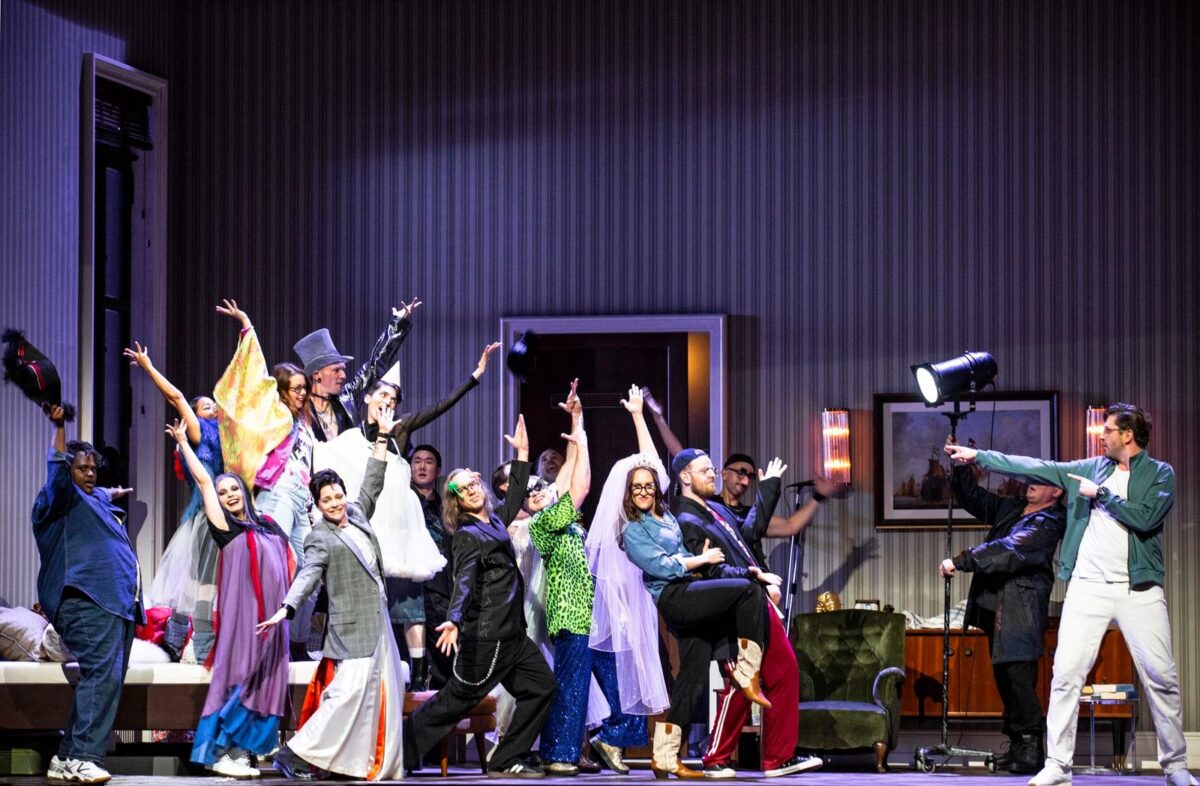
Photo: Bernd Uhlig
The Berlin opera scene continually reminds me that operas are innately political, even if they masquerade as comedies. This reminder resonated clearly during the Berlin Staatsoper’s performance of Richard Strauss and Stefan Zweig’s 1935 opera Die schweigsame Frau, directed by Jan Philipp Gloger and conducted by Christian Thielemann. While Die schweigsame Frau at times resembles an opera buffa and is often compared to works by Mozart or Donizetti, the opera’s path to premiere was anything but comical.
Die schweigsame Frau premiered in Dresden on June 24, 1935, amid a political atmosphere that sought the work’s demise. Two years prior in the Staatsoper’s very own backyard, librettist Stefan Zweig’s books were burned by students at the infamous Nazi book burning on May 10, 1933. By the time the premiere took place, Zweig was living in exile. Strauss’ high rank in the Nazi government as president of the Reichsmuiskkammer ultimately secured the work’s staging, though trouble ensued when Strauss advocated that Zweig’s name be printed on advertising materials, leading Nazi leaders to boycott the performance. The opera was soon forbidden by mid-July 1935 after only four performances.
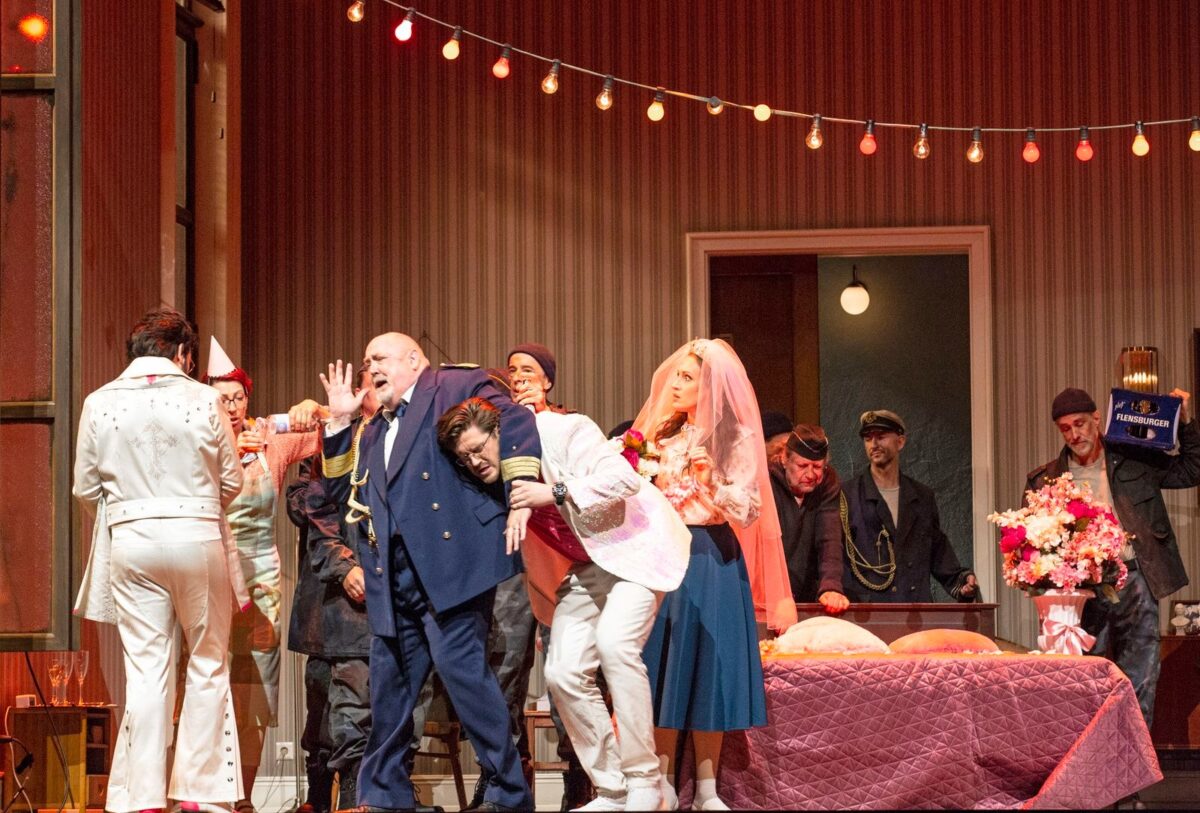
Photo: Bernd Uhlig
Despite the dire political landscape, Zweig and Strauss managed to procure enduring laughter. Zweig’s libretto is based on a 1609 comedy by Ben Jonson, featuring quippy one-liners that transgress the Jacobean and Nazi eras. The plot centers on Morosus (Peter Rose), an old man who craves silence due to an ear-drum injury. Conflict ensues when Morosus’ nephew, Henry (Siyabonga Maqungo), unexpectedly drops in for a visit, bringing with him an entire opera troupe. Soon, Morosus disowns Henry for introducing such operatic calamity into his home. All the while, Morosus’ barber (and seemingly in this production, his physical therapist), Schneidebare (Samuel Hasselhorn), promises to locate a silent wife for Morosus. In the classic operatic game of “fool the old, rich man,” Schneidebare convinces Henry and his wife, Aminta (Brenda Rae), along with the rest of the troupe, to trick Morosus with the intended goal of obtaining his supposed riches. The plan: Henry’s wife, Aminta, is to act as Morosus’ silent bride-to-be (renamed Timidia), but after the nuptials, Timidia will turn up the volume. Henry will then reappear and promise to procure a divorce for the unhappy couple.
During the overture, shushes could be heard across the audience as latecomers located their seats- fitting for a plot where silence is golden. Following the overture, an apartment search was underway as the webpage of a popular Berlin housing search website, “Immoscout24,” was projected, and apartments were scrolled through. Interviews with Gloger revealed that his interpretive focus was both the Berlin housing crisis and enduring loneliness — I suppose projecting the competitive housing market was his first attempt to do so. Later in the production, a variety of statistics were likewise projected: “On average, more than 200 people apply for every vacant apartment in the city;” “loneliness is the greatest public health epidemic: 20% live alone;” and “loneliness is as harmful as 15 cigarettes a day.” Such messages were intended to convey the isolation often experienced when living alone; however, Gloger’s theme of loneliness was not found elsewhere in the production. Ultimately, Gloger suggests that the cure for Morosus’ noise aversion is found in embracing community, as his quest for silence was merely a symptom of his loneliness. However, we must remember that Strauss and Zweig were not living during the male loneliness epidemic but rather the rise of fascism.
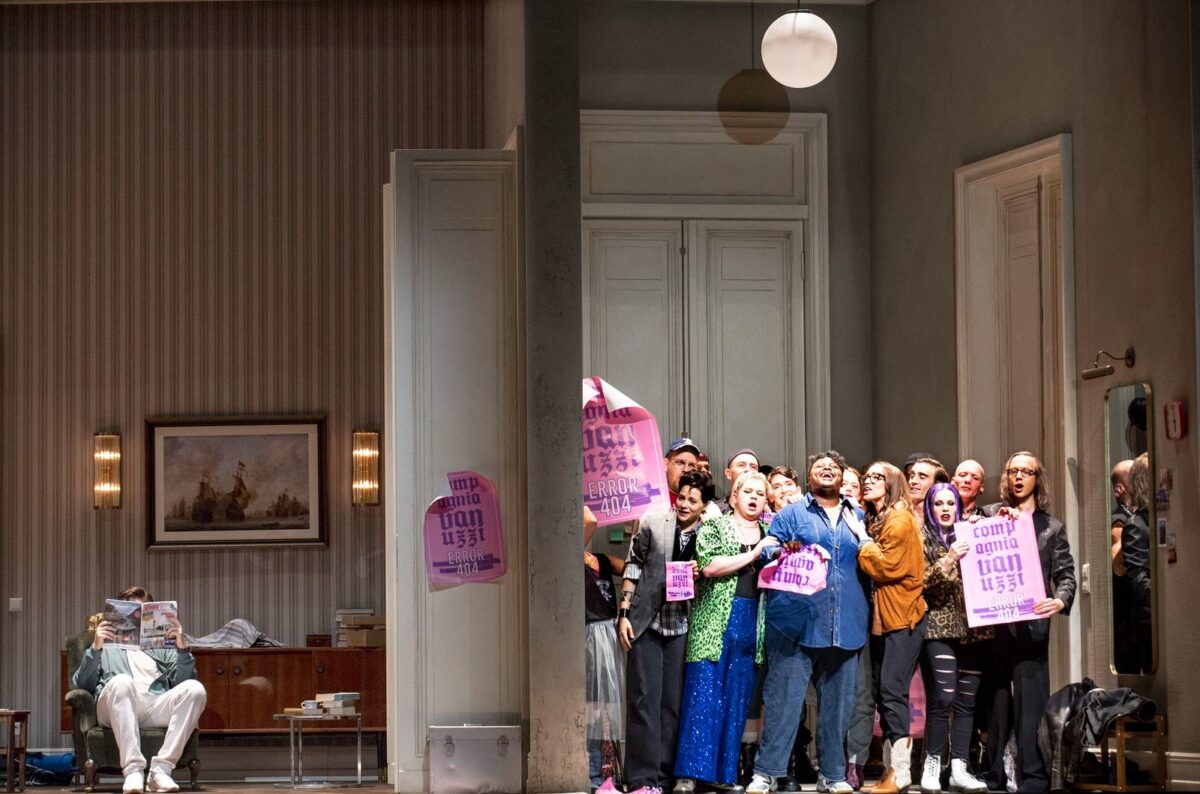
Photo: Bernd Uhlig
Gloger also attempted to counter the work’s misogynist message, but his attempt was misguided. The plot maintains that women are loud and chatty, and that only a silent woman will please our protagonist. In asides, however, Morosus reminds the audience that such a silent woman doesn’t exist, singing, “How wonderful is a young, silent woman—but how much more wonderful when she remains another man’s wife!” Gloger’s solution to such misogyny was to direct a crowd of women to briefly protest Morosus’ marriage to Timida, the group holding cardboard signs that read “Gegen Frauenhass” (against misogyny). While a snapshot of our times, the group of protestors did nothing to counter the plot’s misogyny, and rather, felt like an afterthought.
Wonderful vocal performances saved the otherwise misguided interpretation. Samuel Hasselhorn singing Schneidebare was able to locate beauty and maintain a rich vocal timbre in even the most patter-filled phrases. Similarly, Siyabonga Maqungo’s bright, pure tenor transformed the role of Henry into a romantic lead. It was as if Strauss saved all the beautiful vocal writing for Maqungo. Brenda Rae singing Henry’s wife, Aminta, unfortunately, was unable to match Maqungo’s cutting resonance, her voice often struggling to be heard over the orchestra. While Rae’s glittery lightness was fitting when singing the trickster bride-to-be Timida, Rae was unable to project to a volume worthy of divorce.

Madison Schindele
Maddie Schindele is based between NYC and Berlin and is a Ph.D. candidate in musicology. She enjoys writing about modernist German opera, disability, and feminist musings!
-
People: Ben Jonson, Brenda Rae, Christian Thielemann, Jan Philipp Gloger, Peter Rose, Richard Strauss, Samuel Hasselhorn, Siyabonga Maqungo, Stefan Zweig
-
Works: Die schweigsame Frau
-
Places & Organizations: Berlin Staatsoper, Berlin Staatsoper Unter den Linden