Northern lights
SoCal goes Scandi in two recent concerts, with one featuring an appearance by Lise Davidsen.
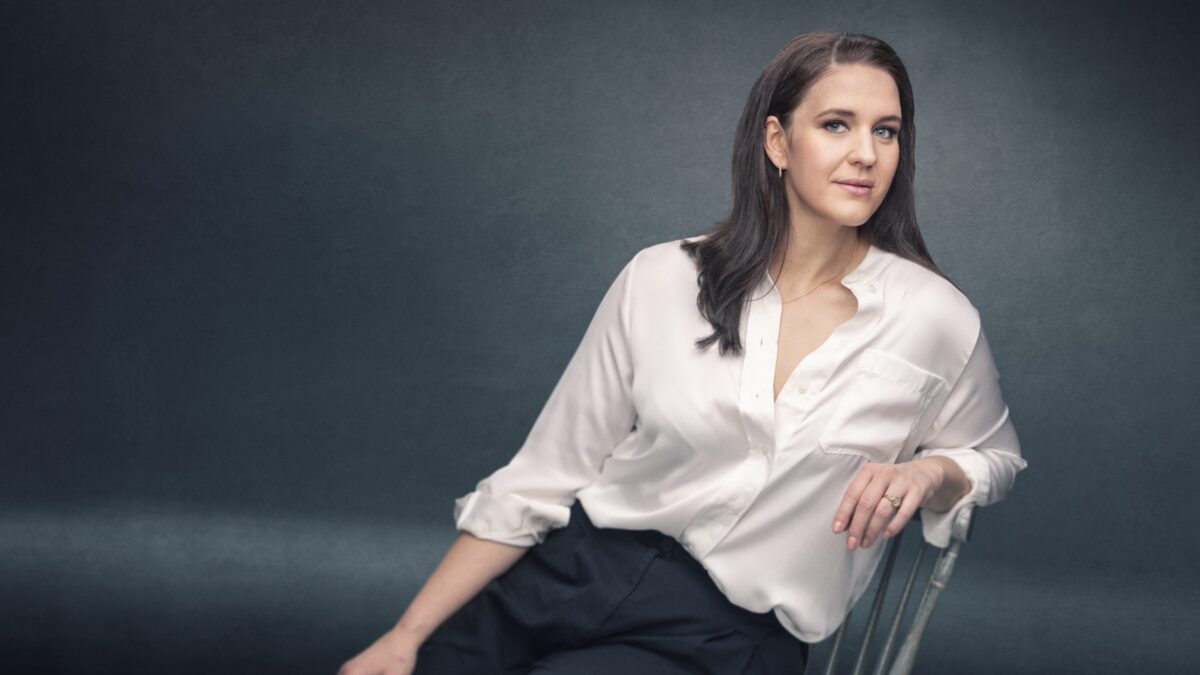
Photo by Frederik Arff
These days, it’s almost impossible to keep up with the embarrassment of riches offered by the many performing arts centers across Southern California; they seem to be competing to present the most exclusive performances by the world’s biggest stars. Last weekend was one case in point. Two separate venues presented the Nordic countries’ biggest classical music stars, along with one well-known Brit, in two very interesting concerts.
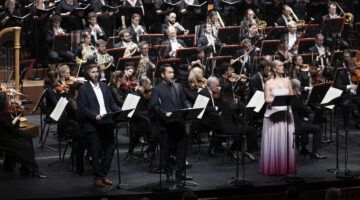
On Friday, April 10, BroadStage Santa Monica welcomed acclaimed Norwegian soprano Lise Davidsen and British-Italian tenor Freddie De Tommaso for a joint concert with orchestra, conducted by Iván López Reynoso, as part of the Celebrity Opera Series. The concert marked a welcome return for both artists, who had separately made their debuts on the intimate 499-seat main stage just a year earlier (De Tommaso in another joint concert with Angela Gheorghiu). This time, the stakes were higher, with a full orchestra present.
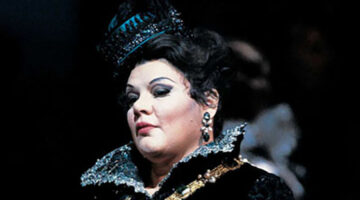
Barely a week has passed since Davidsen completed her much-lauded run as Isolde at the Metropolitan Opera, a spectacular set of performances that was clearly still fresh in the audience’s minds. I happened to attend her penultimate performance of Tristan und Isolde at the Met, so, in a short time, I felt I had been exposed to both sides of Davidsen’s artistry: the towering giant of the German repertoire (particularly in Wagner and Strauss) and the budding Italian diva, especially since the concert focused mostly on the latter.
The Friday concert found Davidsen in a jovial mood, though understandably not at her freshest. It opened with a bang, a piece that had become her calling card, “Dich teure Halle” from Tannhäuser, showcasing the qualities that made her Isolde so mesmerizing: the silky tone, undeniable power, and gorgeously elegant phrasing. On that tiny stage, her voice sounded glorious and thunderous, buoyed by Reynoso’s equally energetic conducting. The queen has arrived, and resistance is futile.
Not to be outdone, her fellow Decca artist De Tommaso launched into his own calling card, “È la solita storia del pastore” (Il lamento di Federico) from Cilea’s L’Arlesiana, delivered with a booming, full voice that proved he was a match for Davidsen, at least in volume. De Tommaso is often described as a park-and-bark tenor, but this aria seemed to fit him like a glove, bringing a touch of tenderness to his more stentorian style.
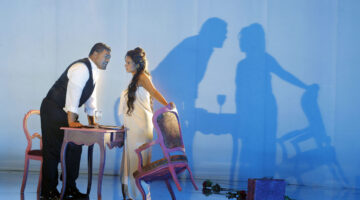
The bulk of the concert was a journey into Italian verismo, beginning with Mascagni’s Cavalleria rusticana. Here, the concert took an unexpected turn. Davidsen has been building a career in Italian repertoire, particularly with high-level engagements at the Met, including Verdi’s La Forza del Destino two seasons ago and Puccini’s Tosca, also with De Tommaso (in his Met debut), last season. She is scheduled to open next season with Verdi’s Macbeth as well. While she never sounded completely natural in Italian operas to my ears, she was improving. However, her solo deliveries last Friday were alarming. “Voi lo sapete o mamma” (from Cavalleria rusticana) sounded a bit too low for her voice, and she compensated by darkening her tone considerably, leaving her low notes muddled and unfocused. Both “La luce langue” (from Macbeth) and, particularly (and surprisingly), “Vissi d’arte” (from Tosca) were marred by soft verses followed by dynamic bursts at the climaxes, making the arias sound jarring and detached. I do hope this was a one-off incident and not a sign of things to come!
Davidsen was much better in the duets with De Tommaso, establishing a strong rapport with him even though she was glued to the score while he sang freely. It was almost as if they inspired each other to give their best. This was evident from “Tu qui, Santuzza?” (from Cavalleria rusticana) to “Teco io sto” (from Un ballo in maschera), which closed the first half, and peaked with the tender and funny reenactment of the “Mario! Mario! Mario!” duet from the first act of Tosca. The latter also demonstrated how much Davidsen’s acting had improved since I first saw her as Ariadne in 2018. In between these duets, De Tommaso also offered “Ch’ella mi creda” from Puccini’s La fanciulla del West, sung with his usual stoic façade. The program also listed the famous “Nessun Dorma,” but De Tommaso didn’t perform it.
Grieg’s “Morgenstemning” from Peer Gynt signaled a shift in mood and opened the final portion of the concert. With both Grieg’s “Våren” and Richard Strauss’s “Befreit,” Davidsen returned to her usual self, delivering an opulent sound marked by a range of dynamics and nuances, undoubtedly the highlights of the night for me. Between those songs, De Tommaso offered a passionate account of Salvatore Cardillo’s “Core ‘ngrato” before Davidsen closed the concert with a rousing rendition of “Heia, in den Bergen” from Kálmán’s Die Csárdásfürstin, showing that even the queen knew how to have fun!
The audience was wildly enthusiastic for both performers, even to the point of being rowdy. Someone shouted “Isolde” to Davidsen for her encore, and we ended up with “I Could Have Danced All Night” from My Fair Lady. Similarly, they demanded “Nessun Dorma” from De Tommaso, only to get “O Sole Mio.” The final encore, surprisingly for De Tommaso, was the gentle waltz “Lippen schweigen” from Lehár’s Die lustige Witwe, with both performers even dancing a waltz onstage. It was the perfect ending to the night, leaving the audience in high spirits. Judging from De Tommaso’s good German, can we ask for more German repertoire in the future, please?
The following night, deep in the heart of Orange County, at the Renée and Henry Segerstrom Concert Hall, two Danish giants, the Danish String Quartet and the Danish National Girls’ Choir (DR Pigekoret), under the direction of Charlotte Rowan, collaborated on an extraordinary concert, courtesy of the Philharmonic Society of Orange County. The Saturday concert was also a fitting celebration for the Committees of the Philharmonic Society, who provided more than 50,000 hours of in-kind service in support of Youth Music Education Programs throughout Orange County.
The two ensembles began collaborating in 2014 and, over a decade, have created numerous concerts featuring strong programming rooted in their shared Nordic culture, including a US tour in 2019 and a German music festival in 2024. For this tour, the first half showcased strong female voices through Nordic folk melodies and new music by four female composers, including Icelandic Anna Thorvaldsdottir, Finnish Lotta Wennäkoski, American Caroline Shaw, and Danish electronica composer Astrid Sonne. In the second half, they premiered David Lang’s “in wildness,” a new work commissioned by the Danish National Girls’ Choir in collaboration with various performing arts centers in the US, including the Philharmonic Society of Orange County.
Words could not even begin to capture the brilliance of this collaboration. Although the program listed no creative team, the presentation had a distinct theatrical quality, down to the movement of the fifty girls and the lighting. The girls were all dressed in royal blue and entered the stage in a processional formation, with one girl wearing a train on her dress. The train would eventually become the multi-purpose platform on which they sang and formed various shapes to match the music.
The concert opened with “Allemande”, the first movement of Shaw’s Partita for 8 voices, which won the 2013 Pulitzer Prize, performed a cappella. Here, the girls sang, spoke, and whispered in unison, all sounding angelic. I was amazed by how clear their diction was. I could discern each word, even though the performance was by a much larger group than the piece was originally intended for. The visibly pregnant Rowan conducted with much authority and precision; her hand signaling added a more dramatic choreography to the whole proceeding.
Danish String Quartet (DSQ) began with a mash-up of “Vorüber, ach, vorüber!”, the first movement of Wennäkowski’s highly dissonant Pige (written for DSQ), with the second movement of Schubert’s String Quartet No. 14 in D minor, Death and the Maiden, a piece that Pige was intended to be paired with. The mash-up evoked the chaotic life of a girl, for whom only death could offer sweet relief. DSQ’s playing proved why they were among the most sought-after quartets, marked by alertness and sensitivity to the score and to each other, and they were simply joyful to listen to.
After the haunting Thorvaldsottir’s Pann heilage kross (On the holy cross), the concert reached its apex with two traditional Swedish and Danish songs arranged by Rune Tonsgaard Sørensen (DSQ’s second violinist), namely “Kisti du kom” and “Dronning Dagmar ligger udi Ribe syg.” The first was a Swedish dance song that featured many movements and particularly melodic interplay between the choir and the string quartet. Even more impressive was the latter, an abridged retelling of the story of Queen Dagmar, who, on her deathbed, requested three things from the King. The first was to grant peace to all the outlawed men and their immediate release from prison, while the third was to allow her youngest son to succeed as King! In this dramatic scene, the DSQ members seemed almost to forget their instruments, as one moved to play the piano and another played the bass drum! They even joined in singing at times. The long train was placed on one of the girls who sang the Queen’s solo parts, an absolutely gorgeous moment.
Sørensen provided the next piece, “Once a Shoemaker,” an ode to a clog fiddle, aka a wooden shoe repurposed as a violin, before the girl choir performed Sonne’s How Far and Shaw’s And So, both dealing with existentialism. The first half concluded with Nielsen/Ingemann’s “Tit er jeg glad og et brudestykke,” whose haunting melodies reminded the audience of life’s duality, where one couldn’t be completely happy or completely sad, always in between.
After the first half’s high point, I felt the second half was a bit of a letdown. Don’t get me wrong, the DSQ and the Girls’ Choir were as committed as ever, even if the girls were understandably score-bound. Set in eight movements, I felt Lang’s score was much too tame compared to his words, which were inspired by Henry David Thoreau and Hans Christian Andersen and asked the audience to listen, to stay curious, to “believe new beginnings can emerge when we dare to step into the wild.” After all, the lyrics included “we wish to be inhabitants, a part of nature rather than members of society!” Nevertheless, the melodies felt rather square and monotone, with a lot of repetition. Only in the Faure-inspired fourth movement and the sixth movement did both ensembles have a lot to work with, and they performed brilliantly.
Watching this collaboration was truly an incredible experience, and it absolutely warmed my heart. There are only two more chances to see them in concert before they return home. As Sørensen said at the beginning of the concert, “cultural interchange is important,” and I, for one, completely agree with that sentiment.
Michael Anthonio
Michael Anthonio's love affairs with classical music and opera started in primary school, when his parents bought him an organ and he began taking lessons. During high school and college, he gave private organ lessons to some of his parents' friends' kids (for pocket money) and he was church organist and later, choir conductor. In 1999 he moved to Singapore where he got involved with the classical music online website "flying inkpot." His interest in opera became an obsession when he was transferred for work to US in 2008. In addition to enjoying world-class opera in SF, he indulges in opera tours in Europe. His favorite opera composer is Handel; at this point, Michael seen 24 of his operas , with hopefully three more coming next year.
-
People: Angela Gheorghiu, Caroline Shaw, Danish National Girls’ Choir, Danish String Quartet, David Lang, Freddie De Tommaso, Iván López Reynoso, Lise Davidsen
-
Works: Cavalleria Rusticana, Die Csárdásfürstin, Die lustige Witwe, L'Arlesiana, La fanciulla del West, La forza del destino, Macbeth, My Fair Lady, Tannhäuser, Tosca, Tristan und Isolde, Un ballo in maschera
-
Places & Organizations: Metropolitan Opera