Follow your bliss
In recital for the Los Angeles Opera, tenor Ben Bliss makes the case for the next stage of his career.
© TheGingerB3eardMan Photography
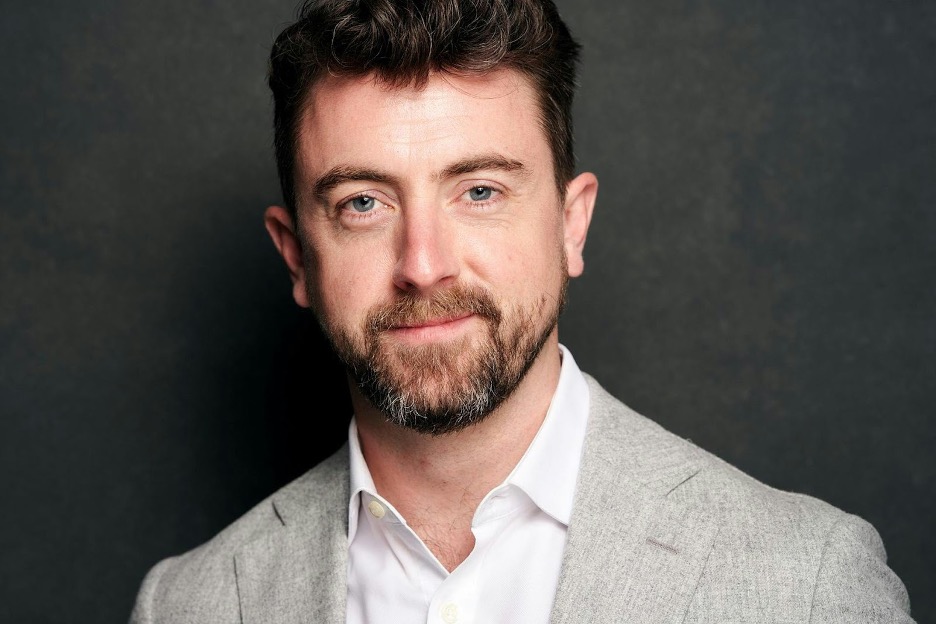
Although I usually have reservations about reviewing recitals because they are very personal to the artists performing them, I couldn’t pass up the opportunity to see tenor Ben Bliss’s recital last Sunday at The Wallis, right in the heart of Beverly Hills. After all, Bliss started his education at nearby Chapman University, where he majored in Film Production, and launched his professional operatic career as a member of Los Angeles Opera’s Domingo-Colburn-Stein Young Artist Program, before moving on to the Metropolitan Opera’s Lindemann Young Artist Development Program. Bliss was also the 2021 recipient of the Met’s prestigious Beverly Sills Award.
Part of LA Opera’s Off-Grand program and presented alongside The Wallis, last Sunday’s recital felt more like a “homecoming” concert for Bliss, a fact he cheerfully acknowledged at the start. Curiously, LA Opera’s website didn’t list a setlist for the recital but instead highlighted Bliss’s status as a “master Mozartean tenor.” You can imagine my surprise when the song list did not include anything from the Classical era; instead, it focused heavily on the Romantic era–the earliest piece was Franz Schubert’s dreamy 1825 Nacht und Träume–onward.
The song list was designed to showcase Bliss’s versatility as an artist beyond Mozart. On Sunday, he was largely successful in that regard, as the eclectic program effectively demonstrated the different facets of his artistry. Bliss himself admitted that recitals came late in his musical journey, which led to his unorthodox way of selecting pieces that resonated with him. Additionally, he is very interested in breaking down barriers between music genres, as reflected in how he blended those pieces.
The first half felt much more successful to me, as it captured Bliss in his most jovial, relaxed mood. A series of German lieder (or, as he put it, “goodbye, goodnight, be thankful!”) opened the show, which included Robert Schumann’s Des Sennen Abschied, that aforementioned Nacht und Träume, and Richard Strauss’ Ständchen and Zueignung. Singing without a score and dressed in a beige suit and white shirt, the series clearly showcased Bliss’s finest qualities, namely his ease of delivery, sensitive and intelligent phrasing, and a smooth, honeyed tone that was both dramatic and elegant. Ständchen was especially lovely, his voice cradled like a warm evening hug, beautifully accompanied by Bryan Wagorn’s luxurious piano playing.
That German Lieder group was preceded by the only Italian piece, Franz Liszt’s adaptation of Francesco Petrarch’s sonnet Pace non trovo. Bliss had a long history with the song, having performed it in his Lindemann Young Artist recital more than ten years ago. This time, however, he took a completely different approach, singing it in an almost declamatory way with some harshness in his voice, which completely shocked me. Instead of resignation, it became a bold defiance. It was almost as if he was preparing to portray a very nasty Duke of Mantua when he debuts the role at the Canadian Opera Company next month.
The next part of the first half, a mixed bag of various songs, was truly the highlight of the show. It started with one of only two opera arias in the concert, Lensky’s aria “Kudà, kudà” from Pyotr Ilyich Tchaikovsky’s Eugene Onegin, an opera that Bliss has never performed on stage but very much wanted to. This was a classic Lensky, with smooth delivery, excellent Russian diction (at least to my ears), and a round, rich middle register. The auditorium was completely silent throughout, and the audience burst into loud applause afterward. Let’s hope Lensky makes it into his repertoire soon.
Bliss made a quick U-turn, following that intense performance with five songs in English that highlighted his comedic side. Of particular note were two songs featuring lyrics by his favorite poet, e.e. cummings, and written by the little-known composer (and art critic!) John Gruen, titled “Spring is like a perhaps hand” and “lady will you come with me into.” Wagorn’s vibrato-free piano accompaniment served as a vital partner to Bliss’s singing here, emphasizing the words and even commenting on them. Along with Lowell Liebermann’s The Arrow and the Song, Benjamin Britten’s arrangement of How Sweet the Answer, and Theodore Chanler’s I Rise When You Enter, these songs lifted the mood and sent the audience into intermission in high spirits.
Bliss offered a collection of moody French songs at the start of the second part, including Claude Debussy’s La flûte de Pan, Lili Boulanger’s Nous Nous aimerons tant, and Reynaldo Hahn’s Si mes vers avaient des ailes and À Chloris. Among these, only the Boulanger piece failed to ignite, as I feel the tessitura was a bit too low for his voice. Bliss concluded this section with the famous “Pourquoi me réveiller” from Jules Massenet’s Werther, singing with a score in hand. Unlike “Kudà, kudà,” I think his interpretation of the aria this time was a work in progress. While Bliss hit all the notes and dynamics, he didn’t quite capture the character, and as a result, the aria didn’t soar the way it should have.
After a traversal of “Ingemisco” from Giuseppe Verdi’s Messa di Requiem (the only oddity in the entire program), we transitioned into the world of Broadway musicals, jazz, and Frank Sinatra. In an interview, Bliss admitted that singing with jazz bands “made me a more versatile performer and a better singer,” and his love for the genre is evident in many of his YouTube videos. He started with two songs popularized by Sinatra: Richard Rodgers’ “Where or When” from Babes in Arms, and Harold Arlen’s One for My Baby (and One More for the Road). While I usually dislike the use of microphones during a (classical) recital, I couldn’t help but wish Bliss had used one here, as he noticeably reduced his vocal volume, perhaps trying to sound more soulful. At times it was hard to hear him. This was truly unfortunate because his showmanship shone brightly as ever, and his English diction was exceptionally clear (at this point, the program stopped including the lyrics). He even mimicked a trumpet sound at the beginning of “Where or When”! He then followed with Stephen Sondheim’s “Being Alive” from Company, one of my favorite Sondheim tunes. He sang it with breathtaking speed that robbed the lyrics of their poignancy, again with a musical score. This was rather disappointing, especially since Bliss had one of the most gorgeous renditions of the song on YouTube, from just a year ago.
As the finale, Bliss channeled Ray Charles in the stirring Hallelujah, I Love Her So, delivering powerful belts and bringing the concert to a joyful close. Even more impressive was the encore, “Maria” from West Side Story, where he floated those beautiful melodies with mastery, earning a standing ovation from the audience.
LA Opera deserves praise for offering such an entertaining recital to enhance the opera season. Next up is the rare North American appearance of Peruvian tenor Juan Diego Flórez at the Dorothy Chandler Pavilion on February 10th, 2026.
And Mr. Bliss, go after Lensky–you’re so ready!
Michael Anthonio
Michael Anthonio's love affairs with classical music and opera started in primary school, when his parents bought him an organ and he began taking lessons. During high school and college, he gave private organ lessons to some of his parents' friends' kids (for pocket money) and he was church organist and later, choir conductor. In 1999 he moved to Singapore where he got involved with the classical music online website "flying inkpot." His interest in opera became an obsession when he was transferred for work to US in 2008. In addition to enjoying world-class opera in SF, he indulges in opera tours in Europe. His favorite opera composer is Handel; at this point, Michael seen 24 of his operas , with hopefully three more coming next year.
-
Topics: recital, review performance
-
People: Ben Bliss, Benjamin Britten, Bryan Wagorn, Claude Debussy, e.e. cummings, Franz Liszt, Franz Schubert, Giuseppe Verdi, Harold Arlen, Juan Diego Florez, Jules Massenet, Lili Boulanger, Lowell Liebermann, Pyotr Ilyich Tchaikovsky, Reynaldo Hahn, Richard Rodgers, Richard Strauss, Robert Schumann, Stephen Sondheim
-
Works: Werther, West Side Story, Yevgeny Onegin
-
Places & Organizations: Dorothy Chandler Pavilion, Los Angeles Opera, Los Angeles Opera, Metropolitan Opera