Four faints in five acts
That little place just two hours from the city is on the list of things I shall never understand, like the plot of Parsifal.
 By
Greg Freed
By
Greg Freed
 That little place just two hours from the city is on the list of things I shall never understand, like the plot of Parsifal. So there I was rushing back from the realm of very large bugs and a terrifying lack of restaurants, waiting to see if I would make it back and across the bay in time for a one o’clock curtain. For better or worse, I did.
Don Carlo always brings out the version fetishists, so I suspect I should come out swinging and announce that the San Francisco Opera is presenting the 1866 five-act Modena Don Carlo, no “s”, with negligible cuts, before mentioning that the current production, for all it is well staffed, is something of a slog. Me, I have always loved the hacked-to-bits opera recordings from La Scala in the 50s and can say (right before you stop reading in outrage) that four acts would still be a perfectly splendid amount of Don Carlo, even with these singers.
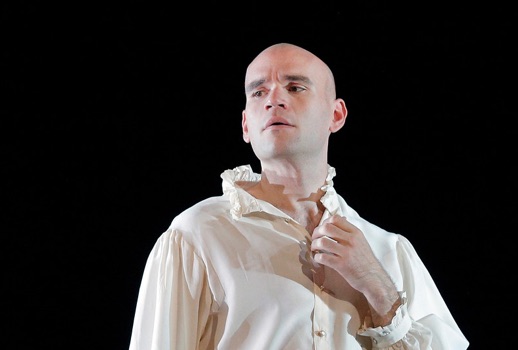
Michael Fabiano is really the headliner here, in that (if one’s hunch is correct), he won’t be singing here much more. He’s not on the roster next season and the Met seems to be onto him. If I’m right, it’s a shame to have him go out on this particular note: it’s not that his singing is diminished in any way; it is rather that Don Carlo is the least interesting role in Don Carlo, musically and dramatically. His work here is impeccable, but it’s a lacklustre showcase for his prodigious talent. Here and there were pleasures and places to show off, as in the Corellian B natural Fabiano hurled at Daddy Dearest in the auto-da-fe, but the thrill of last season’s Boheme wasn’t to be had.
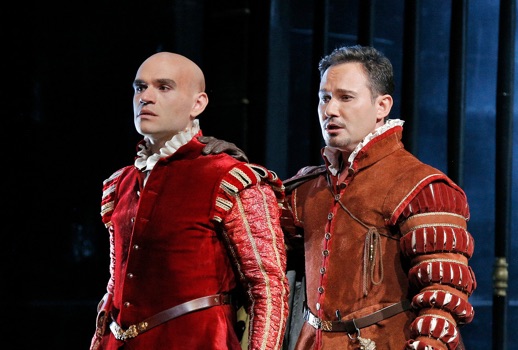 The one truly electric moment, which rippled through the crowd before the music ended and erupted as a frenzied ovation, was the duet with Posa, played here a bit on the “you look like you could use a massage” side and rapturously sung by both Fabiano and Mariusz Kwiecien, who elsewhere was more variable. I still think warmly of Kwiecien’s Guiglielmo at the Met a decade ago, but I don’t think he’s done his voice a lot of favors by stepping up in class, though it’s an understandable career progression. There’s a certain unprepossessing bark there now, though it subsides in lyrical moments like “Per me giunto,” which was indeed lovely.
Ana Maria Martinez, announced months ago in substitution for the lately elusive Krasimira Stoyanova, made of Elisabetta a fine-grained portrait. Her floated acuti are something of a marvel not only on account of their beauty or their security, but because she doesn’t jerk the musical line around with them, so they never sound like a party trick. “Non pianger” can go for nothing; here it was poignant and detailed. The fifth act aria lacked only a little weight to rival the interpretations we all return to. This is a role debut for the soprano, as it is for Fabiano, and it bodes well not only for further essays, but for her promise in Verdi more generally.
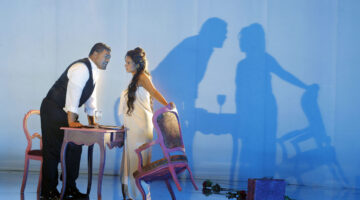
Martinez, it should be said, was not aided by Maestro Luisotti at this particular matinee. His was not the most singer-friendly reading nor, I’m going to say, the most audience-friendly. Some combination of his gravitation toward the ponderous side of the score, Emilio Sagi’s relentlessly dreary production, and the unusually high temperature in the house made it seem that someone had discovered the nine-act version of Don Carlo. (Me, I’d still be open to the two-act edition.)
 Nadia Krasteva gave the most flamboyant performance of the day as Eboli, nimble and alluring in the veil song and brassy in ensembles. Her 11 o’clock number lacked a little in pathos but was a solid, impressive sing with a little danger to it. Rene Pape, a veteran Philip II, has in the past sung the role with formidable solidity; in this account, he included more vocal reflections of the king’s doubt and despair, to great effect, and in great contrast with the solid black bass of Andrea Silvestrelli, a Grand Inquisitor so steadfastly malevolent you wanted to send him on a blind date with Suor Angelica’s aunt.
Company administration should be commended for a much-appreciated (if not universally observed) moment of silence before the production for the victims of Sunday’s massacre in Orlando. On such days, entertainment can feel frivolous, and it was a fine moment to remember that art is our only true respite from such things.
Photos ©Cory Weaver/San Francisco Opera
Greg Freed
Greg Freed is an opera fan who grew up listening to Met broadcasts in Kentucky and later attended as many performances as possible at Austin Lyric Opera, Houston Grand Opera, Lyric Opera of Chicago, and, for 10 years, the Metropolitan, where he occasionally reviewed under the name Maury D'Annato. He currently lives in Oakland, and was Parterre's Bay Area critic (under his own name) for two seasons. His primary vocation is social work, and as such, has spent a decade in sentencing advocacy. Greg loves live recordings of the singers of today and those of yesteryear, with special regard for the contralto Ewa Podles.
-
Topics: mariusz kwiecien, michael fabiano, san francisco opera
-
People: Ana María Martínez, Andrea Silvestrelli, Emilio Sagi, Mariusz Kwiecie?, Michael Fabiano, Nadia Krasteva, René Pape
-
Works: Don Carlo, La bohème, Parsifal, Suor Angelica
-
Places & Organizations: Metropolitan Opera, San Francisco Opera, Teatro alla Scala