
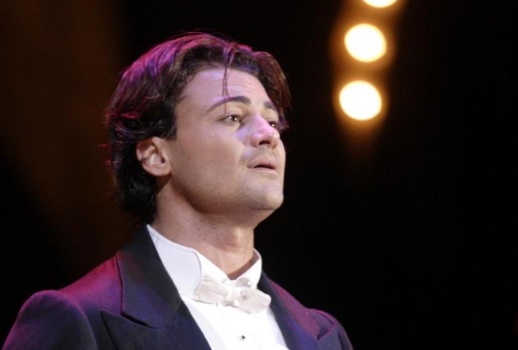
A pretty boy milking his bows
This afternoon at the Met, Grigolo sold his performance like the rent was due tomorrow and he was down to his last penny.
This afternoon at the Met, Grigolo sold his performance like the rent was due tomorrow and he was down to his last penny.
It’s been a bitterly cold winter in NY. When it’s bitterly cold, the air is dry.

We must be doubly grateful that The English Concert’s recent Theodora was so quickly followed by the American Classical Orchestra’s fine Samson on Tuesday evening at Alice Tully Hall.

I am grateful to Sony for this new release of the Metropolitan Opera’s latest production of Parsifal and I hope I’m not the only one who discovers what a rich experience this opera can be because of it.

Andris Nelsons led the Vienna Philharmonic in a performance of Salome that provided just the sort of thing one hopes for in a concert performance of an overflowingly rich operatic score.

We were not at Carnegie Hall to hear superb opera singers bestow their vocalism upon Alban Berg’s Wozzeck; we are there to hear the Wiener Staatsoper’s house band work their magic upon an intricate, spooky, devastating score.
My impossible wish would be to hear one of the great castrati who dominated opera for most of the 18th century.

On February 29, 1812 (thanks to Pope Gregory’s calendrical reforms), Gioachino Rossini celebrated his fourth birthday.
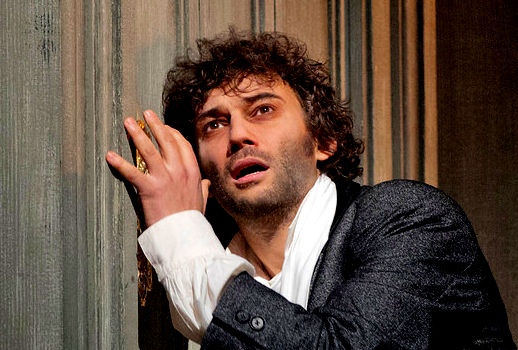
Life is not fair. There are rules that apply to Jonas Kaufmann, and rules that apply to everyone else.
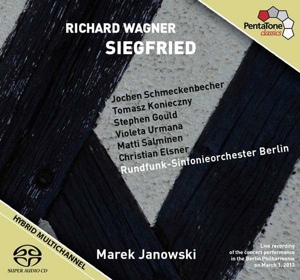
Marek Janowski’s survey of Wagner operas on PentaTone so convincingly captures the pulse and dramatic flow of many of the works that the music-making at times sounds almost effortless.
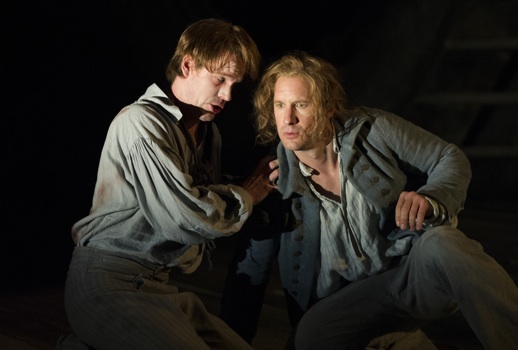
When Winston Churchill was First Sea Lord, the story goes, an indignant admiral accused him of violating British naval tradition, to which Churchill replied that the only traditions of the British Navy were rum, sodomy and the lash.
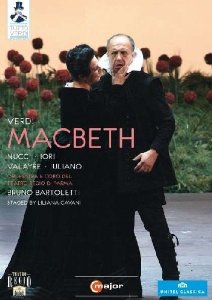
Verdi’s Macbeth poses a challenge to any company with the audacity to mount it.
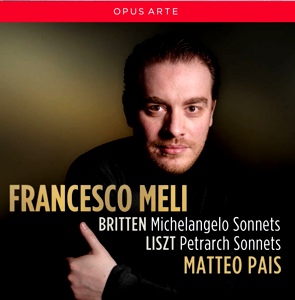
Mr. Ian Rosenblatt is a London solicitor and patron of charitable causes in Britain primarily focused on classical music.

While many performing arts organizations have been reducing their schedules or even closing, Opera Lafayette, a Washington DC-based group dedicated primarily to 17th and 18th century opera, has proven remarkably prosperous.

The legend of the mermaid is ancient, and recently scientists have theorized that these legends might have arisen when humans encountered marine mammals such as whales, seals, or sea lions.
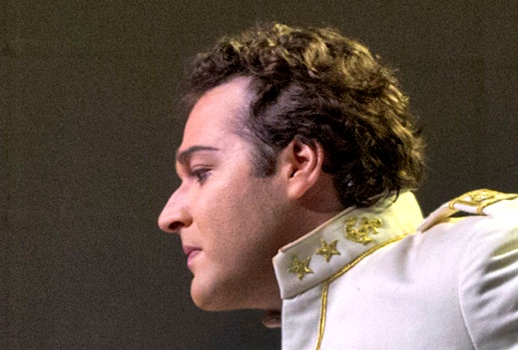
Tenors Bryan Hymel (pictured) and Joseph Calleja redeem otherwise routine Puccini revivals at the Met, says Our Own JJ in the New York Observer.
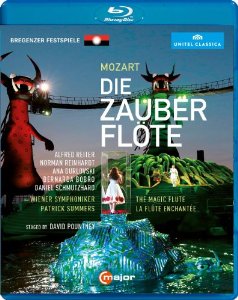
Having recently reviewed Glass’s The Perfect American on this site and participated in spirited discussions about the film Saving Mr. Banks, it is perhaps not surprising that Walt Disney should spring to my mind as I watched the Unitel Classica video of Die Zauberflote from the floating stage of the Bregenzer Festspiele.
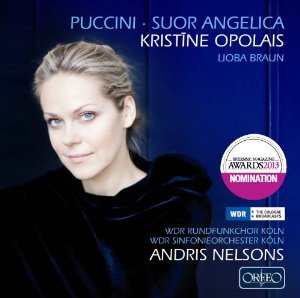
I’ve always had a fondness for Giacomo Puccini’s Suor Angelica and apparently so did he since he often referred to it as, “among the finest of my children.”

The internecine machinations of those who ruled—or sought to rule—the Roman Empire have long provided rich material for writers and composers, and on Thursday evening operamission continued its ambitious plan to stage in chronological order all of Handel’s operas by presenting one of the most delicious of those Roman-based works, Agrippina which premiered in Venice in 1709.
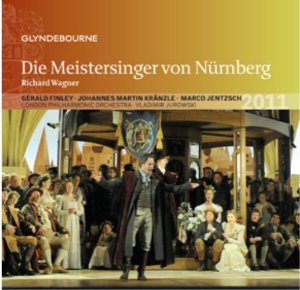
Beneath the pageantry, the paeans to German art and the self-referential allusions to the creative process, Die Meistersinger is a story about a community and human qualities like love, friendship, envy and hatred.
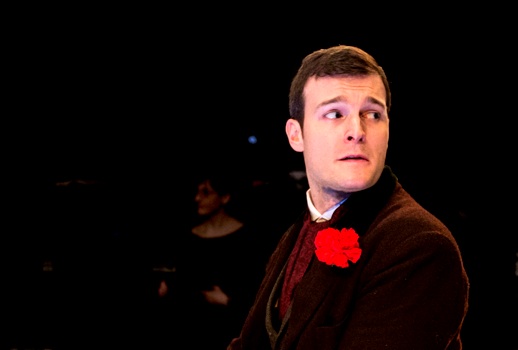
“…a perfect marriage of text and music, creating a series of tableau-like scenes, as if Paul’s story is being related through a series of exquisitely posed still photographs…”
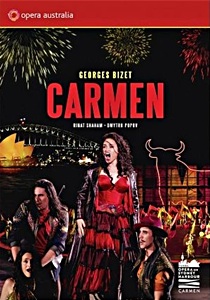
Outdoor arena opera always seems faintly ridiculous.

“…the Met’s brand new production of Die Fledermaus, which premiered on New Year’s Eve, is overproduced, undersung and interminable, less a holiday entertainment than a checklist of opera-making skills the company can’t seem to master.”

Philip Glass’s 25th opera The Perfect American was originally commissioned for New York City Opera during the aborted regime of Gerard Mortier.

The days are getting shorter, but you can keep the prattle going this fall’s Talk of the Town! You will, you can, you must join in the discussion about: Great mezzo soprano performances (October),
Gained in translation (November), Teleport me back to… (December).
Exclusive opera reviews, commentary, and top reads
delivered to your email weekly…ish.