Oops, I did it Onegin
Wolf Trap Opera presented a lovely Eugene Onegin with particularly noteworthy performances by Magdalena Kuźma and Daniel O’Hearn.
 By
Andrew Lokay
By
Andrew Lokay
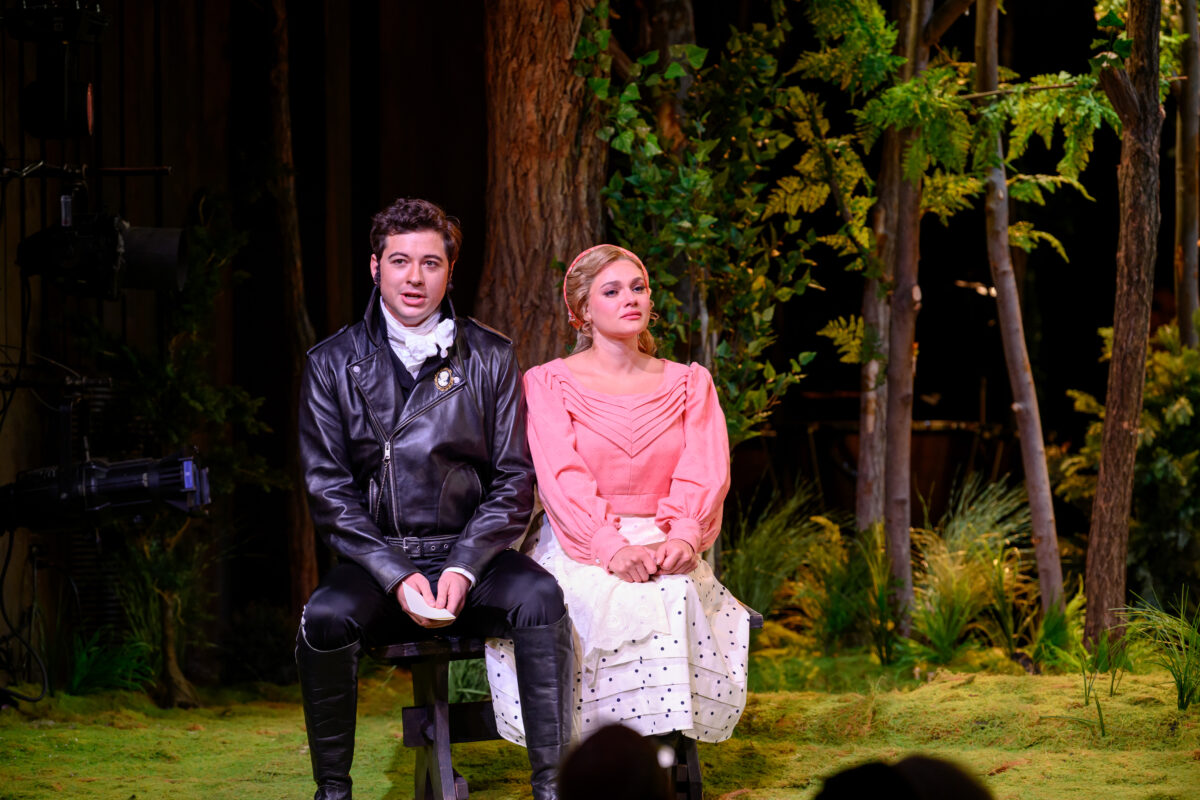
Photo: Rich Kessler
Pyotr Ilyich Tchaikovsky’s most well-known opera, based on Alexander Pushkin’s novel in verse of the same name with a libretto mostly by the composer, is ostensibly about the titular character, but Tatiana is the key character. Other than Onegin and Lensky’s duel, she doesn’t have much of a break for the entire opera. The soprano singing the role is crucial to a successful run of Onegin, and the letter scene is the work’s emotional heart (Tchaikovsky composed it first). Soprano Magdalena Kuźma sang Tatiana with a limpid soprano and solid understanding of Tchaikovsky’s score. Her letter scene boiled with emotional intensity and showcased good modulation of volume, as she brought the scene to a triumphant conclusion that highlighted her glittering top. A gifted actress, she gave wrenching performances of Tatiana’s humiliation at Onegin’s rejection and her tightly leashed pain in turning him down after her marriage.
Baritone Finn Sagal’s rich, dark sound made him a great fit vocally for the role of Onegin, but he still seemed to be settling into the role. Onegin is a complex, challenging character for young artists: Capturing the multiple facets of his personality, both the aloof antihero and the apple of Tatiana’s eye, is not simple. I look forward to watching Sagal’s interpretation of this role develop as his career progresses. His haunted portrayal of Onegin in the aftermath of Lensky’s death was a highlight of his performance.
Tenor Daniel O’Hearn deployed a cushioned, golden-tinged tenor that carried nicely over the orchestra in his idealistic characterization of the poet Lensky, a more stand-up guy compared to his most recent role in the DMV area, Rigoletto’s Duke with the Baltimore Symphony Orchestra in June. His take on Lensky’s famous Act II aria demonstrated the smooth, lyric quality of his instrument and his delicate intonation. Kudos (or rather, kuda, kuda) to O’Hearn for a strong performance.
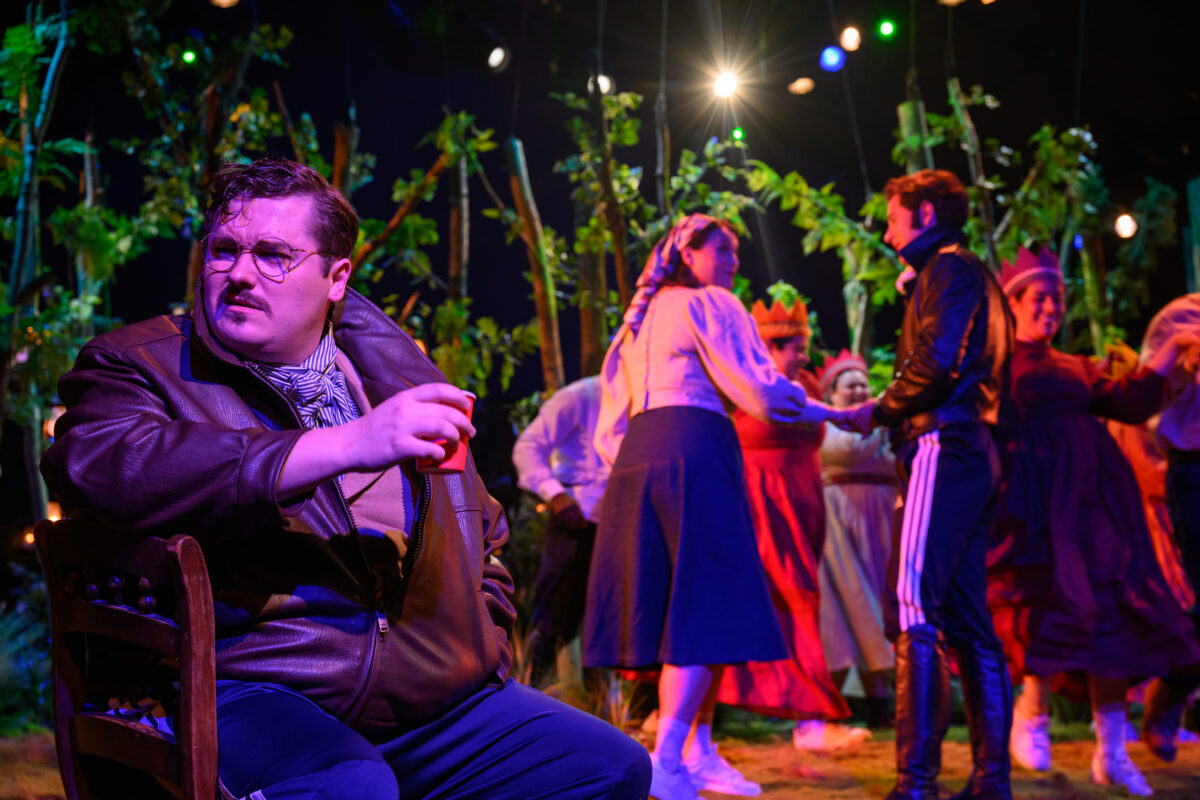
Photo: Rich Kessler
Reunited after their turns as Don José and Carmen in Wolf Trap’s performance of Bizet’s classic opera last year, O’Hearn and mezzo-soprano Elissa Pfaender had vivid chemistry as the fiancés Lensky and Olga. Pfaender’s caramel mezzo and strong bottom made her an excellent Olga, originally written by Tchaikovsky for a contralto. Her expressive acting, which I first witnessed in her role as Marcellina in Wolf Trap’s Le Nozze di Figaro last year, was in full force again.
Sergio Martinez sang Prince Gremin, opera’s pre-eminent wife guy, with a rich, stately bass and warm sincerity. Cecelia McKinley sang the nanny Filipyevna with a tender, dusky contralto. As Madame Larina, mezzo-soprano Aubrey Odle brought a clear, warm voice and ease with Russian. Three Wolf Trap Studio Artists, bass Michael Mensah, tenor Jack Hicks, and baritone John Arlievsky, gave solid performances in the smaller roles of the Commander, Monsieur Triquet, and Zaretsky, respectively. Mensah in particular stood out for his remarkably deep bass. Led by chorus master Ksenia Leletkina, other Studio Artists gave spirited performances in the chorus, vital for providing the backdrop to Onegin’s drama. Conductor Steven White effectively led the Wolf Trap Opera Orchestra in conveying the propulsive energy of Tchaikovsky’s psychological tension.
Director Emma Griffin’s production offered charm and humor. Griffin set the opera in a leafy glade, a staging that invited comparisons to Shakespearean pastoral comedies and Rococo paintings of aristocrats cavorting in pastoral settings. Onegin is essentially the inverse of these lighthearted stories, an alternate timeline that ends in the self-perpetuated destruction of happiness rather than a happily ever after. Lee Jellinek’s lush scenic design nicely fit the intimate scale of the Barns and looked as if it had been airlifted in from the national park surrounding the performance venue. The mossy ground neatly rolled away to reveal an elegant, raked dance floor for the Act III ball.
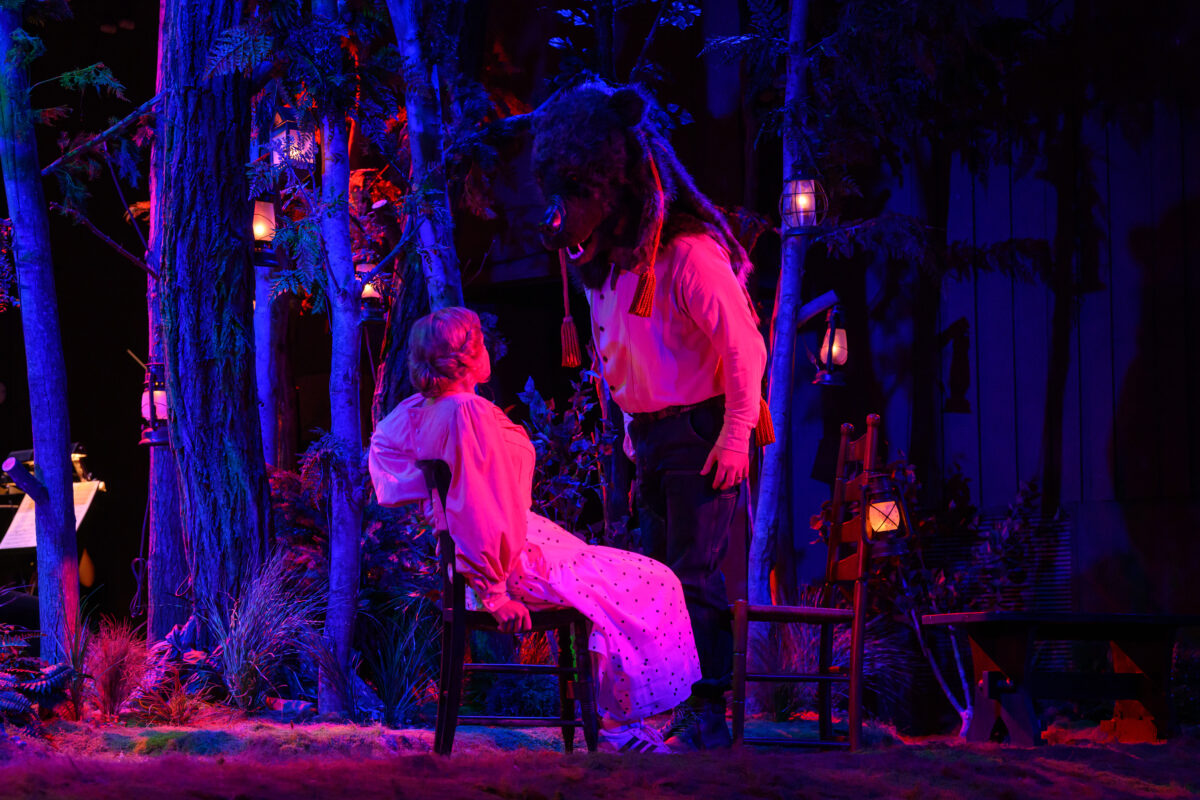
Photo: Rich Kessler
Alejandro Fajardo’s lighting design beautifully evoked the different times of day central to the storyline of this opera. Griffin’s staging reached its limits with the Act II ball for Tatiana’s name day, where the uneven, sloped turf and shallow space inhibited dancing and resulted in some awkward blocking. A decision to have the ball attendees clap rhythmically to the music during the Mazurka had the unfortunate consequence of obscuring Tchaikovsky’s score.
Costume designer Christopher Ford’s striking animal head masks gave a lively carnivalesque air to the proceedings during the name day celebration. He gave an imposing air to Griffin’s bear-headed figure stalking Tatiana, a symbol of her romantic angst. Other costumes were more perplexing. I didn’t fully understand what the production was seeking to accomplish with its anachronistic wardrobe. The women wore handsomely selected traditional dresses curiously paired with modern shoes. Onegin and Lensky sported cravats, waistcoats, and boots along with casual leather jackets and Adidas track pants—a look that suggested Mr. Darcy meets Danny Zuko meets athleisure. The disjointed ensembles left me with unanswered questions.
Andrew Lokay
Andrew Lokay began his career as an opera fan at the San Francisco Opera, where the first performance he saw was Madama Butterfly. He graduated Phi Beta Kappa from Stanford University with a Bachelor of Arts in international relations and French with honors in international security studies. He now lives in Washington, DC and is a frequent audience member for opera and theatre in the nation’s capital.
-
Topics: Review, tchaikovsky
-
People: Alexander Pushkin, Cecelia McKinley, Daniel O'Hearn, Daniel O’Hearn, Elissa Pfaender, Emma Griffin, Finn Sagal, Magdalena Ku?ma, Pyotr Ilyich Tchaikovsky, Sergio Martinez, Steven White
-
Works: Carmen, Eugene Onegin, Le nozze di Figaro, Rigoletto, Yevgeny Onegin
-
Places & Organizations: Baltimore Symphony Orchestra, Wolf Trap Opera