Hell’s kitchen
Teatro Nuovo pays tribute to a historic New York production of Don Giovanni with a talented ensemble.
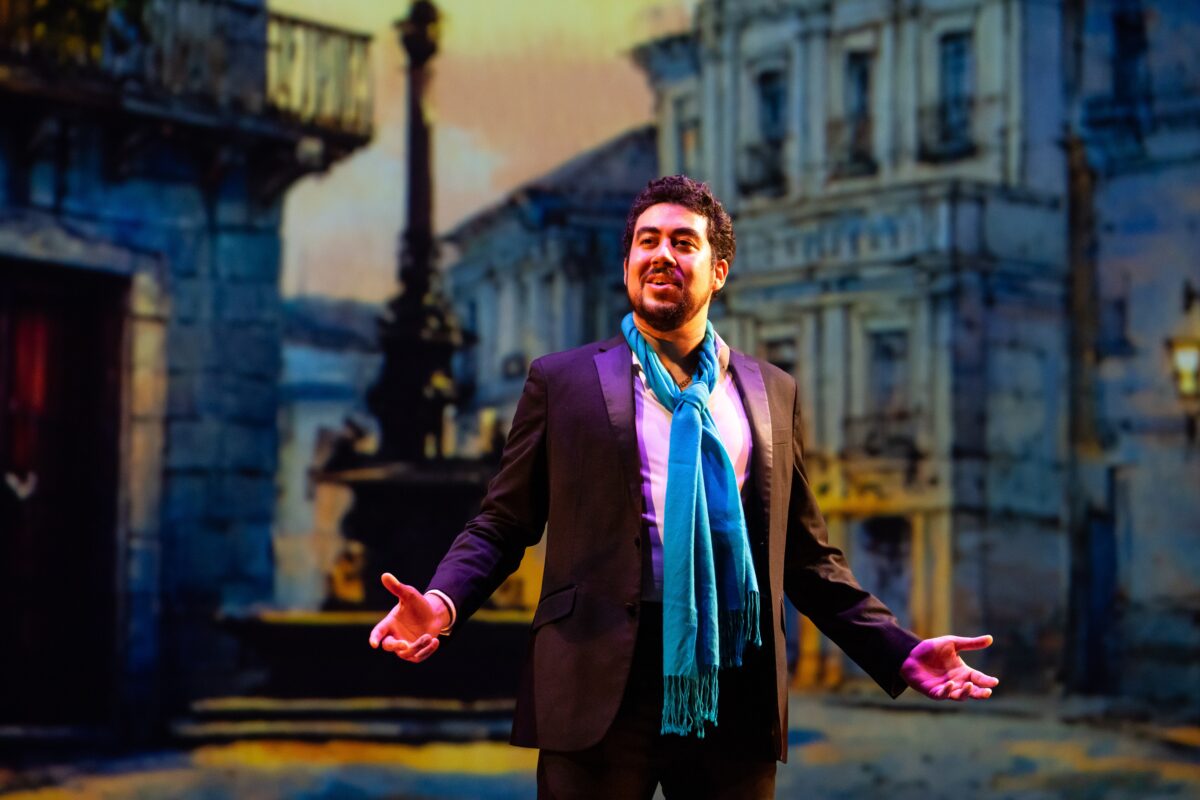
Photo: Steven Pisano
This summer season brought New Yorkers two period instrument historically informed performances where our hero (or anti-hero) goes straight to hell, courtesy of Teatro Nuovo and Caramoor. Let’s start with the former.
Our first hellbound hero was a familiar gent, Don Giovanni aka Don Juan Tenorio, in an edition prepared by impresario Manuel Garcia performed in New York City on May 23, 1826, at the long-gone Park Theatre on Park Row in lower Manhattan. It was the great musical curiosity of Garcia’s pioneering operatic residency in the U.S., introducing the fledgling nation to Italian opera for the first time. With him was his 18 year-old daughter, Mlle. Maria Garcia (later famous as Maria Malibran), who had just debuted the year before, as well as his wife, Joaquina Sitches, his son Manuel Garcia, Jr., and the four-year-old Pauline Garcia, later Viardot. The aged Lorenzo da Ponte was waiting for them, who had fled to the Americas in the wake of scandal and debt to found the Italian Department at Columbia University.
Teatro Nuovo commemorated the bicentennial of the Garcia’s groundbreaking tour with a historically informed semi-staged concert Il Don Giovanni (the title used by Da Ponte and Garcia), using an approximation of the edition performed by the Garcia company (a conflation of the Prague and Vienna scores with cuts and transpositions) fashioned from the surviving contemporary libretto. (The other opera from that 1826 season performed this summer is Il Turco in Italia by Rossini, which Teatro Nuovo also presented at Montclair State University and at the Jazz at Lincoln Center Rose Theater)
The supertitles used the 1826 English translation fashioned by Lorenzo’s son, Luigi da Ponte, which had its quaint archaic touches – Leporello was fond of the exclamation “zooks”. Period instruments were used, and the arias and even the recitatives were freely decorated with not only appoggiaturas but roulades, cadenzas and extensive variations.
As General and Artistic Director Will Crutchfield explained in his pre-performance lecture, in both the 18th and 19th centuries, the printed score was merely the bare bones blueprint for the performance, which provided a framework for the singer’s imagination and stylish embroidery. There was a lingua franca of Italian vocal practice taught in the late 18th century era of Classicism that was carried on into 19th century “bel canto” (a later phrase ,as all music was supposed to be beautifully sung and ornamented in the first third of the 19th century). It was used for different purposes in the different artistic context of early Romanticism. But in the later 19th century and early 20th century, a practice of “come scritto” Mozart performance prevailed, even down to the omission of appoggiaturas which are not in the score but understood as standard musical practice by singers, composers, and vocal coaches. As Mozart’s music in its raw form is structurally and artistically flawless, this didn’t detract in performance but revealed the genius of the composer. But that doesn’t mean that was the way it was performed in Mozart’s lifetime or fifty years later.
Historical instruments conductors have experimented with Don Giovanni; the earliest I remember was Richard Bonynge’s 1969 London/Decca recording with his wife, Joan Sutherland, Gabriel Bacquier, Donald Gramm, Werner Krenn, Pilar Lorengar and, as a mezzo-soprano Zerlina, Marilyn Horne. This recording used considerable decoration in a rather fussy bel canto style. Crutchfield’s textual and stylistic choices were inspired by years of study of contemporary singing manuals and 19th century singers’ personal vocal scores including the “Treatise of the Art of Singing” by Manuel Garcia, Jr. (the Leporello of the 1826 performances) which includes hundreds of examples of ornamentation used in Don Giovanni and all the bel canto operas. This was Mozart through a 19th century bel canto lens.
The differences in the edition were mainly cuts – Masetto’s aria “Ho capito, signor, sì” was MIA. Choral episodes were severely trimmed. “Meta di voi qua vadano” in Act II was replaced by a recitative the provenance of which I am dumbfounded by since musical materials from the Garcia company have not survived. Donna Elvira in Act I had “Ah fuggi il traditor” replaced by “Mi tradì quell’alma ingrata” which seemed stagnant and less effective in that position. Don Ottavio’s “Dalla sua pace” was omitted, but the more virtuosic “Il Mio Tesoro” was retained. The big omission was the final sextet where the survivors mourn the Don and restore order in typical Enlightenment 18th century fashion – once the Don is dragged to Hell, the show is over with just one brief exclamation transferred from the chorus to the remaining principals.
The cast was strong all around with stronger women than men. All the soloists used the added coloratura to intensify expression, musical and dramatic, rather than offer empty display. Teatro Nuovo baritone favorite Ricardo José Rivera played a more gallant than driven Don Giovanni with a mellifluous cavalier baritone with plenty of juice and heft where needed. (Manuel Garcia was an aging baritonal florid tenor who had great success as Don Giovanni by probably transposing upward or working in higher lines and decorations – Rivera kept to his baritonal turf.) Rivera is going places – word on the Rialto is that he has important engagements on the horizon.
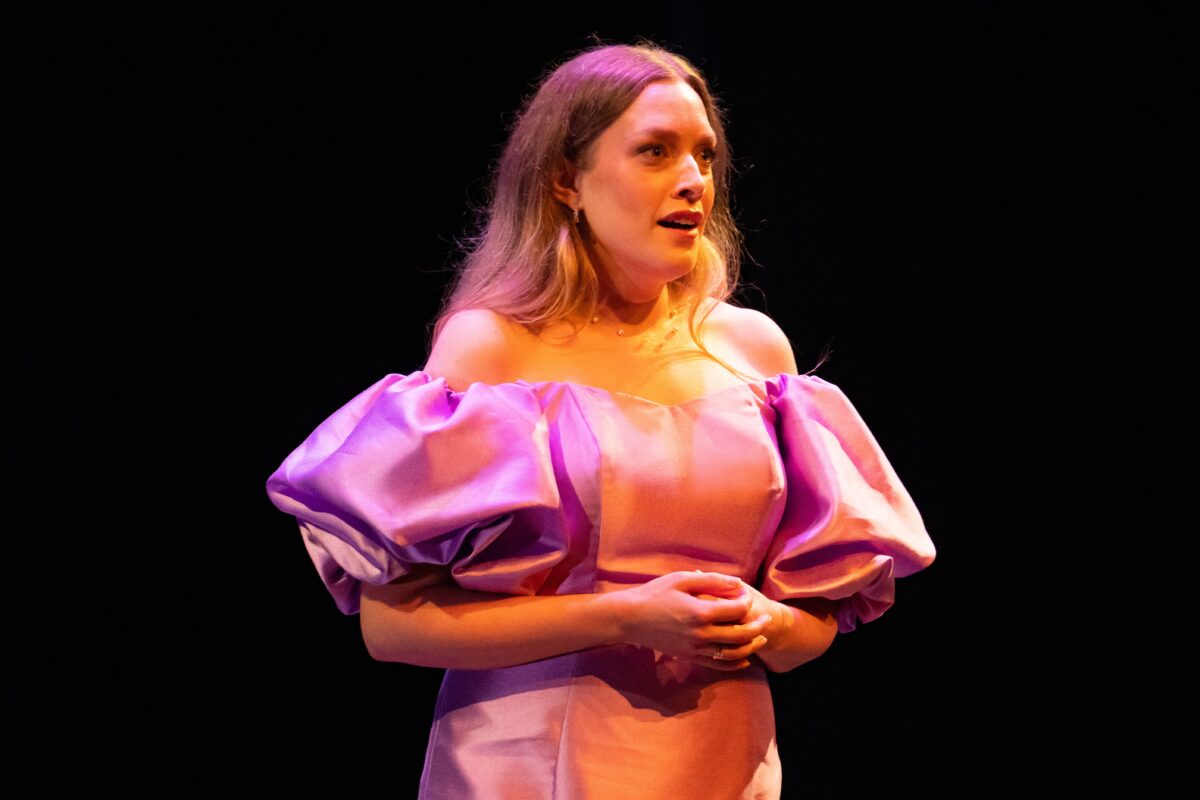
Photo: Steven Pisano
Elizabeth Novella was a revelation as Donna Anna, a pure lyrical sound that suggested youthful aristocratic purity that opened up excitingly when the character veers into the tragic and heroic. Her tight vibrato adds vibrancy to her tone. Novella had dramatic commitment and intensity using the variations to raise the dramatic temperature.
Bass-baritone Kevin Spooner unfurled sonorous resonance and smooth legato as Leporello, but he isn’t a natural comedian: He missed the servant’s craven and buffoonish character. Still, his rich, imposing tone garnered applause. The Donna Elvira, Sedona Libero, is billed as a mezzo-soprano but she sounded like a dark, agile soprano with unexaggerated intensity and easily moved up and down Elvira’s agitated, rangy, vertical vocal line. Tenor Martin Luther Clark was a solid Don Ottavio with a few strained moments but managed his one aria well.
Maria Malibran was billed as a contralto in 1826, and her Zerlina was the big success of that evening. (Lyric mezzos from Frederica Von Stade to Teresa Berganza and Isabel Leonard have performed the role, which isn’t especially high-lying) Following Malibran’s example, Teatro Nuovo cast Simona Genga, a mezzo-soprano (one of imposing heft and mature presence) as Zerlina. The Canadian mezzo had the most womanly, forceful sound in the cast (I suspect the teenage Malibran had a lighter, more delicate mezzo), which initially impressed with its rich sonority and depth of tone. At times she sounded positively Verdian, and I wasn’t surprised that an upcoming role is Azucena at Pacific Opera Victoria. However, as Zerlina’s vocal line got higher and more skittish, Genga’s weighty tone lay awkwardly on the music. If your aren’t casting a lyric-coloratura soprano soubrette, then a light Rossini-type mezzo is preferable. Genga did have the most impressive and largest instrument in the cast but it was an odd fit for the girlish peasant ingenue. I don’t see her repeating the role in the future.
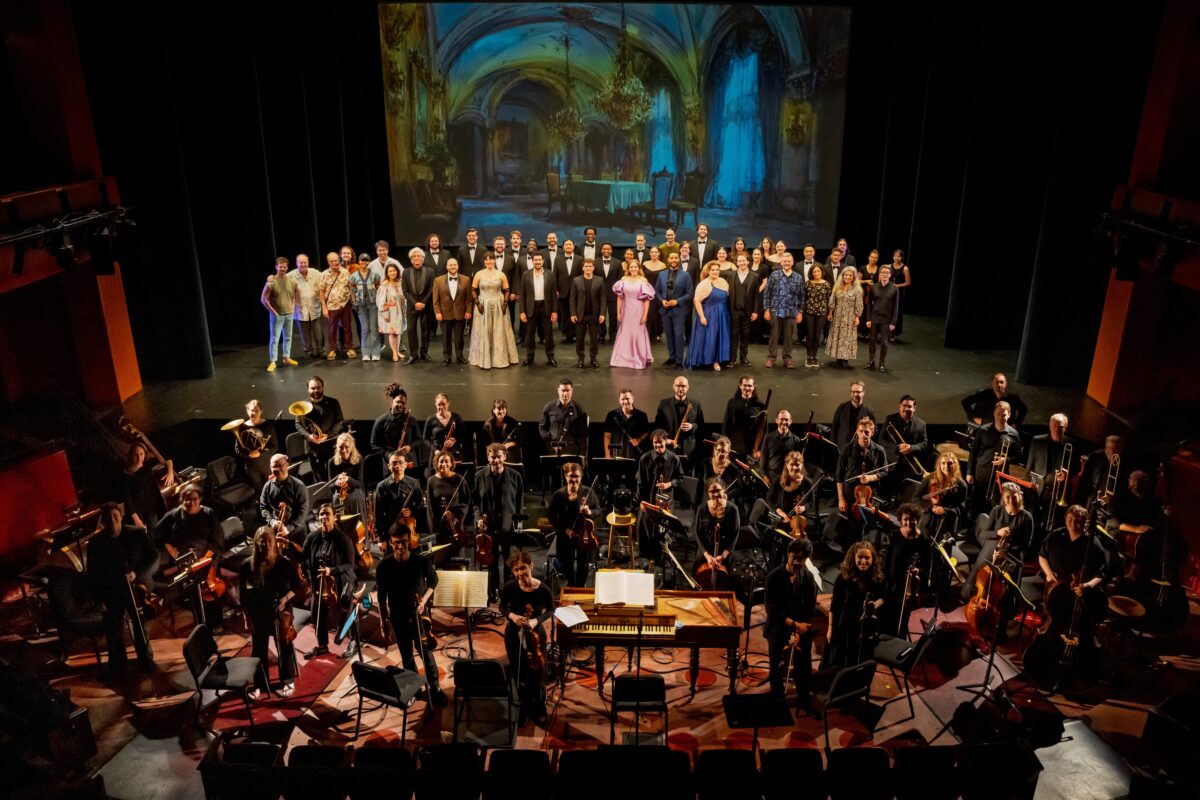
Photo: Steven Pisano
The remaining low voice roles were cast with the youthful, pleasantly grainy-toned baritone Noah B. Rogers and veteran bass Daniel Mobbs now with silver hair as a less than sepulchral but effective Commendatore.
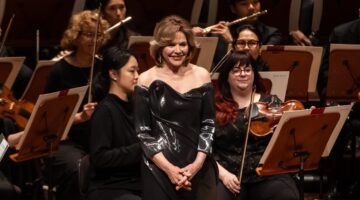
Conductor Geoffrey Loff, working from the cembalo in the recitatives but with a baton otherwise, led the historical instrument Teatro Nuovo Ensemble in a forceful, quick on its feet reading of the score which did not lack depth or drama. Old watercolor scenic designs were projected on the back wall along with the surtitles, modern suits and evening gowns, everyone was off-book and meticulously coached, and there was basic semi-staged blocking with few props. It worked; we got everything we needed.
It wasn’t your grandma’s Don Giovanni but a revelatory and stylishly committed reading of the score with an all-around strong cast.
-
Topics: historically informed performance, Review, teatro nuovo
-
People: Daniel Mobbs, Donald Gramm, Elizabeth Novella, Frederica von Stade, Gabriel Bacquier, Geoffrey Loff, Isabel Leonard, Kevin Spooner, Lorenzo Da Ponte, Manuel Garcia, Maria Malibran, Marilyn Horne, Martin Luther Clark, Mozart, Pauline Viardot, Pilar Lorengar, Ricardo José Rivera, Richard Bonynge, Sedona Libero, Simona Genga, Teatro Nuovo, Teresa Berganza, Will Crutchfield
-
Works: Don Giovanni, Il turco in Italia
-
Places & Organizations: Caramoor, Columbia University, Montclair State University, Teatro Nuovo