Crete-ed rivalry
Soprano Amanda Forsythe as Ilia and tenor David Portillo in the titular role were highlights of Washington Concert Opera’s robust Idomeneo.
 By
Andrew Lokay
By
Andrew Lokay
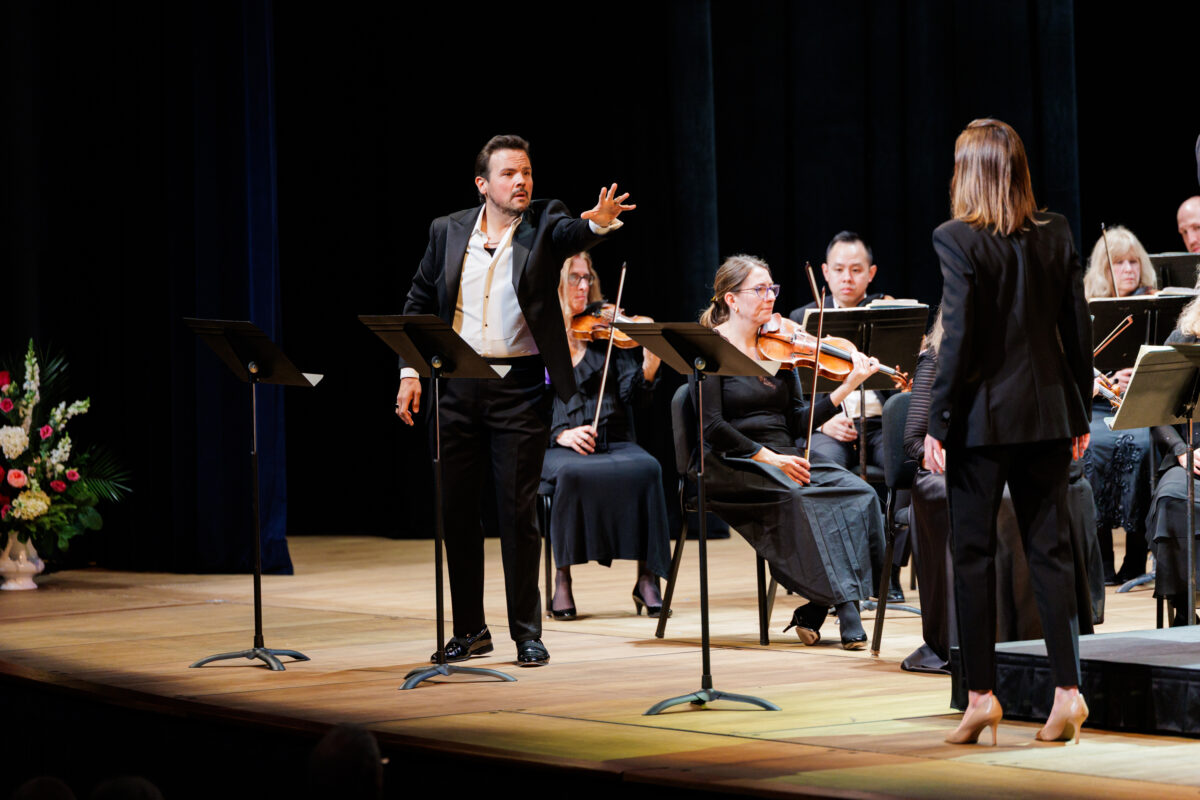
Photo: Elman Studio
Wolfgang Amadeus Mozart’s first mature opera neatly wrapped up WCO’s 2025-26 season, which began with another opera featuring the aftermath of the Trojan war, human sacrifice, and a deus ex machina: Christoph Willibald Gluck’s Iphigénie en Tauride. Mozart’s Idomeneo gives the full opera seria treatment to the story of the king of Crete, who returns from Troy and makes a deal with Neptune: In exchange for getting home safely, he will sacrifice the first person he sees on shore. Unfortunately, that turns out to be his son, Idamante. Meanwhile, Idamante and the captive Trojan princess Ilia have fallen for each other, while Elettra seeks to win Idamante’s love for herself. This production of Idomeneo is only the second Mozart opera to be performed by WCO, following La Clemenza di Tito last season.
Idomeneo premiered just after Mozart’s 25th birthday. The opera reveals his operatic talents already at play, and elements of this early work anticipate Mozart’s later, better-known operas — Ilia walked so Pamina and Susanna could run. In her WCO debut, Forsythe gave a masterful performance as the prisoner of war turned queen of Crete. Her light, crystalline soprano is a strong fit for this repertoire and a welcome addition to the WCO network of singers. Her fluidity and strong control across her range contributed to a moving “Se il padre perdei,” Ilia’s aria declaring Idomeneo to be a surrogate father, delivered with a loving peck on the cheek. Forsythe also sounded splendid in her declaration of love for Idamante, “Zeffiretti lusinghieri,” with nicely flowing legato underlining the emotional impact.
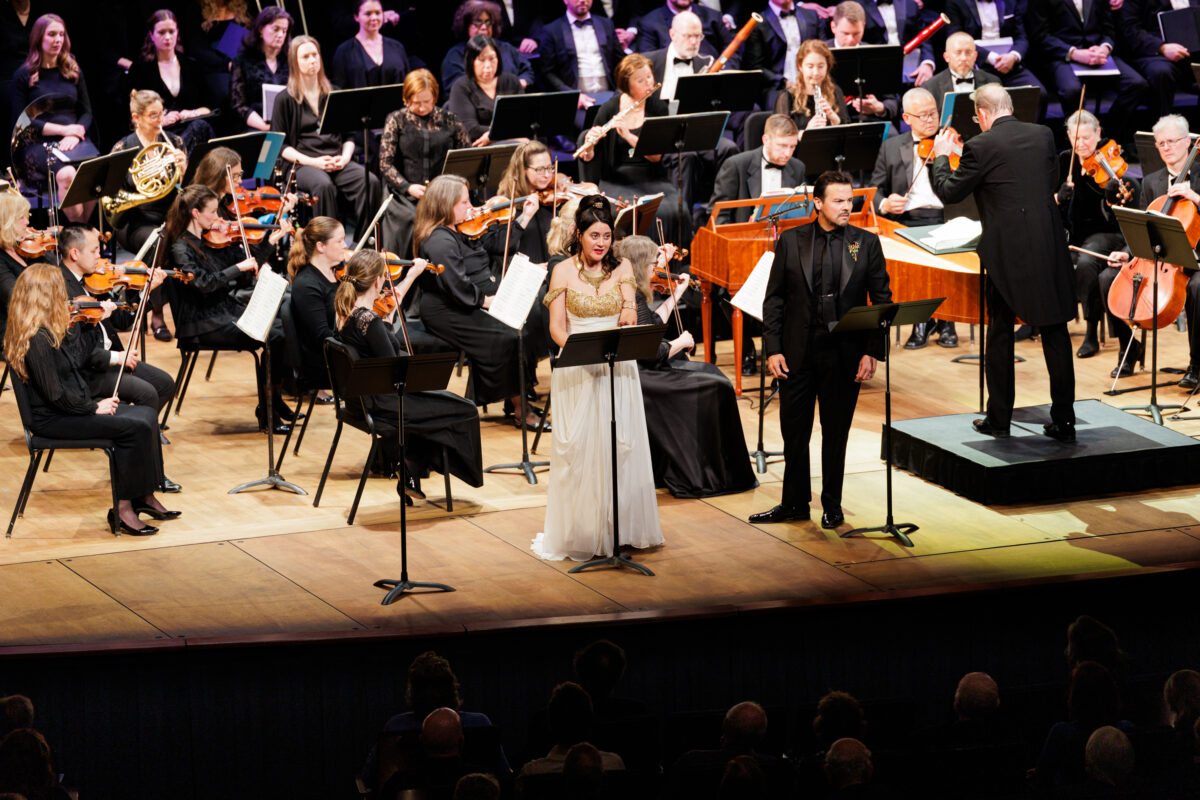
Photo: Elman Studio
Portillo sang a strong Idomeneo, fresh off a run in this role with Boston Baroque late last month, replacing the originally cast Ben Bliss. Portillo showed off a smooth and regal tenor, hardened with grief over his predicament. He tackled the challenging aria “Fuor del mar ho un mar in seno” and its coloratura with poise; he scored some impressive high notes and the voice was sweet-toned and airy like cotton candy.
Returning to WCO for a second Mozart trouser role after Clemenza’s Sesto, mezzo-soprano Stephanie Doche sang a polished Idamante. Doche deftly navigated the prince’s emotional rollercoaster ride, which entails falling in love, reuniting with his long-lost father, fighting a sea monster, and resigning himself to accept his fate of being a human sacrifice to Neptune before concluding with a final triumphant marriage to Ilia and ascension to the throne of Crete. Doche’s rich, coppery mezzo and strong chest voice effectively cut across the orchestra without sacrificing the nuance or intimacy important for the operas of this period.
WCO’s Idomeneo featured a second transfer from Boston Baroque, soprano Aviva Fortunata as Elettra, replacing Amanda Woodbury. Fortunata sang Ilia’s rival for Idamante’s love with a satisfyingly throaty, acidic bent and boasted a vivid stage presence. She gave a boundless, fiery performance of Elettra’s rage aria at the end of the opera, “D’Oreste, d’Ajace.”
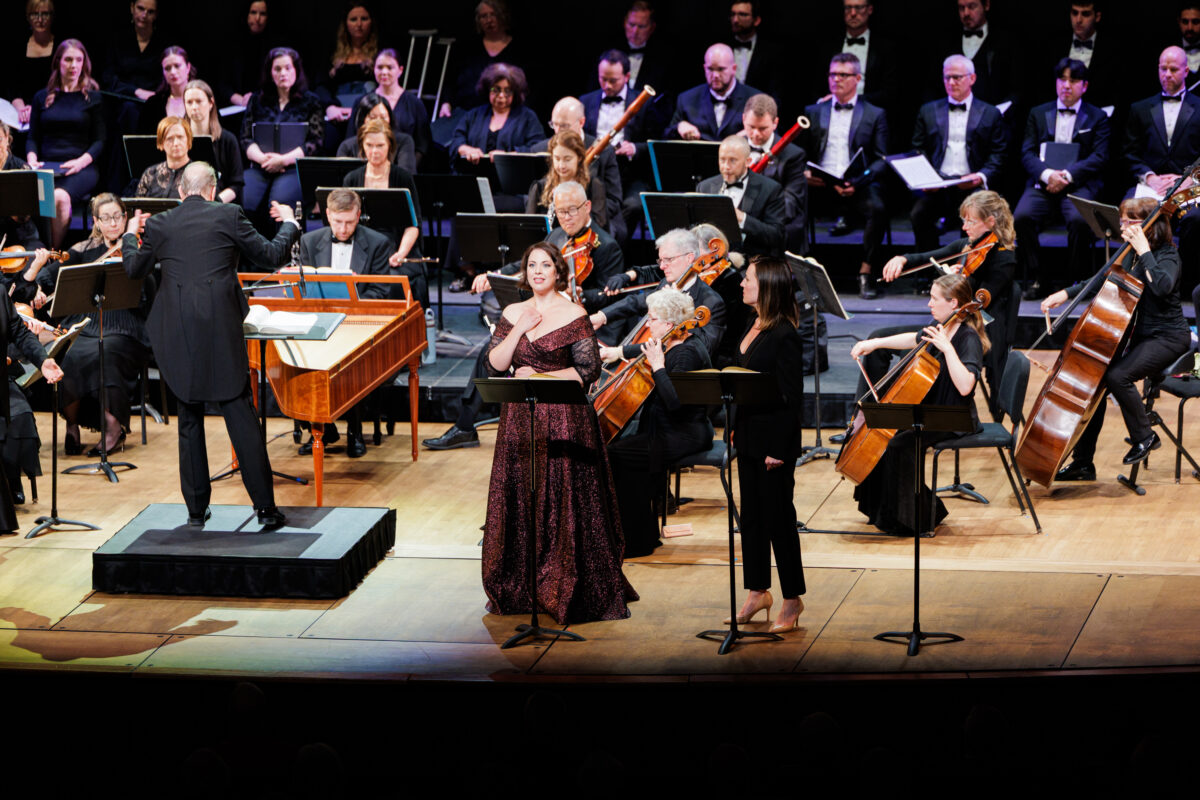
Photo: Elman Studio
Matthew Hill lent a clear, warm, and even tenor to Arbace, Idomeneo’s trusted advisor. Bass-baritone Jim Williams, making his WCO debut, echoed imposingly from the wings as the disembodied voice of Neptune providing a deus ex machina ending. Tenor David Artz, a member of the WCO chorus making his debut in a WCO soloist role, was a ruthlessly efficient High Priest. David Hanlon, WCO’s assistant conductor and chorus master, led the excellent WCO Chorus, which capably handled Idomeneo’s scenes of panic, victory celebrations, and pagan solemnities.
On the podium, Antony Walker, WCO’s artistic director, led the orchestra in evoking the drama and textures of Mozart’s score. At times, the volume balance felt uneven in favor of the strings, while the woodwinds, which Mozart gives rather interesting parts to play in this opera, frequently felt muted. The orchestra and four principal singers were captivating and well-coordinated in the opera’s famous Act III quartet.
Andrew Lokay
Andrew Lokay began his career as an opera fan at the San Francisco Opera, where the first performance he saw was Madama Butterfly. He graduated Phi Beta Kappa from Stanford University with a Bachelor of Arts in international relations and French with honors in international security studies. He now lives in Washington, DC and is a frequent audience member for opera and theatre in the nation’s capital.
-
People: Amanda Forsythe, Amanda Woodbury, Antony Walker, Aviva Fortunata, Ben Bliss, David Hanlon, David Portillo, Matthew Hill, Stephanie Doche, Wolfgang Amadeus Mozart
-
Works: Die Zauberflöte, Idomeneo, Iphigénie en Tauride, La Clemenza di Tito, Le nozze di Figaro
-
Places & Organizations: Boston Baroque, Washington Concert Opera