Trouble in paradise
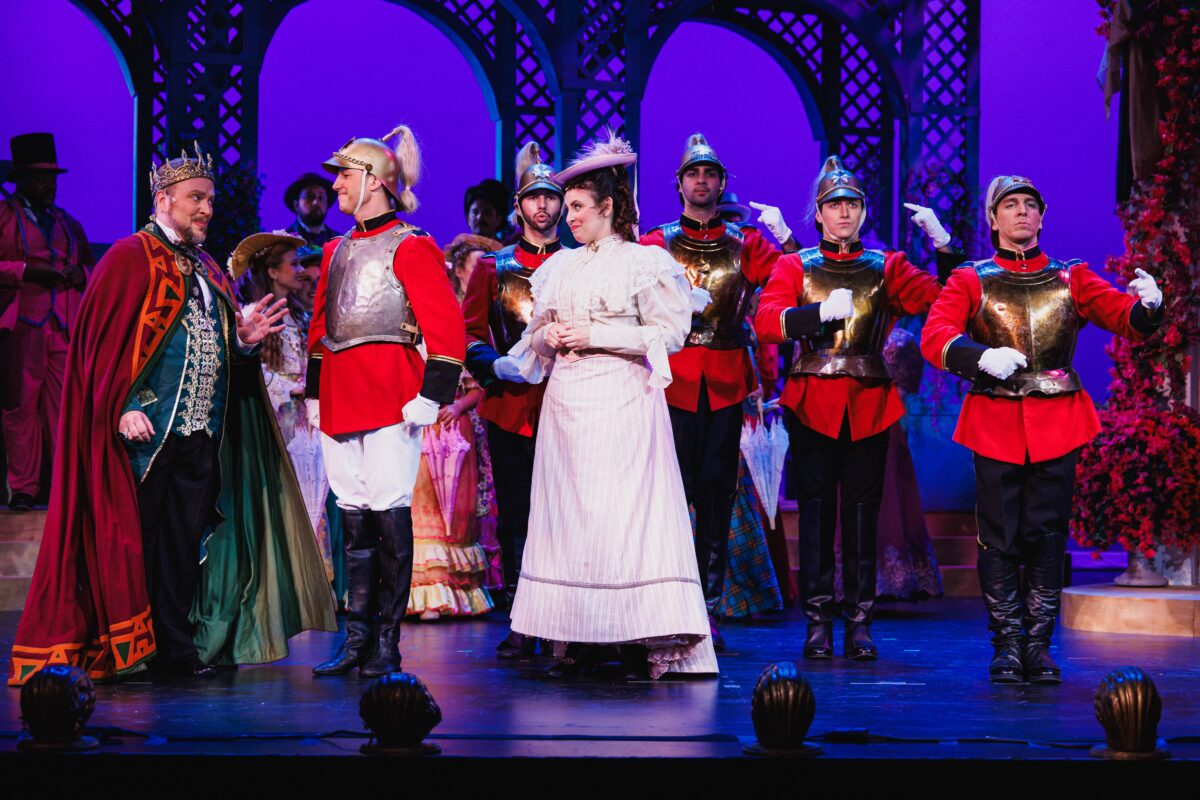
Photo by Danny Bristoll
Gilbert and Sullivan were nearing the end of their partnership in 1893, when their penultimate operetta Utopia, Limited premiered. They hadn’t collaborated since the 1889 premiere of The Gondoliers, their last big success. The 1890 dispute over who should foot the bill for a new carpet for the Savoy Theater had Sullivan siding with their producer, Richard D’Oyly Carte, who wished that the three of them pay for it as partners, while Gilbert was adamant that D’Oyly Carte, as theater-owner, should take the sole financial hit. Though they resolved their differences by 1891, the bitterness remained, and their last two collaborations, Utopia, Limited (1893) and The Grand Duke (1896), were lesser works that never caught on with the public and are rarely revived. The New York Gilbert and Sullivan Players gave their first performance in fifteen years (and probably their first-ever fully staged production) of Utopia, Limited at the Kaye Playhouse at Hunter College this past weekend, on April 18th and 19th.
Utopia, Limited is a free-wheeling satire without much heart, which is basically a satire of British Imperialism, the craze for modernization, and the exportation of capitalism to the “uncivilized” world. Since this is an unfamiliar work, I will quote the brief program synopsis in full:
King Paramount of the island of Utopia decides that his people should adopt all English customs and institutions, but he goes a bit overboard and decrees that the kingdom and each of its inhabitants should become a company limited based on the English “Companies Act” of 1862. The king’s daughter, Princess Zara, brings six “flowers of progress” from England to train the Utopian people in “English” customs. But the reforms are too successful, which upsets the judges of the Utopian Supreme Court [two “wise men” who control the supposedly despotic Paramount], the “Public Exploder”, and ultimately the entire populace, which revolts against them. Zara realizes that an essential element has been forgotten, mainly “government by party”. Introduce that, and the result would be “general and unexampled prosperity.”
The music is not top-drawer G&S, however, even the second drawer is full of delightful surprises and diverting melodies. George Bernard Shaw wrote, “I enjoyed the score of Utopia more than that of any of the previous Savoy operas” in his positive October 1893 review of the show in The World. I wouldn’t completely agree: The love story is curtailed, there are no lovely arias or duets for Princess Zara, the comedy numbers are uneven, and there is no patter specialty that compares with earlier works like The Mikado or Pirates of Penzance. However, the group number for King Paramount and the “Flowers of Progress” (“Society has quite forsaken all her wicked courses”) was brilliantly staged by artistic director James Mills (also one of their leading patter comedians) and choreographer David Auxier as a music hall turn complete with straw boaters and bamboo canes. It was a showstopper.
The piece is set on a fictional South Seas island. The NYGASP “new” production by Mills saved money and controversy by raiding and recycling the contents of their costume and scenic warehouses. The ladies of the chorus, as Utopian maidens, wore colorful Victorian bustles and hats while waving feathered fans; the men wore cloaks and tunics of European type (costume design by Quinto Ott). The sets were generic-looking arches, thrones, and benches, not a palm tree in sight (scenic design by Joshua Warner). The sight gag of the Utopian natives changing into stereotypical Victorian English dress in Act II was lost. They didn’t look that different from Act I.
Where the production scored big was in the bright and vivacious musicality displayed by the orchestra and cast, who put the score over with delicious fervor and point. Joseph Rubin conducted a rather better and much more polished ensemble of musicians in the pit than we’ve been accustomed to with NYGASP.
Everyone in the large cast could sing well and was immersed in the style. The staging by Mills was lively and on point. So it all came together on stage, even while G&S were losing their way as a dramaturgical and musical force.
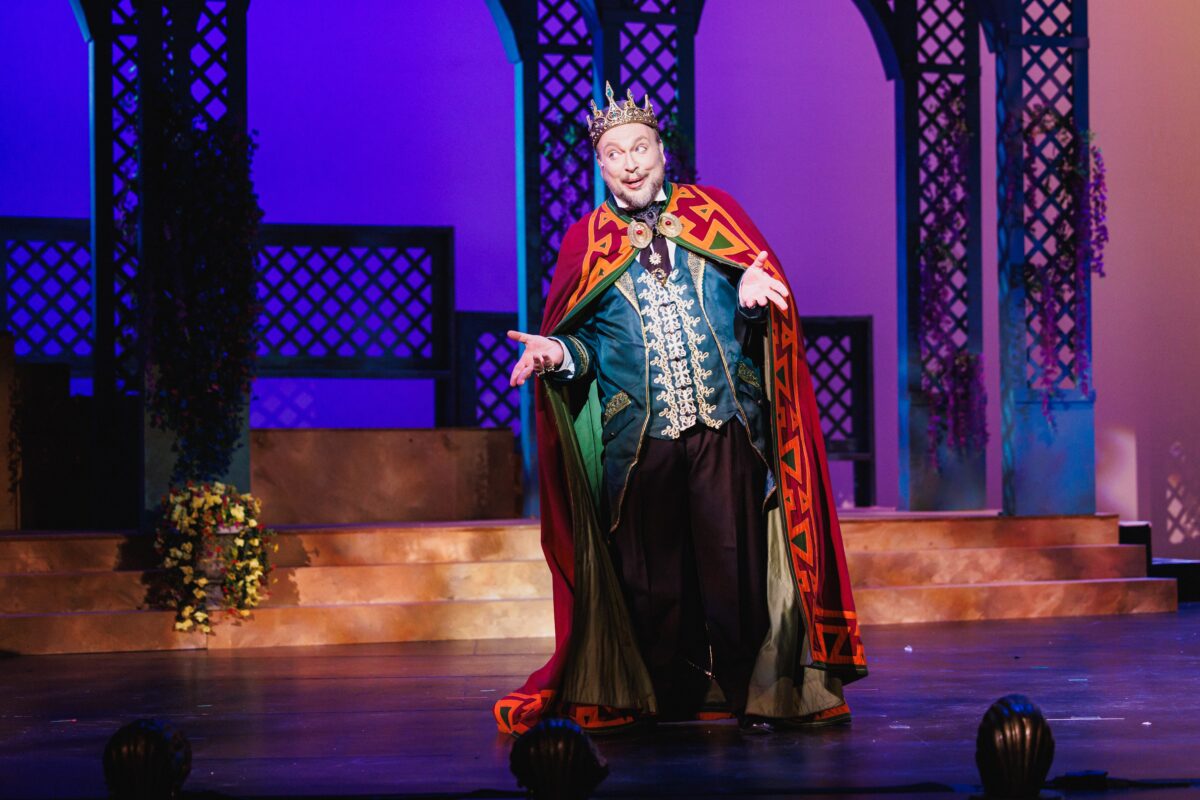
Photo by Danny Bristoll
As King Paramount, comic bass-baritone Matthew Wages was a study in easily deflated pomposity and droll humor – his facial reactions were a study. As the starchy English governess Lady Sophy, mezzo Hannah Holmes perfected the perpetually offended air of looking down her nose at perceived improprieties. Vince Gover and Lance Olds, as the two Wise Judges, were a sterling comedy team – Gover, in particular, was very good at hysterical meltdowns. All the ladies, led by Sophie Thompson as Princess Zara, looked fetching and played their silly parts with poker-faced sincerity. Tenor Cameron Smith nailed his Act II solo “Oh, Zara, my beloved one, please bear with me!” where the besotted soldier Captain Fitzbattleaxe complains that sincere passion is fatal for tenorial high notes.
So it was nonsense, but if one were in an indulgent mood, there was plenty of pleasure to be had. Next season, NYGASP sticks to the popular chestnuts:The Mikado, The Pirates of Penzance, and a personal favorite, The Gondoliers.
-
Topics: Glibert & Sullivan, operetta, Review
-
People: Arthur Sullivan, Cameron Smith, David Auxier, George Bernard Shaw, Gilbert and Sullivan, James Mills, Joseph Rubin, Lance Olds, Matthew Wages, Richard D'Oyly Carte, Sam Balzac, Sophie Thompson, Vince Gover, W.S. Gilbert
-
Works: Limited, The Grand Duke, The Mikado, The Pirates of Penzance
-
Places & Organizations: Kaye Playhouse at Hunter College, New York Gilbert and Sullivan Players, The New York Gilbert and Sullivan Players