Photo: Evan Zimmerman / Met Opera
The Met is currently experimenting in taking major warhorses and giving them consecutive performances in the same period with rotating casts. The Met has also done this in the past with the holiday special The Magic Flute for kiddies: It’s a way of saving money since the sets won’t need to be struck and reassembled as often. Only the most popular operas (a lot of Puccini) are getting this treatment this season: Madama Butterfly, La Bohème, La Traviata and Turandot. Next season Aida, Bohème, and (to a more limited extent) Tosca are getting revivals with consecutive performances and revolving casts. It does give on the opportunity of seeing multiple performers in major roles in close proximity.
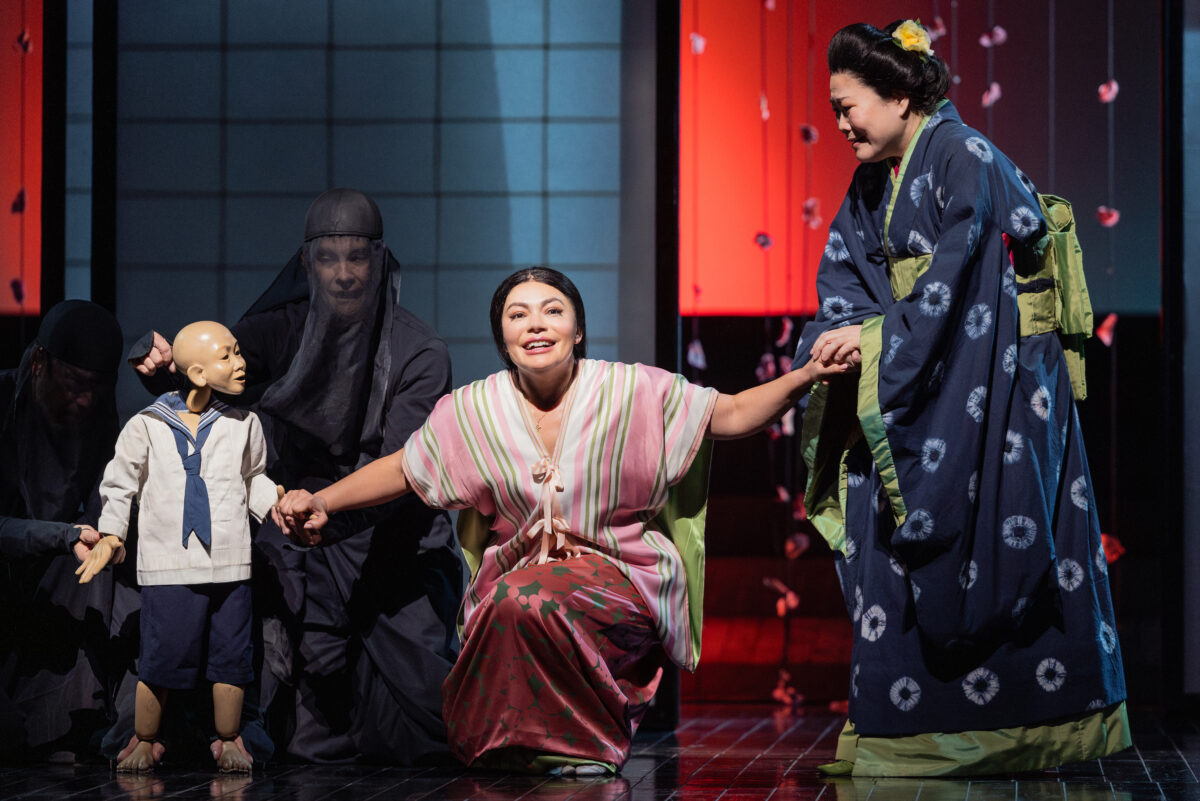
The March Madama Butterfly run was plagued by diva cancellations – both Sonya Yoncheva and Elena Stikhina withdrew at a late date due to family issues and pregnancy respectively. Familiar faces stepped from earlier revivals filled the breach: Ailyn Pérez from the January run and Aleksandra Kurzak from the 2024 revival. Due to scheduling (Kurzak was finishing her first performances of the title role of Turandot in Miami), Pérez had to sing two performances of Cio-Cio San back-to-back on March 10 and 11. No one should be asked to do this, and the first act and second act up to “Un bel dì” of the March 10 performance showed a diva clearly marking and pacing in energy conservation mode. After my early departure, I returned to check out Pérez in full steam mode on March 23. It’s a gorgeous voice – lush and creamy with a bit of spinto power in reserve. When not pacing herself, Pérez is a generous performer. But I was bothered by a very arch, calculated dramatic posture full of oriental “geisha girl” baby talk. This could be justified by playing a naïve teenager in Act I, but it persisted in Act II and to a lesser extent in Act III (I stayed for the full show this time). It undercut what was in general a well-sung and vividly acted performance with bits of genuine humor (her imitation of the American judge in Act II).
Matthew Polenzani sang a full-throated but more sensitive Pinkerton than what we are used to. Polenzani gave us musical phrasing with soft attacks and endings, but his bright, golden tone predominated. His “Addio fiorito asil” showed genuine remorse. Polish baritone Andrzej Filończyk’s Sharpless seemed a younger man who was shocked at the cruel betrayal he was obliged to enable and try to ameliorate. It is a pleasant but medium-sized instrument with a sympathetic timbre. Hyona Kim was way warmer and deeply empathetic Suzuki than earlier exponents in this production. Her Suzuki was equally devastated as her mistress when she learned of Pinkerton’s betrayal and abandonment in Act III. Kim has a nice-sized warm mezzo-soprano and her chemistry with Pérez was excellent. Carlo Rizzi led a firm, unsentimental reading in the pit with good playing from the Met orchestra. The production by the late Anthony Mingella has been scrupulously maintained by the Met and remains a jewel after 20 years of service.
In the alternate cast on March 14, Kurzak (as noted by Parterre commenters in the broadcast chat) scored another triumph that was even more impressive in the house. The middle and bottom have gained breadth and depth, and her singing and acting combine intimate delicacy with heroic strength and scale. Met debutant tenor Adam Smith of Great Britain had a boyish innocence to his American lieutenant – no caddish cruelty but the shallow selfishness and insensitivity of youth. It’s a light and silvery lyric tenor that came into better focus in his second performance. It’s not a Radames instrument, a role he sings elsewhere but should not attempt at the Met. He has a bright tone of limited size and an easy winning manner onstage (charming smile and trim waistline). Quinn Kelsey’s Sharpless was older and more hard-bitten – this consul had already seen too much and had an air of resigned bitterness. The warm-toned and sympathetic Jennifer Johnson-Cano was a vocally generous Suzuki. Everyone seemed higher energy and more engaged than they did on March 10, where clearly the heroic undertaking and triumph of the Tristan und Isolde premiere the evening before occasioned a major night-after letdown.
Verdi’s La Traviata also had consecutive performances on April 3 and April 4. I had seen Lisette Oropesa’s fragile, aristocratic courtesan on the opening night on March 20, she and the rest of the company sounded much better in the theater then than they did over the broadcast airwaves on the 28 of March. On Friday April 3, the cover cast took the stage for one night only and made the opera their own. I think I liked this one-off second cast better! Kentucky-born Amanda Woodbury has sung coloratura roles but has moved into heavier lyric repertory – her Violetta had tonal lushness as well as pinpoint precision and a long-held high E-flat to conclude Act I. She filled out the later acts with generous womanly tone and emotional engagement. She is especially good in high soaring phrases, but there was less sustaining power in the middle and bottom and some difficulty in spinning piano phrases (i.e. “Dite alla giovane”). But where it counted Woodbury delivered big time – sustaining and building the pathos through the oft-omitted second verse of “Addio del passato”. The audience loved her and gave her a big ovation at the end. (Rosa Feola and Ermonela Jaho are waiting in the wings for the late Spring Traviata run)
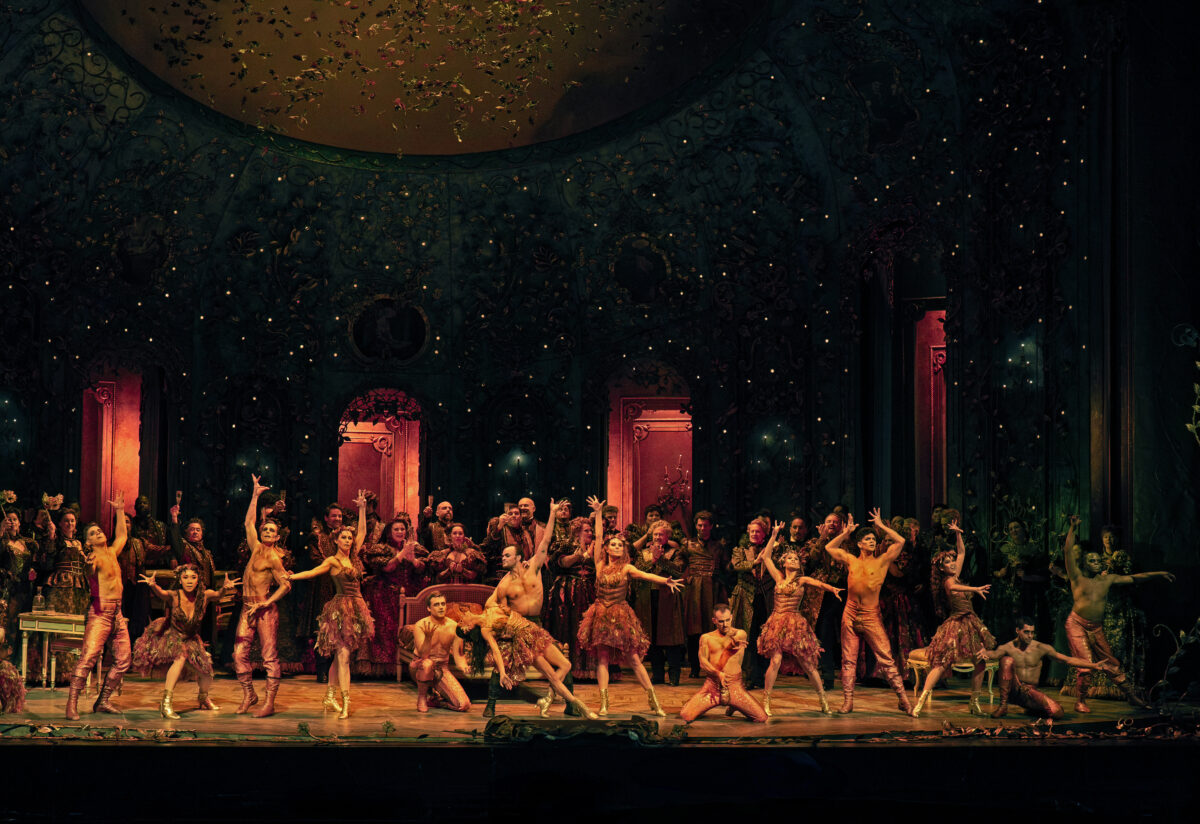
Photo: Ken Howard / Met Opera
Tenor Arturo Chacón-Cruz produced plenty of squillo and bright Latin timbre as her Alfredo Germont – he sounded a bit like Vittorio Grigolo but with better vocal and musical discipline. (He had debuted as Manrico in Il Trovatore a few seasons back, replacing Fabiano.) I think he could be promoted to a full run of his own; he has a very successful career in major opera houses throughout the country. Baritone Anthony Clark Evans has a much smoother, warmer baritone than the rather gruff and rough-edged Luca Salsi. His legato was warmer (though he could throw away the end of phrases). Evans found the high tessitura of the second act duet with Violetta and “Di Provenza il mar” a challenge at times – one he surmounted but with youthful strength rather than suavity. It’s a big, broad and attractive instrument and he should be useful in a wide repertory. Antonello Manacorda conducted with Verdian slancio and forward motion yet still breathed with the singers. There was elegance as well as intensity. Everyone seemed to be enjoying themselves onstage and it communicated to the audience which, from my vantage point, looked full and sounded enthusiastic. The Michael Mayer production has been lambasted many times on these pages. The Day-Glo satin coats for the men with Liberace-esque gold embroidery gave a Bridgerton feel to the whole show. One could ignore the garish production when the performance was as well-sung and engaging as this one.