Photo: Sergi Panizo
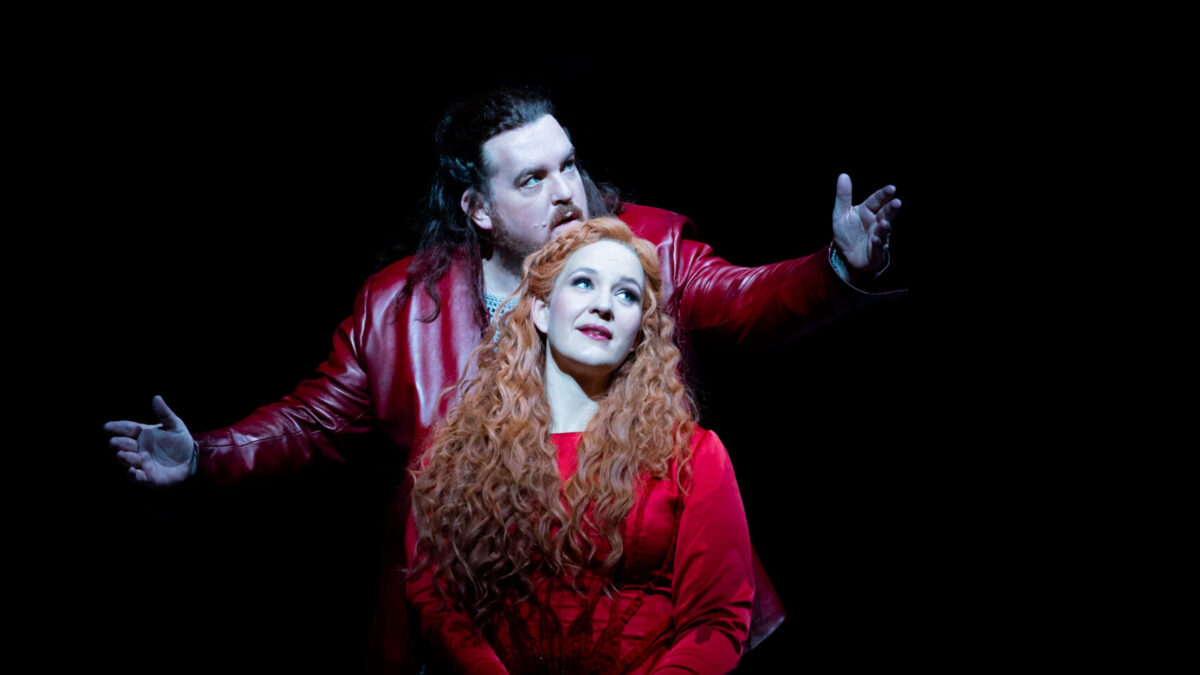
Before bringing her much-anticipated Isolde to the Met next month, Lise Davidsen has been getting her feet wet with the role at the Gran Teatro del Liceu in Barcelona this month in a new production conducted by Susanna Mälkki. I got a chance to see last Monday’s performance, the third of the run.
From her first entrance, the overwhelming impression was of the incredible vocal security Davidsen was able to convey in Isolde’s most demanding passages in Act I. It is delightfully shocking to hear this music, so intertwined with the effort it requires to execute (which has its own pleasures, mind you) delivered with such a rare degree of freedom and command. That (seemingly) casual power was married to the deep and rounded quality in her sound that maintained consistency under the highest pressure conditions. Passages like the climax of Isolde’s Curse unfolded in a stream of lush, alabaster sound.
Act II added some warmer colors to the palette, Davidsen delivering a brooding sensuality in the initial scene with Brangäne. The more intimate material with Tristan in the duet provided opportunities to show off some heart-stopping effects in softer passages — musicality also evident in more expansive material — her sound weaving in and out of the orchestral texture at full tilt. The Liebestod, following some fine pathos in Tristan’s death scene, was a pure showcase for gorgeous sound, Davidsen expertly sticking the piano landing on the final “Lust.”
There were things still in process, too. Davidsen leaned hard into Isolde’s bitter and more cynical aspects in Act I, but didn’t seem entirely convinced, and was still figuring out how to incorporate the direction into a unified stage presence. (Admittedly some of this direction was misguided, like some aggressively cutesy “waiting for my guy” bits early in Act II.)
Musically and dramatically, the Narrative section in Act I didn’t connect as a coherent whole, with lower lying initial sections lacking color and direction relative to the later fireworks. (I have seen chatter with more general claims of a lacking middle register for the part but this didn’t seem like an issue throughout the night to me.) The end of Act I was much stronger as an extended set piece, Davidsen delivering long sustained lines for a simmering buildup of tension in the confrontation with Tristan.
Despite some staggering wall of sound moments, the business end of the love duet fizzled a bit, whatever sorcery sopranos employ to create an intensity gradient in those relentless final bars not yet apparent here. Though the production deserves some blame for defusing this moment as well, as the lovers were riding opposite ends of a dinky looking rotating platform that interrupted their attempt to wrap things up with some very intrusive creaking.
It will be interesting to hear how these elements evolve under different direction and with more reps under her belt as she arrives in New York, but suffice it to say this is a deeply compelling union of voice and role. The way Isolde’s flights of scorn and ecstasy sit so naturally in Davidsen’s voice seems to loosen the constraints of the character and expand its possibilities.
While Davidsen was the headline here, it seems wrong to treat Tristan und Isolde as merely a star vehicle and this production had other virtues as well. Susanna Mälkki’s sure hand in the pit let Wagner’s score breathe and meander outside the bar lines without ever seeming ponderous. Climaxes in both the prelude and elsewhere had a thrilling controlled violence, accentuated by Mälkki’s taste for showcasing Wagner’s crunchier orchestral effects.
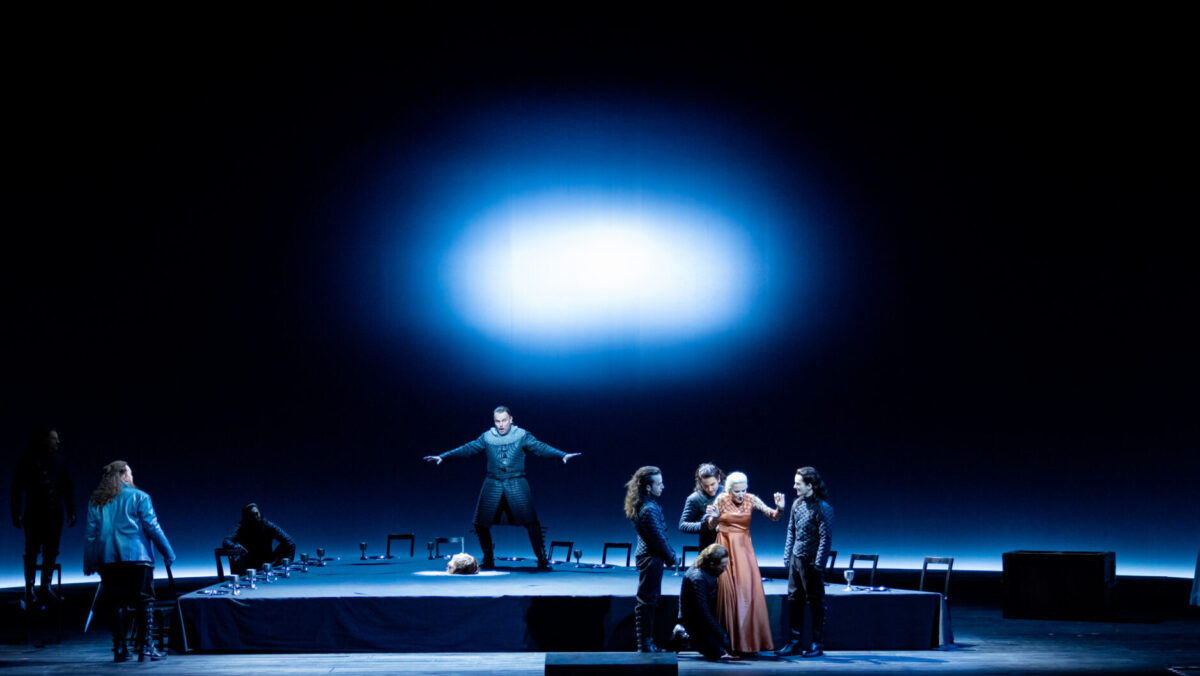
Photo: Sergi Panizo
Clay Hilley’s brash, penetrating sound was well-matched to Tristan’s first-Act braggadocio but also capable of a pleasing musicality in more lyric passages. Act II’s demands for softer and more sustained singing were a tougher scene, with some rockiness that fared especially poorly against the absolute luxury sounds being produced by his partner. He was soon back in his wheelhouse, though, credibly enduring the punishments of Act III to realize Tristan’s frenzy.
Mezzo-soprano Ekaterina Gubanova brought a clarion sound and unusual intensity to Brangäne, while Brindley Sherratt’s rich baritone was a fine vehicle for both Marke’s despondency and self-pitying anger. Special shoutout to tenor Roger Padullés for really selling Melot as a total sniveling weasel.
This new production for Barcelona, directed by Barbara Lluch with sets and lighting by Urs Schonbaum, took an appropriately bleak if slightly anonymous minimalist approach, with simple but strong images like a monolithic wall that closed during the love duet and opened to reveal the King’s forces. A few directorial touches (a phantom Isolde’s mother lurking around Act I, the aforementioned platform fiasco) diluted the focus but for the most part this was a lean take on the opera that prioritized the singers and drama.