Opera Lafayette’s Dido and Aeneas, performed at Sixth and I in Washington, DC, Photo: Jennifer Packard
Henry Purcell’s Dido and Aeneas is, perhaps, better termed a “proto-opera” than the genuine article. First performed around 1688, Dido is one of but a handful of sung-through dramatic compositions written in England before the 1730s. As such, it belongs less to the early operatic tradition that produced the works of Gluck and more to early modern English performance genres like the masque—thinly plotted song-and-dance routines, typically performed at court before nobility.
This context might explain the dramatic structure of Dido and Aeneas, which is sketchy and fragmented. Characters seem to act without motivation, and what little interiority they express is vague and hurried. The whole thing is over in about an hour. This economy of plot, however, contrasts with Purcell’s music, which is quite beautiful and thus has its own kind of depth.
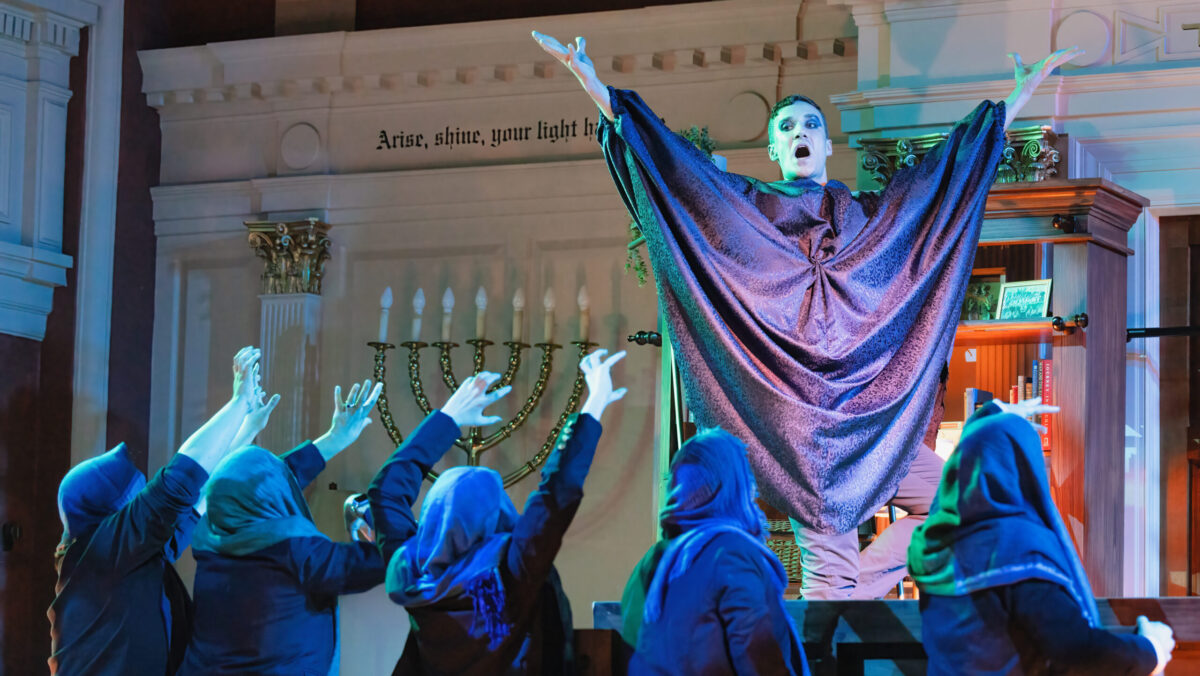
Opera Lafayette’s Dido and Aeneas, performed at Sixth and I in Washington, DC, Photo: Jennifer Packard
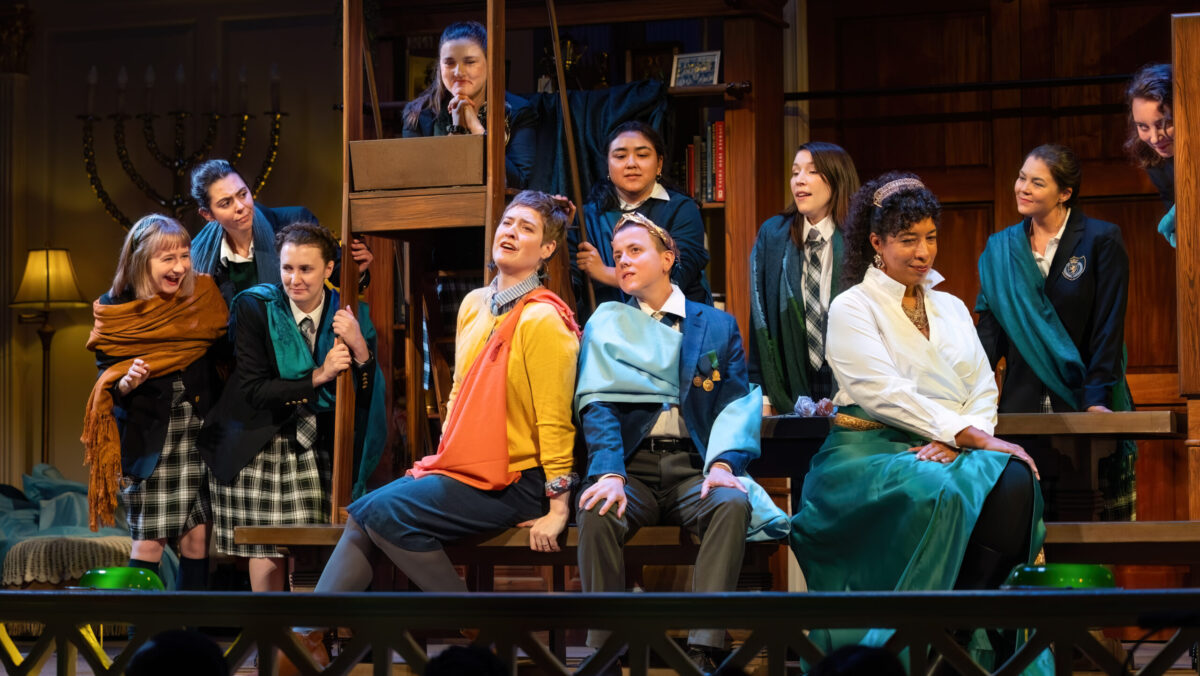
Wisely, in her production for Opera Lafayette performed at New York’s El Museo del Barrio earlier this week, director Corinne Hayes opted not to fight Dido’s lightweight and scattershot construction. Instead, she embedded it within a metatheatrical frame, presenting the opera as the extracurricular sport of a group of schoolgirls. This concept was supported by Lisa Schlenker’s study hall set, with its dark wood bookcase and green glass bankers lamps, and Lynly Saunders’s school uniform costumes. The Opera Lafayette Chorus, decked out in plaid skirts and blazers, for the most part played students, while the opera’s principal roles were filled by their teachers.
This frame narrative, inspired by Dido’s probable first performances at a 17th century girls’ boarding school, was an effective way of grounding the opera’s elusive fragments into a more materially present piece of theater. It also, however, meant giving up on the possibility that Purcell and Nahum Tate’s work might really connect dramatically—grounding Dido and Aeneas in a frame setting meant, necessarily, holding it at a layer of metatheatrical remove. Still, this tradeoff seemed broadly worth it; what Opera Lafayette’s Dido lost in gravitas it gained in charm and specificity.
Charm was also the watchword of the performances, which were strong across the board, from the seven, beautifully blended treble voices in the chorus, to soprano Chelsea Helm’s warm, radiant Belinda to bass-baritone Hans Tashjian’s vivacious Sorceress. Tashjian played the Sorceress in drag, flanked by witches played by Cecilia McKinley and Kayleigh Sprouse—the only schoolgirl figures who sang principal roles. These witches were appealingly campy, if at times a little excessively hammy. McKinley in particular distinguished herself, with her strong, commanding contralto voice never, as Sprouse’s soprano occasionally did, becoming warped by the campiness of the sorceress schtick.
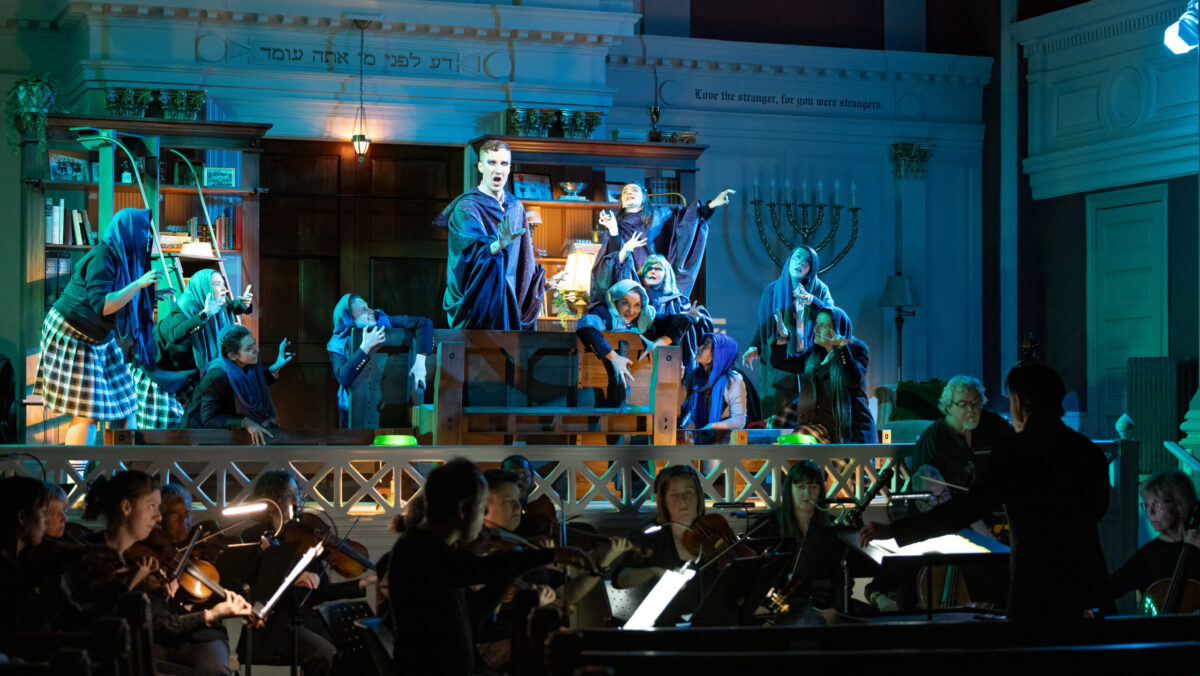
Opera Lafayette’s Dido and Aeneas, performed at Sixth and I in Washington, DC, Photo: Jennifer Packard
Here, the function of the metatheatrical staging was particularly clear. Why do these witches want to ruin Dido’s life? Nahum Tate’s libretto never ventures a guess. But the frame device gave the witches a clear and enjoyable motivation: the adolescent pleasure of playing the baddies.
As the titular doomed lovers, Mary Elizabeth Williams and Elijah McCormack had less recourse to campy meta-play. Luckily, they were both able to shape their roles instead with the beauty of their voices. McCormack’s cool, spun-silver soprano gave his Aeneas’ an air of tragic nobility. The suspended span of his vocal line seemed to match the pull of resisted destiny that called Aeneas on to Rome. As Dido, Mary Elizabeth Williams‘s voice was flashing and forceful. Williams’s is a slightly heavier voice than is often heard in this material, and at times there was a palpable sense that she was banking some of her power to avoid overwhelming the mix of voices onstage. But when she let it rip, as in her climactic aria, the results were powerful.
Patrick Dupre Quigley, conducting an orchestra of primarily strings and reeds, gave Williams and, indeed, all the singers plenty of space to maneuver in, creating a musical landscape that ebbed and flowed naturally across the opera’s brief runtime.