Luciano Romano
I owe some of my best nights at the opera to Anna Pirozzi and Luca Salsi. I first encountered them together in a memorable Due Foscari in Milan in 2016, it was a scorching 2018 Macbeth in Parma that proved to be a highlight of my operagoing life. And while I’ve enjoyed keeping up on the two of them on their own merits, their collaborations are treasurable; I’ve never seen two artists more wholly complementary, more at ease with one another.
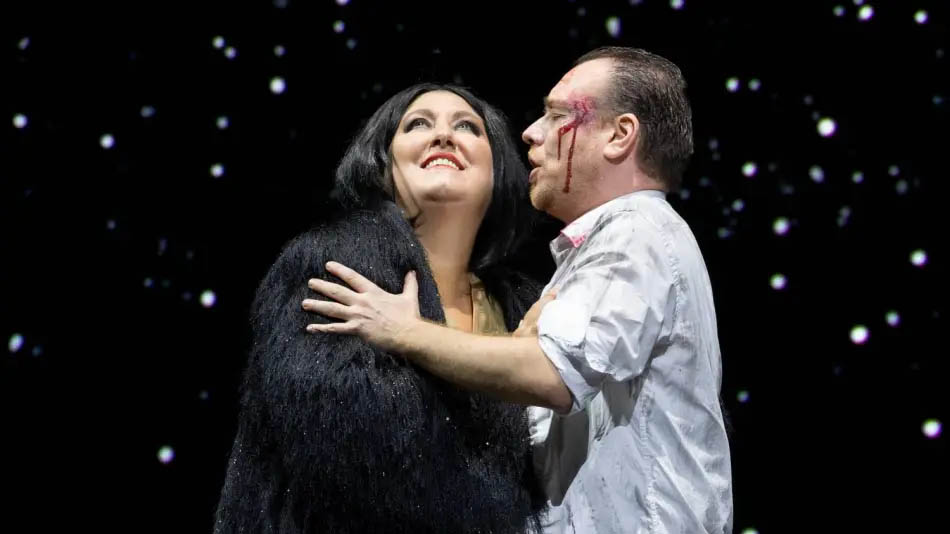
Their brilliant chemistry shone in a performance of Tosca at Naples’s Teatro San Carlo on Tuesday where napulitana Pirozzi gave her first performances as Tosca in her hometown, taking over for Sondra Radvanovsky in a triple-cast run that also features Carmen Giannatasio. But those expecting the hawk-eyed Pirozzi of her Abigaille and Lady Macbeth will be surprised to hear she’s a much more girlish Tosca, meltingly fluid in her singing and effortlessly plowing through the music with style. Her “Vissi d’arte,” cleanly sung and unfussily articulated with lovely diminuendo effects, received such long applause that it briefly seemed like we were going to get a bis.
Because alongside the steeliness of her usual warrior women roles is a strong command of a voice that vibrantly rings, growls, and weeps in all the right places. Pirozzi does not quite make a meal of the scenery, but sings with such confidence, ease, and clarity that she’s riveting all the same.
Luciano Romano
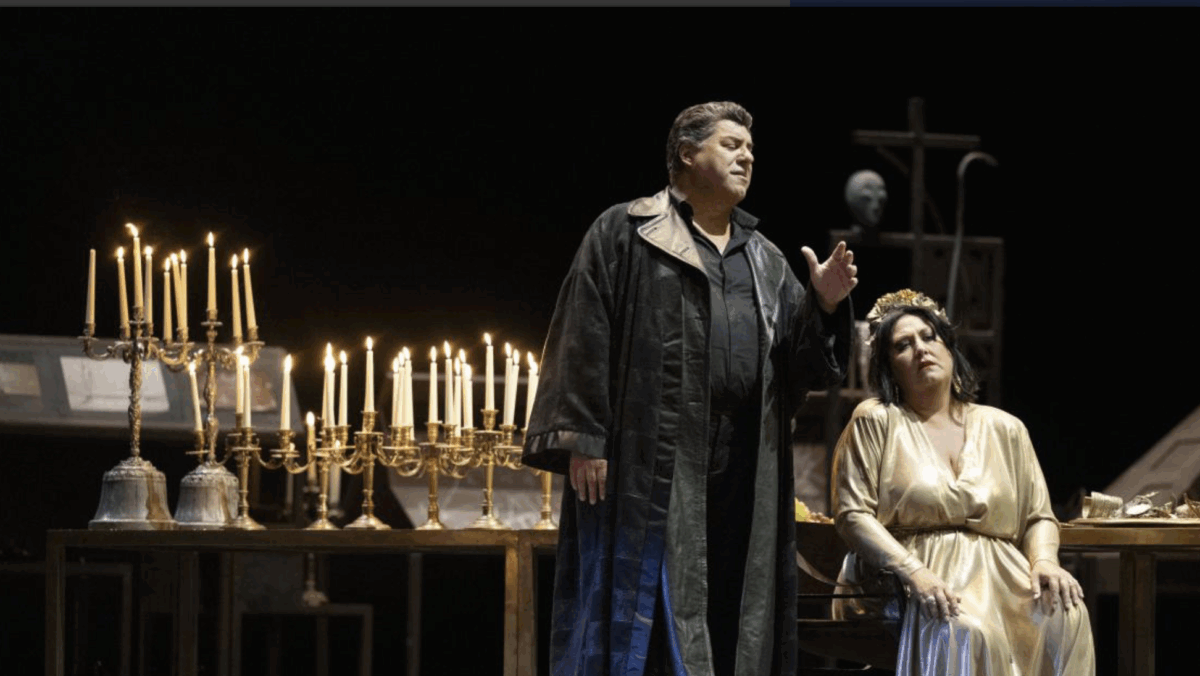
Salsi, on the other hand, is the more ferocious actor and dominating presence. He can be mellifluous when he wants to be (though as Scarpia he seeks little opportunity), but is a singing actor first and foremost. He spits and croons his words and his Scarpia is crude and cruel and colossal. He strides about the stage with fearsome step and literally wrings every drop of terror and desperation from his prima donna. I’ve never sat through such a tense Act II, Scarpia’s extended sextortion of Tosca unfolding with palpable brutality and Pirozzi was in feral form, a one-woman Brutus and Cassius, by the end.
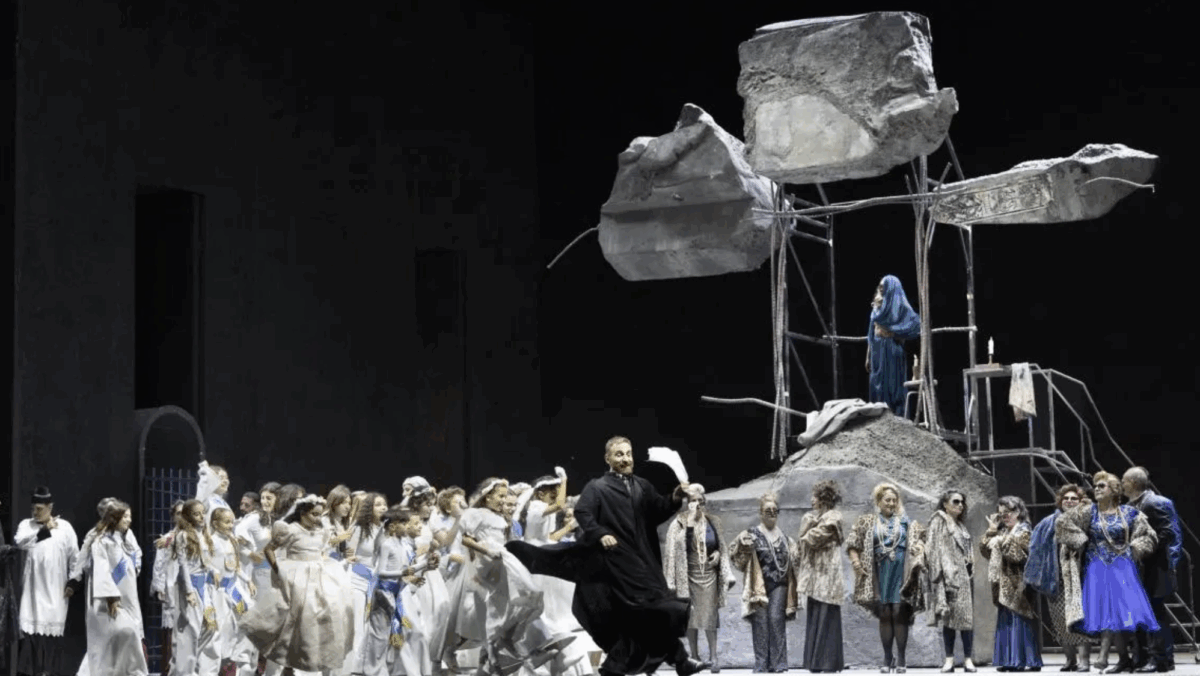
It was a good thing these two came with pre-packaged chemistry because they were helped little by the production. Edoardo De Angelis’s staging was new in January 2020 (Paolo Vettori oversaw this revival) and is a fully traditional production save for the piles of seemingly post-apocalyptic junk – curated by the actually important artist Mimmo Paladino, the guy who makes those sculptures that look like smoother and better fed Giacomettis – that is called a set. Cavaradossi’s painting of the Maddalena is here a sculpture upon which Scarpia exerts a Janet-Jackson-at-the-2004-Superbowl stunt during the Te Deum and Scarpia’s study is crammed full of pointless crap which only serves to be intermittently dramatically shoved off the table by each of the three protagonists. Massimo Cantini Parrini’s costumes sample from a variety of epochs, from Tosca’s 20s to 80’s fashions for the chorus. Not sure why.
Luciano Romano
It was only after I had left the theater that I remembered that Francesco Meli, the evening’s Cavaradossi, had also been in that 2016 Due Foscari where I first beheld Pirozzi and Salsi. But of the three, Meli sounds most compromised by time. The voice is now almost completely monochromatic, any attempts to sweeten it costing him nearly all of his volume. The one coppery color that remains is not plush, but it is clearly projected. “Vittoria” and “E lucevan le stelle” went better than expected, showing that his high notes are still there though perhaps it’s time to find a different approach to them.
Other promising singing came from Lorenzo Mazzucchelli, who as Angelotti might have similarly taken more care with his beautiful bass, and the fearless young Aldo Gaeta’s Pastore, here sung center-stage. Dan Ettinger’s conducting of the adroit Orchestra of the Teatro San Carlo shared the same sense of in-your-face excitement as Pirozzi and Salsi’s performances, but a reliance on slow, melodramatic outbursts and full-on fermate to amp up the tension in certain moments brought this Tosca in at well over three hours. But regardless, with Pirozzi and Salsi at the helm, this was the type of performance that uniquely gratifies the operagoer in Italy; a tightly knit cast of experienced, instinctual performers and an audience eager and excited to hear them.