
The parterre box Calendar is ever a garden of earthly delights. This month, these darling buds do bloom:
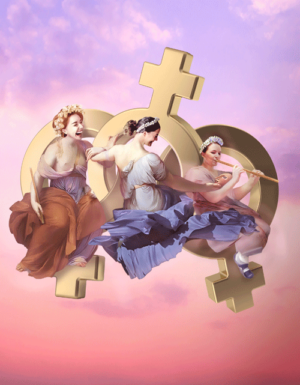
Opera Lafayette’s NY Baroque Music Festival gets underway, if you give a madame.
On Tuesday, May 7th, a modern premiere of an opéra-ballet that broke the mold for its time by putting contemporary characters on stage—Jean-Joseph Mouret’s Les fêtes de Thalie. This “witty, joyful” update features three muses—we prefer the term ‘lady parts’—debating the roles of composers, librettists, and choreographers in opera, alongside the stylings of the Kalanidhi Dance Company, a contortionist, a mechanical doll, and Christophe Rousset on the podium. Period!
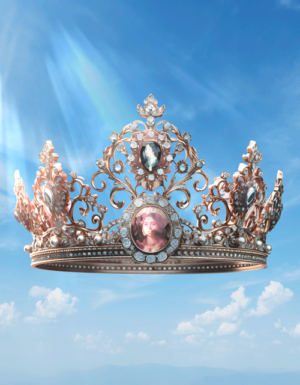
Two days later, on May 9th, you may well enjoy From Saint-Cyr to Cannons, an orchestral concert with vocalists to include works by Jean-Baptiste Moreau and George Frederic Handel, both connected to French dramatist Jean Racine’s play Esther, based on the Old Testament story.
Readers from our Greater Washington D.C. chapter should act now and catch Opera Lafayette’s Thalie at Kennedy Center ce weekend—Friday, May 3 (tonight!) and Saturday, May 4. Get tickets.
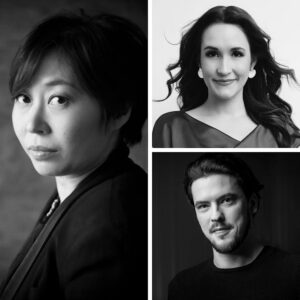
Oh, quel dommage (or Geschenk des Himmels, as the case may be) but also on May 9th, the Orchestra of St. Luke’s present Brahms’s German Requiem. The all-Brahms program includes the Carnegie Hall premiere of the composer’s Begräbnisgesang, an early, short choral work, likely written in remembrance of Robert Schumann. Performers: Xian Zhang, conductor; Erin Morley, soprano; Andrè Schuen, baritone; La Chapelle de Québec; Ensemble Altera.
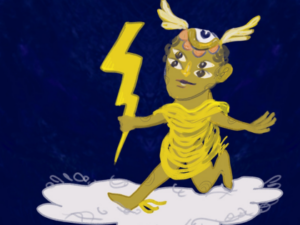
For those of you brave enough to have children or who refuse to grow up yourself, the Little Opera Theatre of NY offers Haydn’s Jupiter’s Journey to the Earth, originally written for a marionette theater at the Royal Castle of Esterhazy in the 18th century. lotNY’s new English language adaptation mixes puppeteers, opera singers, and instrumentalists in a show the entire family can enjoy—four times, if you want!—this Friday thru Sunday (May 10–12). Yank that iPad out of your little one’s hand and pull all strings to get there.
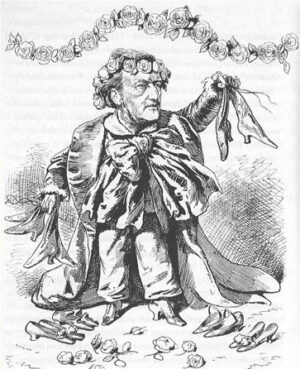
And May 15th, the latest Wagner Society of NY pronouncement—Wagner from a Queer Perspective. This talk, by Dr. Patrick S. Cheng, will explore other published works of Wagnerian queer interest, “as well as topics such as the homosexuality of key people in Wagner’s circle (such as King Ludwig II and Wagner’s son Siegfried), Wagner’s fetishes with respect to satin and perfume, the unorthodox sexual relationships and ethics in Wagner’s life and works, and LGBTQ+ devotees to Wagner’s operas from the 19th century to today.” Worried that you can’t make it? Graal, puh-lease! It’ll also be livestreamed and viewable up to 36 hours after the event.
As always, the cher public are encouraged to patronize and partake of these events, if not each other.
And should you wish your event to pirouette across our pages, or if you covet our illustrious readers’ adulations, a beacon awaits at parterre.com/advertising. Alternatively, dispatch your most charming missive to [email protected].