

F. and Furious
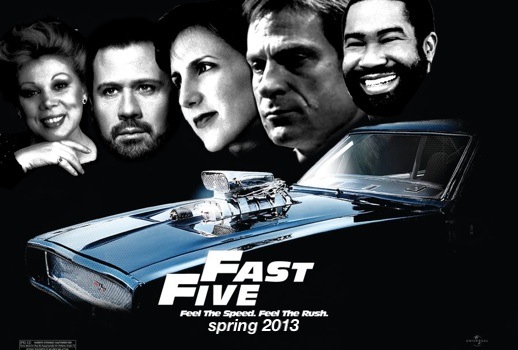
Has it been a year already? Apparently so, because the honorees for the eighth annual F. Paul Driscoll Awards for Outstanding Achievement in the Field of Excellence, or as they are colloquially known, the Opera News Awards, have just this minute been announced. The five superb artists who have made an invaluable contribution to the art form this time around are sopranos Mirella Freni and Dawn Upshaw, countertenor David Daniels, baritone Simon Keenlyside, and bass-baritone Eric Owens. The eighth annual FPDAOAFE ceremony will take place on Sunday, April 21 at the Plaza in New York City.
Mezzo—Eliza Farniente- genius funny.
A pedant writes: Farpoco, surely?
Filosofo ragioni.
Perdonami.
Grazie
Ma prego. Che gentilezza.
Ta luv
Learnt my gentilezza from Professor H.
Comes in handy in my flower shop.
Eric Owens? Seriously? What, exactly, has been his significant contribution to opera? I’ve had erections that have lasted longer than his major career.
Upshaw’s contribution to new music is significant but I never saw her give a performance of standard repertory opera than was anything less than white, colorless, and dull.
” I’ve had erections that have lasted longer than his major career.”
Well, then—as the warning on the television ad urges for those who have to rely on that ‘lil blue pill-- “Call your doctor if you have an erection lasting more then 4 hours”
Can you be any more CRASS—AND DOWN -RIGHT NASTY, concerning Mr. Owens??( then again, seeing the source of this comment—I ain’t surprised in the least..!)
you know, I just happened to look back at this post and even with my sketchy Italian I knew farniente was do nothing as opposed to do little- but I didn’t care- farniente just sounds funnier….so hats- or hat- if I were wearing one- off to you anyway-- it really tickled me.
Since Italian is being flung around, would anyone care to enlighten me as to the social difference between a fanciulla and a ragazza? Google Translate is not up to it.
Isn’t fanciulla an older, slightly more elevated term? As I understand it — and this is just something I was once told by an Italian — the word lost currency after the Fascists made plentiful use of fanciullo/fanciulla in their youth programmes.
Dear DCF and Monty,
«Fanciulla» is indeed older and more elevated. treccani.it put it best: «a word that is now rarely used, limited to discourse of elevated or joking tone».
«Ragazza/ragazzo» is «who is in the age of adolescence or youth». In my experience, vocative use of «ragazzo/ragazzi» («Ciao ragazzi») would be the equivalent of «kids» in American English («Hey, kids»).
Monty, I did not know about that Fascist fanciullo/a fact—thank you!!
Not much difference, really. ‘Ragazza’ is the more general term. ‘Fanciulla’ is somewhat outmoded, it has a connotation of ‘virginity’.
‘fanciulla’
Sinonimi: adolescente, damigella, donna, bambina, bimba, giovane, nubile, ragazza, signorina, vergine, compagna, ragazzina, fidanzata, pulcella, pulzella
‘ragazza’
Sinonimi: adolescente, amore, bambola, bella, damigella, donna, filarino, giovane, nubile, partner, pupa, donzella, cameriera, commessa, signorina, sottana, teen-ager, vergine, aiuto, aiutante, compagna, amata, fanciulla, giovinetta, ragazzina, fidanzata, innamorata, figlia femmina, giovanetta, giovincella, lavorante