
Statuesque puzzle

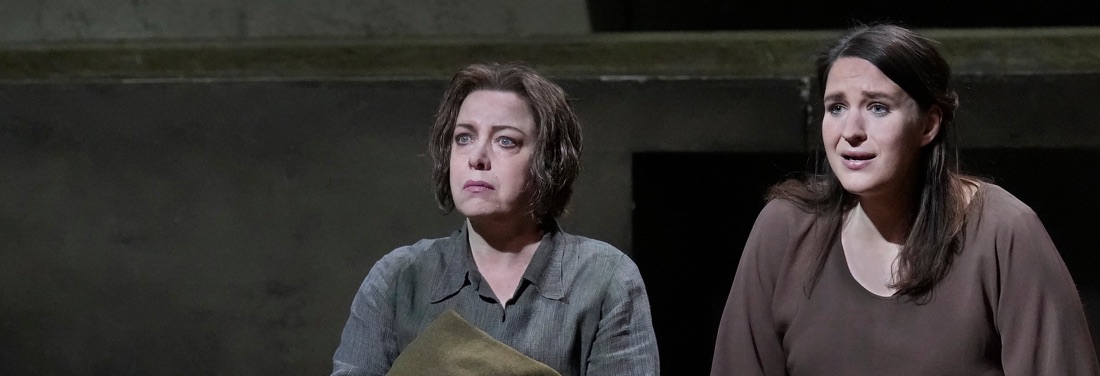
La Cieca invites the newly reunited cher public to participate in an archeological dig scavenger hunt puzzle quiz promoting the new “Sacrificium” CD from Cecilia Bartoli.
Ready to play? Well, first you have to answer this question:
Farinelli’s remains were exhumed in 2006 from this cemetery in Bologna?
Most of you surely know the answer, of course, and those of you who don’t certainly know how to google. So, anyway, once you’ve identified the cemetery, you go to the puzzle site, enter that name, and get a piece of the puzzle. Whee!
After that, you may ask Daniel Stephen Johnson for the next clue.
I listened to the complete Bartoli album on NPR. There are 5 really good FAST arias with all that quasi-yodeling coloratura. The geek in me loves that kind of meaningless mindless display. I guess I need to watch my Farinelli dvd again.
Rysanekfreak, I don’t think you can get an idea of what Farinelli sounded like from the movie. The singing is mostly by Derick Lee Ragin , a countertenor. The engineers cobbled on the voice of a German soprano(Schultze?) to lengthen the phrases and add the higher range that Ragin didn’t have.
The result just sounds strange to me.
For myself, countertenors singing attributes
don’t really match up with what I’ve read in terms of descriptions what the castrati could do. I’m thinking primarily of the endless breath most of the castrati seemed to have as well as the fullness and powerfulness of tone that had throughout their range.
It’s a poor example, but the only one we have is of the recordings of Moreschi, the last Vatican castrati. I doubt that he was really ever all that great but at the time he made recordings, ca 1905, his voice was a wreck.
The lower part of his range sounds comical, it’s so bad, but even then it has more color than most of the lower reaches of today’s countertenors. The high notes are perilous but what fascinates me are the notes around D-E-F-G. The notes are very firm and very rich with color and this is the point at which so many countertenors start to thin out.
The closest we can come to a castrato sound today is probably Michael Maniaci. Unlike countertenors, he doesn’t sing falsetto (his voice never changed). And he has a higher-placed voice and a more powerful (and interesting) instrument than countertenors.
OK, just because I like to complete puzzle challenges:
I can guess from the comments what answer #9 is, but how does one find question #9? Nico Muhly doesn’t give a link to it, does he? So many seem to have found 9 without 8 being posted makes me think I’m missing something obvious.