“To play La Pompadour—what a delightful task! To be La Pompadour—what a gruesome fate!”
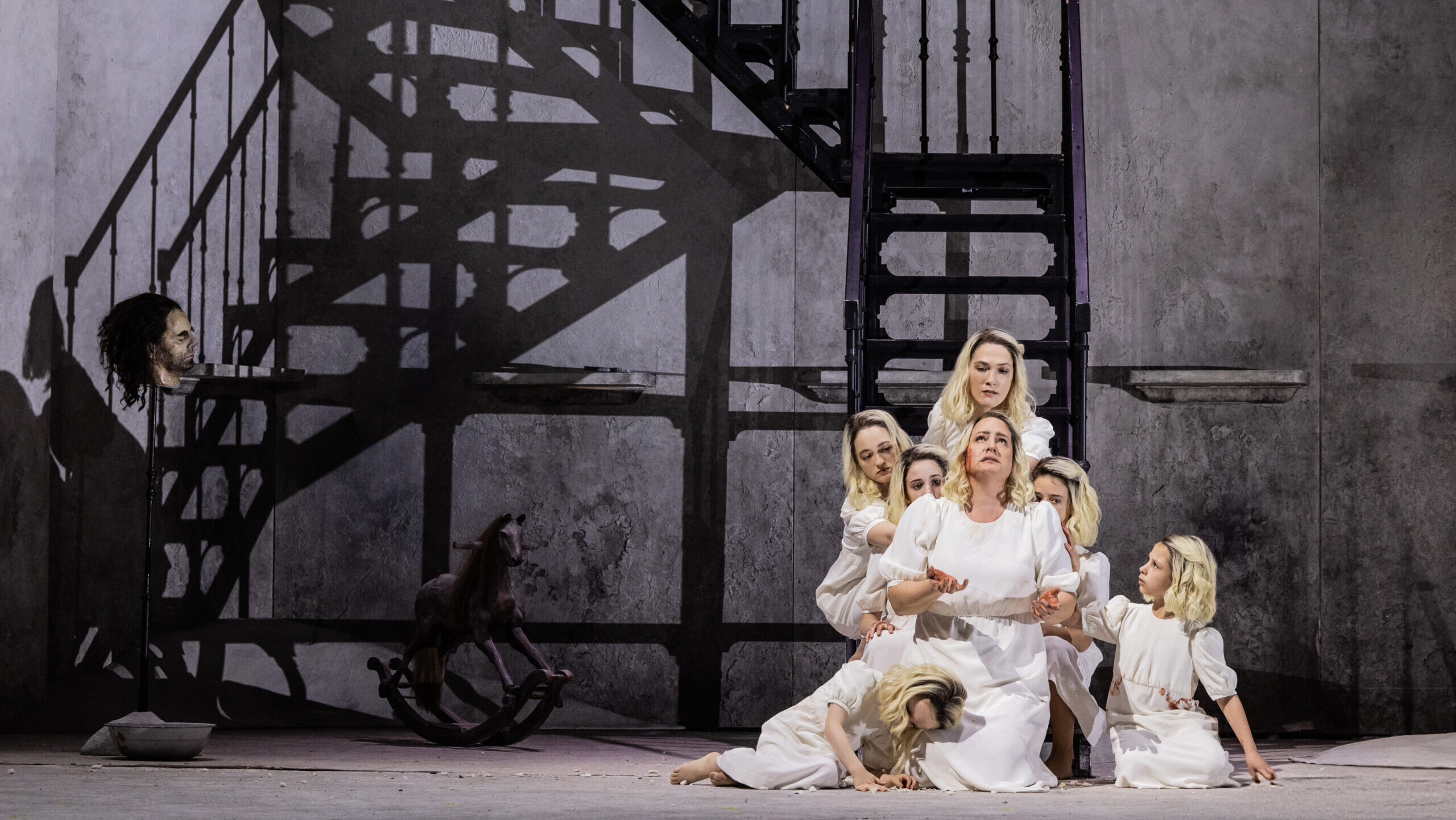
Andris Nelsons led the Vienna Philharmonic in a performance of Salome that provided just the sort of thing one hopes for in a concert performance of an overflowingly rich operatic score.
Each year, Leon Botstein leads the American Symphony Orchestra in a concert opera or two.
What better way to welcome Halloween than with that scariest of all operas, Salome, in a performance culled from one of Mike Richter‘s magnificent CD-ROMs?
In any narrative, the unmentioned—the unmentionable—will always be more alarming than that which is carefully described.
Italo Montemezzi’s La Nave, premiered in 1918 and not performed anywhere since 1938, concerns itself with nautical power, male and female archetypes, love and hate conjoined, sex and death, the eastern and western halves of the Roman Empire — and the visionary future of Old Venice.
By the time Rossini was 20, he had produced six operas, most of them brief, comic and slight. He admitted to admiring Mozart (not then well known south of the Alps), but the melodies of his early works show more of the influence of Paisiello.
Sneaking in under the wire during the final week of May were two highpoints of New York’s opera season: the Cleveland Orchestra’s Salome with a stunning Nina Stemme and operamission’s revelatory US stage premiere of a complete edition of Handel’s first opera Almira.
Frustrated, perhaps, by the bulky requirements and dubious future of grand opera—and grand opera commissions—Benjamin Britten created some of his most intriguing and, nowadays, popular pieces for small casts and chamber orchestra.
Last year, La Cieca dedicated a blog post to a production of Salomé scheduled to take place in the Palais Opéra in Liège, with two surprising late career debuts by June Anderson as Salomé and Kammersängerin Mara Zampieri as Hérodiade. Now, a year later, I could not resist La Cieca’s request for a review, especially…
David McVicar’s ravishingly lurid 2008 production of Strauss’s Salome for the Royal Opera House Covent Garden has been issued as an HD-filmed DVD from Opus Arte. Now, Strauss’s music is ravishingly lurid on its own, so I came to this production, which claims as a visual source reference the Pasolini film Salo, The 120 Days…
Although Walter Braunfels was among those German composers whose music was banned in their home country after 1933, and whose political rehabilitiation in 1945 was not accompanied by a commensurate revival of his music, his 1920 opera Die Vögel should need no special pleading on musical or dramatic grounds. Though Braunfels is traditionally described as…
Richard Strauss’s brilliantly disturbing Elektra was first performed at the Dresden State Opera in 1909, and arrived in America in 1910 at the Manhattan Opera House. A second American premiere, this time in the original German, was in Philadelphia in 1931 with – and this will kill you – Nelson Eddy as Orestes. Along with…
My grandfather warned me once: “Beware redheaded women. They’re both good and evil, depending on the second.” On Patricia Petibon’s new album Rosso the soprano combines arrestingly beautiful singing and aggressively amorous characterizations with wildly dramatic artistic choices so easily and effectively, that she in a way lends an air of truth to the old…
The Berlin Philharmonic brought a spooky Halloween treat to New York on Thursday night, just a few days late. They are at Carnegie Hall for a three-night residency, offering the complete Brahms symphonies along with selected earlier works by that ugly duckling of Brahms disciples, Arnold Schoenberg. They are also far from home during Berlin’s…
parterre fave Peter Konwitschny has returned to his métier, directing a new production of Salome — with a happy ending! Following the jump are excerpts from an interview with the director in Volksrant, translated by Our Own Freniac.
Doubling down on its artistic mission, New York City Opera begins a tenuous season with a turgid Bible drama.
La Cieca received this letter yesterday. If you have reviews, opinion pieces, appreciations, or (as in this case) a Letter to the Doyenne, please email to [email protected]. Saving New York City Opera?
I was there in the house and it was a good night. I still think that Mattila and the production were fresher in 2004 with a wider range of colors and dynamics. However, she didn’t sound frayed or at the end of her rope. Some of the louder high notes can get a blanched quality…
The hallmark of Camp is the spirit of extravagance. Camp taste turns its back on the good-bad axis of ordinary aesthetic judgment. Camp doesn’t reverse things. It doesn’t argue that the good is bad, or the bad is good. What it does is to offer for art (and life) a different — a supplementary —…
Just imagine! The legend herself, Anja Silja taking time out of a busy rehearsal schedule (and despite her concern about the orchestra, problematic in early runthroughs)—to talk to parterre box. I confess I imagined she would be at least a little bit like her character of Emilia Marty—cynical, burned out, impatient. What a surprise, then,…
Tell us: Filth or dementia?
Hasten thee to feed another quarter of conversation for The Talk of the Town!
Sign up for our free Newsletter.
Support Parterre Box
Donate to keep opera's liveliest publication free and independent. No paywalls, no institutional backing, no bootlicking.
Get our free newsletter
Opera's top reads delivered to your email weekly…ish.
Join over 100k readers.
The best opera magazine on the web.
Reviews, breaking news, critical essays, and brainrot commentary on opera from those demented enough to love it.
Essentials
Copyright © 2026 Parterre Box.
All rights reserved.
Registration or use of this site constitutes acceptance of our Terms & Conditions and our Privacy Policy. Do Not Sell or Share My Personal Information.
Sign up for Parterre’s free newsletter.
Exclusive opera reviews, commentary, and top reads
delivered to your email weekly…ish.