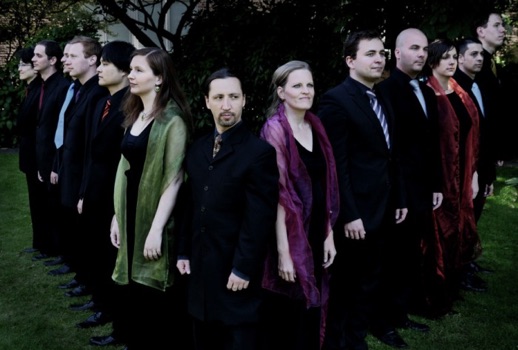
On Saturday Juilliard 415 welcomed the sterling 10-member Belgian group Vox Luminis for a striking program of “Handel in Rome.”
My mother leaned in and quietly whispered,”Is that Leontyne Price?” to which I replied,”Shhhh!”
An unstaged performance of Juditha Triumphans by five soloists and the Venice Baroque Orchestra under Andrea Marcon.
Joyce DiDonato’s atest album, In War & Peace: Harmony through music, is more specific than it sounds.
An extraordinarily rich variety of opera happens locally, under the umbrella of New York Opera Fest.
Fans of divas who sing 19th and 20th century opera may find themselves searching in vain for CDs to buy with this season’s gift cards, since their idols so rarely put out solo recitals these days.
“Operatic” generally refers to sung drama, but there is another meaning of that term: grandiose, outsize, hysterical.
Who needs sets and costumes anyway?
At what moment does a “rising star” become simply a “star”?
They say that Boston, despite many cultural distinctions, ain’t no opera town, and for some decades—generations?—this has been true. But tides of change will break, even on the shores of the Hub.
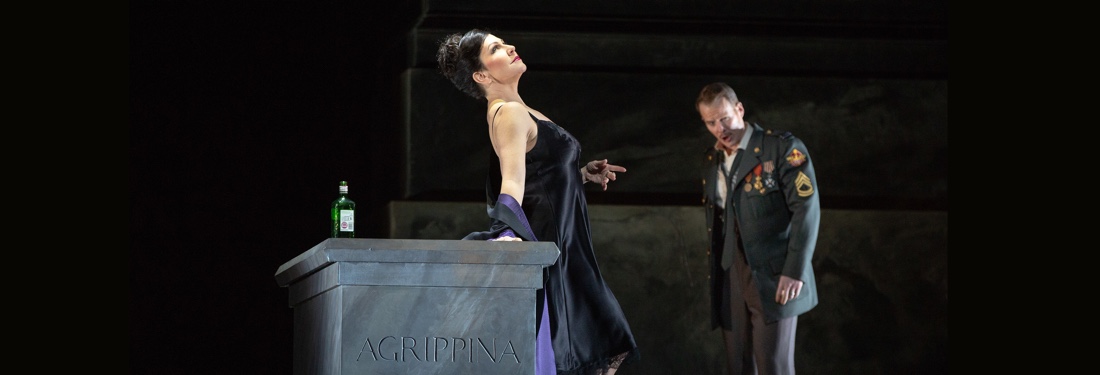
The internecine machinations of those who ruled—or sought to rule—the Roman Empire have long provided rich material for writers and composers, and on Thursday evening operamission continued its ambitious plan to stage in chronological order all of Handel’s operas by presenting one of the most delicious of those Roman-based works, Agrippina which premiered in Venice in 1709.
I suspect most New York City opera-lovers had long since given up hope that the fascinating soprano Anna Caterina Antonacci would ever return to their city.
I can think of no other case that resembles Handel’s complex relationship to the story—derived from Ovid’s Metamorphoses—of the ill-fated love between the shepherd Acis and the sea nymph Galatea.
Probably no more than 100 gathered Tuesday in a curtained-off space in the lobby of NYC’s Gershwin Hotel to witness the North American premiere of Rodrigo by operamission.
Giulio Cesare at the Met proved an evening that added up to much more than the sum of its uneven parts.
Those Romans! How decadent, how corrupt, how much fun!
That’s what it must have been like in 1726 London when Handel composed Alessandro for perhaps the three most famous (and expensive) singers of the day.
As if last week’s survey wasn’t enough, a few more recent diva-recital disks remain worthy of attention particularly since they arrive from five front-rank singers.
Sneaking in under the wire during the final week of May were two highpoints of New York’s opera season: the Cleveland Orchestra’s Salome with a stunning Nina Stemme and operamission’s revelatory US stage premiere of a complete edition of Handel’s first opera Almira.
Joyce DiDonato enjoys the rare cachet of having three studio-recorded operas released in the past three years while other famous divas must be content with “just” DVDs. Although two of Renée Fleming’s Violettas have found their way onto video in less than five years (why??), “the people’s diva” has only recorded one studio opera in…
Tell us: Filth or dementia?
Hasten thee to feed another quarter of conversation for The Talk of the Town!
Sign up for our free Newsletter.
Support Parterre Box
Donate to keep opera's liveliest publication free and independent. No paywalls, no institutional backing, no bootlicking.
Get our free newsletter
Opera's top reads delivered to your email weekly…ish.
Join over 100k readers.
The best opera magazine on the web.
Reviews, breaking news, critical essays, and brainrot commentary on opera from those demented enough to love it.
Essentials
Copyright © 2026 Parterre Box.
All rights reserved.
Registration or use of this site constitutes acceptance of our Terms & Conditions and our Privacy Policy. Do Not Sell or Share My Personal Information.
Sign up for Parterre’s free newsletter.
Exclusive opera reviews, commentary, and top reads
delivered to your email weekly…ish.