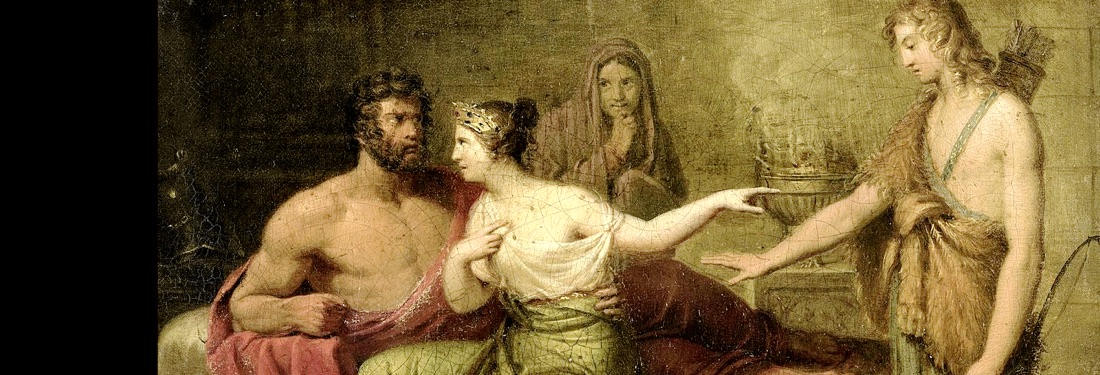
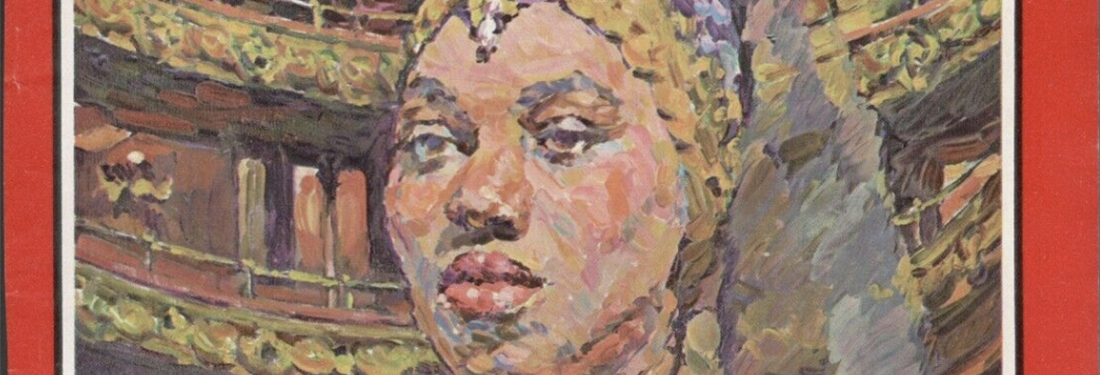
It’s hard to think of a rare work by a great composer more tailor-made for a twenty-first century reexamination than Mozart’s Il Sogno di Scipione.
There’s nothing like a good performance of Verdi’s Macbeth and here is proof positive because this dvd is (almost) nothing like a good performance.
La Cieca has just received a complete report from her spy at today’s open dress rehearsal of La traviata at the Met.
When the hard-partying heroine of Massenet’s Manon hits bottom, she literally lands in the gutter.
Another grim narrative of the Gelb years, and one I think is generally hogwash, is that the Met has (at least in theatrical terms) lost its way entirely.
I have been a devotee of Berlioz’s Les Troyens since I first discovered the Covent Garden recording conducted by Colin Davis.
Apparently, opera fans got the bright side of the bargain: say “Macbeth” in the theater and you court cataclysm; utter the name in the opera house and, as often as not, you merely predict disappointment.
By the end of its 2012-13 season, the Met will have presented four HD transmissions in less than two years featuring countertenors in prominent roles.
“Though Mr. Herheim’s work is rigorous, it is also fun, and this Rusalka is serious but the opposite of dour.”
L’elisir d’amore, Donizetti’s evergreen comedy about young love, returned to the Met last night with a strong cast, a high energy level from all the performers, and last but not least, a very full house.
Being an opera lover in Los Angeles is a lot like being a Red Sox fan. As hard as they try we never make it to the World Series, let alone the playoffs.
This 2010 DVD of Brecht and Weill’s Rise and Fall of the City of Mahagonny from Madrid assumes pride of place among the available video versions of the opera.
The comprimario tenor, veteran of 2,928 performances at the Met, died earlier today. He was 82.
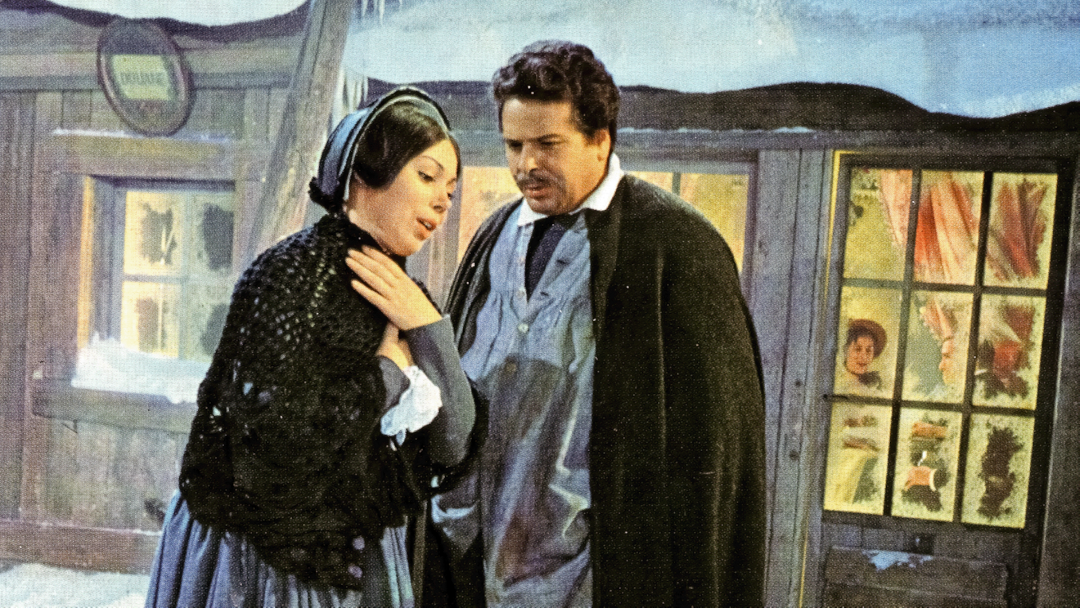
Yes, the plot of Luisa Miller is a novella, and a pleasantly juicy one at that.
Almost exactly one hundred years ago on March 18, 1912, the Metropolitan Opera gave its final performance to date of Armide.
Few singers today cause me as much consternation as Vivica Genaux.
I could feel my face (to say nothing of my spirits) sink as I opened an envelope from La Cieca containing a new Decca CD to review.
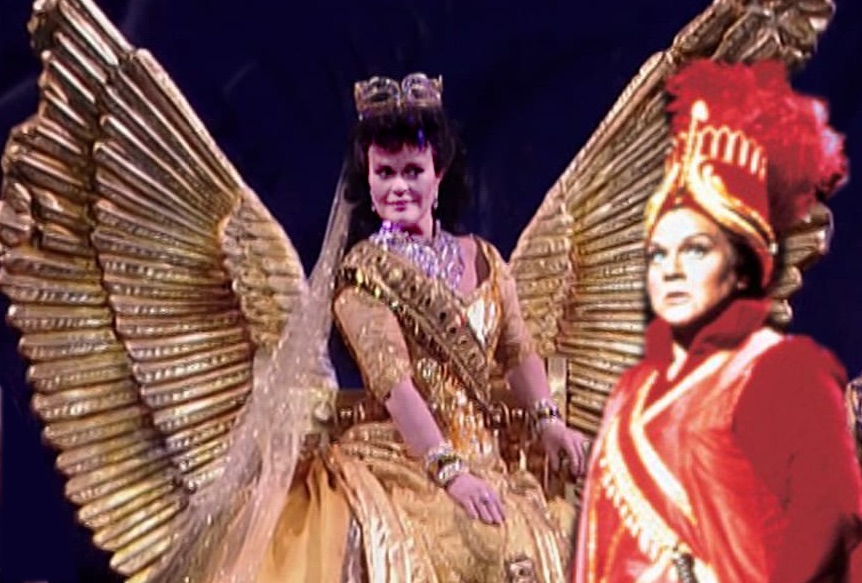
The New Year’s Eve gala at the Met ushering out 2011 was the world premiere of the much-anticipated mash-up The Enchanted Island AKA “baroque opera for those who hate (or at least don’t know) baroque opera.
After today’s Met dress rehearsal of The Enchanted Island, La Cieca’s spy (pictured) reports: “You would think that if they had the entire Baroque canon to mine, they would’ve chosen music that wasn’t slow, dull, and long. In Peter Gelb‘s opening remarks, he called it ‘the Met’s Baroque Coming Out party,’ which makes me think this entire endeavor was…
As suggested in Part I of this piece, to experience Glass’s Satyagraha as a purely aesthetic experience is unfortunately to succumb to a romantic ideology promoting detached reflection on art which is wholly inapplicable to such a politically-charged opera. The idea that Gandhi’s action-oriented philosophy would be packaged and sold for the sake of passive…
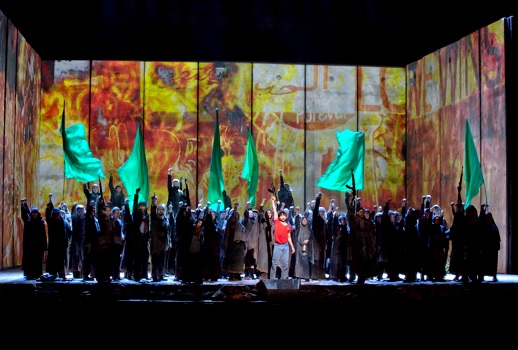
That Philip Glass’s opera about Gandhi’s nonviolent civil disobedience should be revived by the Metropolitan Opera in 2011—a year marked by nonviolent revolutions and uprisings around the globe—is timely, to say the least. The most recent production of his Satyagraha (1979) was first premiered by the Met in the spring of 2008 as America stood…
Many American opera-lovers take the “Grand Tour”—a pilgrimage to Europe to attend opera at its great houses—Peter Grimes at the Royal Opera in London or Otello at La Scala in Milan, or perhaps for the more well-heeled a visit to the summer festivals of Glyndebourne, Salzburg or Aix-en-Provence.
Capriccio skates along on a fine line between a fascinating idea-driven debate about the purpose of art in the wider world and a rather fussy narrow debate about text and music interesting only to those interested in opera as theatre.
The Monday, 12th December, Weill Hall recital debut of Signora Chiara Taigi, a strikingly good looking Italian soprano, who had made her American operatic debut this past March, starring as Selika in the OONY production of Meyerbeer’s long-neglected L’Africaine, was something Your Own Camille had looked forward to with a high hopes and a faintly…
Tell us: Filth or dementia?
Hasten thee to feed another quarter of conversation for The Talk of the Town!
Sign up for our free Newsletter.
Support Parterre Box
Donate to keep opera's liveliest publication free and independent. No paywalls, no institutional backing, no bootlicking.
Get our free newsletter
Opera's top reads delivered to your email weekly…ish.
Join over 100k readers.
The best opera magazine on the web.
Reviews, breaking news, critical essays, and brainrot commentary on opera from those demented enough to love it.
Essentials
Copyright © 2026 Parterre Box.
All rights reserved.
Registration or use of this site constitutes acceptance of our Terms & Conditions and our Privacy Policy. Do Not Sell or Share My Personal Information.
Sign up for Parterre’s free newsletter.
Exclusive opera reviews, commentary, and top reads
delivered to your email weekly…ish.