Once upon a time, a man and a woman met. He could sing, she could sing. They fell in love, got married, and became a power couple to rival Billary.
I am certain that we Parterrians are a very literate, even literary, group.
There is a truism that there are no small parts, only small singers. Last night’s Così fan tutte has made me consider another possible truism: there are no bad productions, only miscast productions.
Think of it as the anti-Puritani.
Alan Gordon, embedded journalist, reports from inside the first AGMA/Met negotiation session.
A new DVD of The Gershwins’ Porgy and Bess features an enjoyable live performance from the San Francisco Opera from June of 2009.
Joyce DiDonato is taking her Mary Stuart on the road, so to speak.
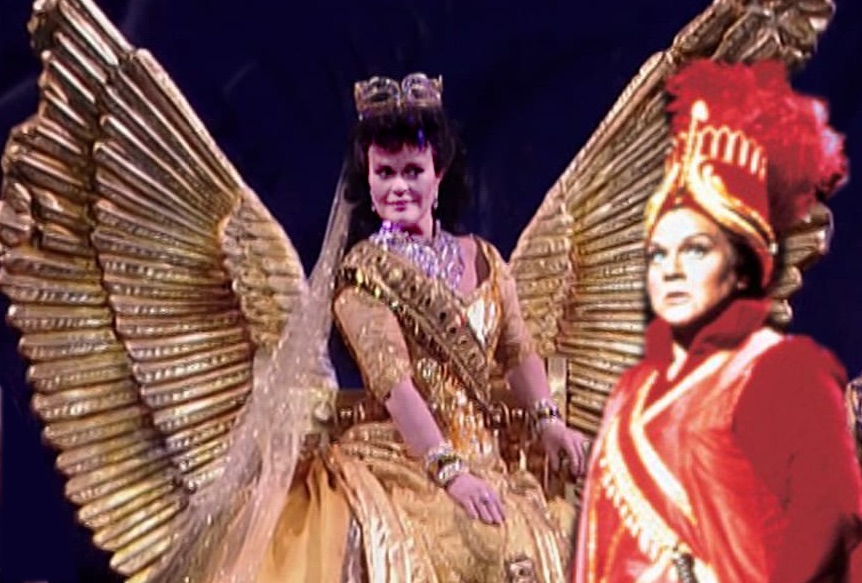
The legions of New York opera buffs who now can’t talk about anything but Javier Camarena will be happy to know that there’s now a DVD release of their new favorite tenor in Rossini’s Le Comte Ory available.
Joyce, Javier and now Julia—this week these three remarkable Js brought New York City memorable “Cinderella stories.”
The Met stage was filled with considerable magic Monday night when its dizzily effervescent revival of La Cenerentola starring Joyce DiDonato and Javier Camarena stirred a bewitched audience to some of the most ecstatic ovations heard this season.
That’s the exact word I’d use to describe Olga Peretyatko’s debut in I Puritani last night at the Metropolitan Opera: “calm.”
The scene: a vocal audition, sometime in the past. A young, blond soprano approaches the podium. Her aria: “Un bel di.” She sings. Before she gets to the second “Chi sara” she’s rudely interrupted.
Coming as Peter Gelb did from the music industry, opera lovers hoped that he would display a more distinctive knack for casting and an improved talent pipeline than Joe Volpe offered during the waning years of his tenure.
Pytor Ilyich Tchaikovsky’s Eugene Onegin is his masterwork and its themes of social convention and unrequited longing surely struck a deep chord in a composer who, in late 19th century Russia, was gay and had to conduct himself carefully.
With Richard Strauss and Hugo von Hofmannsthal’s Arabella once again on the Met’s stage, I thought I’d take a moment to revisit that opera’s most reviled character, the Fiakermilli.
About this evening: the opera we saw was Arabella, written by a gentleman named Mr. Richard Strauss.
La bohème is such a popular romantic opera that hardly anyone ever notices that Mimì and Rodolfo undergo what in modern terms would be called speed dating.
Short answer: yes. But let’s begin by dismissing the a blatant canard. One thing that the Metropolitan Opera does not need to do is to scale back the number of performances in a season.
When Norman Lebrecht is declaring on an almost daily basis that classical music is dead, it’s perhaps heartening that four of today’s prominent tenors have recently released what might be called fluff/vanity albums.
The Met’s financial challenges are not meteorological, demographic, or cyclical; they are structural.
The hostile reaction to the Mary Zimmerman production of La sonnambula was well documented after the premiere in 2009.
Midway through the first portion of this past Wednesday’s New York City recital debut of Mme. Natalie Dessay I became very distracted by the persistent urge to try to characterize the experience of what was happening on stage, for this was, by no means, an ordinary recital and no ordinary debutante.
This afternoon at the Met, Grigolo sold his performance like the rent was due tomorrow and he was down to his last penny.
It’s been a bitterly cold winter in NY. When it’s bitterly cold, the air is dry.
Tell us: Filth or dementia?
Hasten thee to feed another quarter of conversation for The Talk of the Town!
Sign up for our free Newsletter.
Support Parterre Box
Donate to keep opera's liveliest publication free and independent. No paywalls, no institutional backing, no bootlicking.
Get our free newsletter
Opera's top reads delivered to your email weekly…ish.
Join over 100k readers.
The best opera magazine on the web.
Reviews, breaking news, critical essays, and brainrot commentary on opera from those demented enough to love it.
Essentials
Copyright © 2026 Parterre Box.
All rights reserved.
Registration or use of this site constitutes acceptance of our Terms & Conditions and our Privacy Policy. Do Not Sell or Share My Personal Information.
Sign up for Parterre’s free newsletter.
Exclusive opera reviews, commentary, and top reads
delivered to your email weekly…ish.